Finding the Best Wholesale Coffee Suppliers UK for Your Business
Picking the right wholesale coffee supplier is one of the most critical decisions you'll make for your UK café or retail shop. This isn't just about buying beans; it’s about forging a partnership that shapes your brand's reputation for quality, consistency, and ultimately, customer loyalty.
How to Choose Your Ideal Wholesale Coffee Partner
Think of your supplier as the silent partner behind every single cup you serve. A great one ensures you always have incredible, freshly roasted coffee on hand, delighting your customers every time. A poor one? That can lead to inconsistent flavours, unreliable stock, and a whole lot of headaches.
Your goal is to find someone who doesn't just sell exceptional coffee but who also genuinely clicks with your business values and vision for growth. This guide is your roadmap to navigating the UK's vibrant coffee scene, breaking down all the essential factors so you can make a confident, informed choice.
The Core Pillars of a Strong Supplier Relationship
Before we get into the nitty-gritty, it helps to understand what a truly successful wholesale relationship is built on. These are the three foundational pillars you should look for in any potential partner:
- Product Quality and Freshness: This is the absolute deal-breaker. The supplier must offer exceptional beans, consistent roasting, and a clear, unwavering commitment to freshness. If you're new to the lingo, getting your head around what is specialty coffee will help you spot true quality.
- Ethical Sourcing and Sustainability: Today's customers care deeply about where their products come from. A supplier with transparent, ethical practices isn't just a bonus—it becomes a valuable part of your brand's story.
- Reliable Logistics and Support: Consistent delivery, flexible ordering, and brilliant customer service are the nuts and bolts that keep your business running smoothly. You need a supportive partner, not just a faceless vendor.
This decision tree visualises the key questions you should be asking right from the start, centring on quality, ethics, and logistics.
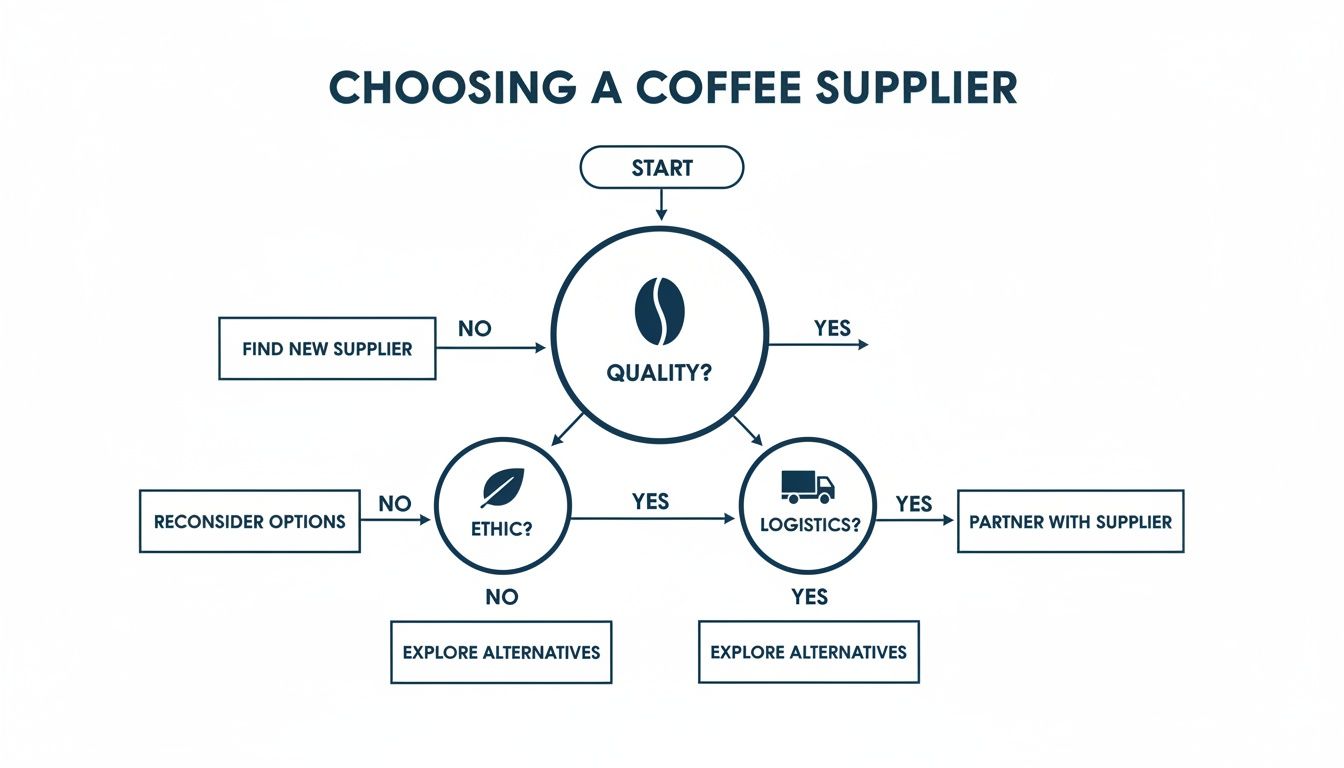
As the flowchart shows, while amazing quality is your starting point, the ideal partner must also tick your boxes for ethical practices and logistical reliability. Each element is a critical checkpoint on the path to building a successful, long-term partnership that helps your business thrive.
Getting to Grips with the UK Wholesale Coffee Scene
Before you can pick the right wholesale partner, you need a clear picture of the world you’re stepping into. The UK's wholesale coffee market is a lively, competitive space, driven by constantly shifting consumer tastes and a huge demand for both amazing quality and real-world sustainability.
It's a market with two distinct ends. On one side, you have the huge commercial suppliers who are all about volume and efficiency. On the other, there's a buzzing community of artisan roasters obsessed with unique flavour profiles and building direct relationships with farmers. Figuring out where you fit on this spectrum is the first step to finding your perfect match.
The Push and Pull of Supply and Demand
Let's be honest, the UK's love for coffee isn't going anywhere. This endless demand, powered by a booming café culture and a growing army of serious home brewers, gives the wholesale market a solid foundation. Even when the economy tightens, coffee remains a non-negotiable daily ritual for millions.
But the supply side has had a tougher time. The UK coffee wholesaling industry has been navigating some pretty choppy waters recently. Post-Brexit import hurdles and tangled supply chains have really put businesses to the test.
The Coffee, Tea & Spices Wholesaling sector's revenue actually dropped at an annual rate of 2.1% between 2020 and 2025, landing at an estimated £2.8 billion this year. It’s a number that really shows the pressure the industry has been under.
Despite that dip in revenue, the number of businesses in this space has surprisingly grown. This shows just how resilient and appealing the market still is. It's a sign of a sector that's adapting, with many wholesale coffee suppliers in the UK finding clever new ways to serve cafés, restaurants, and shops. You can dig deeper into the numbers by checking out the full industry report.
Big Shifts Shaping the Future
There are a few massive trends steering the wholesale coffee market right now. If you get your head around these, you'll be in a much better position to choose a supplier who’s not just keeping up, but thinking ahead.
- Speciality Coffee is the New Normal: People know their coffee now more than ever. They’re actively looking for interesting origins, complex tasting notes, and unique processing methods. This has thrown the doors wide open for suppliers who can offer a really diverse and high-quality range of beans. You can get a feel for what’s out there by browsing our own specialty coffee beans.
- Sustainability Isn't Optional Anymore: Ethical sourcing used to be a nice-to-have; now, it’s a deal-breaker. Your customers want to know the story behind their cup—from how the farm operates to the roaster's green credentials. Suppliers with strong, transparent ethics are the ones winning business.
- The Lines Are Blurring: The old wall between wholesale and retail is crumbling. Loads of roasters now sell directly to consumers online while still supplying businesses. For a buyer like you, this means more competition, but it also means a whole lot more choice.
By understanding these market forces, you can start to see exactly where your business fits in and what kind of supplier will help you thrive. Whether you need the muscle of a commercial giant or the personal touch of an artisan roaster, the UK market has a partner for every ambition.
Evaluating Coffee Quality: Roast Profiles and Freshness
Look, the numbers on a spreadsheet and the logistics are important, but they don’t mean a thing if the coffee in the cup is forgettable. The actual quality of the beans is where your reputation is built. When you're vetting potential wholesale coffee suppliers in the UK, getting this part right is non-negotiable. It all boils down to the roaster's philosophy, their range, and an almost obsessive commitment to freshness.
Think of a supplier's coffee list like a chef's pantry. You want to see a thoughtful selection. This means having both reliable, crowd-pleasing blends and a few exciting, distinct single origins. A great blend is your workhorse—engineered for consistency and balance, it's the perfect foundation for your house espresso. Single origins, on the other hand, are your showstoppers. They tell the story of a specific farm or region, offering complex and unique flavours that are perfect for filter coffee or as a guest espresso to intrigue the coffee geeks.
Decoding Roast Profiles
The term "roast profile" is just industry speak for the recipe a roaster uses—a precise dance of time and temperature designed to bring out the best in a green coffee bean. A tiny tweak can be the difference between a coffee that’s bright and fruity and one that’s rich and chocolaty.
A truly skilled roaster doesn't just have one style they force onto every bean. They craft a unique profile for each coffee to make its natural characteristics sing.
- Light Roasts: These are all about preserving the bean's origin flavours. You'll get higher acidity, delicate floral or fruity notes, and a lighter body. They’re fantastic for showing off the unique terroir of a top-tier single origin.
- Medium Roasts: For many, this is the sweet spot. It's a balanced, harmonious profile where you get the bean's inherent flavours alongside deeper notes like caramel and nuts that develop during roasting.
- Dark Roasts: Roasted longer, these beans offer a heavy body, low acidity, and bold, punchy flavours like dark chocolate and smoke. While they have their fans, it's a fine line—over-roasting can easily obliterate a bean's unique character. Quality control here is everything.
Don't be shy about asking a potential supplier about their roasting philosophy. A roaster who is passionate about their craft will be more than happy to talk your ear off about how they approach different beans to unlock their potential.
The Non-Negotiable Rule of Freshness
Coffee is a fresh product. Simple as that. Its flavour starts to degrade the moment it leaves the roaster, with oxygen, light, and moisture as its mortal enemies. The absolute peak window for amazing flavour is usually somewhere between seven and twenty-one days after the roast date. Serving stale coffee is probably the quickest way to send customers to your competitor down the road.
Freshness isn't a premium feature; it's the absolute baseline for quality. A supplier worth their salt should be roasting to order, meaning the beans that arrive at your door were roasted just days ago, not collecting dust in a warehouse for weeks.
This is exactly why you need to understand a supplier's roasting schedule. Do they roast every day? Once a week? Knowing this helps you dial in your stock management so you're only ever serving coffee at its best. Any great roaster understands this, which is why it's so vital to find partners who prioritise freshly roasted coffee beans in the UK.
The Vital Step of Sampling and Cupping
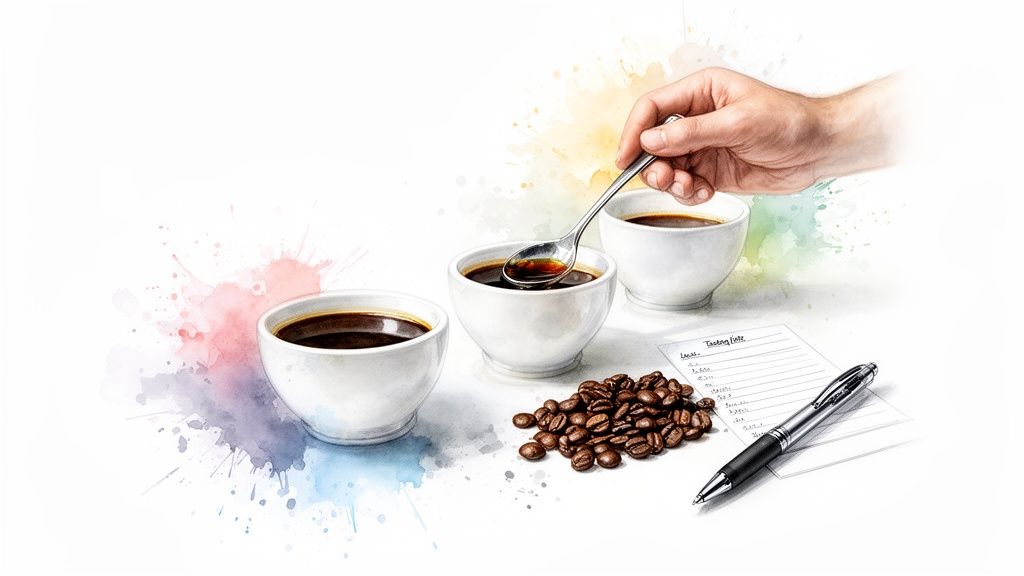
You wouldn't buy a car without taking it for a spin, and the same logic applies here. Before you sign on any dotted line, you have to taste the coffee. In the industry, we call this process "cupping"—it's a standardised way to taste and evaluate coffee, but you don't need to be overly formal.
Ask potential suppliers for samples of their key offerings, like their house espresso blend and a couple of interesting single origins. When you taste them, focus on these four things:
- Aroma: What do you smell right after grinding and when you add hot water? Is it floral, nutty, fruity, spicy?
- Flavour: What are the main tasting notes you can pick out?
- Acidity: Is it a sharp, bright, crisp acidity, or is it more mellow and smooth?
- Body: How does the coffee feel in your mouth? Is it light and tea-like, or is it rich, heavy, and syrupy?
- Aftertaste: What flavour is left behind after you've swallowed? Is it pleasant and lingering or harsh and bitter?
This hands-on tasting is your final quality check. It’s the ultimate proof in the pudding, revealing the roaster's true skill and helping you find the beans that will have your customers coming back day after day.
Analysing Pricing Structures and Profit Margins
While incredible flavour is the heart of your business, the numbers on your balance sheet are its backbone. For any UK café, coffee shop, or retailer to succeed, the economics have to add up. Honestly, understanding the financial side of your relationship with a wholesale coffee supplier is just as crucial as tasting the coffee itself.
There’s no one-size-fits-all model for wholesale coffee pricing. The cost per kilogram is a moving target, influenced by a blend of factors. These can range from the coffee’s origin and any ethical certifications it holds, right through to the sheer volume you commit to ordering.
Generally, the more you buy, the lower the per-kilogram price. Simple enough. But this brings us to one of the most important figures for any new or growing business: the Minimum Order Quantity (MOQ).
Finding Your Financial Sweet Spot
A supplier’s MOQ is the smallest amount of coffee you can purchase in a single order. This number is a critical test of compatibility. A large commercial roaster might demand a 20-30kg MOQ, which is just unmanageable for a small independent café trying to keep stock fresh and cash flow healthy.
On the other hand, more flexible artisanal roasters often have MOQs as low as 5-10kg. Finding a supplier whose requirements actually align with your consumption rate is essential for building a sustainable business without tying up all your capital in stock.
The goal is to strike a balance. You need enough stock to meet demand without sacrificing the freshness that defines great coffee, all while respecting your operational budget.
This balancing act directly impacts your profitability. Before you commit to anyone, you absolutely must calculate your potential profit margins to make sure the partnership is financially viable.
Calculating Your Cost of Goods and Profit
To get a real grip on profitability, you need to break down the cost of every single cup you sell. This starts with the wholesale price of your beans, but you also have to account for variables like milk, cups, and labour. To get a precise handle on your pricing and potential returns, a good restaurant profit margin calculator can be an invaluable tool.
To illustrate, let's break down the core components of a single cup.
Example Cost and Margin Calculation Per Cup
This table provides a simplified look at how to work out the gross profit on a cup of coffee, based on the cost of your wholesale beans.
| Cost Component | Example Cost (Per Cup) | Notes |
|---|---|---|
| Coffee Beans | 36p | Based on an £20/kg bag and an 18g double espresso shot. |
| Milk | 22p | Based on 180ml for a latte, with milk at £1.20/litre. |
| Consumables | 15p | This covers the takeaway cup, lid, sleeve, and sugar. |
| Total Cost of Goods | 73p | Your direct cost before overheads are factored in. |
As you can see, the numbers add up quickly. Your total direct cost for a takeaway latte might be around 70-80p before you even consider overheads like rent, utilities, and staff wages. Transparent pricing from your supplier is vital here, as it forms the foundation of every financial projection you make.
Businesses that roast their own coffee often report higher profit margins, but this comes with a significant upfront investment in equipment and training. For most, a reliable wholesale partner remains the most practical path to profitability.
For those just starting out, managing these variables can feel overwhelming. Exploring options like a flexible UK coffee subscription can be a smart way to control costs and guarantee fresh deliveries without being locked into huge, infrequent orders.
Ultimately, the right supplier provides not just great coffee, but a pricing structure that helps your business thrive.
The Growing Importance of Sustainability and Ethics
Today’s coffee drinkers are a curious and conscious bunch. They’re not just after a great-tasting cup; they want the story behind it. They want to know about the farmer who grew the beans and the roaster who dialled in the perfect flavour. For any café or retailer, this shift means a supplier's commitment to sustainability and ethical sourcing isn't just a "nice-to-have"—it's a core credential for your business.
Choosing a wholesale partner with strong principles is about more than feeling good. It's a seriously powerful way to connect with your customers, build a brand they trust, and stand out in a crowded market. When you can confidently share the journey of your coffee, you give people a compelling reason to choose you over the competition.
The UK coffee scene is increasingly driven by these values. While wholesaling has its challenges, the demand for premium, ethically sourced coffee is booming. Sustainability is a key force pushing the industry forward, with organic and Fairtrade lines often lifting margins because they resonate with customers who are happy to pay a bit more for quality with a conscience.
Decoding Ethical Certifications
As you start exploring coffee bags and supplier websites, you’ll be greeted by a whole host of logos and certifications. Think of these labels as a shorthand, a quick way for roasters to signal their commitment to certain standards. Getting to grips with what they mean is crucial for vetting a potential partner.
Here are some of the most common certifications you'll see from wholesale coffee suppliers in the UK:
- Fairtrade: This is one of the most recognised stamps of approval. It guarantees that farmers receive a fair minimum price for their coffee, which helps protect them from volatile market prices and empowers their communities.
- Rainforest Alliance: See the little green frog logo? That means the coffee was produced on farms that meet tough standards for environmental, social, and economic sustainability. It's all about protecting biodiversity and looking after the well-being of workers.
- Organic (Soil Association): For a coffee to be certified organic in the UK, it has to be grown without any synthetic pesticides or fertilisers. The Soil Association is the UK's leading organic certifier, ensuring those standards are strictly met from farm to cup.
These certifications offer a valuable baseline, but a supplier's commitment often goes much deeper. Many specialty roasters now engage in direct trade, building personal relationships with farmers. This allows them to ensure exceptional quality and pay prices well above the Fairtrade minimum. To learn more about what this involves, check out our guide on what makes for truly sustainable coffee companies.
Vetting a Supplier’s Credentials
A genuinely transparent supplier will be proud to share their sourcing practices with you. Don't just take the logos on the bag at face value; ask direct questions to really understand the story behind their beans.
A supplier's sustainability policy isn't just a document; it's a reflection of their values and a promise to their partners and customers. A transparent and passionate supplier will be eager to discuss their relationships at origin and their efforts to reduce their environmental impact.
When you're talking to a potential supplier, ask them to walk you through their supply chain. Can they tell you about the specific farms or cooperatives they work with? Do they visit the origins themselves? The way they answer will reveal the depth of their commitment and help you find a partner whose values truly align with your own.
This ethical alignment creates a powerful brand story that your customers will be proud to support, turning a simple transaction into a meaningful partnership.
Navigating Logistics and Branding Opportunities
Incredible coffee is one thing, but it’s not much good if it doesn’t get to your door on time and in perfect condition. Once you’ve ticked the box on a supplier’s bean quality, the next, equally crucial step is to look at their logistics. The day-to-day practicalities of delivery, packaging, and branding are what turn a fantastic product into a reliable, profitable part of your business.
Think of a supplier’s delivery network as the lifeline of your coffee programme. You need a partner who can guarantee consistent, timely shipments, making sure you never run out of the beans your customers love. An unreliable delivery service means lost sales and unhappy regulars, so this isn't an area where you can afford to compromise.
The Nuts and Bolts of Delivery
When you’re talking to potential wholesale coffee suppliers in the UK, you need to get crystal-clear answers on their delivery setup. Speed and reliability are everything—freshly roasted beans are the foundation of every great cup you serve.
Here are the key questions you should be asking:
- What are your typical lead times? How long is it from the moment you place an order to it leaving their roastery? A roaster who roasts to order will naturally have a different timeline than one holding stock.
- Who are your delivery partners? Are they using a big national courier or a smaller local service? Knowing their network gives you a sense of their reach and dependability across the UK.
- What are the shipping costs? Is delivery included, a flat fee, or based on weight? Some suppliers offer free delivery over a certain order size, which can make a real difference to your bottom line.
Getting your product to your customers efficiently is a cornerstone of any successful business. For a deeper dive into how this fits into your wider strategy, this guide on marketing mix distribution strategy is a great read. It'll help you think about how delivery slots into your whole business model.
Packaging Freshness and Your Brand
Packaging has two jobs, and both are vital. First, it has to keep the beans fresh. Second, it's a physical piece of your brand that customers hold in their hands. Good packaging isn't just a container; it's a promise of the quality inside.
You absolutely want to see bags with one-way degassing valves. For freshly roasted coffee, these are non-negotiable. They let the CO2 that beans release after roasting escape without letting oxygen in, which is what makes coffee go stale. The bag material itself should also be tough enough to protect the beans from light and moisture.
Packaging is your first physical touchpoint with a customer. It should not only protect the product but also communicate the quality and story of the coffee inside, reinforcing your brand identity with every bag.
The Power of Private Labelling
Go beyond just stocking a supplier's coffee. Many roasters offer an exciting opportunity to build your own brand through private labelling. This means you can sell exceptional coffee under your own business name, creating a unique product that builds customer loyalty and opens up a whole new revenue stream.
This is so much more than just slapping your logo on a generic bag. It’s your chance to build a coffee brand that is exclusively yours. You get to lean on the expertise and sourcing network of a professional roaster while building your own identity. Lots of cafes and shops use private labelling to sell retail bags, cementing their reputation as the local spot for great coffee.
A great wholesale partner makes this process easy, helping you with everything from bag design to labelling requirements. If creating your own line of coffee sounds appealing, it’s worth checking out a dedicated Wholesale Coffee page to see how a supplier can help bring your vision to life.
Answering Your Wholesale Coffee Questions
Choosing the right partner from the many wholesale coffee suppliers in the UK is a big decision. To help you feel completely confident, we’ve put together some of the most common questions that businesses like yours ask when they're looking for a supplier. Here are some clear, straightforward answers to help you lock in your choice.
What Is a Typical Minimum Order Quantity for Wholesale Coffee in the UK?
Minimum Order Quantities (MOQs) can vary wildly between suppliers. Huge commercial roasters might expect you to commit to 20-30kg or more per order. For a small, independent café trying to manage cash flow and keep beans fresh, that’s a massive hurdle.
On the flip side, most speciality roasters offer much more flexibility. It's not uncommon to find MOQs as low as 5-10kg, which makes it far easier for smaller businesses to keep their stock fresh and stay agile.
The key is finding a supplier whose MOQ lines up perfectly with how much coffee you get through each week. A great partner should be ready to grow with you, offering a setup that supports your business right from the start.
How Can I Verify a Supplier's Ethical and Sustainable Claims?
A good place to start is looking for recognised certifications on their website or packaging, like Fairtrade, Rainforest Alliance, or the Soil Association stamp for organic products. These labels are a solid initial sign that they’re committed.
But don’t stop there. A truly transparent supplier will be more than happy to talk you through their sourcing practices in detail.
Ask them directly about the relationships they have with specific farms or cooperatives. A supplier who is genuinely invested in ethical sourcing will have compelling stories and clear information about their supply chain, showing a real passion that goes way beyond just sticking a logo on a bag.
Look for suppliers who are actively involved in industry initiatives. It shows a genuine commitment to improving the entire coffee ecosystem, from the farm right through to the final cup.
What Support Should I Expect Besides the Coffee Beans?
A top-notch wholesale relationship goes way beyond just dropping off the product. Many of the best suppliers offer some serious value-added support that can be a huge asset to your business.
This often includes services like:
- Barista Training: Professional guidance to get your staff pulling perfect shots and pouring beautiful latte art every single time.
- Equipment Advice: Expert recommendations on choosing the right espresso machine, grinders, and brewers that fit your space and your budget.
- Menu Development: Working with you to craft a coffee menu that gets your customers excited and really shows off the quality of the beans.
- Marketing Materials: Resources to help you tell the story behind the coffee—its origin, its flavour profile—and connect with your customers on a deeper level.
When you’re checking out potential suppliers, always ask what training and support packages they offer. This kind of partnership can become an invaluable resource for making your business a success.
Should I Choose a Single Origin Coffee or a Blend for My Business?
This really comes down to your brand’s identity and what your customers are looking for. Each one serves a different purpose. Blends are carefully crafted for consistency and balance, making them a reliable, crowd-pleasing choice for a house espresso.
On the other hand, our selection of single origin coffees offers unique and distinct flavour profiles that tell a story of their specific terroir. These are perfect for your filter coffee offering or as a guest espresso to draw in coffee connoisseurs who want to try something special.
Many of the most successful cafés find a happy medium by offering both. A consistent, high-quality house blend provides a reliable foundation, while a rotating selection of exciting single origins keeps the menu fresh and interesting. A good supplier will work with you to find the perfect mix for your business.
Ready to partner with a wholesale coffee supplier that puts quality, sustainability, and your success first? At ADS Coffee Supplies, we provide freshly roasted speciality coffee with the support and flexibility your business needs. Explore our wholesale coffee programme today and discover how we can help you serve the perfect cup.