What is ground coffee: A Practical Guide to a Better Brew

Ever wondered, what is ground coffee? Let's clear that up straight away. At its simplest, it's whole coffee beans that have been milled into small, even particles. This step is essential—it’s how all the hidden flavour and aroma locked inside the bean is released.
Think of a peppercorn. Whole, it holds its spicy potential, but you can't just drop it into your stew. You need to grind it first to release its fragrance. Coffee beans are the same; grinding gets them ready for brewing so you can enjoy a proper cup of coffee.
What is Ground Coffee? A Beginner's Guide

Ground coffee is the vital link between a roasted bean and the rich, aromatic brew you enjoy every morning. When hot water flows over these grounds, it extracts the oils, acids, and sugars that create coffee's complex flavours.
Without grinding, you’d just have hot water and some very uncooperative hard beans. The process is non-negotiable for making any type of brewed coffee, from a quick cafetière to a carefully crafted filter brew.
To understand ground coffee, it helps to see how it compares to whole beans and instant coffee.
- Whole Bean Coffee: These are roasted coffee beans in their complete, un-ground state. They offer peak freshness because their solid form protects fragile flavour compounds until the moment you grind them.
- Ground Coffee: This option strikes a fantastic balance between convenience and quality. You get the authentic flavour of brewed coffee without needing a grinder, making it a great way to explore better coffee.
- Instant Coffee: This is coffee that has already been brewed and then dehydrated into crystals. It offers maximum speed—just add hot water—but at the cost of the nuanced aromas found in freshly brewed ground coffee.
For a clearer picture, let's break down how these three formats compare.
Ground Coffee at a Glance
| Characteristic | Ground Coffee | Whole Bean Coffee | Instant Coffee |
|---|---|---|---|
| Form | Pre-ground particles | Intact, roasted beans | Dehydrated granules/powder |
| Freshness | Good, but degrades after opening | Excellent, peak freshness | Very long shelf life |
| Flavour | Full, brewed coffee flavour | Richest, most complex flavour | Simplified, often one-dimensional |
| Convenience | High (no grinder needed) | Lower (requires a grinder) | Highest (just add water) |
| Brewing | Requires a brewing device | Must be ground before brewing | Dissolves instantly in water |
This table shows why ground coffee is such a popular choice. It delivers a genuine coffee experience with minimal fuss. For more on this, check out this deep dive into whole bean vs. ground coffee.
The Best of Both Worlds
For many coffee drinkers, pre-ground coffee hits the sweet spot. It offers a vastly superior taste to instant coffee while remaining convenient and accessible. It’s an easy way to explore different origins and roasts without investing in extra kit, like a quality coffee grinder.
At its heart, ground coffee is all about unlocking flavour. The size of the grounds directly controls how much flavour is extracted, making it the most important variable for taste.
This is why buying high-quality, pre-ground coffee is so important. A poor grind can ruin even the best beans. Good ground coffee is a simple step towards a much more rewarding daily ritual. You can learn more about the differences between types of coffee and find the perfect match for your taste.
From Roasted Bean to Perfect Grounds
The journey of ground coffee starts long before your morning brew. It begins with a single, roasted coffee bean—a tiny package brimming with potential flavour. The real magic happens in the transformation from that solid bean into fragrant grounds.
This path leads from sustainable farms across the globe to roasters who use artisanal techniques to protect the delicate oils that give coffee its character. A huge part of this comes down to the grinding process itself.
Why the Grinding Process Matters
Professional roasters use burr grinders, not the blade grinders you might see in a home kitchen. This distinction is critical for ground coffee that tastes truly exceptional.
- Burr Grinders: These use two revolving abrasive surfaces (burrs) to crush beans into a consistent, uniform size. This consistency is the secret to a balanced, delicious cup.
- Blade Grinders: Think of a blender. These use a spinning blade to chop beans haphazardly, creating an unpredictable mix of fine dust and large chunks.
That lack of uniformity is the enemy of good coffee. When you add hot water, the tiny particles over-extract and turn bitter, while the big chunks under-extract, leaving a sour, weak taste. No matter how good the beans were, the result is a muddled cup.
The core principle is simple: an even grind leads to an even extraction. By ensuring every particle of ground coffee is a similar size, you get the best possible chance of brewing a consistently flavourful cup every time.
This meticulous approach is a cornerstone of quality. The care taken in grinding directly impacts the superior taste you'll find in every bag. As you learn more about how to roast coffee at home, you’ll appreciate how each step contributes to the final flavour.
The Rise of Ground Coffee in the UK
There’s a growing appreciation for quality coffee across the UK. Ground coffee is fast becoming a favourite for home brewers who want a fresh, aromatic experience that instant just can't match. This trend reflects a nationwide passion for better coffee, with the UK consuming around 98 million cups daily. You can explore more about UK coffee trends on Balance Coffee.
Ground coffee is ideal for filter or cafetière enthusiasts who are ready to elevate their daily brew. If you're looking to upgrade your setup, consider exploring quality brewing equipment.
Matching Your Grind Size To Your Brewer
Getting the grind size right is where the magic happens. Think of it as tuning an instrument; a small adjustment can be the difference between a sour note and perfect harmony. Understanding this is a game-changer for your daily cup.
The concept is simple. The size of the coffee grounds dictates how quickly water extracts flavour. Finer grinds have more surface area, so flavour is extracted fast. Coarser grinds have less surface area, which slows everything down. Our detailed coffee grind size guide is a great place to start if you want to dive deeper.
Finding The Perfect Grind For Your Method
You must match the grind to your brewing equipment for a balanced taste. A mismatch here is the usual cause of a bitter or weak brew.
A simple way to think about it is that the brewing time tells you everything you need to know about the grind size.
The golden rule is this: the shorter the brew time, the finer the grind. An espresso shot is over in seconds and needs a super-fine grind, while a cold brew takes hours and needs an extra-coarse one.
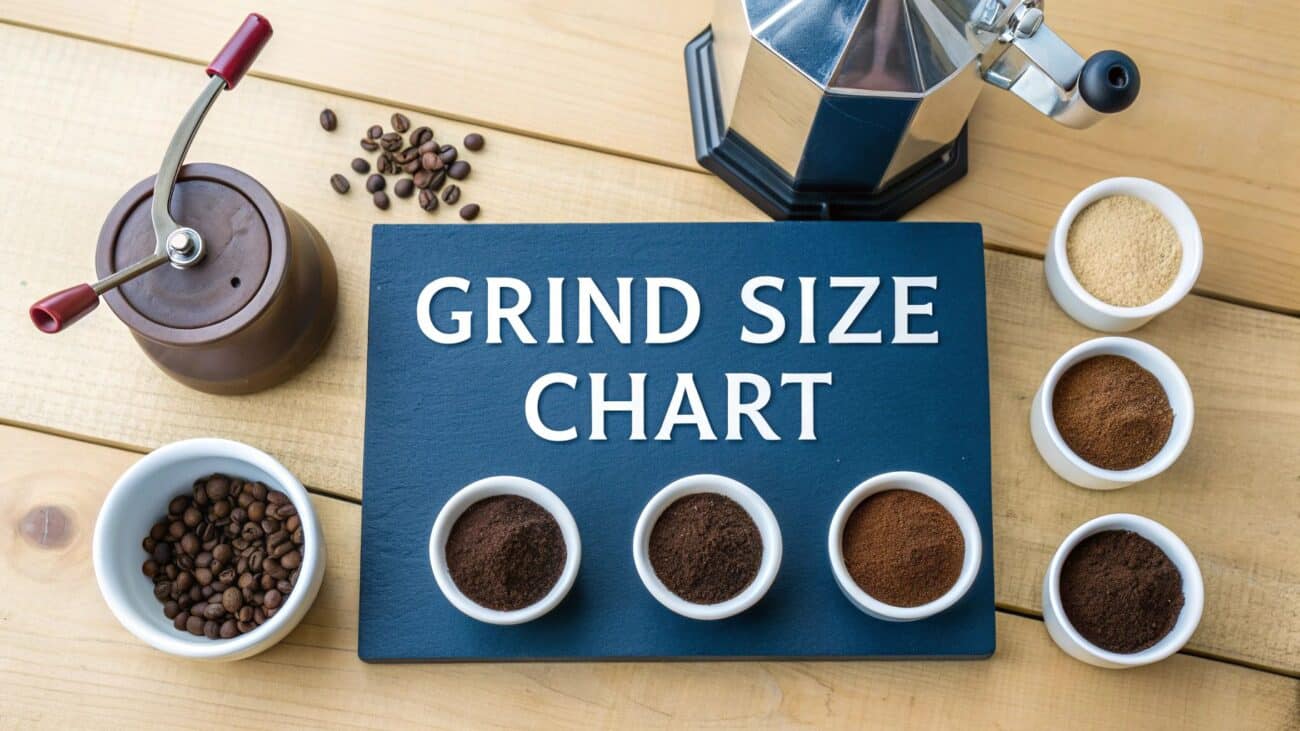
The image below gives you a great visual. The point of grinding isn't just to smash beans into smaller pieces, but to create consistently sized particles. This uniformity allows water to work its magic evenly, giving you a balanced and delicious extraction.

To make it easier, here’s a quick-glance table to help you find the perfect partner for your favourite brewer.
Coffee Grind Size and Brewing Method Matchmaker
This table breaks down which grind size works best for popular brewing methods and why. Use this as your starting point, and don’t be afraid to experiment to dial it in perfectly for your taste.
| Grind Size | Looks Like… | Best For (Brewing Method) | Why It Works |
|---|---|---|---|
| Extra Coarse | Peppercorns | Cold Brew | The large particles need 12-24 hours of immersion to gently extract flavour without becoming bitter. |
| Coarse | Rock Salt | Cafetière (French Press) | The 4-minute steep time needs a coarse grind to avoid over-extraction and keep fine sediment out of your cup. |
| Medium | Granulated Sugar | Drip Coffee Makers, V60, Pour-Over | This is a versatile, all-rounder grind that provides balanced extraction for methods with a moderate brew time. |
| Fine | Table Salt | Espresso Machines, Moka Pot | Creates high resistance, allowing intense pressure to pull a rich, concentrated shot in just 25-30 seconds. |
Once you start matching your grind to your brewer, you'll notice an immediate improvement. It’s all about giving the coffee grounds the right amount of time to release their flavour, and this chart is your cheat sheet to getting it right. Happy brewing.
How to Choose Your Ideal Ground Coffee
Now you have a handle on grind sizes, let's get to the fun part: finding a ground coffee that speaks to your tastes. The world of coffee flavour is vast, but it’s less intimidating once you know what to look for. The journey comes down to three key things: the roast profile, the coffee’s origin, and its flavour notes.
These elements work together to create the final taste in your cup. Getting the right combination is the secret to discovering a coffee you’ll look forward to brewing every day.
Roast Profile: The Foundation of Flavour
The roast profile has the biggest impact on your coffee's taste. Roasting is the process of heating green coffee beans, and how long and how hot they're roasted completely transforms their character. You can take the same bean and produce wildly different results just by tweaking the roast.
Here’s a quick guide to what you can expect from each level:
- Light Roast: This style lets the bean’s natural personality shine. Expect bright, acidic, and often fruity or floral flavours. It’s the truest expression of the coffee's origin.
- Medium Roast: This is the happy medium, offering a beautiful balance. You get a taste of the bean's origin notes, complemented by deeper, sweeter flavours like caramel or nuts developed during roasting.
- Dark Roast: Roasted for longer to create a bold, rich, and intense profile. These coffees have low acidity and deliver classic, powerful flavours of dark chocolate, smoke, and spice.
Understanding roast profiles is your first step. If you enjoy bright, zesty flavours, explore light roasts. If you crave something rich and comforting, a dark roast is likely your best bet.
Single Origin vs. Blends
Next, consider whether a single-origin coffee or a blend is right for you. This choice boils down to whether you prefer a consistent, reliable flavour or an adventurous, unique one.
A single-origin coffee comes from one specific farm, region, or country. The point is to showcase the unique flavour of that place—like a wine from a specific vineyard. To get a better sense of what makes them special, you can learn more about single-origin coffee beans.
A blend, on the other hand, is a thoughtful combination of beans from multiple origins. Roasters craft blends to achieve a specific, consistent, and well-rounded flavour profile you can count on, cup after cup. It’s about creating a harmonious and dependable experience. We offer a great range of both single origin and blended coffee beans.
Keeping Your Ground Coffee Fresh for Longer

The biggest enemy of great ground coffee is oxygen. The moment beans are ground, their increased surface area is exposed to the air, and a countdown begins. The vibrant flavours start to dull as the delicate oils evaporate.
Don’t worry—preserving that just-ground taste is simple with the right storage. Your main goal is to shield your coffee from its four enemies: oxygen, heat, light, and moisture.
The golden rule is to keep it in an airtight container, tucked away in a cool, dark, and dry place. A kitchen cupboard far from the oven or sunny windows is the perfect spot.
The Do's and Don'ts of Coffee Storage
To get the best flavour, knowing how long ground coffee stays fresh is a game-changer. It’s tempting to put your coffee in the fridge or freezer, but this common mistake does more harm than good.
Don't Freeze Your Coffee: Every time you take the bag out of the freezer, condensation introduces moisture. This moisture wreaks havoc on the coffee's cellular structure and strips away aromatic oils, leaving you with a flat, lifeless brew.
Instead, follow these simple tips to lock in freshness:
- Buy Little and Often: The best way to enjoy fresh coffee is to buy smaller bags more frequently. For ground coffee, aim to use it within two weeks of opening for the best taste.
- Use an Airtight Container: The bag your coffee arrives in is fine for a few days, but a dedicated canister is far better. It makes a noticeable difference.
- Keep It Whole (If You Can): While this guide is about ground coffee, it’s a fact that whole beans stay fresher for longer. If you’re serious about flavour, your next step might be exploring how long coffee beans stay fresh.
By treating your ground coffee with a little care, you can make sure every brew is as aromatic and flavourful as it was meant to be.
Your Ground Coffee Questions Answered
To wrap things up, let's tackle some common questions about ground coffee. This quick-fire round should clear up any lingering doubts.
Is Ground Coffee Worse Than Whole Beans?
Not necessarily, but it’s all about freshness. Coffee starts losing its delicate aromas the second it's ground. However, high-quality, pre-ground coffee offers incredible convenience and fantastic taste, especially if you don’t own a grinder.
The secret is to buy from a roaster who grinds it right before shipping and then store it properly. It’s a massive leap in quality from standard instant coffee.
How Long Does Ground Coffee Actually Last?
For the best flavour, use your ground coffee within two weeks of opening the bag.
It will be safe to drink for much longer, but those vibrant, complex aromas will fade noticeably over time. To keep it tasting its best, always store it in an airtight container in a cool, dark cupboard.
Remember, fresh coffee has four enemies: oxygen, heat, light, and moisture. Protecting your grounds from these is the best thing you can do for a better-tasting cup.
Can I Use Any Ground Coffee for My Espresso Machine?
Absolutely not. This is a crucial point. Making proper espresso relies on a very fine and consistent grind to create the resistance needed for high-pressure extraction. If you use a coarser grind, like one for a cafetière, you’ll end up with a watery, weak shot with no crema.
Always make sure you choose a dedicated ‘espresso’ grind for your machine. It’s the only way to get that rich, concentrated shot you’re chasing.
What Is the Most Popular Coffee in the UK?
While instant coffee is still a fixture in most UK homes, there is a huge trend towards better-quality coffee. Ground coffee and pods are gaining popularity at a rapid pace, especially among people who want to bring the café experience home. This shift shows UK drinkers are prioritising flavour, aroma, and the ritual of brewing a genuinely great cup of coffee.
At ADS Coffee Supplies, we're passionate about helping you brew the best possible coffee at home. Explore our full range of expertly roasted and ground coffees to find your new favourite.