What Is Coffee Cupping? A Practical Guide to what is coffee cupping

Imagine wine tasting, but for coffee. That's the simplest way to think about coffee cupping: a standardised process everyone in the industry uses, from farmers to roasters, to taste and compare coffees on a level playing field. It's essentially a universal language for grading quality, pinpointing distinct flavours, and keeping everything consistent.
Demystifying The Coffee Cupping Ritual
Don’t mistake coffee cupping for some complicated scientific procedure. It’s really just a structured tasting session designed to let the coffee speak for itself. The process strips away all the variables—different brew methods, milk, sugar—creating a controlled space where the true character of the bean can shine through.
This ritual is the absolute backbone of the speciality coffee industry. It’s how a coffee buyer in London can understand the exact quality of a bean grown thousands of miles away, and how a roaster can tweak their approach to bring out the very best in each batch. For us at Seven Sisters Coffee Co., cupping is an indispensable daily tool.
Why Is Cupping So Important?
The real value of this structured tasting method is its objectivity and repeatability. By following a strict protocol—everything from the grind size and water temperature to the steeping time—everyone involved evaluates the coffee from the exact same starting point. This eliminates guesswork and makes direct, clear comparisons possible. The main goals are simple but vital:
- Quality Control: To spot any defects or inconsistencies in a batch of coffee, making sure every bag that leaves our roastery meets a high standard.
- Sourcing Decisions: To assess samples of green beans from different farms or regions, helping us select the very best coffees to purchase. You can learn more about the incredible diversity of coffee-producing countries and their unique flavour profiles in our guide.
- Roast Profile Development: To taste how different roasting approaches change the final flavour, allowing us to perfect our craft and unlock a bean's full potential.
At its heart, coffee cupping is a form of mindful tasting. It’s about slowing down, paying close attention, and developing a deeper appreciation for the complex journey a coffee bean takes from the farm to your cup.
But this ritual isn't just for professionals. By learning the basics, any coffee enthusiast at home can elevate their experience, discover what flavours they truly enjoy, and gain a newfound respect for the craftsmanship behind their favourite morning brew. This guide will walk you through everything you need to know to start your own tasting journey.
Understanding the Purpose of Coffee Cupping
Why does the coffee world have such a formalised tasting ritual? At its core, coffee cupping is the industry's universal language—a gold standard for objective assessment. It creates a level playing field, enabling clear, consistent communication between coffee growers, international buyers, and roasters like us here at Seven Sisters Coffee Co.
This standardised method goes way beyond "I like this one." Instead, it provides a structured framework to evaluate a coffee's intrinsic qualities, from its bright acidity to its lingering aftertaste. Without this shared understanding, assessing quality across the vast global supply chain would be a mess of vague descriptions rather than concrete, comparable data.
From Humble Origins to Global Standard
The practice of coffee cupping isn’t some new fad; its roots stretch back to the late 19th and early 20th centuries. As coffee production scaled up, merchants desperately needed a reliable way to check for defects and ensure they weren't buying a bad batch. In the beginning, cupping was mostly about damage control—avoiding truly awful coffee.
Over time, the focus shifted from just spotting flaws to actively identifying excellence. The rise of the speciality coffee movement is what really propelled cupping into the sophisticated practice it is today, now guided by the globally recognised Specialty Coffee Association (SCA) protocol. This evolution helped define what makes a coffee truly exceptional, a standard we're passionate about upholding. You can dive deeper into what is specialty coffee in our detailed guide.
The Three Pillars of Cupping
The purpose of modern coffee cupping really boils down to three main jobs, each vital to bringing a superb coffee from the farm all the way to your cup.
- Rigorous Quality Control: First and foremost, cupping is used to spot any defects. Tasters can pinpoint undesirable flavours—like mustiness from improper storage or a sour tang from over-fermentation—that might otherwise go unnoticed. This ensures every single batch meets a high standard.
- Informed Sourcing Decisions: For roasters, cupping is absolutely essential for sourcing green beans. By tasting samples from different farms and regions side-by-side, we can assess their potential and pick out the coffees that perfectly match the flavour profiles our customers love.
- Perfecting the Roast Profile: Cupping also allows roasters to fine-tune their craft. We can test how tiny adjustments to a roast affect the final taste, methodically working to unlock a bean’s full potential and highlight its most delicious, unique characteristics.
Coffee cupping transforms tasting from a simple act of enjoyment into a powerful analytical tool. It’s about deconstructing flavour to understand, evaluate, and ultimately improve the final product.
This systematic approach has found a passionate audience far beyond just industry professionals. The sensory evaluation at the heart of coffee tasting has seen a huge surge in popularity among UK home enthusiasts, mirroring the nation's booming coffee market. The UK coffee shop sector hit a staggering £6.1 billion in turnover, with outlets growing 2.4% to 12,229 locations as coffee's share of the eating-out market rose to 7.1%. Realising the importance of unbiased evaluation is key, and resources like this guide to blind tasting show just how valuable it is to remove preconceptions and focus purely on what’s in the cup.
The Step-by-Step Coffee Cupping Protocol
So, you want to taste coffee like the pros? Let’s pull back the curtain on the official coffee cupping protocol. It’s a highly structured method, championed by the Specialty Coffee Association (SCA), that creates a level playing field for every coffee being tasted.
Think of it as a scientific experiment for your palate. Every single variable—from the grind size right down to the water temperature—is meticulously controlled. This precision makes sure that what you’re tasting is the coffee’s true, unadulterated character, not just the result of a particular brewing style.
Setting the Stage for Cupping
The first phase is all about preparation, and it’s all about precision. Getting this setup right is the foundation for an honest evaluation, creating the consistent environment needed to understand what makes each coffee tick.
Here’s how it starts:
- Measure and Grind: The industry standard ratio is 8.25 grams of coffee for every 150 ml of water. The beans are ground to a medium-fine consistency, just a touch coarser than you might use for a drip brewer. Consistency across every sample is absolutely crucial. If you need a refresher, check out our guide on how to grind coffee beans for the best results.
- Water Temperature: The water is heated to a precise 93°C (200°F). This is the sweet spot—hot enough to properly extract all the wonderful flavours and aromas, but not so hot that it scorches the grounds and introduces a nasty bitterness.
Evaluating the Fragrance and Aroma
With the bowls lined up and the scales put away, the sensory evaluation begins—and we haven't even added water yet. This part of the process is split into two key stages designed to assess the coffee’s volatile compounds, giving us our first hints of what’s to come.
First up is the fragrance—the smell of the dry coffee grounds. You give the cupping bowl a gentle shake to release the aromatics and take a good, deep sniff. Is it floral? Fruity? Nutty? Maybe a little earthy? This is your first impression.
Next, it’s time to assess the aroma. Hot water is poured directly over the grounds, filling the bowl right to the brim. As the coffee starts to steep, a thick blanket of grounds called the crust forms on the surface. This crust acts like a lid, trapping a huge concentration of aromatic gases just waiting to be released.
It's a simple but important distinction: fragrance is what you smell from the dry grounds, while aroma is the scent of the wet, brewing coffee. Both give you vital clues about the coffee’s personality.
This chart shows how cupping fits into the bigger picture for coffee professionals, guiding everything from quality checks to sourcing new beans and refining roast profiles.
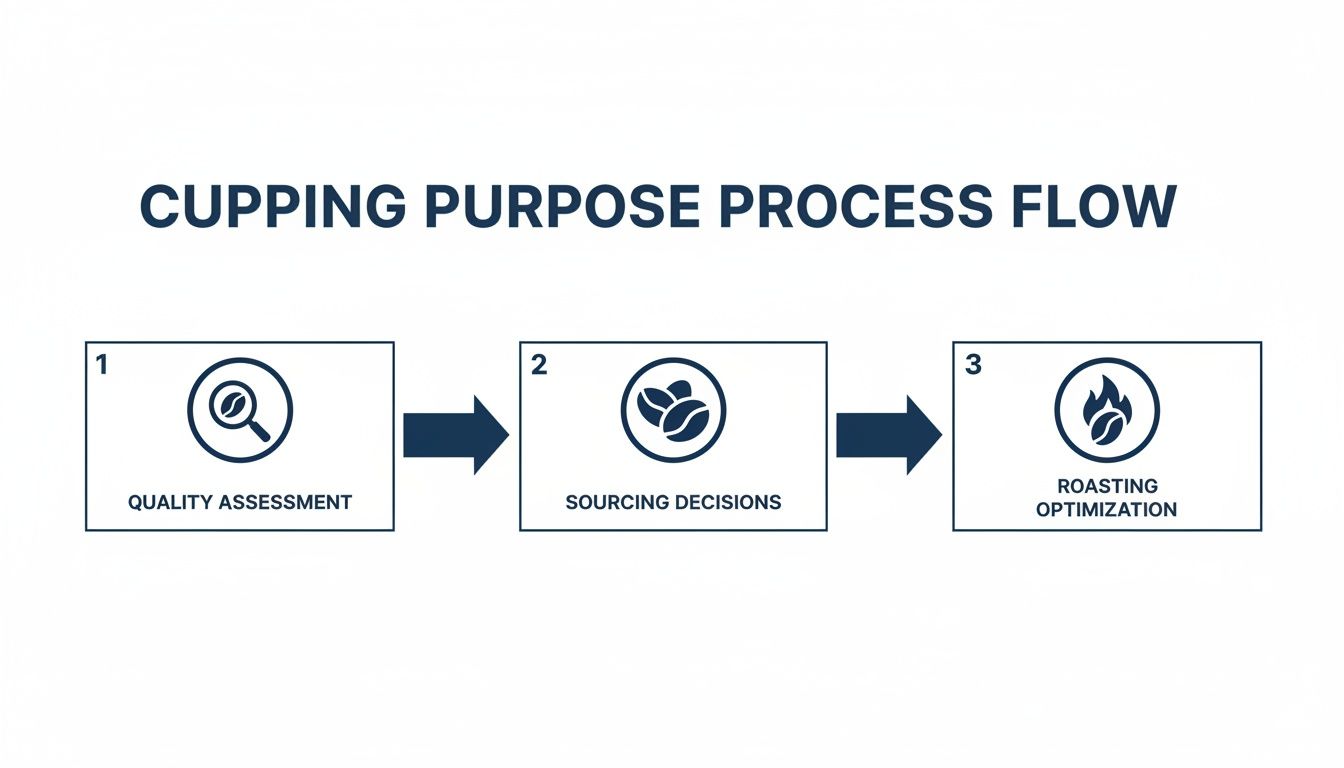
Every stage visualised here depends on this strict, repeatable protocol to deliver clear, reliable insights.
Breaking the Crust and Tasting
After the coffee has steeped for exactly four minutes, we get to one of the most satisfying moments in cupping: breaking the crust. You take a special cupping spoon and gently push the floating grounds away from the surface. As you do this, you lean in close and inhale deeply to catch the intense wave of aroma that rushes out. It’s an incredible sensory hit.
Once the crust is broken, any leftover grounds and oils are skimmed off the top to clean up the sample. Now, it's finally time to taste.
And tasting means slurping. It feels a bit silly at first, but that loud, sharp intake of air is non-negotiable. The goal is to spray the coffee across your entire palate, coating every taste bud from the tip of your tongue to the back of your throat. This technique lets you perceive the coffee's full spectrum of flavour, acidity, body, and aftertaste.
This standardised process has become the backbone of quality control for roasters like us here at Seven Sisters Coffee Co. It's this dedication to precision that helps maintain incredibly high standards across the UK's thriving café industry.
To keep their palates sharp, cuppers will cleanse with water between each sample. They also typically spit the coffee into a separate cup rather than swallowing it—a must when you’re evaluating dozens of samples and want to avoid a massive caffeine jolt and palate fatigue. It’s this disciplined, step-by-step approach that ensures every coffee gets the fair and thorough assessment it deserves.
How to Score Coffee Using the SCA Form
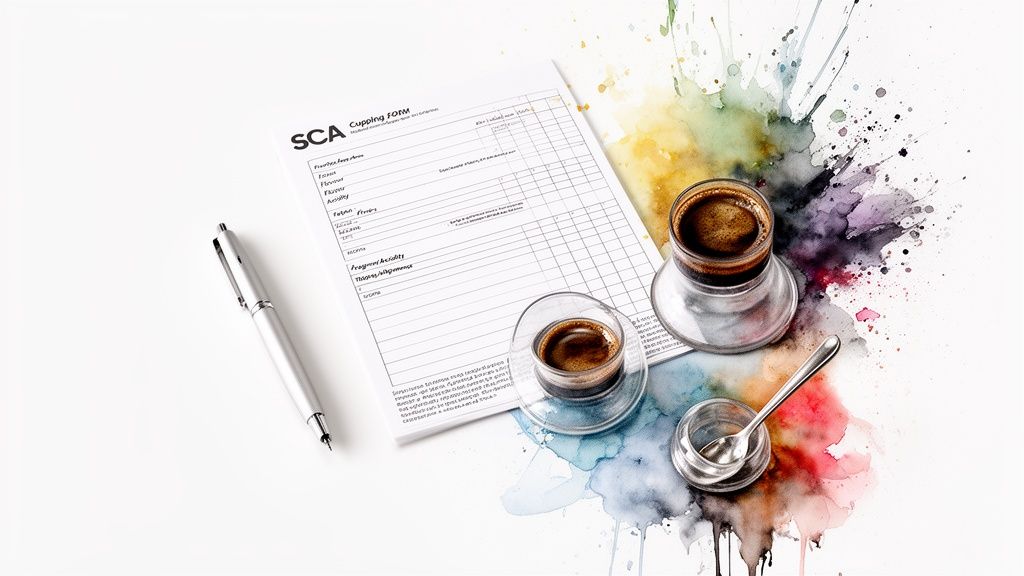
Once you’ve got the hang of the cupping protocol, the next step is learning how to score coffee like a pro. This is where the Specialty Coffee Association (SCA) cupping form comes in. It’s the industry-standard tool that provides a structured framework for turning your sensory experience into objective, measurable data. It demystifies the whole process, translating subjective tastes into a final score out of 100.
This common language is what allows a coffee buyer in East Sussex to talk turkey with a farmer in Colombia. You’re not just saying a coffee is "good"; you’re explaining why it’s good, using a shared vocabulary and scale. Let's break down the key attributes that cuppers evaluate on the form.
Deconstructing the Key Attributes
Each category on the SCA form represents a different dimension of the coffee's character, scored on a scale from 6 to 10. Tasters mark their scores for each attribute, and these are all tallied up to produce a final score.
Fragrance/Aroma: This is your first impression. It assesses the scent of the dry grounds (fragrance) and the wet grounds after adding hot water (aroma). You’re looking for appealing scents here – anything from bright florals and fruits to rich nuts or warm spices.
Flavour: This is the big one. Flavour represents the coffee’s main personality, combining taste and aroma to create the complete profile. A high score means the flavour is distinct, pleasant, and has layers of complexity.
Aftertaste: This evaluates the flavour and sensation that lingers on your palate after you’ve spat out or swallowed the coffee. A clean, sweet aftertaste that hangs around is what you want. A harsh or bitter finish? That’ll score poorly.
These initial categories capture the immediate sensory hit, but the evaluation goes much deeper into the coffee’s structure and mouthfeel.
Analysing Texture and Quality
Beyond the initial flavours, the SCA form pushes cuppers to analyse the coffee’s more subtle, textural qualities. These are often the attributes that separate a good coffee from a truly exceptional one.
Think of the SCA form as a report card for a coffee bean. It provides a detailed breakdown of its strengths and weaknesses, offering a complete picture of its quality and potential.
Take Acidity, for example. In coffee cupping, this isn't about sourness. It refers to a bright, vibrant, and sparkling quality that brings the brew to life. Think of the pleasant tartness of a green apple or a citrus fruit—that’s the kind of acidity that scores highly.
On the other hand, Body describes the physical sensation of the coffee in your mouth. It’s all about its weight and texture. Is it light and tea-like, or is it rich and creamy like full-fat milk? A coffee’s body should feel fitting for its origin and flavour profile.
Finally, Balance is the ultimate test of how all the other components—flavour, aftertaste, acidity, and body—play together. A well-balanced coffee is one where no single attribute shouts over the others, creating a harmonious and complete experience.
The entire evaluation process is popularised through SCA-certified events, which have seen a rise in UK participation across a landscape of over 12,229 coffee outlets. Roasters like Seven Sisters Coffee Co. use this detailed feedback to fine-tune profiles for their single-origin and blended coffees, ensuring each batch is roasted sustainably and to perfection. Explore more on the UK's coffee market trends, where dark roasts have seen a 43% year-on-year growth, showing how cupping helps identify coffees with bold bodies that score highly. You can discover more insights about the UK Coffee Market on stellarmr.com.
The Significance of the 80-Point Threshold
Once all the individual scores for attributes like flavour, acidity, and body are tallied up, they produce a final score. This number is a huge deal, as it determines a coffee's official classification.
Any coffee that scores 80 points or higher on the 100-point scale earns the title of Specialty Coffee. This is the quality benchmark that separates the world’s best coffees from commercial-grade beans. It's this high standard that roasters like Seven Sisters Coffee Co. strive for, ensuring every bean we source and roast meets this elite criteria. This framework empowers you to think critically about every cup you taste, moving beyond simple preference to a much deeper understanding of quality.
Developing Your Palate and Tasting Vocabulary
So, how do you get from simply saying a coffee is "nice" to confidently picking out notes of blackberry, jasmine, or even rich milk chocolate? That journey from a vague impression to a specific description is all about developing your palate and building a tasting vocabulary. It’s a bit like learning a new language—one that lets you perfectly describe what’s happening in your cup.
The more you taste and pay close attention, the better you’ll get at spotting the subtle nuances that make each coffee unique. It transforms your daily ritual into a genuinely exciting sensory exploration.
Your Map to Flavour: The Coffee Taster's Flavour Wheel
To help tasters navigate this complex world of flavour, the Specialty Coffee Association (SCA) created an indispensable tool: The Coffee Taster's Flavour Wheel. Think of it as your map for identifying and describing every imaginable flavour in a cup of coffee. It’s cleverly organised to take you from the general to the specific.
You start at the centre with broad categories like "Fruity," "Floral," or "Nutty/Cocoa." From there, you just follow the spokes outwards to find more precise words. For example:
- You might start with Fruity…
- Which leads you to Citrus Fruit…
- Which then branches into Grapefruit, Orange, or Lemon.
This structure stops you from feeling overwhelmed. Instead of grasping for words, the wheel gives you a framework to narrow down what you’re tasting and guides you toward the most accurate language. If you're keen to dig deeper into these descriptors, you can explore the common notes of coffee in our dedicated article.
The Flavour Wheel isn't a list of flavours that should be in your coffee. It's a universal reference that helps you name the flavours you are actually tasting, making your feedback specific and understood by others.
Connecting Flavours to Origins
Once you get comfortable with the flavour wheel, you'll start noticing patterns. Coffees from different parts of the world often have distinct and recognisable flavour profiles, all shaped by their unique terroir—the specific soil, climate, and altitude where the beans were grown.
Getting a handle on these regional characteristics is a massive step forward in training your palate. It adds context to what you're tasting and helps you guess what a coffee might be like before you even take a sip. For instance, the bright, almost tea-like floral notes of an Ethiopian Yirgacheffe are a world away from the rich, chocolatey character of a Brazilian Santos.
To help you build your tasting vocabulary, here’s a table that breaks down some common flavour profiles you might find from popular coffee-growing regions.
Common Flavour Profiles by Coffee Origin
| Origin | Common Acidity | Common Body | Typical Flavour Notes |
|---|---|---|---|
| Ethiopia | Bright, High | Light to Medium | Floral (Jasmine, Bergamot), Citrus (Lemon), Berry (Blueberry) |
| Colombia | Balanced, Medium | Medium, Smooth | Caramel, Milk Chocolate, Nutty (Almond), Red Apple |
| Brazil | Low | Heavy, Creamy | Dark Chocolate, Roasted Nuts (Peanut), Brown Sugar |
| Kenya | Very Bright, Tart | Medium, Juicy | Blackcurrant, Tomato, Grapefruit, Wine-like |
| Guatemala | Bright, Crisp | Full, Velvety | Milk Chocolate, Toffee, Green Apple, Orange |
| Sumatra | Low | Very Heavy, Syrupy | Earthy, Cedar, Dark Chocolate, Spices (Clove) |
This kind of knowledge empowers you to pinpoint exactly what you enjoy most. By learning to identify and describe these flavours, you can confidently explore new coffees, knowing what to look for and how to talk about your preferences. It’s the key to finding your favourite coffees and sharing that passion with others.
How to Host a Coffee Cupping at Home
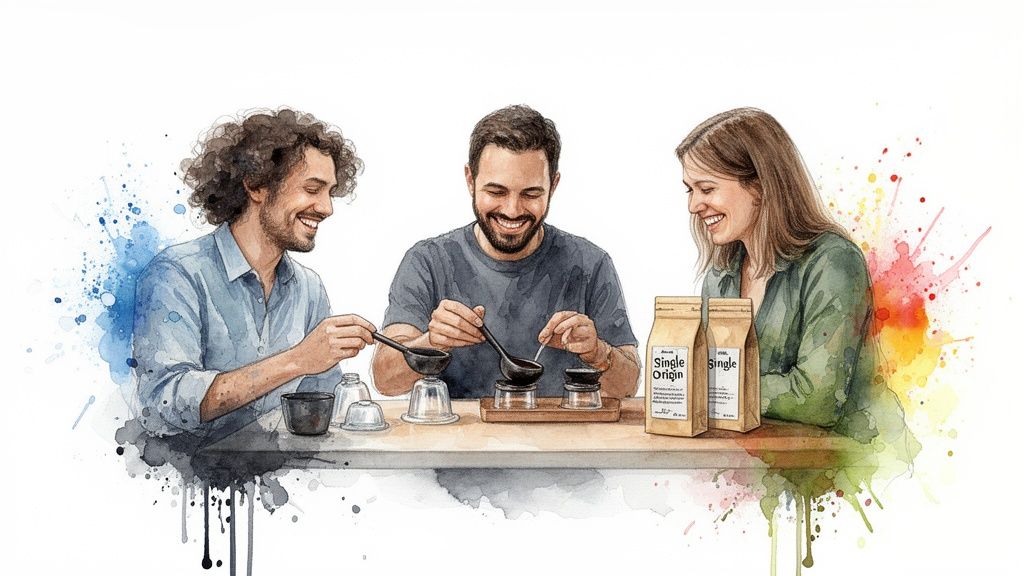
Feeling inspired to dive into the world of coffee cupping yourself? The great news is you don’t need a professional lab to get started. Hosting a cupping at home is a brilliant and surprisingly easy way to deepen your appreciation for coffee and share that experience with friends.
By simplifying the official protocol, you can transform what’s often a formal procedure into a relaxed, educational, and social activity. The focus isn't on scoring coffee like a pro, but on the joy of discovering new flavours together.
Gathering Your Essential Equipment
You can get going without any specialised gear. In fact, most of the essentials are probably already lurking in your kitchen cupboards. The main goal is consistency, so try to use matching items for each coffee you’re tasting to keep the comparison fair.
Here’s a simple checklist of what you'll need:
- Cupping Bowls: Any small, heatproof bowls or glasses of the same size are perfect. A capacity of around 200-250 ml is ideal.
- Cupping Spoons: Deep soup spoons will work just fine. You'll need one for each person, plus an extra one for skimming the crust.
- Coffee Grinder: A burr grinder is your best bet for a consistent grind size, which is key. For some great recommendations, check out our guide on finding the best coffee grinder for home use.
- Kettle and Scales: A kettle to heat your water and a set of digital scales to accurately measure your coffee and water are must-haves for consistency.
- Spit-cups and Rinsing Glasses: Provide cups for spitting (optional but helpful if you're tasting a lot!) and glasses of water for rinsing spoons and cleansing palates between samples.
With these simple tools, you are well on your way to organising a brilliant tasting session.
Choosing Your Coffees
The coffees you select are the stars of the show, so choose them thoughtfully to make the experience as interesting as possible. The trick is to pick beans with noticeably different flavour profiles—this will make it much easier for everyone to identify their unique characteristics.
For a memorable home cupping, aim for contrast. Tasting a bright, fruity Ethiopian coffee next to a rich, chocolatey Brazilian bean will create a clear 'aha!' moment for you and your guests.
A great way to start is by selecting two or three single-origin coffees from Seven Sisters Coffee Co. Reading the tasting notes on the packaging will help you pick beans with contrasting qualities, like a floral African coffee versus an earthy Sumatran one. This approach brilliantly highlights the impact of origin on flavour and makes for a much more dynamic tasting.
Guiding Your Guests Through the Experience
The most important part of hosting a home cupping is making sure your friends feel comfortable and engaged. Frame it as a fun exploration rather than a serious test. Start by explaining the basic steps simply: smell the dry grounds, then the wet aroma after adding water, and finally, taste by slurping.
Encourage everyone to share what they’re smelling and tasting, even if they can’t find the "right" words. There are no wrong answers here. It can be helpful to provide copies of the Coffee Taster's Flavour Wheel to give people a reference point and prompt discussion.
Above all, remind them that the goal is to have fun, learn something new, and enjoy some fantastic coffees together.
Got Questions About Coffee Cupping?
Even after breaking down the process, you might still be wondering about a few of the finer points. It's completely normal. To give you that final boost of confidence, I've answered some of the most common questions that pop up.
My goal here is to clear up any lingering confusion and make the world of coffee cupping feel totally accessible, whether you're just getting curious at home or starting to think like a pro.
Is Coffee Cupping Only for Professionals?
Absolutely not! While cupping is a non-negotiable tool for roasters, buyers, and anyone in quality control, it’s a genuinely rewarding practice for anyone who loves coffee.
Hosting a simplified version at home is a brilliant way to train your palate, figure out what flavour profiles you truly enjoy, and build a much deeper appreciation for the coffee you drink every day. Don't get hung up on formal scoring—just focus on the experience of tasting different coffees side-by-side and putting words to what you notice.
Why Do You Slurp the Coffee So Loudly?
That loud slurp isn't just for show—it serves a crucial purpose. When you slurp the coffee sharply, you aerate the coffee and spray it across your entire palate, hitting everything from the tip of your tongue to the back of your throat all at once.
This technique ensures all your taste buds get in on the action simultaneously. It’s the best way to perceive the coffee's full spectrum of flavours, from its bright acidity and body to its lingering aftertaste.
Think of it like a wine taster swishing wine around their mouth. The goal is maximum sensory exposure to unlock all the subtle notes that a simple sip might miss. It’s the key to a comprehensive evaluation.
Do You Swallow the Coffee During a Cupping?
In a professional setting, where a roaster might be tasting dozens of samples, cuppers almost always spit the coffee into a separate cup. There are a couple of solid reasons for this:
- To Avoid Palate Fatigue: Your senses can get tired and dull after tasting that many coffees. Spitting helps keep your palate fresh so your evaluations stay sharp and consistent from the first cup to the last.
- To Manage Caffeine Intake: Let's be honest, swallowing dozens of samples would lead to an overwhelming amount of caffeine. That makes it pretty difficult to stay focused and objective.
For a home cupping with just two or three coffees, feel free to swallow if you wish. But if you plan on tasting regularly, spitting is a great habit to get into.
Ready to explore a world of distinct flavours and find your perfect brew? At Seven Sisters Coffee Co, we source and roast exceptional single-origin coffees and unique blends, perfect for your next cupping session. Discover our freshly roasted collection and start your tasting adventure today at https://sevensisterscoffee.co.uk.