
What is a flat white: A Quick Guide to This Espresso Favourite

Walk into any decent coffee shop, and you'll see the flat white on the menu. But what exactly is it? Put simply, a flat white is an espresso-forward coffee that perfectly balances the intensity of the coffee with smooth, velvety milk. It’s made with a double shot of espresso and steamed milk, creating a seamless integration of flavours in a small ceramic cup.
Decoding the Perfect Flat White

So many people ask, "what is a flat white?" and the answer is all in its careful construction. Unlike a frothy cappuccino or a milk-heavy latte, the flat white is all about its intense coffee flavour and a uniquely silky mouthfeel. It gets there through a very specific combination of ingredients and technique.
It all starts with a double shot of espresso—or often a ristretto, which is a shorter, more concentrated shot. This gives you a powerful coffee base that won't get lost under the milk. Nailing this foundation is everything, and learning how to dial in your espresso ratio is one of the most important skills for any aspiring home barista.
The Secret is in the Texture
The real magic of a flat white, though, is in the milk. A good barista will steam the milk to create microfoam, a texture made of tiny, uniform bubbles you can’t even see. The result is something often compared to wet paint—it's glossy, smooth, and pours like a dream.
This microfoam is then poured carefully into the espresso, integrating from the bottom up. The idea is to blend the coffee and milk seamlessly, not to create distinct layers like you might see in other drinks. This gives you a 'wetter' coffee with just a thin, flat layer of foam on top, letting the rich notes of the coffee shine through in every single sip.
To pull it all together, here’s a quick summary of what makes a flat white, well, a flat white.
Flat White at a Glance Key Characteristics
This table breaks down the defining features of a genuine flat white, helping you quickly understand its core components.
| Characteristic | Description |
|---|---|
| Coffee Base | A strong double shot of espresso or ristretto. |
| Milk Texture | Steamed milk with a fine, velvety microfoam. |
| Ratio | Higher coffee-to-milk ratio than a latte. |
| Serving Size | Traditionally served in a smaller (5-6 oz) ceramic cup. |
| Flavour Profile | Intense coffee flavour with a smooth, creamy finish. |
In short, it’s a drink designed for those who truly love the taste of coffee but appreciate the creamy texture that perfectly steamed milk can bring.
The Journey of the Flat White from Down Under to the UK
Every great coffee has a story, and the tale of the flat white is one of friendly rivalry and a journey halfway across the world. Long before it became a fixture in British cafés, this drink was born in the buzzing coffee scenes of Australia and New Zealand during the 1980s. To this day, both nations passionately claim to have crafted the first one.
The flat white emerged as an answer to the overly frothy cappuccinos that dominated the era. Coffee lovers were craving something that put the espresso front and centre, where the milk complemented the coffee rather than drowning it. What they created was a smoother, more intense coffee experience that quickly became the drink of choice for connoisseurs Down Under.
From Antipodean Secret to London Sensation
For years, the flat white was a well-kept secret, cherished in the cafés of Melbourne, Sydney, and Wellington. Its trip to the UK wasn't exactly an overnight success story. The drink’s arrival was actually spearheaded by pioneering Aussie and Kiwi café owners who brought their coffee culture with them to London in the mid-2000s.
Talk about perfect timing. British coffee drinkers were just starting to look beyond the big chains, developing a real appetite for artisanal products with a clear story and superior flavour. The flat white, with its focus on high-quality espresso and skilled milk texturing, was the perfect fit. You can explore a broader range of these drinks in our guide to the different types of coffee drinks.
The Catalyst for a Coffee Revolution
The flat white was virtually unheard of in the UK until 2005, when a café named Flat White Soho opened its doors in London, specifically to showcase this Antipodean brew. Its success was immediate and staggering. Within just four years, the café was selling around 700 flat whites a day—a sure sign that the British public was ready for something new. Naturally, this caught the attention of the larger chains, who quickly added the drink to their own menus to meet the growing demand. You can read more about the flat white's impressive rise.
The flat white didn't just introduce a new drink to the UK; it helped usher in a new era. It became a symbol of the shift towards a more sophisticated, speciality coffee culture that values craftsmanship and flavour above all else.
This groundswell of interest helped fuel the independent coffee shop boom right across the country. The flat white wasn't just another item on the menu board; it was an emblem of change. It stood for a desire for better coffee, made with better beans, by baristas who genuinely understood their craft. Its journey from a debated origin Down Under to a beloved favourite in the UK is a real testament to its quality and undeniable appeal.
Flat White vs Latte: Unpacking the Key Differences
It's the question we hear all the time: "So, what is the difference between a flat white and a latte?" While they share the same basic ingredients—espresso and steamed milk—the drink you end up with is worlds apart. Getting to grips with these distinctions is the key to ordering the coffee you actually want.
The real answer comes down to three things: the ratio of coffee to milk, the texture of that milk, and the size of the cup it's served in. Think of it like this: a flat white is all about a strong, coffee-forward flavour wrapped in a velvety texture, whereas a latte is a much milder, milkier drink made for easy sipping.
To truly get what a flat white is all about, you have to look at the details. A latte usually has a lot more milk and a thicker layer of foam on top, which really dials down the espresso's intensity. In contrast, a flat white uses less milk and just a whisper-thin layer of glossy microfoam, letting the rich notes of the coffee take centre stage.
Ratio and Texture: The Defining Factors
The absolute core of the difference is the espresso-to-milk ratio. A flat white is built on a double shot of espresso in a smaller cup (around 5-6 oz), which gives it a much more punchy, intense coffee flavour. A latte, on the other hand, typically uses just a single shot in a much bigger cup, making it a far milkier and gentler drink.
Milk texture is the other half of the story. For a proper flat white, the milk is steamed into what we call microfoam—a silky, liquid-paint-like consistency. This fine foam integrates perfectly with the espresso, creating a seamless, velvety mouthfeel from the first sip to the last. Lattes, and especially cappuccinos, tend to have a more distinct, airy layer of foam that sits right on top.
If you're trying to perfect your milk steaming at home, our guide on how to make a latte has some great tips that apply here too.
A flat white is like a rich sauce where the coffee and milk are perfectly emulsified. A cappuccino is more like a layered dish, with a light, airy foam sitting distinctly on top of the liquid below.
This infographic brilliantly traces the flat white's journey from its disputed origins to its eventual takeover of the UK coffee scene.

You can see how the drink travelled from its Antipodean roots to become a staple in London's trend-setting cafés and, eventually, a firm favourite right across the country.
Comparing the Classics: Flat White, Latte, and Cappuccino
To lay it all out as clearly as possible, let’s break down the three most popular espresso-and-milk drinks side-by-side. This table should clear up any lingering confusion.
| Feature | Flat White | Latte | Cappuccino |
|---|---|---|---|
| Espresso | Double Shot | Single Shot | Single Shot |
| Milk Texture | Silky Microfoam | Steamed Milk | Thick, Dry Foam |
| Cup Size | Small (5-6 oz) | Large (8-12 oz) | Medium (6-8 oz) |
| Flavour | Strong & Coffee-Forward | Milky & Mild | Balanced & Foamy |
Ultimately, choosing between them is all down to what you're in the mood for.
If you love a bold, rich coffee experience where the espresso is the undisputed star of the show, the flat white is your drink. But if you prefer something softer, creamier, and more comforting, a latte will probably be more your speed.
How To Make The Perfect Flat White At Home
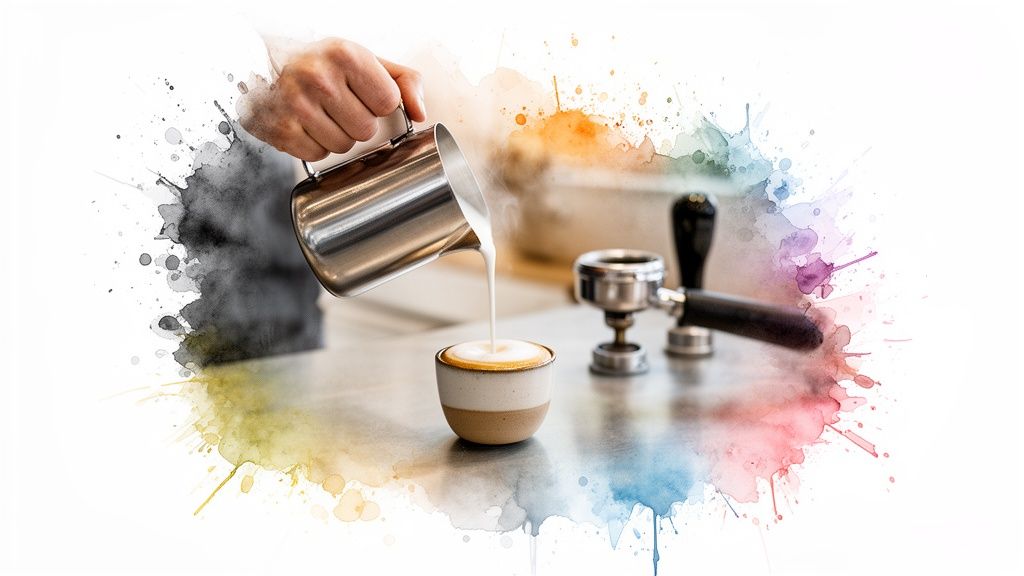
Ready to bring the café experience into your own kitchen? Making a proper flat white is an incredibly satisfying skill to learn. It really just comes down to nailing three key things: pulling a great espresso shot, steaming the milk just right, and bringing them together with a smooth pour.
Don't let the pro-level results fool you; this is absolutely achievable. With a bit of practice and the right equipment, you’ll be pouring drinks that rival your favourite coffee shop. Let's break it down.
Step 1: Pull A Perfect Espresso Shot
The heart of any great flat white is the espresso. For that signature bold flavour, you’ll want to pull a double shot of espresso. Better yet, try pulling a ristretto. A ristretto uses the same dose of coffee but half the water, giving you a sweeter, more concentrated base that really sings through the milk.
Using freshly roasted coffee beans is non-negotiable here. It’s the complex, nuanced flavours in high-quality beans that make a flat white truly special. Single-origin coffees are fantastic for this, as their unique character gets a chance to shine.
- Grind Fresh: Always use a burr grinder for a fine, even grind right before you brew.
- Dose and Tamp: Add the right amount of coffee to your portafilter and tamp it down with firm, level pressure. Consistency is key.
- Brew: You're aiming for an extraction time of around 25-30 seconds for a double shot. The flow should look like warm honey.
Step 2: Steam Silky Microfoam
This is where the magic happens. The goal isn’t stiff, bubbly foam but velvety microfoam—a glossy, liquid texture that looks and feels like wet paint. This silky consistency is what allows the milk to blend perfectly with the espresso.
Start with very cold milk in a stainless steel jug. Pop the steam wand just below the surface and flick it on. You want to hear a gentle hissing sound as you introduce a tiny bit of air.
Once the jug feels warm to the touch (about body temperature), raise it to submerge the wand deeper. This stops adding air and starts spinning the milk into a vortex, which breaks down any big bubbles and creates that gorgeous, silky texture.
The sweet spot for steamed milk temperature is between 55-65°C. Go any hotter and the proteins start to break down, killing the sweetness and texture. A milk thermometer is a brilliant tool for getting this right every time.
When you're done, give the jug a firm tap on the counter to pop any rogue bubbles, then a gentle swirl to keep everything perfectly mixed. For a deeper dive, check out our complete guide on how to steam milk at home and master the correct temperatures.
Step 3: Master The Pour
The final act is combining your espresso and milk. This takes a gentle, steady hand to get that beautiful integration that makes a flat white what it is.
- Start High: Begin pouring the steamed milk from a few inches above the cup. This lets the milk dive under the crema, mixing with the espresso base.
- Move Closer: As the cup starts to fill, bring the spout of your jug right down close to the surface of the coffee.
- Create The Art: Once you're close, the whiter microfoam will start to float on top. Now you can use a gentle wiggle or a forward push to create simple latte art, like a heart or a rosetta.
Mastering this final step takes practice, but it's the finishing touch that elevates your coffee to a true flat white. Focus on these three stages, and you'll be pouring beautiful, delicious drinks in no time.
Why the Flat White Conquered the UK Coffee Scene
The flat white isn’t just another drink on the menu; it’s a cultural cornerstone. Its journey from a niche import from Down Under to a high-street staple tells a much bigger story about how our tastes, and even our work lives, have transformed over the last two decades.
This drink landed in the UK at the perfect moment. Coffee lovers were growing tired of overly milky or frothy options and were starting to crave something that put the quality of the espresso front and centre. The flat white, with its robust, coffee-forward profile and luxurious velvety texture, was the perfect answer.
A Symbol of the New Economy
The drink’s rise became so intertwined with modern work culture that it sparked the term ‘Flat White Economy’. Coined by the Centre for Economics and Business Research (CEBR), the phrase perfectly captures the UK’s booming creative, digital, and media sectors.
These industries often blurred the lines between office and social space, with coffee shops becoming the new headquarters for a generation of freelancers and entrepreneurs. The research even found that London's flat white economy was projected to drive a cumulative growth rate of 15.4% over five years. You can read the full analysis of this trend here.
It shows just how much the flat white became a symbol of a modern, ambitious lifestyle—the go-to for people who value craftsmanship and quality, not just in their coffee but in their creative pursuits.
Meeting a Demand for Quality
Ultimately, the flat white’s success is a story about taste. It satisfies a more discerning palate, reflecting a nationwide shift towards appreciating better ingredients and skilled preparation. The drink is a brilliant showcase for high-quality beans, where the nuanced flavours of the coffee are complemented, not drowned, by the milk.
The flat white is more than a beverage; it's an experience. It represents a conscious choice to prioritise flavour and texture, aligning perfectly with the core principles of the speciality coffee movement.
This desire for superior quality is exactly what drives the demand for expertly crafted coffee. Understanding the fundamentals of what specialty coffee is helps explain why the flat white has found such a dedicated following. It’s a drink that respects the bean, and in turn, it has earned the respect of the nation.
Your Flat White Questions Answered
We’ve covered its history, how it's made, and its place in café culture, but a few questions always seem to pop up when people are really getting to know the flat white. This last section is all about tackling those common queries head-on, giving you clear, straightforward answers.
Think of this as a quick reference to lock in the key details and clear up any final bits of curiosity you might have about this fantastic drink.
Does a Flat White Have More Caffeine Than a Latte?
In most cases, yes. A flat white is nearly always built on a double shot of espresso, or sometimes a punchier ristretto. A standard latte in many UK cafés, on the other hand, is often made with just a single shot. This means the flat white packs a stronger coffee flavour and a bigger caffeine kick into its smaller cup.
That robust, coffee-forward character is exactly what has won it so many fans. This drink isn't designed to hide the espresso; it's made to show it off.
Can I Make a Flat White with Oat Milk?
Absolutely! In fact, oat milk is now an incredibly popular choice for flat whites, and for good reason. Its natural creaminess steams into a beautiful, glossy microfoam that behaves a lot like dairy milk, making it perfect for pouring latte art.
Other barista-grade plant-based milks, like soya or even some almond varieties, can work well too. Just keep in mind that their flavour profiles and how they react to steaming will be a bit different, so it’s worth experimenting to find what you like best.
What Is a Ristretto Shot?
A ristretto is essentially a ‘restricted’ espresso shot. You use the same amount of ground coffee as you would for a normal espresso, but you pull the shot with about half the amount of water. This technique results in a shorter, more concentrated shot that’s often sweeter and less bitter than its full-length counterpart.
Using a ristretto is a classic way to craft a flat white because it lets the coffee’s most delicate and interesting flavours shine right through the milk, creating a perfectly balanced and flavourful cup.
The flat white's journey to becoming a UK favourite has been nothing short of remarkable. It’s carved out a serious space for itself, with recent research showing that 15% of British coffee drinkers now choose it as their go-to drink. That's an impressive slice of the market, especially when you remember the drink was virtually unknown here less than 20 years ago. This shift towards smoother, less frothy drinks shows exactly why the flat white's perfectly balanced profile hits the spot for the UK palate. You can discover more UK coffee consumption insights to see just how popular it has become.
Ready to brew your own perfect flat white? At Seven Sisters Coffee Co, we source and roast exceptional beans that are ideal for creating a rich, velvety cup at home. Explore our range of freshly roasted coffee beans and taste the difference quality makes.