10 Surprising Uses for Coffee Grounds in Your Home and Garden 2026

Each day, millions of us across the UK brew our favourite coffee, but what happens to the grounds left behind? More often than not, they end up straight in the bin, contributing to household waste and landfill. However, those dark, aromatic remnants of your morning ritual are packed with untapped potential. From nourishing your garden to creating natural cleaning solutions, the humble coffee ground is a surprisingly versatile and sustainable resource waiting to be repurposed.
This guide moves beyond generic advice to provide ten practical and actionable uses for coffee grounds, transforming what was once waste into a valuable asset for your home, garden, and even your skincare routine. Before you brew your next cup of exceptional coffee, perhaps a single-origin delight from a premium UK supplier like Seven Sisters Coffee Co, let's explore how to give your used grounds a brilliant second act.
By embracing these methods, you can easily reduce your environmental footprint, save money, and discover the hidden value in your daily brew. We will delve into specific applications, offering straightforward instructions to help you get started immediately, ensuring you never look at spent coffee grounds the same way again.
1. Garden Soil Amendment and Natural Fertiliser
One of the most popular and beneficial uses for coffee grounds is enriching your garden soil. Spent grounds are packed with essential nutrients like nitrogen, potassium, and magnesium, which slowly release as they decompose. This process improves soil structure, aeration, and water retention, creating a healthier environment for your plants to thrive.
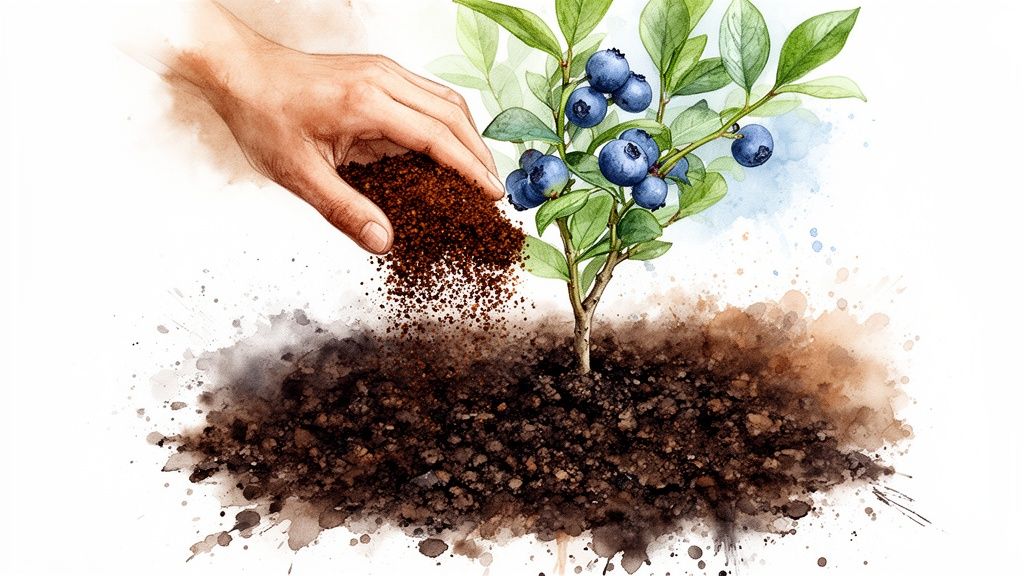
This sustainable practice is championed by organisations like the Royal Horticultural Society (RHS) and has been adopted by community gardens across the UK, who often partner with local cafés. As a key ingredient in enriching your garden, coffee grounds serve as an excellent natural fertilizer for grass and other plants, providing a gentle boost without harsh chemicals.
How to Use Grounds in Your Garden
To get the best results, follow these practical steps:
- Dry First: Always spread your used coffee grounds on a tray to dry completely before use. This prevents them from clumping together and developing mould, which can harm your plants.
- Compost Ratio: For a balanced compost heap, add coffee grounds as a 'green' nitrogen source. Aim for a ratio of no more than 20-30% coffee grounds to avoid making your compost overly acidic.
- Direct Application: You can sprinkle the dried grounds directly onto the soil around established plants and gently work them into the top layer. This method is particularly effective for acid-loving plants such as rhododendrons, azaleas, hydrangeas, and blueberries.
For a deeper dive into which plants benefit most, you can explore more about using coffee grounds for plants. Remember to only use well-composted grounds on delicate seedlings.
2. Natural Skincare and Beauty Products
Repurposing your coffee grounds into DIY skincare offers a sustainable way to invigorate your beauty routine. The grounds act as a natural exfoliant, buffing away dead skin cells, while their caffeine content helps to tighten skin, improve circulation, and reduce puffiness. Rich in antioxidants, they can also protect your skin from environmental damage, making them a popular ingredient in both homemade and commercial products.
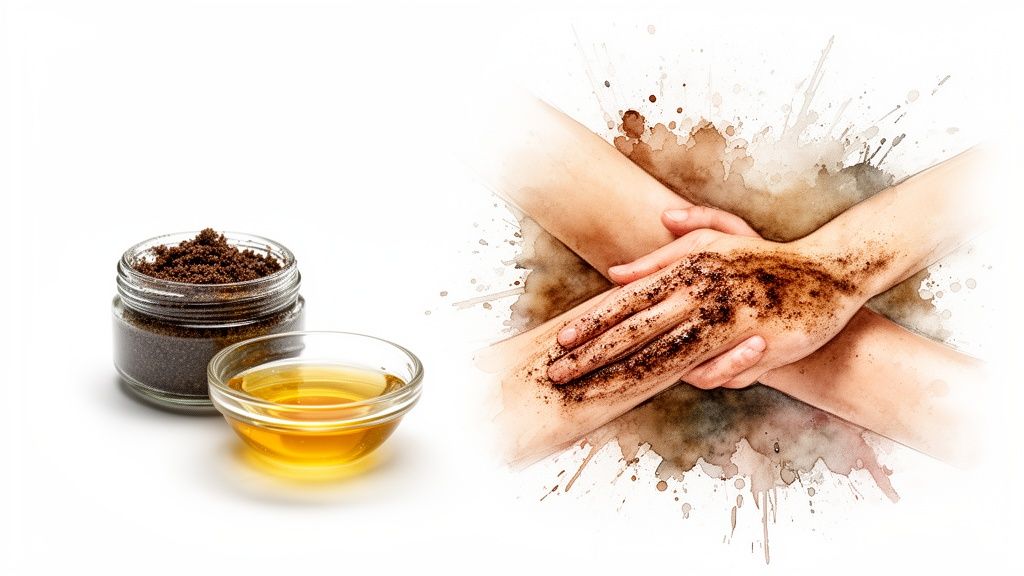
This trend has been embraced by both independent UK beauty creators on social media and major brands. You’ll find caffeine serums from premium lines like The Ordinary and Kiehl’s stocked in Selfridges, highlighting its recognised benefits. The effectiveness of your scrub starts with the quality of your coffee, and understanding the best coffee brewing methods can give you an insight into the properties of the grounds you're using.
How to Use Grounds for Skincare
To create a simple and effective body scrub, follow these steps:
- Mix Your Scrub: Combine cooled, used coffee grounds with a nourishing carrier oil like coconut oil or a humectant like honey to create a thick paste. For facial use, ensure the grounds are very fine to avoid irritation.
- Application: Apply the scrub to damp skin in gentle, circular motions for 1-2 minutes, paying extra attention to rough areas like elbows and knees. Use this treatment 1-2 times per week to prevent over-exfoliation.
- Storage: Store any leftover mixture in an airtight container in a cool, dark place. It is best used within two weeks to ensure freshness and prevent mould growth.
3. Natural Cleaning Products and Deodoriser
Beyond the garden, coffee grounds serve as a powerful, non-toxic cleaning agent and natural deodoriser. Their mildly abrasive texture is perfect for scrubbing stubborn grime from surfaces without scratching, while the organic compounds within them chemically neutralise odorous molecules instead of simply masking smells. This makes them a fantastic, zero-waste alternative to harsh chemical cleaners.
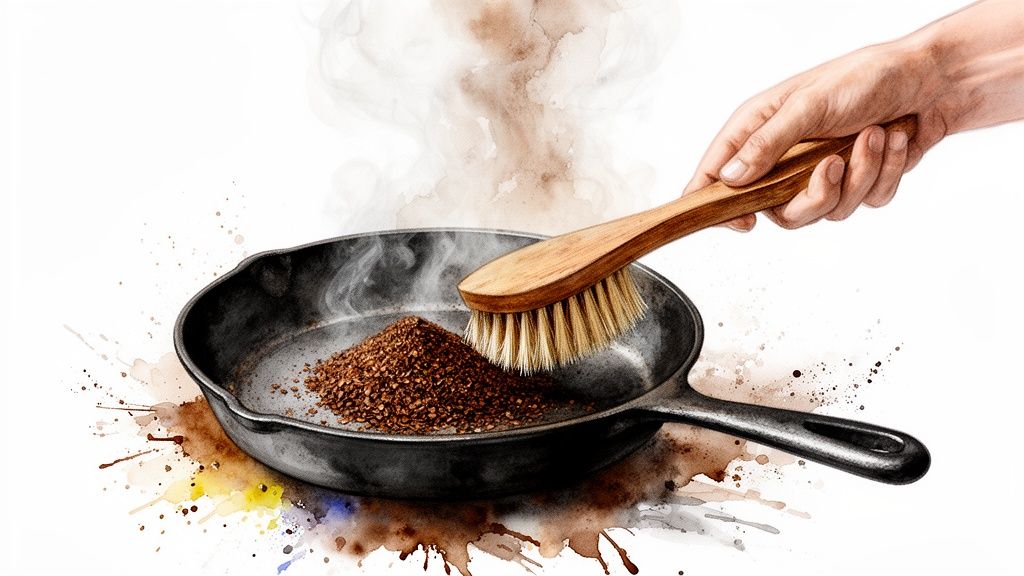
This sustainable cleaning hack is popularised by cleaning influencers like Mrs Hinch and championed by zero-waste initiatives across the UK. It’s a simple way to give your daily brew a second life, turning waste from your favourite speciality coffee beans into a practical household tool. Many eco-friendly cleaning brands even incorporate coffee extracts for their powerful deodorising properties.
How to Use Grounds for Cleaning and Deodorising
To effectively use coffee grounds in your cleaning routine, try these simple methods:
- Gentle Scouring Paste: Mix dried grounds with a small amount of washing-up liquid to create a paste. Use it to scrub pots, pans, grills, and even your kitchen sink. It's especially effective on tough, baked-on food.
- Refrigerator Deodoriser: Place a small, open container of dried coffee grounds in your fridge or freezer. They will absorb strong odours from foods like garlic, onions, and cheese. Replace the grounds every few weeks.
- Carpet Freshener: Sprinkle dry coffee grounds lightly over carpets or rugs, let them sit for 15-30 minutes, and then vacuum them up thoroughly. This helps to lift and neutralise lingering odours trapped in the fibres.
- Natural Hand Scrub: After chopping garlic or onions, rub a small amount of coffee grounds between your hands with a little soap to eliminate the strong smells before rinsing.
4. Natural Pest Control and Insect Repellent
One of the most practical uses for coffee grounds is as a natural pest deterrent for your garden and home. The abrasive texture, strong aroma, and residual caffeine create a powerful barrier against common pests like slugs, snails, and ants, which dislike crawling over the gritty surface. The compounds within the grounds, such as caffeine and diterpenes, are toxic to many insects but remain safe for humans, pets, and beneficial garden creatures like earthworms.
This eco-friendly pest management technique is widely endorsed by organisations like the Royal Horticultural Society (RHS) and is a popular method in UK allotments. It offers a sustainable alternative to chemical pesticides, protecting your plants without harming the local ecosystem. Beyond just coffee, there are many innovative approaches to sustainable pest management; for instance, these 10 effective natural pest control methods offer further inspiration for an organic garden.
How to Use Grounds for Pest Control
To effectively deter pests, apply your used coffee grounds with these tips in mind:
- Create a Barrier: Sprinkle a generous ring of dried coffee grounds around the base of plants susceptible to slugs and snails, such as hostas or lettuces. The coarse texture irritates their soft bodies, preventing them from reaching the leaves.
- Reapply Regularly: The repellent effect diminishes over time, especially after rainfall. Be sure to replenish your coffee ground barrier every one to two weeks, or after it has been washed away, to maintain its effectiveness.
- Mix into Soil: To deter root pests and ants, mix a small amount of dried grounds into the top few inches of soil before planting. This disperses the scent and texture throughout the root zone.
- Discourage Cats: The strong smell can also deter cats from using your garden beds as a litter box. A light scattering of grounds over the soil is often enough to send them elsewhere.
5. Natural Dye for Textiles and Crafts
Beyond the kitchen and garden, coffee grounds offer a creative outlet as a natural dye for textiles and crafts. The tannins and chromogenic compounds within the grounds produce a beautiful range of rich, earthy tones from soft tan to deep brown. This eco-friendly dyeing method is a fantastic alternative to synthetic chemicals and works wonderfully on natural fibres like cotton, linen, silk, and wool.
This sustainable practice is celebrated by textile artists like India Flint and championed within slow fashion and UK craft communities. It allows you to transform old garments or create unique patterns on new fabrics, giving them a warm, vintage-inspired appearance. The resulting colour depends on factors like the coffee-to-water ratio, steeping time, and even the origin of your coffee beans.
How to Use Grounds as a Natural Dye
To create your own coffee-dyed masterpiece, follow these simple steps:
- Prepare Your Fabric: For the most vibrant and lasting colour, pre-wash your fabric and treat it with a mordant like alum. This helps the fibres absorb and hold onto the dye more effectively.
- Create the Dye Bath: Steep a generous amount of used coffee grounds in hot water (around 60-80°C) for several hours, or even overnight, to extract the maximum colour. A good starting point is a 1:2 ratio of grounds to water.
- Dye the Material: Strain the liquid to remove the grounds, then submerge your fabric in the dye bath. Gently simmer for 1-2 hours, being careful not to boil, as high heat can damage delicate fibres like wool. For a deeper shade, let the fabric soak in the cooled dye for up to 24 hours.
Experimenting with darker roasts, such as those found in a robust espresso blend, will often yield a deeper brown hue. Remember to rinse the fabric in cold water after dyeing until the water runs clear, then allow it to air dry.
6. Animal Bedding and Livestock Feed Supplement
Beyond the garden and home, one of the more surprising uses for coffee grounds is in agriculture, specifically as animal bedding and a feed supplement. The fibrous texture of spent grounds makes them an absorbent, warm, and compostable alternative to traditional materials like straw or wood shavings. Their natural antimicrobial properties can also help maintain a healthier environment for livestock by reducing pathogenic bacteria.
In small, controlled quantities, dried grounds can be incorporated into feed for certain animals. This practice is being explored by regenerative agriculture advocates and small-scale farms in the UK, who find it offers a sustainable way to supplement diets. It’s a prime example of a circular economy, turning a waste product from our daily cup of speciality coffee into a valuable resource.
How to Use Grounds for Livestock
To safely introduce coffee grounds on your farm or smallholding, follow these guidelines:
- Create a Bedding Blend: Mix dried coffee grounds with straw or wood shavings at a ratio of approximately 1 part grounds to 4 parts traditional bedding. This creates an optimal blend for absorbency and comfort. Ensure the area is well-ventilated to prevent any mould.
- Limit Feed Supplement: If using as a feed supplement, introduce it very gradually. It should constitute no more than 1-2% of an animal's total diet. This is most commonly trialled with cattle and goats.
- Source Clean Grounds: Only use grounds from coffee brewed without chemical additives or synthetic flavourings. Partnering with a local roaster that provides pure, high-quality beans is ideal.
- Compost After Use: Once the bedding is spent, it can be added to your manure compost heap. Allow it to decompose for 6-8 weeks before applying it to your garden, creating a wonderfully nutrient-rich soil amendment.
7. Odour Control for Composting Systems
One of the most practical uses for coffee grounds is managing and neutralising smells within home composting systems. As a carbon-rich 'brown' material, spent grounds effectively balance the nitrogen-rich 'green' materials like food scraps and grass clippings. This balance is crucial for preventing the production of ammonia, which is the primary source of unpleasant odours in a compost bin.
The porous structure of coffee grounds also helps to aerate the compost pile, while beneficial microorganisms present in the grounds accelerate the decomposition process. This method is championed by UK-based initiatives like Zero Waste Week and is often included in local authority guidance for home composting, making it an approved and effective way to maintain a healthy, odour-free compost heap.
How to Use Grounds for Compost Odour Control
To successfully manage your compost and reduce odours, follow these straightforward tips:
- Layering Technique: Add your used coffee grounds in thin layers, alternating them with 'green' materials. This prevents clumping and ensures an even distribution of carbon and nitrogen throughout the pile.
- Maintain a Ratio: A good rule of thumb is to maintain a ratio of approximately one part coffee grounds to three parts other green and brown materials. This keeps the pile balanced without it becoming too acidic.
- Ensure Proper Moisture: Your compost should be moist, like a wrung-out sponge, but not waterlogged. The coffee grounds will help absorb excess moisture, but regular checks are still necessary.
- Aerate Regularly: Turn your compost pile with a garden fork at least once a week. This introduces vital oxygen, which aids the decomposition process and further prevents anaerobic, smelly conditions from developing.
By integrating this simple practice, you can turn food waste into nutrient-rich compost more efficiently. For a complete guide, you can learn more about composting coffee grounds and the benefits it offers.
8. Natural Deodoriser for Refrigerators and Freezers
One of the most practical uses for coffee grounds is as a powerful, natural deodoriser for your fridge and freezer. Unlike baking soda, which often just covers up smells, the porous nature of coffee grounds allows them to absorb and trap airborne particles that cause unpleasant odours. The nitrogen in the coffee also helps to neutralise strong smells from foods like fish, cheese, and onions, leaving a faint, pleasant coffee aroma instead.
This simple, zero-waste trick is a staple in many eco-conscious households and is frequently recommended by housekeeping experts as a chemical-free alternative to commercial air fresheners. It's a fantastic way to give your grounds a second life while keeping your appliances smelling fresh and clean. The subtle scent profile is a welcome change from synthetic products and hints at the complex notes of coffee you enjoy in your daily brew.
How to Use Grounds to Deodorise
To effectively banish bad smells from your fridge, follow these simple steps:
- Dry Completely: First, spread your used grounds on a baking tray and allow them to dry out fully. This is a crucial step to prevent mould from growing in the damp environment of a refrigerator.
- Choose a Container: Place the dried grounds in a small open bowl or, for a tidier solution, put them in a breathable pouch made from muslin cloth or even an old pair of tights.
- Strategic Placement: Put the container on a shelf in your fridge or freezer, preferably towards the back where it won't be easily knocked over.
- Regular Replacement: For the best results, replace the coffee grounds every few weeks, or whenever you notice their deodorising power starting to fade.
9. DIY Natural Face and Body Masks
One of the more luxurious uses for coffee grounds is creating your own natural skincare treatments. Spent grounds act as a gentle exfoliant while their antioxidant and anti-inflammatory properties can help reduce puffiness and improve circulation. When blended with nourishing ingredients like honey, yoghurt, or coconut oil, they form revitalising masks that leave your skin feeling smooth and refreshed.
This DIY approach aligns perfectly with the growing trend for chemical-free, sustainable beauty, popularised by natural skincare influencers and wellness communities. It's a fantastic way to create personalised skincare without the premium price tag, using ingredients you likely already have in your kitchen alongside your favourite freshly roasted coffee.
How to Create Your Own Coffee Masks
Follow these simple recipes to make an effective face or body mask at home:
- For Dry Skin: Mix 2 tablespoons of fine, used grounds with 1 tablespoon of honey and 1 tablespoon of coconut oil to create a deeply hydrating and exfoliating paste.
- For Oily Skin: Combine 2 tablespoons of grounds with 2 tablespoons of plain yoghurt and a squeeze of lemon juice. The yoghurt helps to balance oil production.
- For Sensitive Skin: Blend grounds with a generous spoonful of aloe vera gel for a soothing treatment that calms irritation, especially after sun exposure.
Apply your chosen mask to damp skin, massaging gently for a minute before leaving it on for 10-15 minutes. Rinse with lukewarm water and pat dry. For the best results, incorporate this into your routine once or twice a week.
10. Industrial-Scale Biofuel and Energy Production
Beyond the home and garden, one of the most innovative uses for coffee grounds is their role in industrial-scale energy production. At this level, vast quantities of spent grounds are transformed into renewable resources like biofuel and bioenergy. The high oil and residual sugar content in used grounds makes them a surprisingly efficient feedstock for creating biodiesel or bioethanol through advanced processing and fermentation.
This large-scale recycling demonstrates the true potential of the circular economy, turning a common waste product into a valuable energy source. Major projects, such as those converting grounds into biofuel in Colorado and research from the University of Nevada demonstrating its viability, showcase this technology in action. In the UK, some forward-thinking brewing companies are even exploring the production of biochar from grounds for carbon sequestration.
How Grounds Are Used for Energy
This industrial application supports a shift away from fossil fuels. Here’s how it typically works:
- Biodiesel Conversion: The oils within the coffee grounds are extracted and processed through a chemical reaction called transesterification to produce biodiesel, which can power vehicles and machinery.
- Bioethanol Production: The residual sugars can be fermented by microorganisms to produce bioethanol, a renewable fuel that can be blended with petrol.
- Direct Combustion: Dried grounds can be compressed into pellets or briquettes and burned in industrial boilers to generate heat and electricity, directly replacing coal or other fossil fuels.
This process is a core focus for many sustainable coffee companies looking to close the loop on their production waste and contribute positively to the environment. It represents a significant step towards reducing the coffee industry's carbon footprint.
Comparison of 10 Uses for Coffee Grounds
| Use / Item | Implementation Complexity 🔄 | Resource Requirements ⚡ | Expected Outcomes 📊 | Ideal Use Cases 💡 | Key Advantages ⭐ |
|---|---|---|---|---|---|
| Garden Soil Amendment and Natural Fertiliser | 🔄 Low — direct application or composting | ⚡ Low — spent grounds, mixing tools | 📊 Improved soil structure, slow N release, better water retention | 💡 Home gardens, acid-loving plants, community plots | ⭐ Low-cost, boosts microbial activity, reduces waste |
| Natural Skincare and Beauty Products | 🔄🔄 Medium — formulation & hygiene considerations | ⚡⚡ Medium — grounds, carrier oils, containers, storage | 📊 Exfoliation, improved circulation; cosmetic benefits, short shelf life | 💡 DIY scrubs, indie beauty brands, spa treatments | ⭐ Natural exfoliant, antioxidant-rich, microbead alternative |
| Natural Cleaning Products and Deodoriser | 🔄 Low — simple dry use or mixes | ⚡ Low — dried grounds, brushes, containers | 📊 Mild abrasive cleaning, real odour neutralisation; possible residue | 💡 Kitchen scrubbing, fridge deodorising, zero‑waste cleaning | ⭐ Non-toxic, biodegradable, inexpensive |
| Natural Pest Control and Insect Repellent | 🔄🔄 Low–Medium — scatter or brew applications; reapply after rain | ⚡ Low — grounds, periodic reapplication | 📊 Repels slugs/snails/ants; variable efficacy; best as deterrent | 💡 Organic gardens, small-scale pest management | ⭐ Chemical-free, doubles as soil amendment |
| Natural Dye for Textiles and Crafts | 🔄🔄 Medium — mordanting and heat processing | ⚡⚡ Medium — grounds in bulk, heat source, mordant (alum) | 📊 Earthy browns and tans; colour varies and may fade over time | 💡 Craft projects, slow-fashion, textile art | ⭐ Sustainable, unique tones, non-toxic dye |
| Animal Bedding and Livestock Feed Supplement | 🔄🔄 Medium — mixing bedding; controlled feed inclusion | ⚡⚡ Medium — bulk grounds, mixing materials, ventilation | 📊 Absorbent bedding, modest nutritional supplement; toxicity risk if excess | 💡 Small farms, poultry bedding, composting systems | ⭐ Cost-saving, compostable, antimicrobial benefits |
| Odour Control for Composting Systems | 🔄 Low — layer or mix into piles | ⚡ Low — regular supply of grounds | 📊 Reduced ammonia odours, improved C:N balance, faster decomposition | 💡 Home/community compost, municipal schemes | ⭐ Effective odour control, improves finished compost |
| Natural Deodoriser for Refrigerators and Freezers | 🔄 Low — place dried grounds in pouch or bowl | ⚡ Low — dried grounds, breathable pouch/container | 📊 Neutralises fridge odours for 2–4 weeks; subtle coffee aroma | 💡 Household refrigerators, zero‑waste homes | ⭐ Non-toxic, more neutralising than baking soda, cheap |
| DIY Natural Face and Body Masks | 🔄🔄 Medium — recipe mixing and skin-safety awareness | ⚡ Low — grounds plus common ingredients (honey, oil, yoghurt) | 📊 Exfoliation, reduced puffiness; customisable but short shelf life | 💡 Home skincare, budget DIY beauty routines | ⭐ Cost-effective, customisable, chemical-free |
| Industrial-Scale Biofuel and Energy Production | 🔄🔄🔄 High — processing, permits, technical expertise | ⚡⚡⚡ High — specialised equipment, consistent feedstock, logistics | 📊 Biodiesel/bioethanol, direct combustion or biochar; large waste reduction | 💡 Coffee producers, energy firms, circular-economy projects | ⭐ Scalable waste‑to‑energy, revenue potential, climate benefits |
Brew, Reuse, and Rethink Your Coffee Routine
From the rich, dark soil of your garden to the shine on your kitchen surfaces, the journey of your coffee beans doesn't have to conclude once your cup is empty. As we've explored, the humble coffee ground is a powerhouse of potential, a versatile resource that can transform household chores, beauty routines, and gardening practices. Moving beyond its role as a simple beverage by-product allows us to embrace a more circular, sustainable approach to our daily consumption.
The key takeaway is that with a little creativity, you can significantly reduce your household waste and get more value from every bag of speciality coffee you purchase. Instead of seeing spent grounds as refuse destined for the bin, this guide has hopefully reframed them as a valuable asset. Whether you’re enriching your compost with a nitrogen boost, creating a luxurious DIY body scrub, or naturally deterring garden pests, you are actively participating in a more eco-conscious lifestyle. These aren't just clever hacks; they are practical, actionable steps toward minimising your environmental footprint.
Putting Knowledge into Practice
The real value lies in integrating these ideas into your regular habits. To make this transition seamless, consider these next steps:
- Designate a Collection Spot: Set up a dedicated, airtight container next to your coffee maker. This simple act makes saving your grounds an effortless part of your morning ritual. Remember to use them or dry them within a few days to prevent mould.
- Start Small and Specific: Don't feel overwhelmed by the possibilities. Choose one or two uses for coffee grounds that resonate most with your lifestyle. If you're an avid gardener, focus on soil amendment. If you enjoy DIY projects, start with a simple cleaning scrub.
- Observe and Adapt: Pay attention to how the grounds perform. Does your acidic soil need balancing with lime? Is the scrub's texture right for your skin? Tailor the 'recipes' to suit your specific needs and environment for the best results.
Mastering these approaches does more than just save you money on fertilisers or cleaning products. It fundamentally changes your relationship with the products you consume. You begin to see waste not as an endpoint, but as a new beginning-a resource waiting for its next purpose. This mindset is at the core of sustainable living and aligns perfectly with the values of the speciality coffee community, which champions quality and care from farm to cup and beyond. By rethinking the lifecycle of your coffee, you honour the entire process and the people who made your daily brew possible.
Ready to start your journey with coffee that’s as rewarding to reuse as it is to drink? The rich, complex grounds from Seven Sisters Coffee Co are perfect for all these applications, ensuring you get a premium brew and a high-quality resource for your home and garden. Explore our full range of specialty coffees at Seven Sisters Coffee Co and make your next cup the start of a truly sustainable routine.