A Brewer’s Guide to the Main Types of Coffee
Welcome to our definitive guide on the types of coffee. If you think your choice is just ‘black or white’, get ready to have your world turned upside down. We're diving deep into the rich world of coffee's character, tracing its journey from its genetic roots as a bean all the way to its final, glorious form in your cup. Think of this as your roadmap to real flavour.
Your Journey Into the World of Coffee Starts Here
Embarking on a journey into the world of coffee can feel a bit like learning a new language. You see terms like 'single origin', 'roast profile', and 'Arabica' popping up on café menus and bags of beans, and it's easy to feel a little lost. But trust me, getting to grips with these concepts is the key to unlocking a world of incredible tastes and aromas. It's what turns a daily habit into a genuine experience.
This guide is designed for everyone, whether you're a curious beginner or a seasoned coffee lover looking to refine your palate. We'll break down the essential types of coffee, starting right at the beginning with the bean itself and following its path through roasting, blending, and brewing. By the end, you'll be able to navigate any coffee menu with confidence and know exactly what you’re looking for. For those truly passionate about quality, you can learn more about what sets apart the best beans in our article on what is specialty coffee.
Understanding the Coffee Landscape
The UK's coffee scene has changed dramatically. I remember when, back in the early 2000s, espresso-based drinks first started to challenge the reign of instant coffee. Fast forward to today, and Britons drink around 98 million cups of coffee every single day, with a massive and growing demand for high-quality, whole-bean, and speciality roasts. This isn't just a trend; it's a nationwide shift towards appreciating the finer details in our daily cup.
This concept map breaks down the three core stages that define the coffee you end up drinking.
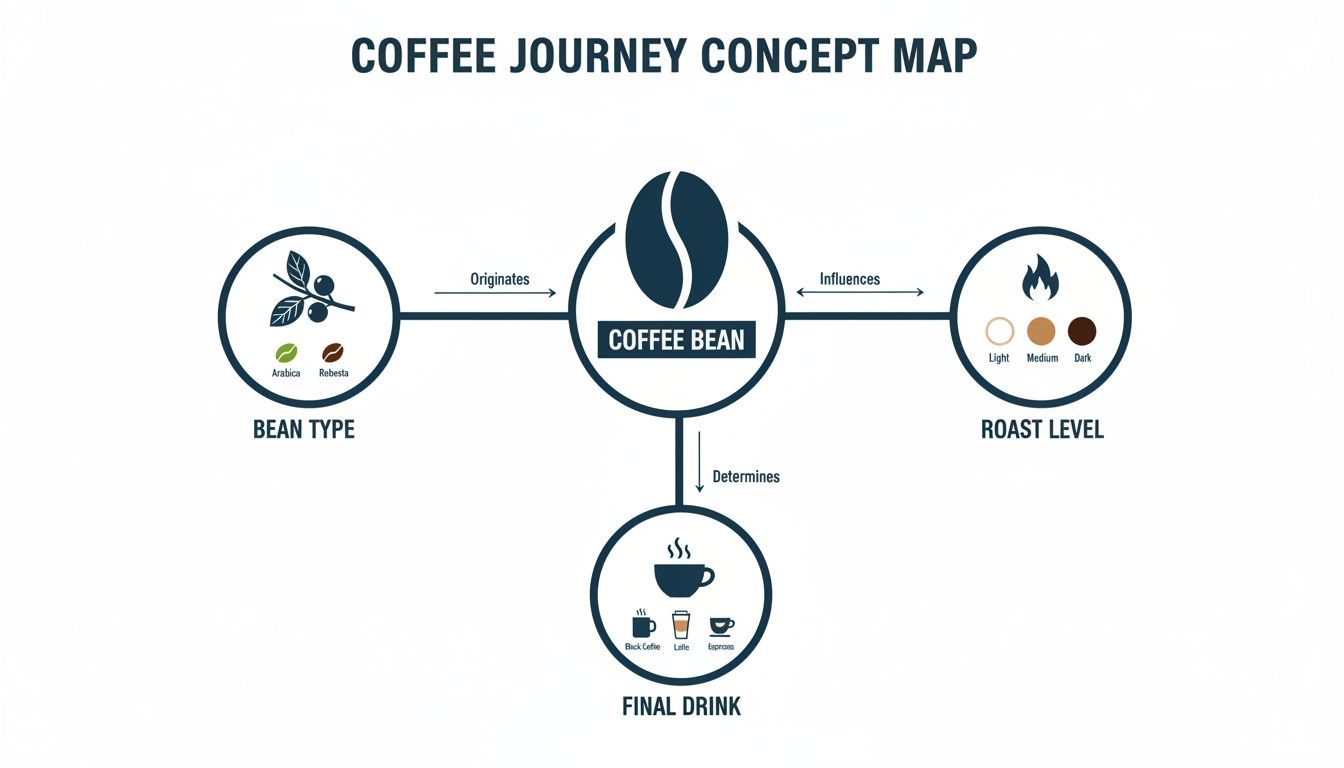
As the map shows, the journey from a coffee cherry to your mug is shaped by crucial decisions at each stage—the bean's origin, the roast's intensity, and the brewing method. Each one has a profound impact on the final flavour. For anyone thinking of turning their passion into a profession, getting the right setup is vital, as this guide on essential coffee shop equipment makes clear.
Meet the Two Titans of Coffee: Arabica and Robusta
At the heart of every coffee you’ve ever tasted are two dominant species, two titans of flavour that shape the entire industry: Arabica and Robusta. Think of them not just as different types of beans, but as distinct personalities. Getting to know them is the first real step towards understanding what's in your cup.
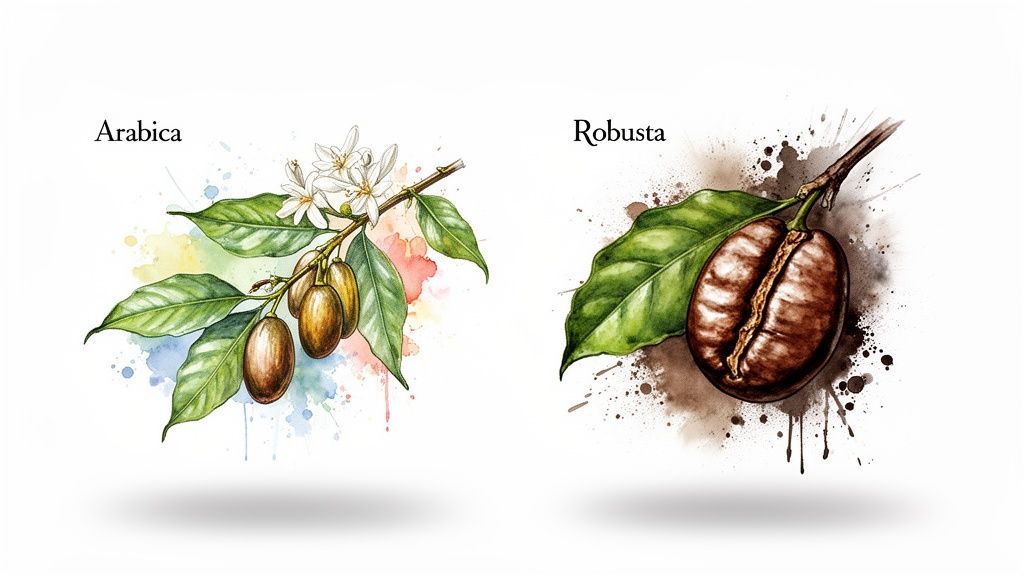
Arabica is the refined artist—complex, aromatic, and celebrated for its bright acidity and nuanced notes of fruit and flowers. It’s the species that makes up over 60% of the world’s coffee production and is prized by many for its sophisticated, almost wine-like qualities.
Then you have Robusta, the bold powerhouse. It’s strong, deep, and known for its rich crema, classic chocolatey profile, and a significantly higher caffeine kick. If Arabica is a fine wine, Robusta is a dark, punchy ale, bringing intensity and body to the table.
Arabica: The Aromatic Aficionado
Arabica beans are delicate. They demand very specific growing conditions to thrive, preferring high altitudes, consistent rainfall, and stable, mild temperatures. This sensitivity is precisely what gives them their complex and desirable flavour profiles.
Because they are more challenging to cultivate, Arabica beans generally command a higher price. They’re also physically distinct, typically oval in shape with a curved centre crease. Their lower caffeine content (averaging 1.5% by weight) and higher sugar levels contribute to a smoother, sweeter, and more aromatic brew with less bitterness.
"When you taste a coffee with bright, fruity, or floral notes, you are almost certainly experiencing the character of a high-quality Arabica bean. Its complexity is what makes the world of speciality coffee so endlessly fascinating."
The world of Arabica is vast, containing countless sub-varieties, or cultivars, each with a unique taste. Two of the most famous are:
- Typica: One of the oldest and most important cultivars, known for its clean, sweet, and complex cup.
- Bourbon: A natural mutation of Typica, celebrated for its buttery sweetness and rich chocolate undertones.
This incredible diversity within a single species is what allows roasters to source beans with such specific and unique characteristics.
Robusta: The Bold Contender
True to its name, Robusta is a much hardier plant. It can grow in hotter climates and at lower altitudes, and it's far more resistant to disease. This resilience makes it easier and cheaper to produce, and it accounts for most of the remaining 30-40% of global coffee production.
Robusta beans are typically smaller and more circular than Arabica, with a straight centre crease. Their defining characteristic is a powerful, bold flavour often described as rubbery or chocolatey, with a full body and very low acidity.
The key difference lies in its chemical makeup. Robusta packs nearly double the caffeine of Arabica (averaging 2.5% or more by weight) and contains less sugar, resulting in a stronger, more bitter, and less aromatic coffee. This high caffeine content also acts as a natural pest repellent, contributing to the plant's robust nature. To really appreciate the bright, nuanced flavours typical of high-quality Arabica, you could explore a superb Costa Rican coffee, which showcases the species' potential for clean and vibrant notes.
To help you see the differences side-by-side, here’s a quick breakdown of what sets these two coffee giants apart.
Arabica vs Robusta At a Glance
| Characteristic | Arabica | Robusta |
|---|---|---|
| Flavour Profile | Sweet, soft, fruity, floral | Bold, strong, chocolatey, rubbery |
| Acidity | High | Low |
| Body | Lighter | Fuller, more viscous |
| Caffeine Content | ~1.5% by weight | ~2.5% or more by weight |
| Sugar Content | High | Low |
| Bean Shape | Oval | Circular |
| Growing Altitude | High (600+ metres) | Low (0-600 metres) |
| Cost | Generally higher | Generally lower |
This table makes it clear just how different their profiles are, which naturally leads to them being used in very different ways.
How They Are Used
Understanding these two species helps explain why certain coffees are chosen for specific drinks. 100% Arabica blends are sought after for filter coffee methods like pour-over or cafetière, where their delicate aromas and bright acidity can be fully appreciated.
Robusta, on the other hand, is a cornerstone of traditional Italian espresso blends. Its ability to produce a thick, stable crema is highly valued, and its bold flavour provides a powerful base that cuts through milk in drinks like cappuccinos and lattes. While often used in instant coffee, high-quality Robusta can add depth and punch to a well-crafted blend.
Decoding Single Origin Beans vs Expert Blends
Now that we’ve got a handle on the core personalities of Arabica and Robusta, let’s look at how these coffees actually make their way to you. When you’re browsing for beans, you’ll typically run into two main categories: single origin and blends. The easiest way to think about them is as solo artists versus a skilled orchestra.
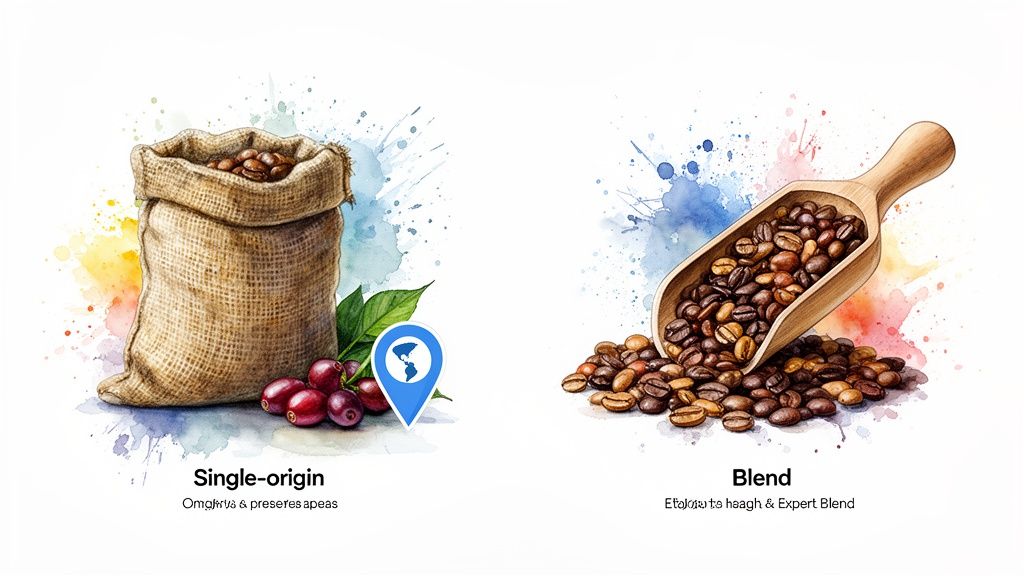
A single-origin coffee is the ultimate expression of place. It's a solo performance, showcasing the pure, unadulterated character of beans from one specific farm, region, or cooperative. Just like a fine wine has its ‘terroir’, so does coffee; the unique combination of soil, altitude, and climate gives it a distinct flavour profile that simply can't be replicated anywhere else. This is where you find the truly unique tasting notes that coffee connoisseurs get excited about.
This means a single-origin coffee from Ethiopia might burst with bright, fruity notes of blueberry, while another from Sumatra could offer deep, earthy tones of dark chocolate and cedar. These coffees are all about celebrating purity and distinctiveness.
Single Origin: The Solo Artist
The real magic of a single-origin coffee is its ability to tell a story. Each cup is a snapshot in time, reflecting a specific harvest and a particular set of environmental conditions. Because this unique character is the star of the show, single-origin beans are often best enjoyed with filter brewing methods like a V60 or French press. These methods gently coax out the flavour, allowing all those delicate and complex notes to shine without being overpowered.
They are perfect for drinkers who love exploring diverse and sometimes surprising flavours. To taste this for yourself, you can explore a curated selection of some of the world's most interesting coffees in our single-origin coffee beans collection.
Expert Blends: The Orchestra
If single origin is the solo artist, then a blend is a masterfully conducted orchestra. Here, our expert roasters act as the conductor, skillfully combining beans from different origins to create a specific, balanced, and consistently delicious flavour profile. The goal isn't to spotlight one particular note but to create a harmonious and well-rounded experience.
Blending is an art form. It's about taking the best qualities from different beans—the body of a Brazilian, the acidity of a Colombian, the sweetness of an Ethiopian—and weaving them together to create something greater than the sum of its parts.
This is exactly why blends are often the go-to for espresso. A great espresso requires a careful balance of sweetness, acidity, and body, with a rich crema on top. Blending allows roasters to hit this balance time and time again, ensuring every shot you pull is as good as the last. They’re designed to be reliable, comforting, and perfectly suited for milk-based drinks like lattes and cappuccinos.
So, Which One Should You Choose?
Honestly, it all comes down to what you’re looking for in your cup and how you plan to brew it. Your decision really hinges on your personal taste and your coffee-making routine.
- Choose Single Origin if: You love variety, enjoy exploring distinct and vibrant flavours, and mostly use filter brewing methods.
- Choose a Blend if: You value consistency, prefer a balanced and well-rounded flavour, and mostly make espresso or milky drinks.
Ultimately, there is no right or wrong answer here. The best way to learn what you love is simply to taste them side-by-side. Exploring both worlds is the most rewarding way to continue your coffee journey.
How Roasting Unlocks Unique Coffee Flavours
If the coffee bean is a raw ingredient brimming with potential, then roasting is the art form that coaxes out its soul. This is where the real magic happens, turning dense, green, grassy-smelling beans into the wonderfully aromatic, brittle, and brown gems we all recognise and love. The roast profile is, without a doubt, one of the biggest factors shaping the final taste in your cup.
Think of it like toasting bread. A lightly toasted slice still tastes a lot like the original loaf. But as you leave it in longer, the flavour changes, becoming less about the grain and more about that distinct ‘toasted’ character. Coffee roasting follows the same logic; it’s a delicate dance between preserving the bean's inherent origin flavours and introducing new ones created by the heat itself.
This transformation is driven by a series of complex chemical reactions. As the beans heat up, sugars and amino acids combine in what’s known as the Maillard reaction—the very same process that gives a seared steak or freshly baked bread its delicious browning and irresistible flavour. This process develops hundreds of new aromatic compounds, fundamentally changing the coffee from the inside out.
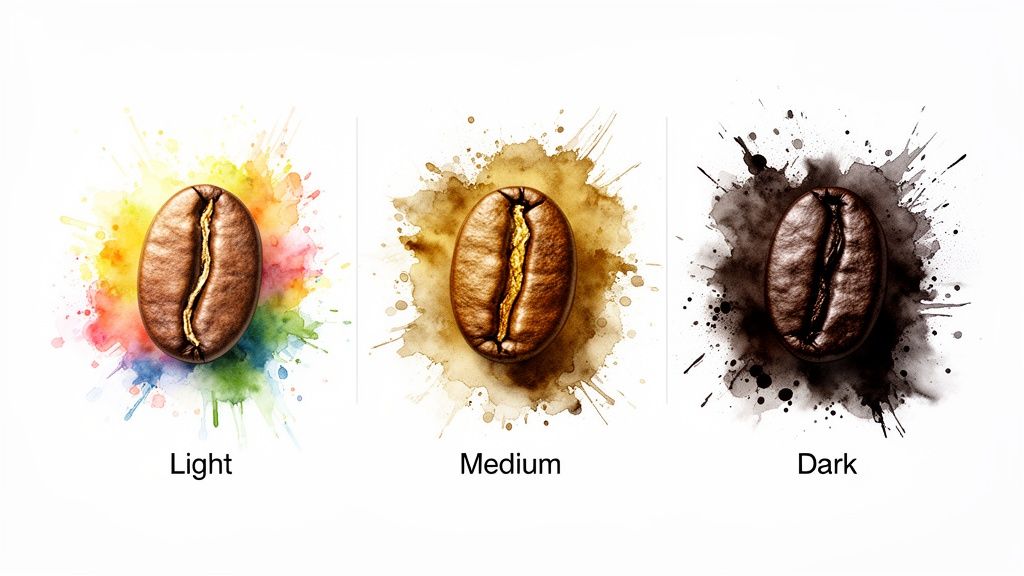
Light Roasts: The Bean's True Character
A light roast is all about celebrating the bean's origin. The roaster’s goal here is to develop the coffee just enough to make it soluble and delicious, without letting the "roast" flavour dominate. These beans are typically a pale, cinnamon-brown colour, with no oil on the surface.
Because they’re roasted for a shorter time, they hang onto more of their original characteristics. This means you’ll experience a brighter acidity, a lighter body, and a vibrant, often complex flavour profile. Expect bright, delicate notes of fruit, flowers, or citrus. Light roasts are absolutely perfect for filter methods like a pour-over or AeroPress, which really let their nuanced flavours sing.
Medium Roasts: The Perfect Balance
Medium roasts are the crowd-pleasers of the coffee world, striking a fantastic balance between the bean’s origin character and the flavour developed during roasting. Cooked a little longer than light roasts, these beans are a solid medium brown and still rarely have an oily surface. They offer a more balanced flavour profile with less sharp acidity.
In a medium roast, the bright, acidic notes of a light roast begin to mellow out, making way for deeper notes of caramel, nut, and chocolate. The body feels fuller, creating a smoother and more rounded cup. This versatility makes medium roasts a superb choice for a huge range of brewing methods, from a classic cafetière to your everyday drip coffee machine.
"A great medium roast allows you to taste both the unique terroir of the coffee's origin and the skilful craft of the roaster. It's a harmonious dialogue between the bean and the flame."
In the UK, different generations often gravitate towards different types of coffee and roast profiles. For instance, data reveals that older consumers are the most habitual coffee drinkers, with 40% of those aged 50–64 drinking coffee several times a day. Younger drinkers, while consuming fewer cups, show a stronger interest in speciality roasts and unique flavour profiles, driving demand for light and medium-roasted single-origin beans.
Dark Roasts: Bold and Rich Flavours
When you venture into dark roast territory, the flavour profile shifts dramatically. These beans are roasted until they’re dark brown or nearly black, often with a visible sheen of oil on their surface. At this stage, the roasting process has caramelised more of the sugars and brought the natural oils to the forefront.
Here, the original flavours of the bean are almost entirely replaced by the characteristics of the roast itself. You can expect a heavy body, low acidity, and bold, deep flavours like dark chocolate, burnt caramel, and even a touch of smoke. Dark roasts are the traditional choice for espresso, as their robust flavour stands up well to milk and helps create that rich, thick crema we all look for.
To dig even deeper into this, check out our guide where coffee roasting profiles are explained in much more detail.
Coffee Roast Profiles and Flavour Characteristics
To help you choose your next coffee, here’s a quick summary of how the roast level shapes the final cup. This table breaks down what you can expect from each profile.
| Roast Level | Flavour Profile | Acidity | Body | Best For |
|---|---|---|---|---|
| Light | Delicate, bright, fruity, floral | High | Light | Pour-over, AeroPress, filter coffee |
| Medium | Balanced, sweet, nutty, chocolatey | Medium | Medium | Cafetière, drip, all-round use |
| Dark | Bold, rich, smoky, bittersweet | Low | Heavy | Espresso, Moka pot, French press |
Ultimately, the best roast is the one you enjoy the most. Don't be afraid to experiment with different profiles to discover what truly excites your palate. Each level offers a completely different, yet equally valid, coffee experience.
Navigating the Modern UK Coffee Menu
Walking into a coffee shop today can feel like trying to crack a code. With a menu full of terms like Flat White, Americano, and Cappuccino, it’s easy to feel a little lost. This guide is your key to ordering with total confidence, breaking down the most popular coffee drinks you'll find across the UK.
We’ll dig into what actually goes into these espresso-based favourites, exploring the subtle but crucial differences in milk textures and coffee-to-milk ratios that give each drink its unique identity. Getting your head around these distinctions is the first step to finding your perfect cup.
The popularity of these types of coffee is tied directly to the UK's booming café culture. An incredible 80% of UK adults pop into a coffee shop at least once a week, with 16% visiting every single day. This daily ritual, dominated by milky drinks like lattes and flat whites, has completely reshaped what we drink and what we try to make at home.
Espresso-Based Favourites
At the heart of almost every drink on the menu is espresso—a small, potent shot of coffee brewed by forcing hot water through finely-ground beans at high pressure. It’s the foundation for everything else.
- Espresso: The purest expression of coffee. Served as a single or double shot, it’s intense, rich, and crowned with a fine, reddish-brown foam called crema. Think of it as the soul of the coffee bean, highly concentrated.
- Americano: Simple, yet so satisfying. It’s just an espresso shot topped up with hot water, giving you a larger drink with a strength similar to filter coffee but with that unmistakable espresso character.
- Long Black: Often mistaken for an Americano, but the technique is different. Here, the espresso shot is poured over the hot water, a small change that cleverly preserves more of that delicate crema on top.
The Art of Milk and Foam
When you introduce steamed milk, a whole new world of flavour and texture opens up. The way the milk is steamed, frothed, and poured is a true craft, creating the distinct personalities of the UK’s most-loved coffees.
The real magic—and the difference between a Latte, Cappuccino, and Flat White—all comes down to the texture of the milk and how much of it is used. It’s a subtle art of balancing foam, liquid, and the punch of the espresso.
Let's break down these milky marvels:
- Latte: The smoothest and milkiest of the trio. A latte starts with an espresso shot, followed by a generous pour of steamed milk and just a thin layer of foam on top. It’s creamy, gentle, and really lets the sweeter notes of the milk shine.
- Cappuccino: A classic drink of thirds. Traditionally, it's equal parts espresso, steamed milk, and a thick, airy cap of foam. This gives it a much more textured, foam-forward experience with a stronger coffee kick than a latte.
- Flat White: Hailing from Down Under, this drink has taken the UK by storm. It’s built on a double shot of espresso and topped with a thin layer of velvety microfoam (steamed milk with tiny, silky bubbles). With less milk and foam than a latte, it delivers a powerful coffee flavour with a smooth, luxurious texture.
Of course, the café experience is also about making you want to come back. Many shops use clever coffee shop loyalty programs to turn a one-off visit into a regular habit.
Brewing At Home
Beyond the café, plenty of us prefer to be our own barista. Two of the most popular manual methods create completely different results, so it pays to know which one suits your taste.
- French Press (Cafetière): This is an immersion method where coarse coffee grounds steep in hot water before a plunger pushes them to the bottom. It produces a full-bodied, robust cup with a rich texture, making it a fantastic match for medium to dark roasts.
- Pour-Over (V60): This is a filtration method where you pour hot water over coffee grounds sitting in a paper filter. The result is a clean, bright, and nuanced cup that brilliantly highlights the delicate, complex flavours of light-roast, single-origin beans.
Choosing the right beans and roast is key to getting the best out of whichever method you use. And if you're keen to dive deeper into the world of coffee drinks, check out our complete guide to the different types of coffee drinks.
How to Choose the Right Coffee for You
Now that we’ve covered the ground from bean types to brewing styles, it’s time to bring it all together. Choosing the right coffee isn’t about finding one single "best" bag. It’s about creating a perfect match between the beans, the roast, your personal taste, and the brewer you use every morning.
It’s a lot simpler than it sounds. You just need to ask yourself a couple of key questions to cut through the noise and find the coffee that feels like it was made just for you.
Matching Coffee to Your Taste and Brewer
First things first, what flavours do you actually enjoy? Think about it. Are you someone who craves a bright, clean, almost zesty cup, maybe with hints of fruit or flowers? Or do you lean towards something rich, deep, and comforting, with classic notes of chocolate and nuts? Your answer here is the biggest clue you have.
Next, consider your hardware. What’s your go-to brewing method? A pour-over dripper like a V60 is designed to highlight delicate, subtle notes. A full-immersion French press creates a heavy, robust body. An espresso machine demands a balanced but bold profile that can stand up on its own or cut through milk. For the best results, your bean and your brewer need to be working in harmony.
To make it easy, here are a few practical recommendations based on what you might be looking for:
-
For a clean, vibrant cup (V60/Filter): If you love exploring unique and surprising flavours, a light-roast single-origin coffee is your best bet. Origins from Africa, like Ethiopia or Kenya, are famous for their bright acidity and complex fruitiness—qualities that really shine in a pour-over.
-
For a bold, classic espresso: Want a powerful shot that makes a perfect latte or flat white? One of our dark-roast coffee blends is exactly what you need. They are expertly crafted for balance, consistency, and that rich, chocolatey flavour that just works.
-
For a rich, full-bodied brew (French Press): The cafetière is a classic for a reason, and it pairs beautifully with medium to dark roasts. A single-origin from Brazil or one of our well-balanced blends will give you that comforting, full-bodied cup with low acidity you're looking for.
"The perfect coffee is a conversation between your palate and your brewing method. When you align a bean's character with the strengths of your brewer, you unlock its full potential and create a truly exceptional cup, every single time."
And for those who love the ritual and flavour of coffee but would rather skip the caffeine, making the right choice is just as important. Our range of Swiss Water decaffeinated coffee ensures you never have to compromise. You get all the flavour you could want, any time of day.
Your Coffee Questions, Answered
Stepping into the world of coffee can feel like learning a new language. To help clear things up, here are some of the most common questions we hear, with answers straight from the experts.
What's the Real Difference Between a Latte and a Cappuccino?
It all comes down to the milk-to-coffee ratio and the texture of the foam. Think of a cappuccino as a balanced, structured drink: it's traditionally made with equal parts espresso, steamed milk, and a thick, airy cap of foam. That foam gives it a distinctly layered and textured feel.
A latte, on the other hand, is a much milkier affair. It starts with a shot of espresso but is then filled with a generous amount of steamed milk and just a whisper of foam on top. The result is a creamier, smoother drink where the coffee flavour is softer and more integrated.
Why Do Some Coffees Taste Fruity?
When you taste those bright, fruity, or floral notes, you're experiencing the signature of high-quality Arabica beans, especially those grown in famous regions like Ethiopia or Kenya. These flavours aren't added—they're an inherent part of the coffee cherry itself, a bit like how different grapes produce different tasting wines.
A light roast is the key to unlocking these delicate characteristics. This roasting style is intentionally gentle, ensuring the bean’s natural, vibrant flavours aren’t baked out and replaced by a darker, "roastier" taste. It lets the coffee's unique origin really shine through.
Is an Americano Just Filter Coffee?
Not at all, though it’s easy to see why people get them confused. An Americano is born from espresso. It's made by taking a shot of espresso and diluting it with hot water. This gives you the volume of a larger coffee but with the bold flavour profile and characteristic crema that only an espresso can provide.
Filter coffee is a much gentler brewing process. Hot water is passed slowly through ground beans in a filter, which coaxes the flavour out more subtly. This method produces a cleaner, less intense cup that often highlights the more delicate and nuanced notes of the coffee.
How Can I Make a Great Espresso at Home?
The secret to a fantastic home espresso is starting with a coffee that's balanced, full-bodied, and flavourful enough to stand up to the high-pressure brewing. While single-origins can be exciting, many people find that a well-crafted blend delivers the most consistent and satisfying results.
Our signature coffee blends are designed specifically for this. We’ve meticulously combined beans to create a well-rounded and reliably delicious shot, perfect for savouring on its own or as the foundation for your favourite milky drinks.
Ready to find the perfect coffee for your palate? At ADS Coffee Supplies, we offer a curated selection of freshly roasted beans designed to elevate your daily ritual. Take a look at our single-origin coffee beans and start your flavour journey today.