Swiss Water Decaf Coffee UK: Your Guide to Flavourful Coffee

If you’ve ever searched for a truly great decaf coffee in the UK, you know the frustration. All too often, the hunt ends in a cup that’s just… lacking. Many of us have been led to believe that to lose the caffeine, you have to sacrifice the rich, complex flavours that make coffee so special in the first place.
But what if you could have it all? A full-flavoured, aromatic cup, any time of day, without the caffeine kick. This is exactly where Swiss Water decaf coffee completely changes the game.
A Flavourful Alternative to Traditional Decaf
Let’s be honest, decaf has a bit of a reputation problem. For years, the options on offer tasted weak, flat, or worse, carried a faint chemical aftertaste. This is usually the fallout from decaffeination processes that rely on chemical solvents. While they strip out the caffeine effectively enough, these harsh methods often take the delicate oils and flavour compounds along with it, leaving you with a brew that’s a pale shadow of its caffeinated self.
This history of lacklustre decaf has made many UK coffee drinkers understandably sceptical. But things are changing, and fast. More and more people are seeking high-quality, caffeine-free options for health, lifestyle, or simply to enjoy a late-night cup without staring at the ceiling. This growing demand has finally brought better methods into the spotlight.
The Rise of High-Quality Decaf in the UK
This shift away from mediocre decaf isn't just a hunch; it's a clear trend. In the UK, decaffeinated coffee is no longer a forgotten corner of the menu. In fact, research now shows that around 20% of UK coffee drinkers regularly choose decaf. That means roughly one in five people in a café queue is probably thinking about a decaf.
The UK decaf market, valued at around USD 126.58 million, is set to grow steadily, proving there’s a real national thirst for better caffeine-free choices. Discover more insights on the growing decaf market.
This is where the Swiss Water Process comes into its own. It’s a brilliant, 100% chemical-free method that uses nothing but pure water to gently remove 99.9% of caffeine. Most importantly, it’s designed to do this while leaving the coffee's original character and flavour profile intact. It’s the reason discerning coffee lovers and speciality roasters across the UK—including us at A D S Coffee Supplies—are championing this incredible process.
You can explore our carefully selected Swiss Water decaf coffee here.
How Water Alone Unlocks a Better Decaf
So, how can simple water get caffeine out of coffee beans without a single chemical in sight? The secret is a remarkably clever process, one that’s grounded in science but feels more like an art. It ditches the harsh solvents and instead uses pure water and the principle of diffusion to keep the coffee’s natural flavour right where it belongs.
Think of it this way: you start with a special, caffeine-free liquid that’s already completely saturated with all the good stuff in coffee—the oils, acids, and unique flavour compounds. This is what’s known as Green Coffee Extract (GCE), and it’s the key to the whole operation.
The Gentle Cycle of Decaffeination
The journey begins with a fresh batch of unroasted, green coffee beans. They’re given a good soak in pure, hot water, which opens up their pores and gets the caffeine ready to move. It’s the prep work that makes the main event possible.
Next, these beans are introduced to the GCE. This is where the magic happens. Nature loves balance, or what scientists call equilibrium. The GCE has zero caffeine, but the beans are full of it. So, the caffeine molecules naturally begin to migrate out of the beans and into the GCE to even things out.
But here’s the crucial part: all those precious flavour compounds stay locked inside the beans. Why? Because the Green Coffee Extract is already full to the brim with them, leaving no room for more to dissolve. It’s like trying to dissolve more sugar in a cup of tea that's already saturated—it just won’t happen.
This diagram shows just how much the Swiss Water method has changed the game for decaf, shifting us away from the disappointing old ways towards a new standard of chemical-free flavour.
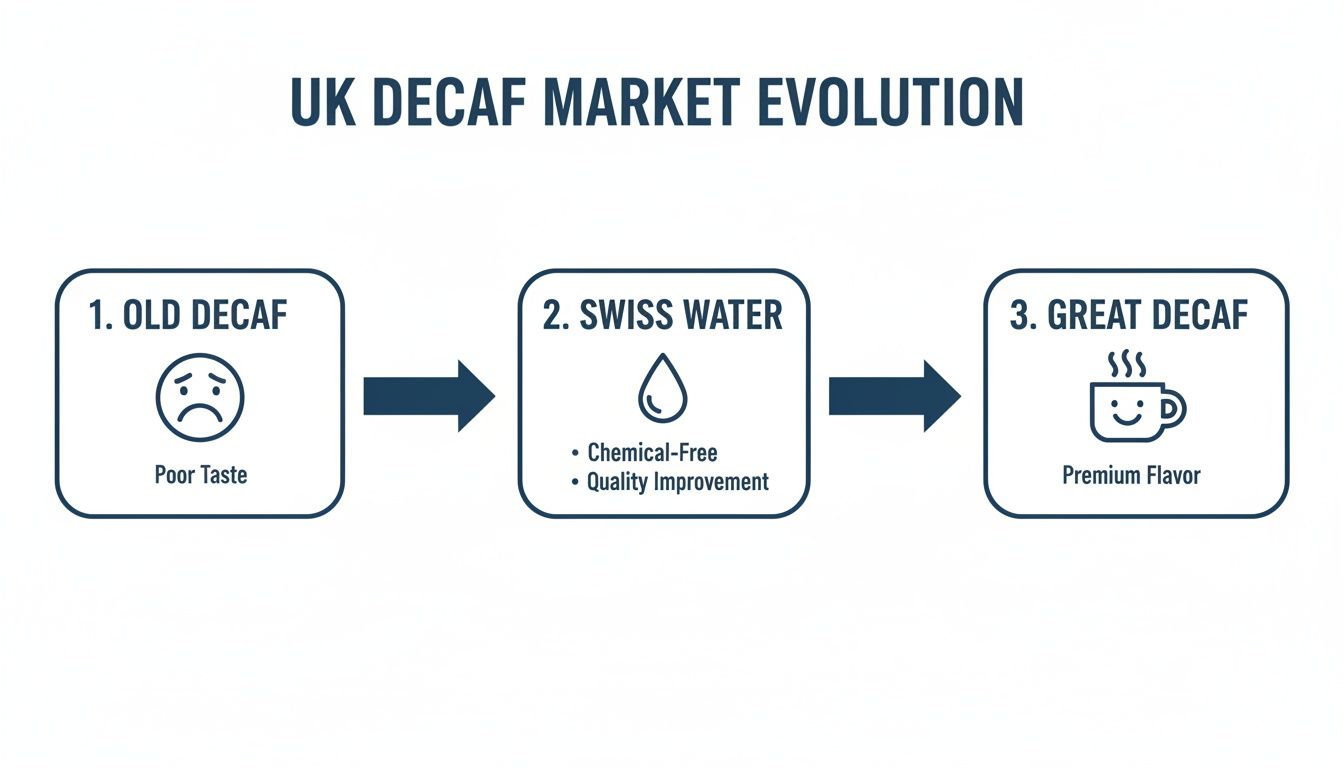
As the infographic makes clear, focusing on a natural process leads to a much happier outcome in the final cup. It’s an elegant and incredibly effective solution.
Filtering and Reusing for Purity
Once the caffeine has moved into the GCE, that now caffeine-rich liquid is drained away from the beans. It’s then passed through special activated carbon filters, which are designed to trap only the caffeine molecules while letting the flavour-packed GCE flow through untouched.
What you’re left with is a refreshed, caffeine-free GCE, ready to work its magic on the next batch of green coffee beans. This sustainable, closed-loop system is repeated until the beans are 99.9% caffeine-free, all while their original flavour profile is kept completely intact. To really appreciate how effective this is, it helps to understand what truly defines ultrapure water, which is a world away from your standard tap water. Keeping the temperature just right is also vital, and you can learn more about the best water temperature for coffee in our detailed guide.
Thanks to this meticulous, water-only method, what you taste is the coffee's origin, not the decaffeination process.
Why Swiss Water Decaf Tastes Remarkably Better
The real secret behind why this decaf tastes so much better boils down to one simple idea: preservation.
Think of it like this. You wouldn't clean a delicate silk shirt with harsh chemical detergents; it would ruin the fibres and fade the colour. Instead, you’d gently wash it in pure water to keep its texture and vibrancy intact.
That’s the perfect way to think about decaffeination. So many traditional methods use chemicals like methylene chloride which, while great at removing caffeine, also tend to strip away the coffee’s natural oils and soluble compounds. Those are the very things that give a coffee its unique flavour and aroma. What you’re often left with is a flat, one-dimensional cup that just tastes… well, ‘processed’.
The Swiss Water Process was engineered from the ground up to prevent this. By using that clever Green Coffee Extract to protect all those precious flavour compounds, it delivers a cup that genuinely reflects the coffee's origin.

Tasting the Coffee, Not the Process
With this method, you get to experience the bright, fruity notes of an Ethiopian Yirgacheffe or the deep, chocolatey body of a Colombian bean, just as the grower intended. It’s all about tasting the coffee, not the process. This meticulous focus on preserving the natural character of single origin coffee beans is what truly sets this decaf apart.
And it’s a commitment to quality that’s clearly resonating with UK coffee drinkers. While most of us still reach for regular coffee, market data shows decaf is one of the fastest-growing segments in the British hot drinks world. The UK decaffeinated market is projected to grow at about 7.72% annually between now and 2032—a pretty significant pace for a mature grocery category.
More telling is the fact that demand for non-solvent methods is now so strong that industry analysts track the Swiss Water process separately from its chemical-based counterparts.
Decaffeination Methods: A Clear Comparison
To see why this matters, it helps to put the methods side-by-side. The choice of decaffeination process has a direct and noticeable impact on what ends up in your cup. Here’s a quick look at the key differences.
| Feature | Swiss Water Process | Solvent-Based Methods |
|---|---|---|
| Method | Uses pure water and Green Coffee Extract to gently remove caffeine. | Uses chemical solvents like methylene chloride to strip caffeine. |
| Flavour Impact | Preserves the coffee’s original flavour, aroma, and body. | Can mute nuanced flavours, leaving a flat or chemical aftertaste. |
| Purity | 100% chemical-free, ensuring no residual solvents in the final cup. | May leave trace amounts of chemical residue behind. |
This clear distinction is why coffee lovers looking for swiss water decaf coffee uk are increasingly choosing this superior, water-only method. It guarantees a cleaner, more flavourful experience that truly honours the hard work of coffee farmers.
The Health and Sustainability Benefits of Going Chemical-Free
When you choose Swiss Water decaf, you’re not just making a decision for your taste buds. You’re making a choice for your well-being and for the planet. Opting for a coffee decaffeinated this way means you’re embracing a purer, more responsible way to enjoy your favourite drink.
For many of us across the UK, the biggest draw is the 100% chemical-free guarantee. This process ensures there is absolutely no chance of residual solvents, like methylene chloride, ever finding their way into your cup.
That peace of mind makes it the perfect option for expectant mothers, people with health sensitivities, or really just anyone who cares about what they put in their body. It’s coffee in its cleanest form.
A Greener Choice for Your Daily Brew
Beyond the immediate health advantages, the Swiss Water Process is built on a foundation of environmental awareness. Sustainability isn’t just a nice-to-have; it's woven into every single step of the decaffeination cycle, aligning perfectly with what modern coffee drinkers value.
The whole operation is remarkably efficient with its resources. Some of the key sustainable practices include:
- Water Conservation: The water used to soak the beans and create the Green Coffee Extract isn’t just thrown away. It's continuously recycled and reused, which dramatically cuts down on waste.
- Filter Regeneration: Those specialised activated carbon filters that trap the caffeine aren't single-use. They get sent to an off-site facility to be fully regenerated, ready to be used again and again.
- A Circular System: Even the captured caffeine doesn't go to waste. It’s often collected and sold on for use in other industries, like pharmaceuticals and energy drinks, which creates a much more sustainable, circular system.
This commitment to clean technology and responsible practices means every cup of Swiss Water decaf supports a healthier planet. It’s a method that delivers a great-tasting coffee without compromising on environmental ethics.
This focus on responsible sourcing and processing is a core value for many modern roasters. You can learn more about what separates the leaders in our guide to sustainable coffee companies.
Ultimately, choosing swiss water decaf coffee uk is about more than just dodging caffeine. It’s about embracing a method that respects both the integrity of the coffee bean and the health of our environment, making sure your daily ritual is one you can feel truly good about.
Finding and Brewing the Best Swiss Water Decaf in the UK
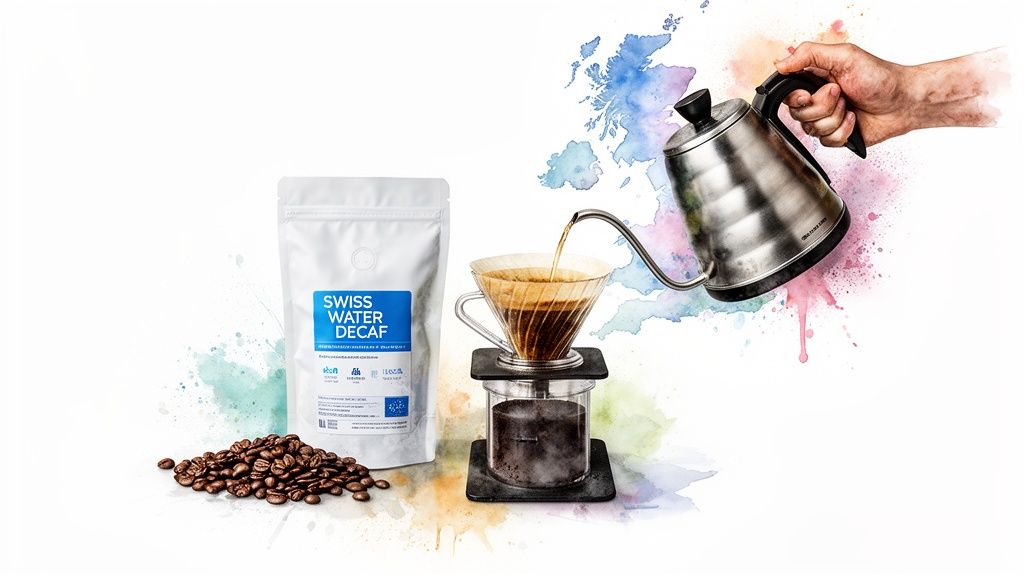
Ready to try a genuinely flavourful, chemical-free decaf for yourself? Finding proper Swiss Water decaf here in the UK is pretty simple once you know what you’re looking for. The first, most crucial step is to check the packaging for the official Swiss Water logo.
That logo is your seal of approval. It’s a guarantee that the coffee inside was decaffeinated using the gentle, 100% water-based method we've been talking about, instantly setting it apart from anything that’s been near a chemical solvent.
Where to Buy Quality Beans
You can find Swiss Water decaf in supermarkets and speciality coffee shops, but the freshest and often best-quality beans are found online, direct from roasters. For coffee businesses, the growing demand for chemical-free decaf isn't just a niche—it’s a major trend. Roasters across the UK are responding to this shift, but for an exceptional cup, you’ll want to buy from someone who truly understands how to handle these beans.
Choosing a speciality roaster like us ensures you’re getting beans that haven't been gathering dust on a shelf. We carefully source high-quality beans and roast them with precision to bring out all the delicate and complex flavours that the Swiss Water process works so hard to preserve. It makes a world of difference to the final taste.
Tips for the Perfect Home Brew
Once you’ve got your hands on some quality beans, a few simple brewing tweaks will unlock their full potential. Decaffeinated coffee beans can behave a little differently to their caffeinated cousins; the process subtly changes their structure, which affects how they grind and extract.
The biggest takeaway for any home barista is that decaf often benefits from a slightly finer grind than you might normally use. This small adjustment increases the surface area of the coffee grounds, helping you achieve a more balanced and complete extraction for a richer, fuller flavour.
Here are a few more tips to get you brewing like a pro:
- Try a Slightly Higher Dose: Don't be afraid to use a little more coffee. An extra gram or two per cup can often help produce a brew with more body and depth.
- Watch Your Water Temperature: Just like any great coffee, using water that’s just off the boil (around 92-96°C) is the sweet spot. It extracts all the best flavours without scorching the grounds and introducing bitterness.
- Freshness is Everything: For the best possible taste, always buy whole beans and grind them right before you brew. This simple step preserves all the incredible aromatic compounds that make a cup of coffee so enjoyable.
Follow these simple pointers, and you'll be brewing café-quality Swiss Water decaf in your own kitchen. If you want to dive deeper into the world of amazing coffee, why not explore our full range of speciality coffee beans?
Your Swiss Water Decaf Questions Answered
Even after hearing all the good things, you might still have a few questions rattling around. It's totally normal. This last section is all about tackling the most common queries we get about Swiss Water decaf here in the UK, giving you the clear, straightforward answers you need.
Is Swiss Water Decaf Completely Caffeine-Free?
It gets incredibly close. The process is so effective that it removes 99.9% of the caffeine from the coffee beans. While no method can zap every last molecule, what's left is a tiny, trace amount. For almost everyone, it’s considered effectively caffeine-free and won't interfere with your health or dietary goals.
Does the Process Affect the Coffee's Flavour?
Not in the slightest—and honestly, that's the whole point of it! Because the process is so gentle and specifically designed to leave the coffee's natural flavour compounds alone, it keeps the original acidity and character of the bean perfectly intact. You get to taste the coffee's origin, not some chemical aftertaste.
The Swiss Water method is all about letting the bright, unique character of the coffee shine through. It sidesteps the harsh chemical processes that can strip away flavour, protecting those delicate notes that make each coffee special.
How Does Grind Size Impact Decaf Brewing?
This is a great question. The structure of a decaffeinated bean can be a little different from its caffeinated counterpart, which sometimes means you need a slightly finer grind to get a full-flavoured extraction. If your brew is tasting a bit weak or watery, simply tightening up your grind setting can make a huge difference.
For a deep dive into getting it just right, our coffee grind size guide will help you dial in the perfect setting for any brewer you’re using.
And if you're keen to broaden your horizons for beverages without the jitters, you can explore more caffeine-free options from other specialists in the UK. This gives you even more ways to enjoy a relaxing drink, day or night.
At A D S Coffee Supplies, we're truly passionate about bringing you the best chemical-free decaf experience possible.
Explore our exceptional Swiss Water Decaf coffee collection today.