Oat Milk vs Dairy for Latte: Which is Best for Your Espresso?
The choice between oat milk and dairy for your latte really boils down to what you value most. Dairy milk has that traditional creaminess and is a dream to froth for classic latte art, but oat milk brings a fantastic plant-based, subtly sweet alternative to the table that's hard to beat on texture and sustainability. Ultimately, the best milk for you depends on whether you’re chasing the perfect taste, have specific dietary needs, or are focused on your environmental footprint.
The Great UK Latte Debate: Oat Milk vs Dairy
The UK's coffee scene is buzzing with one question: which milk truly makes the best latte? For years, full-fat dairy was the undisputed king, the go-to for any barista wanting to pour silky, perfect microfoam. But the rise of plant-based milks has introduced a serious contender, and oat milk is leading the charge.
You can see this shift everywhere, from high-street cafés in London to independent spots in Edinburgh, and it’s even changing what we put in our shopping trolleys. We're all more conscious of our diet, health, and environmental impact, making the milk decision more complex than it's ever been. This guide breaks down every angle of the oat vs dairy rivalry.
We'll compare everything from flavour and texture to how well each performs for latte art, helping you feel confident about your next coffee order. If you want to brush up on the basics of what makes a great latte and other classic drinks, have a look at the different coffee drinks types that are the foundation of café culture.
Oat Milk vs Dairy Latte Quick Comparison
To kick things off, let's start with a quick side-by-side look at what each milk brings to your cup. The table below summarises the key differences you’ll notice in your latte.
| Attribute | Oat Milk Latte | Dairy Milk Latte |
|---|---|---|
| Flavour Profile | Subtly sweet with cereal notes | Rich, creamy, and familiar |
| Texture | Creamy and smooth (especially barista blends) | Velvety and full-bodied |
| Latte Art | Excellent with barista editions | The gold standard for microfoam |
| Dietary Notes | Vegan, lactose-free, nut-free | Contains lactose and dairy protein |
| Environmental Impact | Lower emissions and land use | Higher emissions and water use |
This snapshot shows there's a genuine choice to be made. While dairy holds its ground as the traditional favourite, oat milk has proven it’s more than capable of creating a delicious and beautiful latte.
A Detailed Comparison of Flavour and Texture
The soul of a great latte is the perfect marriage of espresso and milk, and swapping dairy for oat fundamentally changes that relationship. It’s a decision that goes far beyond dietary preference; it influences every part of the experience, from the first aroma to the last sip. Understanding these nuances is the key to crafting a latte that genuinely hits the spot.
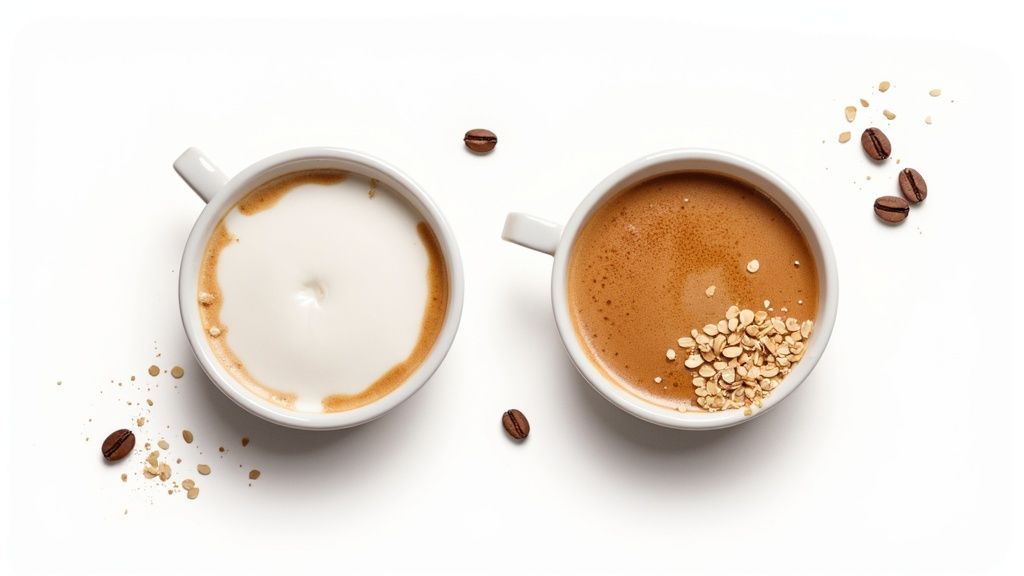
It’s a choice more and more of us are making. In fact, the UK oat milk market is set to explode, with projections showing a compound annual growth rate of around 40% between 2023 and 2033. This surge is fuelled by health-conscious consumers and the reality that about 56% of Europeans have some level of lactose intolerance, making oat milk's creamy texture a fantastic alternative. You can dig into more stats on the booming UK oat milk market to see the full picture.
The Classic Creaminess of Dairy Milk
Whole dairy milk has long been the gold standard for a reason. Its fat content, typically around 3.5%, coats the tongue to create that rich, velvety mouthfeel that smooths out the sharp edges of a strong espresso. It’s this luxurious texture that defines the classic latte experience for so many people.
Flavour-wise, dairy is subtly sweet and creamy, acting as a neutral yet enhancing canvas for the coffee. It doesn't fight with the espresso's delicate notes; it elevates them, especially with darker roasts. When steamed, the natural milk sugars add a gentle sweetness that perfectly balances bitterness, often without needing any extra sugar.
This classic profile is the perfect partner for a robust coffee. For instance, pairing whole milk with our Seven Sisters Coffee Co espresso blend, with its deep notes of dark chocolate and roasted nuts, creates a comforting, balanced, and truly timeless latte.
The Nuanced Profile of Oat Milk
Oat milk brings a completely different personality to the cup. Its flavour is often described as having gentle, earthy, almost cereal-like notes. The sweetness here is distinct from dairy's lactose sweetness, as it comes directly from the oats during the production process.
This unique flavour means oat milk doesn't just sit in the background—it interacts with the coffee in a much more noticeable way. It’s not just a carrier for the espresso; it becomes an active ingredient in the final flavour profile.
Key Takeaway: Dairy milk provides a rich, neutral canvas that enhances the coffee's own flavours, while oat milk adds its own distinct, subtly sweet character, creating a more complex and layered drink.
This interaction makes oat milk a brilliant match for certain coffees. Its gentle sweetness can lift the bright, fruity, or floral notes found in many single-origin light roasts. The coffee's acidity is softened, but its unique characteristics get to shine through in an entirely new way.
Ideal Coffee Pairings for Each Milk
Choosing the right milk can completely transform your coffee experience. Here’s a quick guide on how to pair them effectively with different roasts from ADS Coffee Supplies.
-
For Dairy Milk Lattes:
- Best With: Medium to dark roasts and traditional espresso blends.
- Why: The robust flavours of chocolate, caramel, and nuts in these coffees are perfectly complemented by dairy's rich creaminess.
- Try This: The Seven Sisters Coffee Co Italian Blend creates a classic, powerful latte with a beautifully smooth finish when paired with whole milk.
-
For Oat Milk Lattes:
- Best With: Light to medium roasts and single-origin coffees with bright, acidic notes.
- Why: Oat milk’s natural sweetness balances the acidity and allows delicate floral or fruity notes to come forward.
- Try This: A single-origin like the Seven Sisters Coffee Co Ethiopia Yirgacheffe becomes wonderfully complex in an oat latte, with its bright, citrus-like notes softened into a smooth, flavourful cup.
Ultimately, the best choice in the oat milk vs dairy for latte debate comes down to what you’re looking for. Are you chasing the nostalgic, creamy comfort of a traditional latte, or are you ready for an exciting, modern flavour combination that brings new dimensions to your favourite coffee?
Frothing Performance and Latte Art Potential
Beyond the taste, the real showdown for many coffee lovers is how well milk steams. Can it create that velvety, glossy microfoam essential for a luxurious texture and, of course, for pouring beautiful latte art? This is where the science of milk proteins and fats comes into play, creating a world of difference between dairy and its plant-based rival.
For decades, whole dairy milk has been the undisputed king of the steam wand. Its magic is all down to a perfect natural balance of proteins (casein and whey) and fats. When you introduce steam, these proteins unwind to form stable, tiny bubbles, while the fat lends a silky mouthfeel and a beautiful sheen. It’s the ideal canvas.
Oat milk, in its pure form, just doesn't have this structure. That’s why your standard carton of oat milk often produces a thin, bubbly foam that vanishes in seconds. But the coffee world is an inventive place.
The Rise of Barista-Edition Oat Milk
To close this performance gap, manufacturers created barista-edition oat milks. These are specialised formulas engineered to mimic the frothing power of dairy, and they do it by adding a few key ingredients:
- Acidity Regulators: Usually a type of dipotassium phosphate, this stops the oat milk from curdling the moment it hits the acidic espresso. It’s a game-changer.
- Emulsifiers and Stabilisers: Ingredients like gellan gum help create a more stable, cohesive foam that actually holds its shape.
- Higher Fat Content: Barista blends add oils, like rapeseed oil, to boost the fat content. This is absolutely crucial for achieving the silky texture and glossy finish you need for latte art.
These clever additions are exactly why brands like Oatly Barista Edition steam so beautifully. They create a microfoam that genuinely rivals dairy, which is why it has become a staple in cafés all over the UK.
Achieving the Perfect Microfoam
Of course, your technique with the steam wand is just as important as the milk itself. The principles are similar for both, but you’ll need to make small adjustments to get the best out of each.
Steaming Dairy Milk:
Dairy is pretty forgiving, but for perfection, you need precision. The sweet spot is 60-65°C. At this temperature, the lactose sugars are at their sweetest, but the proteins haven't started to break down and taste scalded. Keep the steam wand tip just below the surface for the first few seconds to aerate, expanding the volume by about 20-30%. Then, plunge the wand deeper to create a smooth, spinning vortex that polishes the foam.
Steaming Oat Milk:
Barista oat milk behaves in a similar way but usually needs less aeration time. Introduce air for just a few seconds, as it can create big, unhelpful bubbles quite quickly. It’s also a little less stable with heat, so aim for a slightly lower final temperature of around 55-60°C. This keeps its flavour sweet and stops the texture from thinning out.
Key Insight: Dairy milk creates a dense, creamy, and incredibly stable foam that holds intricate latte art for longer. Barista oat milk produces a slightly lighter, silkier foam that is excellent for pouring but can be less forgiving and may lose definition faster.
Latte Art: A Visual Comparison
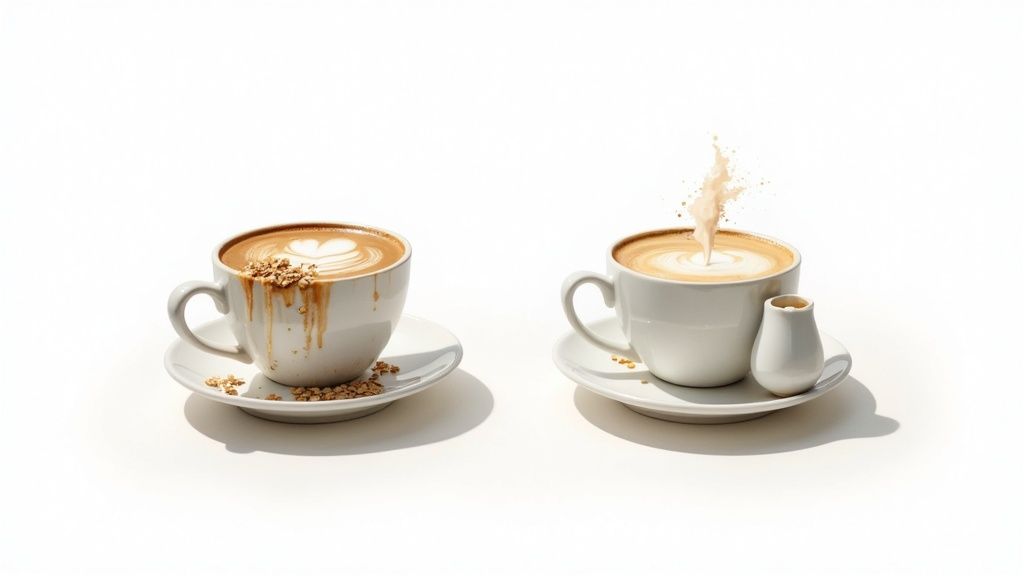
When it comes to pouring, the differences really show. The dense, rich foam from dairy milk offers more resistance, which gives you the control needed for sharper lines and complex patterns like rosettas and tulips. It "holds" the design with crisp definition.
Oat milk creates a foam that flows a little more quickly. This is fantastic for pouring smooth hearts and simple tulips, but getting that fine detail can be a real challenge. Mastering oat milk art often means adopting a quicker, more confident pouring style.
If you’re keen to master the craft with either milk, getting the fundamentals right is the best place to start. You can find some great advice in our guide to the basics of creating latte art at home.
Ultimately, both can produce stunning results. While dairy is still the benchmark for stability and ease of use, the incredible performance of modern barista oat milks means you no longer have to sacrifice your latte art when you go plant-based.
Comparing Health and Environmental Impacts
Beyond the café counter, the choice between oat and dairy milk for your latte carries real weight, both for your health and the planet. That daily coffee is more than just a caffeine hit; it's a chance to make a conscious decision. Understanding what's behind each milk helps you line up that choice with what you actually care about.
This kind of awareness is driving a huge shift in habits. Oat milk's rise in the UK has been nothing short of remarkable, with spending hitting £146 million in 2020—a massive leap from £74 million just the year before. It even overtook almond milk as the top plant-based alternative, showing a clear public appetite for dairy-free options.
A Nutritional Breakdown
When you put them side-by-side, it’s obvious they offer very different nutritional profiles. Neither is universally "healthier"; the right one for you comes down to your personal dietary goals and needs.
Whole dairy milk is a natural powerhouse. It's packed with high-quality protein, which is essential for muscle repair, and it’s a major source of calcium for bone health. The catch? It also contains lactose, which many people struggle to digest, along with higher levels of saturated fat.
Oat milk, on the other hand, is naturally free from lactose, nuts, and soy, making it a go-to for anyone with common allergies. It contains soluble fibre like beta-glucans, which are great for heart health. Plus, most commercial oat milks are fortified with calcium and vitamin D to put them on par with dairy.
Key Nutritional Differences
Let's get specific with a typical 250ml serving, about what you’d find in a standard latte:
- Protein: Dairy milk is the clear winner here, offering around 8-9 grams of complete protein. Barista-style oat milk usually has 2-4 grams – less, but it still counts.
- Fat Content: Whole dairy milk is higher in saturated fat. The fat in oat milk mostly comes from added oils (like rapeseed oil in barista blends), which are primarily unsaturated.
- Calories: The calorie count is often surprisingly similar. A latte made with whole milk and one with barista oat milk can both land in the 150-200 calorie range.
- Calcium: While dairy is a natural source, fortified oat milk typically contains the same amount of calcium, making it a solid alternative for keeping your bones strong.
Important Consideration: If you're living a vegan lifestyle or dealing with lactose intolerance, oat milk is the obvious choice. But for those purely focused on getting the most protein from natural sources, dairy still holds its ground.
Environmental Footprint: A Clear Contrast
The environmental story is where the two milks really diverge. When it comes to land use, water consumption, and greenhouse gas emissions, producing oat milk is significantly more sustainable.
Dairy farming is incredibly resource-intensive. It demands huge stretches of land for grazing and growing feed, uses vast quantities of water for the animals and crops, and produces a lot of methane—a potent greenhouse gas.
Oat cultivation, in contrast, leaves a much smaller footprint. Oats need less land and grow well in the UK climate, which cuts down the need for heavy irrigation. The whole process generates far fewer emissions than livestock farming.
- Land Use: To produce one glass of dairy milk, you need roughly nine times more land than for the same amount of oat milk.
- Water Consumption: It takes a staggering 600 litres of water to produce a single litre of dairy milk. Oat milk requires just a fraction of that.
- Emissions: The carbon footprint of dairy milk is around three times higher than oat milk's.
Choosing sustainable options goes beyond just the milk itself; it’s about the companies you support. You can learn more about what to look for in our guide on sustainable coffee companies. While oat milk is generally the greener option, things like transportation and farming methods still matter. Sourcing locally and responsibly is always the best way to go for a truly eco-friendly latte.
A Practical Look at Cost and Availability
Beyond the crema and the flavour, the choice between oat and dairy milk often comes down to two very practical things: price and convenience. These factors really shape the daily habits of home baristas and the bottom line for professional café owners across the UK.
For anyone making coffee at home, the price difference is hard to ignore. A litre of standard fresh dairy milk is still one of the most affordable options on the shelf, usually costing a fair bit less than its plant-based rivals. But the story changes when we talk about barista-grade milks. The special "barista edition" oat milks, which are designed to froth beautifully, come with a premium price tag thanks to the extra ingredients and processing involved. This inevitably nudges up the cost of your homemade oat latte.
Breaking Down the Costs
In a café setting, that price gap has a direct impact on profit margins. It's why you'll see a standard upcharge of 30p to 50p for oat milk in most UK coffee shops—it’s a simple way to cover the higher wholesale cost. While it might not seem like much per cup, it adds up quickly over hundreds or thousands of lattes. For a deeper dive into how coffee shops manage these decisions, exploring cafe operational solutions can shed some light on the business side of things.
Back at home, it’s a personal balancing act between your budget and your taste. If a daily latte is part of your ritual, the extra expense of a premium oat milk will certainly add up over the year. A smart move is to buy in bulk from suppliers, which can soften the blow and offer better value than picking it up from the supermarket. For more tips on getting your home setup just right, check out our guide on how to make a latte.
To give you a clearer picture, here’s how the numbers stack up for a typical latte.
Cost and Nutritional Breakdown Per 250ml Serving
| Metric | Barista Oat Milk | Whole Dairy Milk |
|---|---|---|
| Average Cost | £0.45 – £0.60 | £0.25 – £0.35 |
| Calories | 140 – 160 kcal | 150 – 165 kcal |
| Fat | 7g – 8g | 8g – 9g |
| Protein | 2g – 3g | 8g – 9g |
As you can see, while calories and fat are surprisingly similar, dairy milk pulls ahead on protein, and oat milk costs a bit more per pour.
Key Takeaway: Dairy is generally the cheaper, more traditional choice. But for many oat milk fans, the superior texture and flavour of a barista-grade option easily justify the extra cost, both at home and in a café.
Convenience and Shelf Life
Availability is the other big piece of the puzzle. You can find fresh dairy milk pretty much anywhere, from the corner shop to the big supermarkets. The catch? Its notoriously short shelf life. Once opened, you’ve only got a few days to use it up, which can sometimes lead to waste.
This is where oat milk really shines, especially the UHT (Ultra-High Temperature) versions. Most barista-style oat milks come in long-life cartons that can sit happily in your cupboard for months.
- UHT Oat Milk: Stays fresh for up to a year unopened. Once you crack it open, it'll last a good 7-10 days in the fridge.
- Fresh Dairy Milk: Needs to live in the fridge and usually has a use-by date of about a week. After opening, you've got 3-5 days to finish it.
That long, stable shelf life makes oat milk an incredibly reliable option. For home brewers, it means you can stock up without worry. For cafés, it simplifies inventory management and cuts down on waste. It's a practical advantage that, for many, easily outweighs the higher price tag.
How to Choose the Right Milk for Your Latte
So, what’s the final verdict? Honestly, there isn't one. The right milk for your latte really boils down to what you value most in your daily cup. It’s less about finding the single ‘best’ milk and more about matching the right milk to the moment, your taste, and your priorities.
For the coffee purist chasing that classic, time-honoured café experience, dairy milk is still the gold standard. Its unique blend of natural fats and proteins creates a rich, velvety texture that’s hard to beat. This is what gives you that incredibly stable microfoam, perfect for pouring intricate latte art. It just has that familiar creaminess that plays well with almost any espresso, complementing the coffee without stealing the show.
On the other hand, if you're more eco-conscious or simply enjoy a more contemporary flavour, oat milk is a fantastic partner. It adds a subtle, oaty sweetness that can really make the unique notes in lighter roasts sing. Plus, its environmental footprint is significantly smaller. The barista editions steam beautifully these days, making it a brilliant modern alternative that stands on its own.
Pairing with Seven Sisters Coffee Co
Your choice of coffee beans can also nudge you in one direction or the other. The character of each milk can elevate certain roasts in different ways.
-
For Dairy Lattes: The sheer richness of whole milk is a dream with our Seven Sisters Coffee Co espresso blend. That creaminess perfectly balances the blend's deep chocolate and nutty notes, creating a comforting, classic latte every time.
-
For Oat Lattes: The gentle sweetness of oat milk is an excellent match for a vibrant single-origin coffee. Give it a go with our Seven Sisters Coffee Co Ethiopia Yirgacheffe — it softens the coffee's bright acidity and helps those beautiful floral notes come to the forefront.
Of course, practical things like cost and shelf life matter too. This quick decision tree can help you figure out which milk best fits your buying habits.

As you can see, if a long shelf life is your top priority, UHT oat milk is the clear winner. But if you're keeping a close eye on your budget, dairy often has the edge.
Final Recommendations Based on Your Priorities
To break it down as simply as possible, here's our final take on the oat vs. dairy debate:
Choose dairy milk if: Your top priorities are a traditional flavour, maximum creaminess, and the most stable foam possible for practising complex latte art.
Choose oat milk if: You value sustainability, follow a plant-based diet, or enjoy a modern, slightly sweet flavour that interacts with your espresso in new and interesting ways.
Ultimately, the best way forward is to experiment. Don't be afraid to try both and see what you prefer. Perfecting your steaming technique takes practice, no matter what you're pouring. For a bit more help with that, our guide on how to steam milk at home to the right temperatures has some great tips for both dairy and oat. By thinking about these points, you can confidently pick the perfect milk to craft your ideal latte, every single time.
Got Questions? We've Got Answers
When you're chasing that perfect latte, a few questions always seem to pop up. Let's tackle some of the common hurdles you might face when working with oat milk versus dairy.
Why Does My Oat Milk Sometimes Curdle In Coffee?
Ah, the dreaded curdle. It’s a common frustration, but it boils down to a simple chemical reaction. The high acidity and heat from your coffee can cause the proteins in some oat milks to clump together and separate. This is especially true for the regular, non-barista stuff you'd pour on your cereal.
To get around this, you can try a few things:
- Let your coffee cool down just a touch before adding the oat milk.
- Gently warm the oat milk first. This reduces the temperature shock.
- Grab a barista-edition oat milk. These are specifically designed with acidity regulators to stop this from happening.
Honestly, the simplest way to guarantee a smooth, curd-free coffee is to use a product like Oatly Barista Edition. It's built to handle the heat and acidity without any fuss.
Is Barista-Edition Oat Milk Really Necessary For Lattes?
If you want a genuine, café-quality latte at home, then the answer is a firm yes. Standard oat milk just doesn't have the right balance of fats and proteins to create that silky, stable microfoam we're all after. You'll likely end up with thin, big bubbles that vanish before you can even take a sip.
Barista editions are engineered with added fats and stabilisers for one reason: to mimic the frothing performance of dairy. Without it, you'll find achieving the right texture and pouring any kind of latte art is next to impossible.
Sure, you can use regular oat milk for a simple milky coffee, but it won't give you that creamy, velvety texture that truly makes a latte.
Which Milk Is Easier For Beginners Learning Latte Art?
For anyone just starting to dabble in latte art, whole dairy milk is without a doubt the easier option. Its natural fat and protein content create a wonderfully dense, stable, and forgiving microfoam. It holds its shape beautifully, giving you that extra bit of time to pour your design without everything falling apart.
Barista oat milk is a brilliant plant-based alternative, but its foam can be a little less forgiving and demands a more confident, quicker pour. If you're just getting the hang of hearts and tulips, you'll find dairy milk a much more reliable canvas to practise on.
Can I Use Homemade Oat Milk For Frothing?
Making your own oat milk is a fantastic way to control ingredients and save a bit of cash, but it's not really suitable for frothing into latte-worthy microfoam. The homemade stuff is missing the crucial stabilisers, emulsifiers, and added fats that give commercial barista blends their steaming power.
What you usually get is a thin, watery foam that separates almost instantly. For that authentic, creamy latte texture, you're much better off sticking with a professionally formulated barista-grade oat milk.
Ready to put all this into practice? Explore our full range of speciality coffee beans and barista essentials at ADS Coffee Supplies and find the perfect match for your next latte. Check out our fantastic selection of Seven Sisters Coffee Co blends today.