
A Guide to the Delicious Notes of Coffee in Your Cup
When you see a bag of coffee with "notes of chocolate, citrus, and nuts" printed on the front, it's easy to assume those things have actually been added to the beans. But that’s not the case at all. The notes of coffee are the inherent flavours and aromas that are already locked inside the bean, just waiting to be coaxed out through careful farming, processing, and roasting.
Think of it like the complex bouquet in a glass of fine wine—no one’s adding grapes or oak chips to your Merlot, but you can still taste them.
Unlocking the Flavour Within Your Coffee Beans
Every single coffee bean is a tiny capsule of potential flavour, profoundly shaped by its entire journey from the farm right into your cup. "Notes of coffee" is simply the language we use to describe this incredible sensory spectrum. It's the reason one coffee can taste bright and almost zesty while another is rich, deep, and chocolatey, even when all you’ve added is hot water.
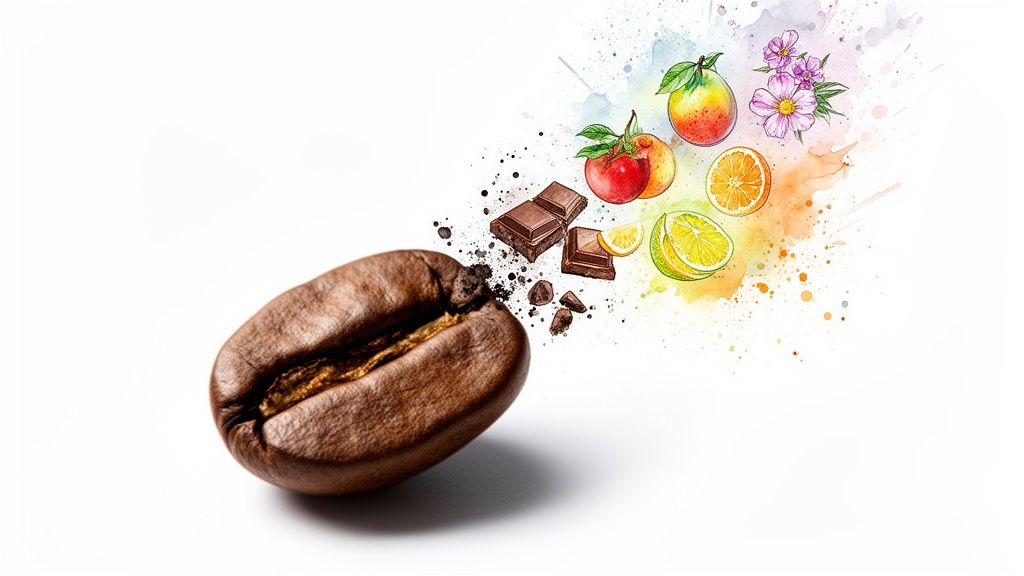
This complex flavour profile isn’t down to one single thing; it's a combination of factors all working together. It all starts with the bean's origin—the soil, altitude, and climate all leave their unique fingerprint. Then there's the processing method used after harvesting, whether washed, natural, or honey-processed, which plays a massive role in shaping the final taste. Finally, the roaster’s skill draws out these latent characteristics, developing specific tastes through precise control over temperature and time.
"A coffee’s tasting notes are its aromatic and gustatory fingerprint. They are the subtle hints of fruit, flowers, spices, or sweets that distinguish one coffee from another, reflecting its unique origin and craftsmanship."
Why Do Coffee Notes Matter?
Getting to grips with these notes transforms your daily coffee from a simple caffeine fix into a genuinely rich sensory experience. It's the foundation for appreciating the world of difference between a mass-market blend and a high-quality single-origin bean. In fact, appreciating this complexity is a core principle of the entire movement, as you can discover in our guide explaining what is specialty coffee.
Learning to identify these notes empowers you to:
- Choose coffees you'll truly love: You can start picking out beans based on flavour profiles you know you enjoy, whether that’s floral, fruity, or nutty.
- Appreciate the craft: It gives you a much deeper connection to the farmers and roasters who work incredibly hard to produce something exceptional.
- Enhance your palate: Over time, you’ll begin to notice the subtlest of differences and develop a more refined sense of taste and smell. It’s a skill that builds with every cup.
How Roasters Unlock Coffee Tasting Notes
A green coffee bean, straight from the farm, tastes nothing like the coffee you know. It’s dense, grassy, and completely un-brewable. The magic that transforms this raw seed into a fragrant, flavourful bean is the art and science of roasting. At ADS Coffee Supplies, our roasters are like flavour conductors, using precise control over heat and time to unlock the specific notes of coffee unique to each batch.
This transformation isn't a single event but a dance of complex chemical reactions. As the beans tumble in the roaster and the temperature climbs, two key things happen. First is the Maillard reaction, a chemical tango between amino acids and sugars that gives browned food its signature flavour. Think of the delicious crust on a loaf of bread or a seared steak; in coffee, this process creates hundreds of new aromatic compounds, bringing out nutty, malty, and even savoury notes.
Shortly after, caramelisation kicks in. This is the browning of sugar, a process that breaks down complex carbs into simpler sugars. It’s what creates the sweet and slightly bitter notes we love—think caramel, toffee, and dark chocolate.
The Roaster's Craft and Consistency
The roaster’s skill lies in navigating these reactions with an expert hand. A lighter roast will stop the process earlier, preserving the bean's natural acidity and delicate floral or fruity notes. Pushing the roast darker dials down this acidity, allowing the deeper, richer notes from caramelisation—like dark chocolate and molasses—to step into the spotlight. Every choice shapes the final flavour profile.
For a deeper dive into how this all comes together, you can learn more about the fundamentals of coffee roasting profiles in our detailed guide.
To guarantee quality and consistency, roasters rely on a professional tasting ritual known as 'cupping'. This systematic process allows them to analyse and describe a coffee's characteristics with incredible precision.
Cupping is the roaster's final quality check. It involves smelling the fragrance of the dry grounds, the aroma of the wet grounds, and then tasting the brewed coffee to assess its body, acidity, sweetness, and of course, its distinct tasting notes.
This rigorous analysis is how we check that every single batch meets our standards. It’s the reason we can confidently print "notes of bergamot and jasmine" or "milk chocolate and almond" on our bags. Every description you read is a direct result of this meticulous, sensory-driven craft, ensuring the notes of coffee we promise are the ones you experience in your cup.
Exploring the Coffee Taster's Flavour Wheel
To navigate the dizzying world of coffee flavour, professionals needed a shared language. This challenge led to the creation of the Coffee Taster's Flavour Wheel, the industry's official guide developed by the Specialty Coffee Association (SCA). Think of it not as a rigid rulebook, but as a detailed map for your tasting adventures.
The wheel is a brilliant tool designed to help anyone, from a curious beginner to a seasoned expert, pin down and talk about the specific notes of coffee they're experiencing. It gives you a visual framework that organises flavours in a way that just makes sense, moving your description from a simple "this tastes nice" to a much more evocative "I'm getting notes of stone fruit, maybe even peach."
How to Read the Flavour Wheel
At first glance, it might look a bit intimidating, but the wheel is simpler than you think. It's designed to be read from the inside out, taking you from general categories to incredibly specific descriptions.
- The Centre: This is your starting point. The innermost circle holds the broadest flavour categories, like Fruity, Floral, or Nutty/Cocoa. It’s your first port of call when you take a sip.
- The Middle Rings: As you move outwards, these general buckets break down into more defined sub-groups. For instance, 'Fruity' might split into 'Berry', 'Citrus Fruit', or 'Stone Fruit'.
- The Outer Edge: This is where the real magic happens. The outermost ring contains the most specific tasting notes you can identify, like 'Blackberry', 'Grapefruit', or 'Almond'.
This layered structure is built to guide your palate. If you taste something fruity but can't quite put your finger on it, you can follow the wheel's path to narrow down the possibilities until you find the perfect word.
The chart below shows how a roaster's key decisions—heat, time, and the notes they're aiming for—are all connected.
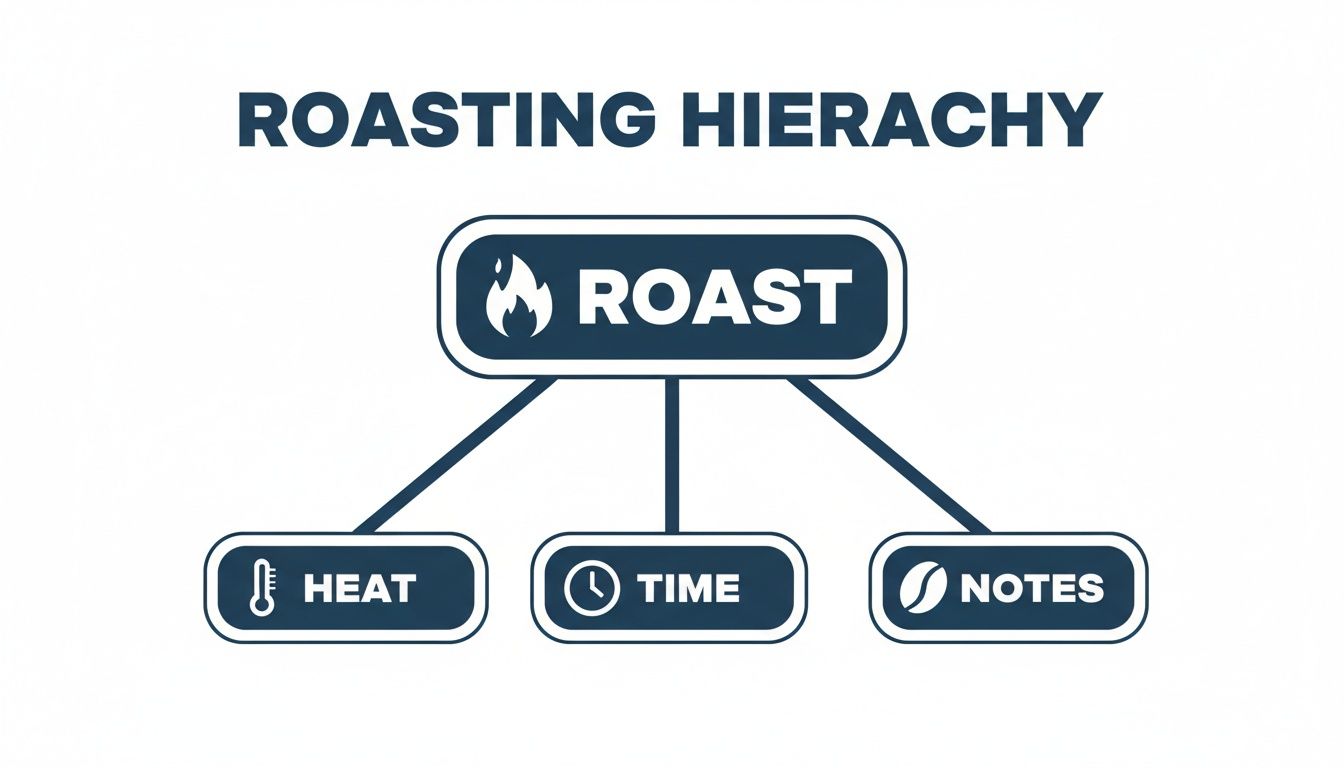
It’s a great reminder that the final notes in a coffee are a direct result of the delicate balance a roaster strikes between roasting time and the heat they apply.
Common Coffee Flavour Categories and Notes
To give you a head start, the table below breaks down some of the major flavour categories from the Taster's Wheel, along with a few specific examples you might find in your next cup.
| Flavour Category | Specific Tasting Notes Examples |
|---|---|
| Fruity | Blackberry, Raspberry, Strawberry, Pineapple, Grape, Apple, Peach, Cherry |
| Floral | Jasmine, Rose, Chamomile, Hibiscus, Elderflower |
| Sweet | Brown Sugar, Caramel, Molasses, Honey, Maple Syrup, Vanilla |
| Nutty / Cocoa | Almond, Hazelnut, Peanut, Dark Chocolate, Baker's Chocolate, Cocoa Nibs |
| Spices | Cinnamon, Nutmeg, Clove, Cardamom, Anise, Pepper |
| Green / Vegetal | Olive Oil, Fresh, Herb-like, Grassy, Hay-like |
| Roasted | Toasted, Cereal, Burnt Sugar, Smoky, Pipe Tobacco |
This is just a snapshot, of course. The full wheel is incredibly detailed, but these common examples are what you'll encounter most often as you start exploring different coffees.
Putting the Wheel into Practice
The flavour wheel becomes an indispensable tool when you start exploring beans from different parts of the world. For example, a bright, elegant single-origin from Ethiopia might send you straight to the 'Floral' and 'Citrus Fruit' sections, where you’ll find notes like jasmine and bergamot.
In contrast, a classic Brazilian coffee might point you firmly towards the 'Nutty/Cocoa' section, with comforting descriptors like chocolate and almond. To see how these characteristics shine through, you can explore our range of single-origin coffees and start connecting the dots between origins and specific flavours.
Using the flavour wheel isn't about getting it "right" every time. It's about developing your palate, expanding your vocabulary, and deepening your appreciation for the incredible complexity hidden within every single coffee bean.
Tasting Notes in Our Coffee Selection
Understanding the theory behind the notes of coffee is one thing, but actually tasting them is where the real fun begins. Let’s put all this talk into practice and explore the distinct flavour profiles found right here in our own ADS Coffee Supplies selection. These examples show how a bean’s origin and our roasting style come together to create a delicious, tangible experience in your cup.
Each coffee tells a story of its homeland, and few tell it as vividly as those from Ethiopia. Our single-origin Ethiopian Yirgacheffe is the perfect example of a bright, vibrant coffee that truly showcases its unique terroir.
When you brew a cup, you’re met with a wave of delicate and fragrant aromas. These aren’t overpowering flavours; think of them more as elegant whispers of the plant life that grows alongside the coffee cherries.
Our light roast for this particular bean is intentionally designed to preserve these delicate characteristics. By carefully managing the heat, we ensure the bean’s inherent floral and citrus qualities shine through, rather than being masked by deeper, roast-developed flavours.
A Vibrant Single Origin Example
The Ethiopian Yirgacheffe is celebrated for its clean and bright profile. As you take your first sip, you'll likely notice its signature notes almost immediately.
- Jasmine: A prominent floral note that gives the coffee an almost perfume-like quality.
- Bergamot: That distinct citrus aroma you might recognise from Earl Grey tea.
- Lemon: A zesty, clean acidity that makes the finish crisp and wonderfully refreshing.
These specific notes make it an exceptional choice for pour-over or filter methods, which really highlight its clarity. You can taste the sunshine and high altitude of the Yirgacheffe region in every cup—it's a truly sensory journey. You can browse our full range of single-origin coffees to find this and other exciting options.
A Comforting and Balanced Blend
While single origins offer a snapshot of a specific place, blends are all about creating harmony and balance. Our roasters craft blends to deliver a consistent and approachable flavour profile that you can rely on. A fantastic illustration of this is our Seven Sisters Blend—a true crowd-pleaser.
To create this blend, we combine beans from different origins, with each one contributing a specific characteristic to the final taste. We then apply a medium roast profile that develops sweetness and body, resulting in a cup that is both comforting and complex. The primary notes you'll discover are:
- Milk Chocolate: A smooth, creamy sweetness that forms the delicious base of the flavour.
- Caramel: A rich, buttery note that adds depth and a satisfying sweetness.
- Almond: A subtle nuttiness that rounds out the finish, leaving a pleasant, lingering aftertaste.
This combination creates a perfectly balanced coffee versatile enough for any brew method, from a classic French press to a rich espresso. It's the ideal everyday coffee—reliable, delicious, and deeply satisfying. Find your perfect everyday coffee in our selection of coffee blends.
How to Identify Coffee Notes at Home

You don't need a professional lab or years of training to start picking out the fascinating notes of coffee in your daily brew. With just a little bit of mindful practice, you can turn your kitchen into a personal tasting room. It’s all about transforming your morning ritual into an engaging sensory journey.
This desire for a richer experience is catching on. Here in the UK, we now drink roughly 98 million cups of coffee every single day. That’s not just a statistic; it shows a real national passion for quality and a growing curiosity for what’s in the cup.
A Simple Tasting Method
To start your own flavour exploration, you just need your favourite brewing kit, some fresh beans, and an open mind. The whole process is inspired by what the pros do, but it’s really just about paying close attention at three key moments.
-
Smell the Dry Grounds (Fragrance): Before a drop of water hits the coffee, take a good sniff of the dry grounds. This is what we call its fragrance. You might pick up on deeper scents like chocolate, nuts, or even a hint of spice. Of course, how you grind your beans makes a massive difference here.
-
Smell the Wet Grounds (Aroma): As soon as you add hot water, the aroma is released. This is often when the more delicate, volatile notes burst out—think bright fruits and florals. Give the wet grounds a gentle swirl and breathe in deeply. What’s new? What scents are there now that you couldn’t detect before?
-
Taste as it Cools: Now for the best part. Take a sip. A classic pro trick is to "slurp" the coffee. It might feel a bit strange, but doing so sprays the liquid across your entire palate, waking up more of your taste receptors. Pay attention to how the flavours evolve as the coffee cools down. You'll be surprised how different notes step forward at different temperatures.
Tips for Sharpening Your Palate
Moving from a general feeling like 'this is fruity' to pinpointing 'I'm getting strawberry notes' is all down to practice. Many people find keeping a small tasting journal is a game-changer. It helps you track your discoveries and spot patterns in the coffees you love most.
Don't ever worry about being "right." Taste is completely subjective. The real goal is just to become more aware of what you're experiencing and build a personal vocabulary to describe it.
The gear you use can also play a huge role. A quality espresso machine, for example, can dramatically amplify the clarity and punch of a coffee’s notes. Investing in the right tools is key, and if you're in the market, consulting an espresso machine buying guide can help you make a smart choice. By following these simple steps, you're empowering yourself to appreciate the incredible complexity hidden in every cup.
Why Understanding Coffee Notes Matters
Diving into the world of flavour is, without a doubt, one of the most rewarding parts of the coffee experience. When you learn to pick out the notes of coffee, your daily cup transforms from a simple caffeine fix into a craft product, much like appreciating the complexities of a fine wine or an artisan chocolate bar. This isn't just about sounding knowledgeable; it's a practical skill.
It gives you the confidence to make smarter buying decisions. Instead of just grabbing a bag and hoping for the best, you can start seeking out coffees with profiles you know you'll love. Maybe that's the bright, zesty citrus of an Ethiopian bean or the comforting, deep chocolate notes of a South American blend. This connection completely changes how you see your coffee.
Understanding tasting notes bridges the gap between the drinker and the producer. It builds a genuine appreciation for the immense skill, passion, and hard work that goes into every single bean, from the moment it's picked to the final roast.
From Commodity to Craft
That incredible journey from farm to cup is something we're deeply passionate about here at ADS Coffee Supplies. We don’t just want to sell you coffee; we want to be your guide in discovering a world of exceptional flavour. We truly believe every coffee tells a story about its origin, and learning to read its notes is how you get to hear it.
This growing appreciation for quality is happening all across the UK. With consumers projected to spend a staggering £6.1 billion on coffee outside the home in 2025 and an average of £16 a month on coffee for home brewing, the demand for premium experiences is undeniable. These numbers highlight a fantastic opportunity for coffee lovers to explore sustainably sourced, artisan-roasted beans. Discover more insights on the UK coffee market's growth.
Your Guide to Exceptional Flavour
Ultimately, engaging with the notes of coffee makes the entire ritual more mindful and enjoyable. It encourages you to slow down, pay attention, and truly savour what’s in your mug.
To help you on your way, we've put together a selection that really showcases this incredible diversity.
- Explore our vibrant single-origin coffees to taste the unique character of a specific region.
- Discover balance and harmony in our expertly crafted coffee blends.
Our commitment is simple: to provide you with exceptional beans and the knowledge to fully appreciate them.
Still Have Questions About Coffee Notes?
To help wrap things up, let's tackle a few of the most common questions we hear about the notes of coffee. Think of this as a quick-fire round to cement everything you've just learned.
Are Flavours Added to the Coffee Beans?
No, never. When you see a note like 'chocolate' or 'strawberry' on a bag, it isn't an added flavour. It’s simply the roaster’s way of describing the natural, inherent aromatic and taste compounds found deep within the coffee bean itself. The roasting process is what unlocks and develops them.
Why Can't I Taste the Notes on the Bag?
Don't worry, this is completely normal when you’re starting out. Your palate is like a muscle—it needs a bit of training. The notes listed on the bag are often subtle, and it just takes practice to learn how to pick them out from the overall taste of the coffee.
The best way to get better is to taste coffees side-by-side. For instance, if you compare a fruity Ethiopian coffee with a nutty Brazilian one, the differences become much clearer. This helps you build a sensory memory of what those flavours feel like.
Does the Brewing Method Change the Notes?
Absolutely. Different brewing methods are like different lenses—they bring certain characteristics into focus.
- Pour-over methods, like a V60, tend to produce a very clean cup. This clarity makes it much easier to spot delicate floral and citrus notes.
- Immersion methods, such as a French press, create a fuller body and richer texture, which can amplify those deep, chocolatey and nutty flavours.
Is There a 'Right' or 'Wrong' Note to Taste?
Not at all. Taste is incredibly subjective and personal. The Coffee Taster's Flavour Wheel is just a guide to give us all a common language to talk about what we're experiencing. If you taste raspberry while the bag says strawberry, that's perfectly fine! What really matters is that you're mindfully engaging with your coffee and, most importantly, enjoying the whole experience.
Ready to put your new knowledge to the test and start your own tasting adventure? At ADS Coffee Supplies, we offer a curated selection of exceptional beans that showcase the incredible diversity of coffee notes.
Explore our vibrant single-origin coffees to discover the unique taste of a specific region.