A Guide to Light Roasted Coffee Flavours and Brewing

For those who want to taste coffee in its purest form, a light roast is the only way to go. It’s all about celebrating the bean’s origin and its most delicate, nuanced flavours.
Unlike darker roasts that often bring heavy, charred notes to the party, a light roast is designed to preserve the bright, complex characteristics locked away inside the green bean. Think of it like the difference between a lightly seared scallop and a well-done steak; both are delicious in their own right, but only one truly lets the ingredient's natural essence sing.
Discover the True Taste of Coffee
For years, the UK coffee scene was dominated by dark, bitter roasts. It's what most of us thought coffee was supposed to taste like. But things have changed. Coffee drinkers today are more curious than ever, hunting for unique flavour experiences that tell a story about where the coffee came from—its terroir.
This is where light roasts really shine. It’s not just about the paler brown colour; it’s a whole philosophy of roasting.
The aim is to gently develop the bean just enough to unlock its natural sweetness and intricate aromas, without letting the taste of the roast itself take over. The result is a cup that can be shockingly vibrant, often with clean, bright notes you'd never expect from coffee. This approach is at the very heart of the speciality coffee world, where every bean has a story to tell. You can dive deeper into what makes this movement so special in our guide on what is specialty coffee.
A Focus on Origin and Flavour
At its core, a light roast is a tribute to the coffee bean. By keeping the roast profile short and gentle, we can let the unique character of each origin speak for itself.
- Bright Acidity: This isn’t sourness. It's that pleasant, lively snap you get from a crisp green apple or a squeeze of citrus.
- Complex Aromatics: Get ready for a whole spectrum of aromas, from floral notes like jasmine and honeysuckle to a huge range of fruity flavours, think berries and stone fruit.
- Subtle Sweetness: Lighter roasts hold onto more of the bean's natural sugars, which translates into a delicate, almost honey-like sweetness in the cup.
This dedication to preserving natural flavour is what makes light roasts so exciting. It allows the meticulous work of the coffee farmer to shine through, offering a transparent taste of a specific place and harvest.
At Seven Sisters Coffee Co., our unique oxygen-free roasting process was designed specifically to protect these fragile flavour compounds. By removing oxygen during the roast, we prevent the oxidation that can dull a coffee’s vibrancy, ensuring every bag is exceptionally clean and lively. As you explore the diverse world of coffee, you might also come across fascinating collaborations like the Blind Barrels X Bourbon Coffee, which blend coffee with other spirits to create truly distinctive flavour experiences.
The Art and Science Behind a Perfect Light Roast
Turning a raw, green coffee bean into the vibrant, nuanced cup of light roast you’re holding is a delicate dance between art and science. Think of it like baking artisan bread, where every minute and degree matters. The roaster’s mission is to guide the bean through a series of crucial transformations without stamping out its natural personality. It's this careful process that lets the unique character of a single-origin coffee shine through.
The journey starts the moment green beans tumble into the preheated roaster. First up is the drying phase. Here, the bean’s internal moisture, usually around 10-12%, starts to evaporate. This is like gently warming the stage before the main performance—a quiet but critical start where the beans shift from green to a pale yellow, giving off a grassy, hay-like scent.
The Magic of Flavour Development
Once enough moisture is gone, the real magic kicks off with the Maillard reaction. This is a complex chemical dance between amino acids and reducing sugars—the very same reaction that gives toasted bread and seared steaks their delicious browning and depth of flavour. For coffee, this is where hundreds of new aromatic compounds are born, creating the foundational notes of the final cup.
Right after, caramelisation begins as the natural sugars inside the bean break down and reform. This process adds sweetness and body, creating a beautiful balance for the bright notes that define a light roast. Juggling these two reactions takes immense skill; the roaster has to apply heat with absolute precision to develop these flavours without scorching the delicate bean.
The timeline below charts the bean's journey from its origin, through the light roast process, to the complex flavours waiting in your cup.
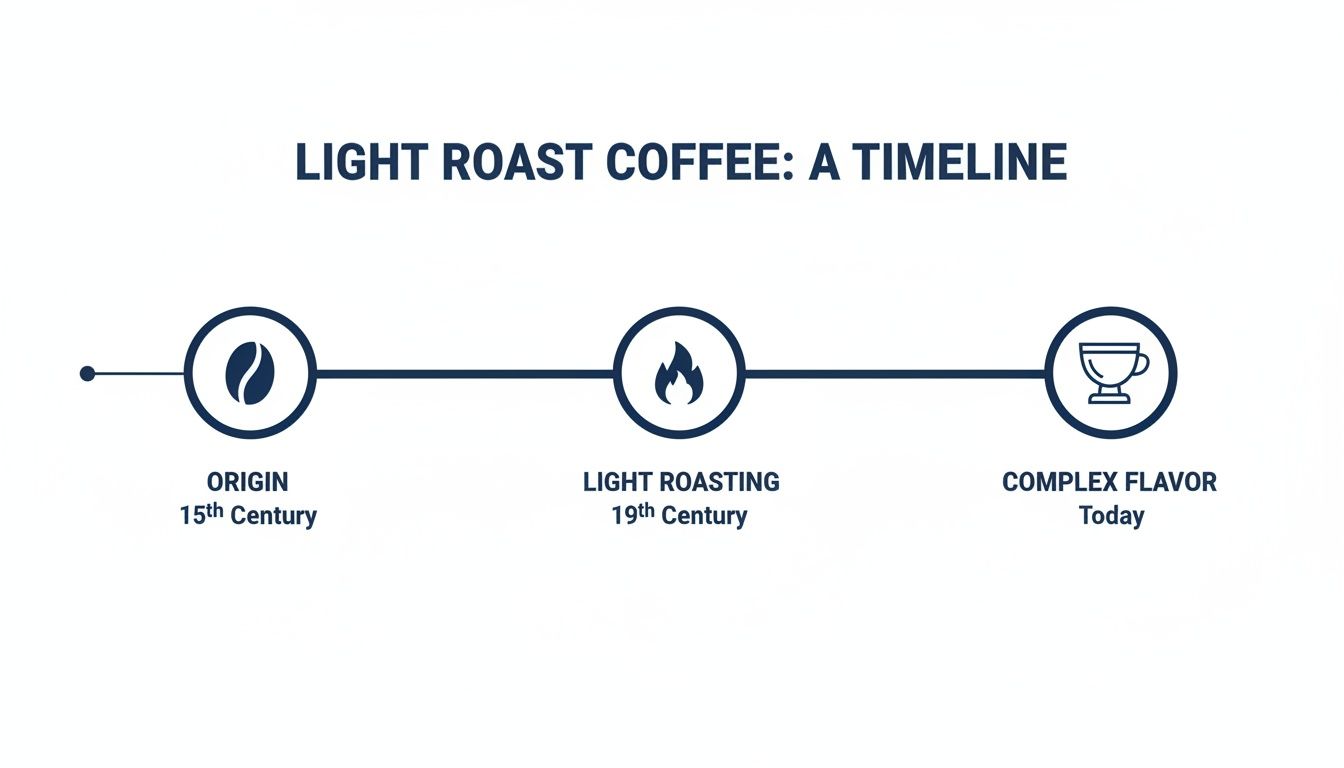
This visual journey shows that the final taste isn’t just about the roast itself, but a culmination of the bean's entire lifecycle.
The Decisive Moment: First Crack
The climax of the light roasting process is an event roasters call first crack. As pressure from steam and carbon dioxide builds inside the bean, it audibly cracks or pops, a lot like popcorn. This signals a critical turning point where the bean rapidly expands and becomes exothermic, meaning it starts generating its own heat.
For a light roast, this is the moment of truth. The roaster must decide exactly when to end the process. Stopping the roast just as first crack begins, or very shortly after, is what preserves the bean’s inherent acidity and its delicate floral or fruity notes.
This is the key difference that sets light roast coffee apart:
- Maximum Origin Character: The roast is stopped before the roasting process itself starts to dominate the flavour profile.
- Preserved Acidity: The bright, lively acidity that often gets muted in darker roasts remains vibrant and clean.
- Delicate Aromatics: Subtle notes of jasmine, bergamot, or berries are kept intact, offering a more complex sensory experience.
To get a more detailed look at how roasters manipulate these stages for different results, you can explore our full guide on how coffee roasting profiles are explained. At Seven Sisters, we take this precision even further with our oxygen-free roasting environment. By removing oxygen, we prevent the oxidative damage that can make delicate flavours taste stale or flat. This ensures the coffee’s journey from green bean to your cup is a pure expression of its origin, geography, and all the meticulous care taken along the way.
What to Expect from Your First Sip
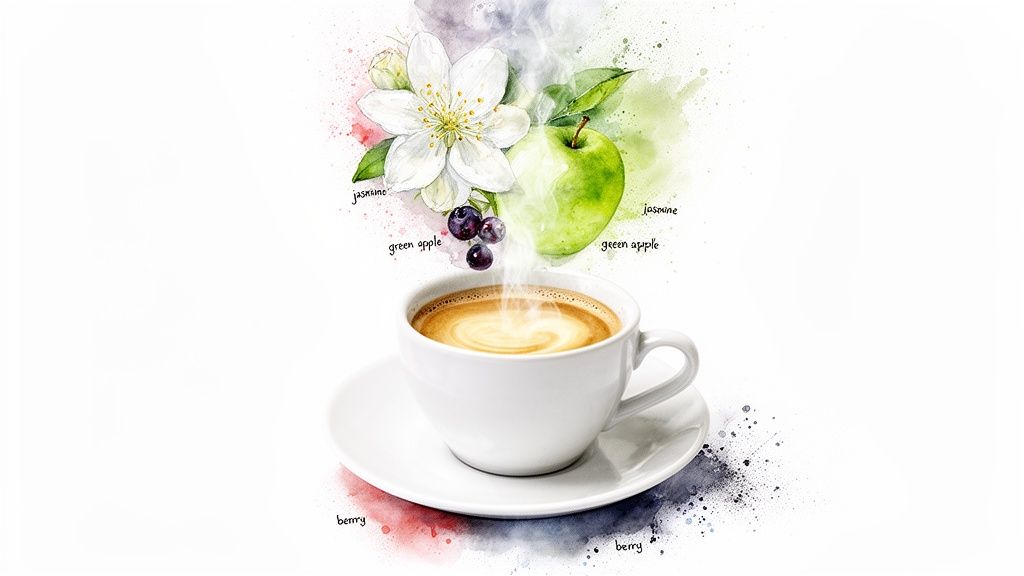
Let's move away from the roaster's technical world and into your coffee cup. Here, the idea of a 'light roast' blossoms into a vibrant, multi-layered experience. If you’re used to the familiar bold, smoky notes of darker coffees, your first proper taste of a light roast can be a genuine revelation.
It’s an invitation to explore a whole spectrum of flavours that are often quieted—or completely silenced—in darker profiles. Instead of tasting the roast, you’re tasting the bean's origin. The experience is cleaner, brighter, and a stunning showcase of the incredible diversity coffee has to offer. You'll discover a world of delicate floral aromas, zesty fruit notes, and a satisfying, often tea-like body. This is coffee in its most transparent form.
Unpacking the Flavour Profile of Light Roast Coffee
When coffee pros talk about light roasted coffee, they often use language that sounds like it belongs in a vineyard or an orchard, not a café. That's because light roasts preserve the bean’s natural, delicate compounds, resulting in a complex and layered taste profile.
You'll frequently hear descriptions circling around three key areas:
- Acidity: This is probably the most defining trait. It’s not a sour or unpleasant taste, but a bright, lively quality that makes the coffee feel crisp and refreshing. Think of the sharp, clean bite of a Granny Smith apple or the zesty tang of fresh lemon.
- Aromatics: Before you even take a sip, a light roast announces itself with a captivating aroma. These can be intensely floral, like jasmine or bergamot, or they might be wonderfully fruity, hinting at everything from red berries to ripe peaches.
- Sweetness: Beneath that bright acidity, you'll find a subtle, natural sweetness. This comes from the sugars that are gently preserved during the roasting process, offering a delicate counterbalance that might remind you of honey or raw cane sugar.
This shift in sensory experience can be startling at first. The heavy, bitter notes many people associate with coffee are replaced by a delicate and intricate profile that is both stimulating and immensely rewarding to explore. It's a completely different way to appreciate your daily cup.
Acidity: A Misunderstood Superpower
The word "acidity" often carries negative baggage, making some people wary of light roasted coffee. In the speciality coffee world, however, acidity is one of the most prized attributes. It's the very thing that gives a coffee its vibrancy and complexity, stopping it from tasting flat or one-dimensional.
A common misconception is that this acidity is a defect. In reality, it is the signature of a high-quality, carefully roasted bean. This desirable brightness adds a sparkle to the cup, much like the acidity in a fine wine or a perfectly ripe fruit.
Think of it this way: a flat, lifeless lemonade has low acidity, while a zesty, refreshing one has high acidity. It’s this quality that lifts all the other flavours and creates a dynamic, engaging taste experience. A truly well-executed light roast always balances this brightness with sweetness and a pleasant, lingering finish.
Origin: The Secret Ingredient
Why does a light roast from Ethiopia taste so different from one from Colombia? The answer lies in the coffee’s origin—its terroir. The unique combination of soil, climate, altitude, and processing method at the farm level has a profound impact on the final flavour. Light roasting is the best way to let these differences shine.
An Ethiopian Yirgacheffe, for instance, is famous for its elegant, tea-like body and prominent floral notes of jasmine and bergamot. A Colombian Huila, on the other hand, might present juicier notes of red apple, orange, and caramel sweetness. By keeping the roast light, we honour the bean's journey and allow you to taste its unique story.
If you're curious to explore this diversity, browsing a collection of single-origin coffee beans is the perfect way to start your journey and discover which regional profiles you enjoy most.
Why Light Roasts Are Defining UK Coffee Culture
The UK's love affair with coffee has changed, and it's changed for good. For years, the default was a dark, often punishingly bitter brew designed to deliver a caffeine hit and not much else. But that’s no longer the story. A massive shift is underway, moving us towards a new gold standard where quality, the story behind the bean, and a genuine sensory experience are what truly matter.
Driving this change is a new wave of curious coffee drinkers, passionate home brewers, and a brilliant indie café scene. Together, they’re creating a huge appetite for speciality beans, and right at the heart of this movement is the light roast. It’s the perfect stage for a coffee to show off its true colours, revealing the subtle, beautiful notes of its origin that darker roasts simply steamroll over.
From Commodity to Craft
The days of shrugging our shoulders at generic, one-note coffee are well and truly behind us. Today’s coffee lovers are asking questions. They want to know the story behind their cup: the farm, the varietal, and the careful journey from crop to roaster. This curiosity has ignited a real passion for beans that offer complexity and nuance—precisely the qualities light roasting is designed to protect and amplify.
This isn't just some passing trend; it's a fundamental change in how we see and value coffee. It’s a nod to the incredible skill that goes into both farming and artisanal roasting. As a result, light roasted coffee has become the flag-bearer for this new, discerning UK coffee culture, where flavour, not just function, is king.
The Economic Drivers of a Flavour Revolution
You can see this cultural shift written all over the market data. UK consumers aren't just drinking more coffee; they're actively trading up to speciality, lighter roast styles that put origin and craft front and centre. The coffee shop and café sector now makes up about 6.0% of the total UK eating-out market, a noticeable jump from 5.5% in 2022.
Market experts point to speciality coffee as the fastest-growing part of the industry, powered by our interest in single-origin beans, home brewing, and flavour—all hallmarks of the light roast philosophy. Even with drink prices on the rise, an estimated 7.9 million UK adults grab a coffee out-of-home every week. It’s clear proof that we’re willing to invest in a better experience. You can explore more data on the UK coffee market to get the full picture of this exciting growth.
This data just confirms what roasters and café owners see every single day: people are voting with their wallets for better coffee. The demand for transparency and incredible flavour isn't just reshaping menus; it's also building a more sustainable and equitable coffee industry.
At Seven Sisters Coffee Co., we couldn't be prouder to be part of this movement. Our oxygen-free roasting process is our commitment to preserving the delicate, authentic flavours of the world’s finest beans. We're here for the new wave of UK coffee drinkers—the ones who appreciate the craft and seek out that vibrant, clean taste that only a perfect light roasted coffee can deliver. We invite you to explore our selection of freshly roasted coffees at our sister site, ADS Coffee Supplies, and taste the difference for yourself.
How to Brew Light Roasted Coffee at Home
Unlocking the incredible flavours of a light roast at home is a genuinely rewarding experience, but it asks for a slightly different touch than you might be used to with darker beans. Light roasted beans are denser and less porous, which makes them less soluble in water. To get all those delicate, complex notes out, we need to adjust our brewing technique.
Think of it like trying to dissolve a hard sugar cube versus a spoonful of caster sugar; the cube needs a bit more work to break down. For coffee, that "work" comes from a few key tweaks to your brewing process. Nail the technique, and you'll coax out the bright acidity, floral aromas, and subtle sweetness that make this style so special.
Essential Adjustments for a Perfect Brew
To get a balanced, flavourful extraction from light roasted coffee, you need to give the water a bit of a helping hand. The two most powerful variables you can play with are water temperature and grind size. These small changes have a massive impact on the final taste in your cup.
Here’s what you need to focus on:
- Hotter Water: Aim for a water temperature somewhere between 93-96°C. That extra heat provides the energy needed to penetrate the dense bean structure and pull out all the desirable flavour compounds.
- Finer Grind: A finer grind dramatically increases the surface area of the coffee grounds. This allows the water to work its magic more quickly, helping you achieve a full extraction without brewing for an eternity.
By combining hotter water with a finer grind, you create the ideal conditions for a balanced brew. This pairing ensures you extract the sweet, complex notes without pulling out the sour, underdeveloped flavours of under-extraction.
Getting your grind right is absolutely crucial. For the kind of consistency that light roasts demand, a quality burr grinder is an essential piece of kit. If you're looking to complete your setup, you can explore a great range of Hario V60 drippers, filter papers, and grinders on our sister site.
Brewing Methods That Make Light Roasts Sing
While you can technically brew a light roast with any method, some are particularly good at highlighting its delicate character. Methods that give you more control over variables like flow rate and brew time are perfect. Pour-over and AeroPress are two fantastic choices that really let the coffee’s nuance shine through.
Pour-Over (Hario V60)
This iconic dripper is famous for producing a clean, bright, and aromatic cup that truly showcases a coffee’s origin.
- Grind: Use 20g of coffee, ground to a texture resembling table salt.
- Ratio: Prepare 320g of water at 96°C.
- Bloom: Pour 60g of water over the grounds, making sure they’re all saturated. Let it bloom for 45 seconds to release any trapped gases.
- Pour: Continue pouring the rest of the water in slow, steady circles. Aim to finish your pour by the 2:30 mark.
- Finish: Let the water drain through completely. Your total brew time should be around 3:00 to 3:15.
AeroPress
The AeroPress is incredibly versatile and forgiving, known for producing a rich, full-bodied cup with remarkable clarity.
- Grind: Use 18g of coffee ground slightly finer than you would for a V60.
- Ratio: Prepare 250g of water at 94°C.
- Brew: Place the AeroPress in the inverted position. Add the coffee, start your timer, and pour all 250g of water in. Give it a gentle stir for 10 seconds.
- Steep: Secure the filter cap and let the coffee steep until the timer hits 2:00.
- Plunge: Flip the AeroPress onto your mug and press down gently and consistently for about 30 seconds.
Choosing between these two popular methods often comes down to personal preference for the workflow and the final profile in the cup. If you're weighing your options, our detailed comparison of the V60 vs AeroPress can help you decide which brewer is the right fit for your home coffee bar.
Choosing and Storing Your Coffee Beans
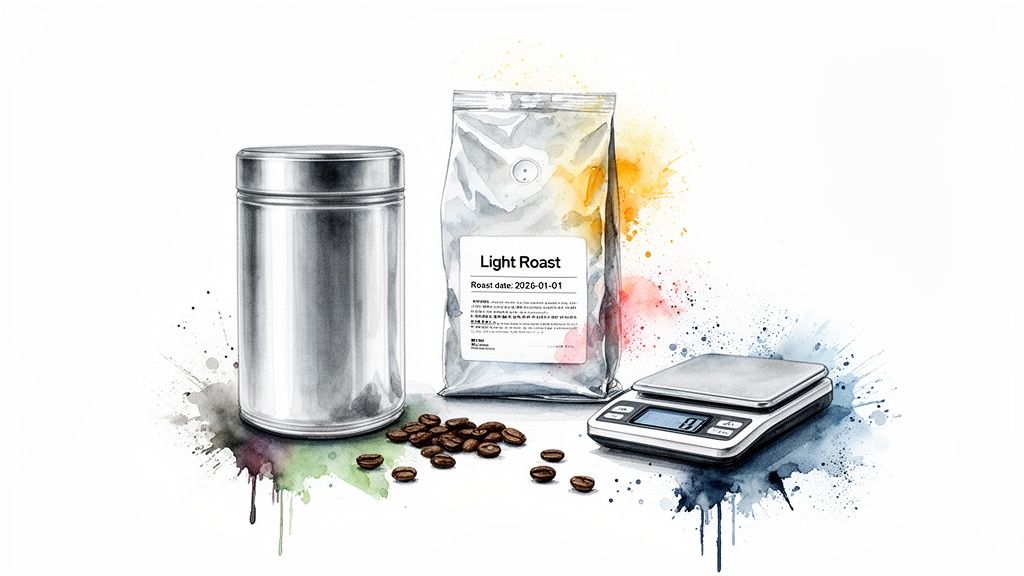
Alright, so you’re ready to dive into the vibrant world of light roasts. Fantastic. The next step is just as important as the brewing itself: picking the right beans and keeping them fresh. It can feel a bit overwhelming when you're staring at a coffee bag covered in details, but a few key pointers will help you make smarter choices and get the flavour the roaster intended.
The single most critical piece of information on any bag of speciality coffee? The roast date. Forget "best before" dates. The roast date tells you exactly when the magic happened, giving you a clear window into its freshness. Coffee hits its absolute peak between three days and four weeks after roasting, so always hunt for the newest date you can find.
What to Look for on the Bag
Beyond the date, the packaging is your first clue to the sensory journey waiting inside. Getting to grips with these details helps you understand the coffee’s story and pick profiles you’ll genuinely enjoy.
Keep an eye out for these key indicators:
- Origin and Varietal: This tells you the bean's life story—from its home country right down to the specific farm. It’s your best hint at the expected flavour profile, like the jasmine and bergamot notes of an Ethiopian Yirgacheffe or the crisp, wine-like acidity of a Kenyan SL28.
- Processing Method: Words like 'washed,' 'natural,' or 'honey' describe how the coffee cherry was handled after being picked. This has a massive impact on flavour. Washed coffees are often clean and bright, while natural coffees can be wild, intensely fruity, and sweet.
At Seven Sisters Coffee, our roast-to-order model is at the heart of everything we do. We only roast your coffee after you’ve placed your order, which means the beans that arrive on your doorstep are at their absolute peak of freshness and flavour.
Keeping Your Coffee Beans Fresh
Choosing great coffee is only half the battle; proper storage is what keeps it great. The biggest enemies of fresh coffee are oxygen, light, heat, and moisture. Let your beans get friendly with any of these, and their delicate aromatic compounds will quickly fade, leaving you with a dull, lifeless brew.
The secret to preserving that just-roasted character is surprisingly simple. Store your beans in an airtight, opaque container and tuck it away in a cool, dark place. A kitchen cupboard away from the oven is perfect. This simple act shields them from harm and keeps their flavours vibrant for longer. For a deeper look into the science, we have a detailed guide on how to store coffee beans.
And please, let's bust a common myth: do not store coffee in the freezer. It might seem logical, but the moisture inside a freezer is a death sentence for your beans. Temperature changes create condensation, which makes them go stale even faster. Your cupboard is the safest, happiest home for your precious light roast.
Your Light Roast Coffee Questions Answered
We’ve travelled through the vibrant world of light roasted coffee, from the science behind the roast to the art of a perfect brew. To wrap things up, let’s tackle some of the most common questions that pop up. This quick-fire guide should clear up any lingering doubts you might have.
Does Light Roast Coffee Have More Caffeine?
Ah, the classic coffee debate. The answer is a fascinating "it depends on how you measure it." Because light roast beans are denser than their darker, more expanded cousins, the way you portion them out changes everything.
-
Measured by weight: If you measure your coffee in grams, a light roast and a dark roast will have almost the exact same amount of caffeine. The roasting process itself barely touches the actual caffeine content within a single bean.
-
Measured by volume (scoops): This is where it gets interesting. If you use a scoop, you'll pack in more caffeine with a light roast. Since the beans are smaller and denser, more of them fit into the scoop, giving you a higher total caffeine dose in your cup.
So, if you’re chasing the biggest kick, measuring your light roasted coffee with a scoop is the way to go.
Is Light Roast Coffee Better for You?
While all coffee has its perks, there's growing evidence that light roasts might just have a slight edge in one key area. The gentler, shorter roasting process is much better at preserving some of the natural compounds found in the coffee bean.
Light roasts tend to hold onto a higher concentration of chlorogenic acids, a powerful group of antioxidants. These compounds are celebrated for their health-promoting properties, but they start to break down as roasting temperatures and times creep up.
By choosing a light roast, you're likely getting more of these beneficial antioxidants in every cup. It's a wonderful little bonus to go along with the incredible flavour.
Why Does My Light Roast Coffee Taste Sour?
This is a crucial lesson for every home brewer: understanding the difference between desirable brightness and unpleasant sourness. Brightness is that lively, crisp acidity we love—think of the clean snap of a green apple. Sourness, on the other hand, is a sharp, puckering sensation that screams "brewing problem!"
Sourness is almost always a sign of under-extraction. It means the water simply didn't have enough time, heat, or access to the coffee grounds to pull out all the delicious, sweet flavour compounds. All it managed to grab were the fast-extracting, sour-tasting acids. The fix is usually simple: try grinding your beans a little finer or using slightly hotter water to give the extraction a helping hand.
Ready to put your new knowledge to the test? At Seven Sisters Coffee Co, we roast our exceptional single-origin beans to order, ensuring you receive the freshest, most vibrant light roast coffee possible. You can buy our Ethiopian Yirgacheffe coffee beans, our popular Monsoon Malabar coffee beans, or explore our full collection and taste the difference for yourself at ADS Coffee Supplies.