A UK Guide to Light Roast Coffees Flavour Brewing and Beans
Light roast coffees are where the true, unadulterated character of the bean gets its moment in the spotlight. Roasted for a shorter time, this delicate process is all about preserving the bright, fruity, and floral notes inherent to the coffee's origin. The result is a cup that’s vibrant and complex—a genuine expression of the bean itself.
What Exactly Are Light Roast Coffees
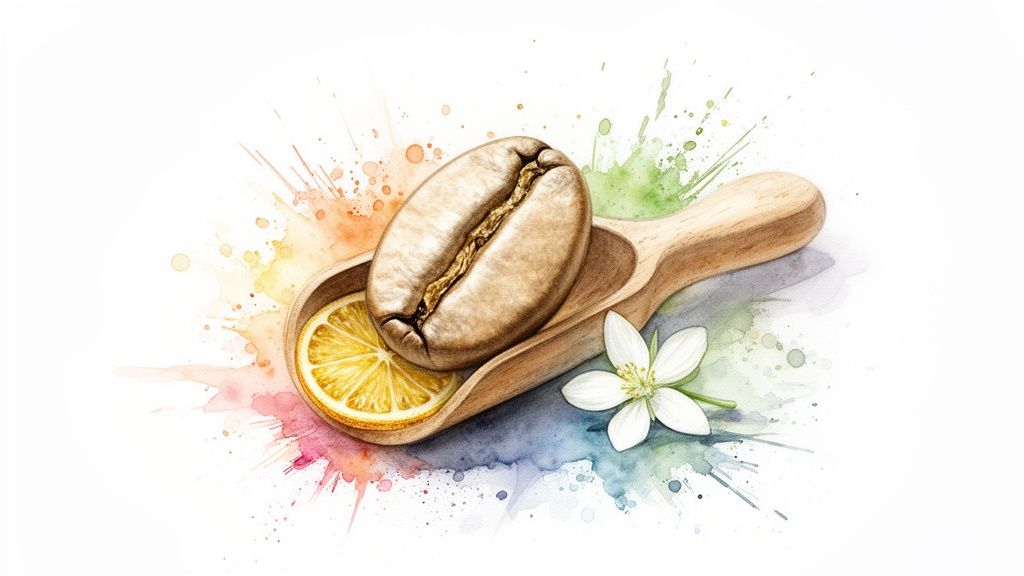
Think of coffee roasting like toasting a slice of bread. When it's lightly toasted, you can still taste the distinct flavour of the grain. But if you were to toast it until it's dark and almost burnt, all you’d really taste is the toasting process. Light roast coffee works on the very same principle; it’s all about letting the bean's intrinsic character sing.
This roasting style is a delicate art. The process is carefully managed and stopped just after the 'first crack'—the moment the beans audibly pop and expand. What you're left with is a bean with a pale brown colour, a higher density, and no oily sheen on its surface. This meticulous handling is what allows the nuanced flavours, shaped by the soil, climate, and altitude of its home, to come through so clearly in your cup.
The True Flavour of the Bean
Unlike their darker cousins, which are known for deep, roasty flavours like chocolate and caramel, light roasts offer a completely different experience. They're prized for their bright, crisp acidity and a much lighter body. The kinds of flavour profiles you can expect are often described as:
- Fruity: Think bright notes of citrus, sweet berry, or stone fruit.
- Floral: Delicate hints of jasmine, rose, or honeysuckle.
- Sweet: A natural sweetness that might remind you of honey or raw sugar cane.
- Tea-like: A clean, subtle finish that is both refreshing and complex.
This focus on origin flavour is exactly why you'll often see light roasts marketed as single-origin coffees, highlighting a specific country or even a single farm. To really get to grips with the differences across the roasting spectrum, you can explore the nuances of various coffee roasting profiles in our detailed guide.
The growing appreciation for nuanced flavour is clear. In the UK, roasted coffee makes up 54.3% of all coffee bought for home use, and that figure jumps to 70.1% for out-of-home purchases, showing a strong consumer preference for quality beans over instant alternatives.
At Seven Sisters Coffee Co., we take this a step further with our oxygen-free roasting process. By shielding the beans from oxygen during this critical phase, we preserve even more of their fragile aromatic compounds. This results in an exceptionally clean and vibrant cup, allowing you to experience the truest expression of the world's finest light roast coffees.
The Art and Science of Roasting Lightly
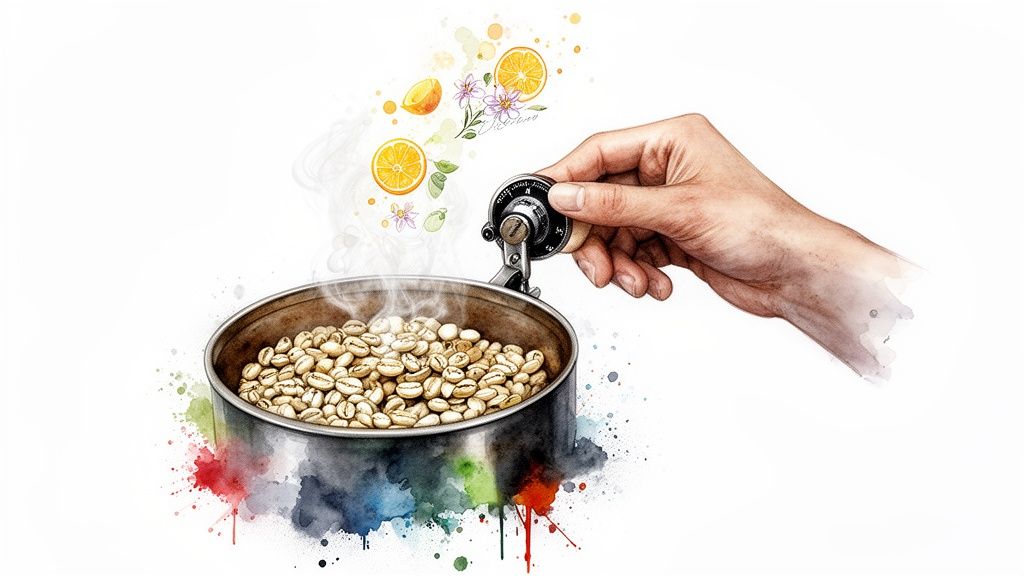
Transforming a dense, green coffee seed into the aromatic brown bean we know and love is a delicate dance between heat and time. For light roast coffees, this dance is a short one. The entire goal is to preserve the incredible flavours of the bean's origin, not to create new ones from the roast itself.
The whole process hangs on one critical moment: the ‘first crack’. Just like popcorn popping, this is the point where moisture inside the bean turns to steam, forcing it to audibly crack open and expand. A true light roast is born when the process is stopped right at this point, or just moments after.
This timing is everything. It captures the coffee at its absolute brightest, locking in all those vibrant, acidic notes. Push the roast any further, and you start to caramelise the sugars and break down the acids, which brings out the deeper, toastier notes you find in medium and dark roasts. Stopping early is the secret to unlocking those incredible fruity and floral characteristics that make light roasts so special.
Our Oxygen-Free Roasting Advantage
At Seven Sisters Coffee Co., we’ve taken this a step further with our unique oxygen-free roasting technique. Think of it like cooking delicate herbs; if you hit them with too much harsh, direct heat, their subtle aromas vanish. Oxygen does something similar during roasting, causing oxidation that can mute the coffee's most fragile flavour compounds.
By roasting in an oxygen-free environment, we shield these delicate notes from harm. The result is a cleaner, brighter cup that more purely expresses the coffee's terroir—that unique cocktail of soil, climate, and altitude where it was grown. It’s our way of making sure the farmer’s hard work is perfectly preserved for you to enjoy.
Roasting is a craft where precision makes all the difference. Protecting the bean’s inherent qualities from oxidation allows for a cup that is not just roasted, but truly revealed.
The Caffeine Myth Debunked
You’ve probably heard that darker roasts pack a bigger caffeine punch. Funnily enough, the opposite is often true. Caffeine is a pretty stable compound that only diminishes slightly during roasting. Because light roast beans spend less time in the roaster at lower final temperatures, they hang onto a little more of their original caffeine content.
What’s more, light roast beans are denser than their darker, more expanded cousins. If you measure your coffee with a scoop, you'll actually fit more light-roasted beans in there, leading to a brew with a bit more of a kick. The difference isn't massive, but it’s a fascinating bit of coffee science that catches many people by surprise. If you're curious to try it yourself, you can even explore the basics of coffee roasting at home with our guide.
Exploring the Flavour Profiles of Light Roasts
Diving into the world of light roast coffees is like exploring a flavour map filled with vibrant, delicate, and often surprising tastes. While darker roasts get much of their character from the roasting process itself—think deep notes of chocolate and caramel—light roasts are a completely different story. They’re a direct expression of the coffee bean's origin.
What you're tasting is the pure, nuanced flavour shaped by the soil, altitude, and climate of the specific farm where the beans were grown. They preserve everything that makes that coffee unique, right from the source.
This means you’ll discover a completely different spectrum of tasting notes. Forget heavy, roasty flavours; your palate will be greeted with bright, clean, and elegant characteristics. It’s no wonder there’s a growing appreciation for this style of coffee in the UK, where the roasted coffee market hit 70,000 tons valued at $922 million—and that figure is only expected to climb. If you're curious, you can discover further insights into UK coffee consumption and the trends driving this growth.
What to Expect in Your Cup
So, what exactly defines the taste of a light roast? While every coffee tells its own story, the flavours generally fall into a few exciting categories.
- Zesty & Citrusy: Many light roasts, especially those from African origins like Ethiopia, burst with a bright acidity that reminds you of lemon, bergamot, or even grapefruit.
- Sweet & Fruity: You might also find delightful notes of sweet berries, juicy stone fruits like peach, or even a hint of tropical pineapple.
- Floral & Delicate: Some of the most sought-after light roasts offer subtle, elegant floral aromas. Think jasmine, honeysuckle, or rose.
- Tea-Like Qualities: These coffees often have a light, delicate body and a clean finish that feels remarkably similar to a fine black or herbal tea.
To really get a feel for this, our Ethiopian Yirgacheffe is a perfect example. It delivers those classic bright citrus and floral notes in every sip, showcasing just how well a light roast lets the bean’s inherent personality shine through.
Light Roast vs Dark Roast: A Flavour Comparison
To really nail down the differences, it helps to see things side-by-side. Light and dark roasts sit at opposite ends of the flavour spectrum, and understanding what sets them apart will help you find exactly what you're looking for in your morning cup.
This table breaks down the key characteristics you can expect from each.
| Characteristic | Light Roast Coffees | Dark Roast Coffees |
|---|---|---|
| Flavour | Bright, fruity, floral, acidic, delicate | Rich, smoky, chocolatey, nutty, bold |
| Acidity | High and vibrant | Low and smooth |
| Body | Light and tea-like | Heavy and full-bodied |
| Origin Notes | Very distinct and prominent | Muted by the roast process |
| Caffeine | Slightly higher | Slightly lower |
Ultimately, one isn't better than the other—it all comes down to personal preference. If you enjoy complexity and nuance, a light roast is your ticket to a world of exciting flavours. If you prefer something rich and comforting, a dark roast will hit the spot.
Single-Origin vs Blends
When you start exploring light roasts, you’ll quickly come across two main types: single-origin and blends.
A single-origin coffee comes from one specific farm, producer, or region within a single country. This approach gives you a pure, unadulterated taste of that particular environment—a concept known in the coffee world as terroir. It's a fantastic way to understand just how much geography can impact flavour.
A blend, on the other hand, is a thoughtful combination of beans from different origins. An expert roaster crafts a blend to create a specific, balanced, and consistent flavour profile that you might not be able to get from just one type of bean.
For light roasts, single-origin coffees are especially popular. Why? Because they put the unique and often exotic notes of a specific region front and centre. They are the purest way to taste the story of a coffee bean, from a specific place and a specific harvest. If you want to delve deeper, you can explore our diverse range of single-origin coffee beans and start your journey.
Ready to start your own tasting adventure but not sure where to begin? Our Light Roast Taster Pack is the ideal introduction. It provides a curated selection that lets you sample different profiles side-by-side, helping you discover which light roast coffees you'll love most.
How to Brew Light Roast Coffee for Maximum Flavour
Getting the best out of a light roast is an art, but it’s one you can easily master at home. These coffees are packed with delicate, complex notes, but they don't give them up easily. Unlike forgiving darker roasts, light roasts demand a bit more precision to really let their bright acidity and subtle aromas sing.
The good news? It all comes down to dialling in four key things: your grind size, water temperature, coffee-to-water ratio, and brew method. Get these right, and you’ll unlock the true character of the bean, tasting every nuance of its origin in your cup. It’s all about creating the perfect environment for a brilliant extraction.
Mastering the Brewing Variables
Because light roast beans are physically denser and less porous than their darker cousins, they need a bit of a nudge to release all their flavour. This just means we need to tweak our usual approach.
- Grind Size: Go for a slightly finer grind than you would for a medium or dark roast. A finer grind increases the surface area of the coffee, giving the water more to work with and helping it pull out all those lovely, desirable flavours during the brew.
- Water Temperature: Hotter water is your friend here. To properly extract flavour from light roasts, you need to push the temperature up a bit. Aim for a range between 92-96°C. That extra heat is crucial for breaking down the denser bean structure and unlocking its bright, fruity, and floral notes. We’ve gone deep on this topic, so you can learn more about the best water temperature for coffee in our detailed guide.
- Coffee-to-Water Ratio: The classic "golden ratio" for most methods is 1:16, which means one part coffee to sixteen parts water. For a single cup, that could be 15 grams of coffee to 240 grams of water. This is a fantastic starting point, giving you a balanced cup that you can then tweak to perfectly match your taste.
Get your brewing right, and you can expect to find some truly distinct flavour profiles.
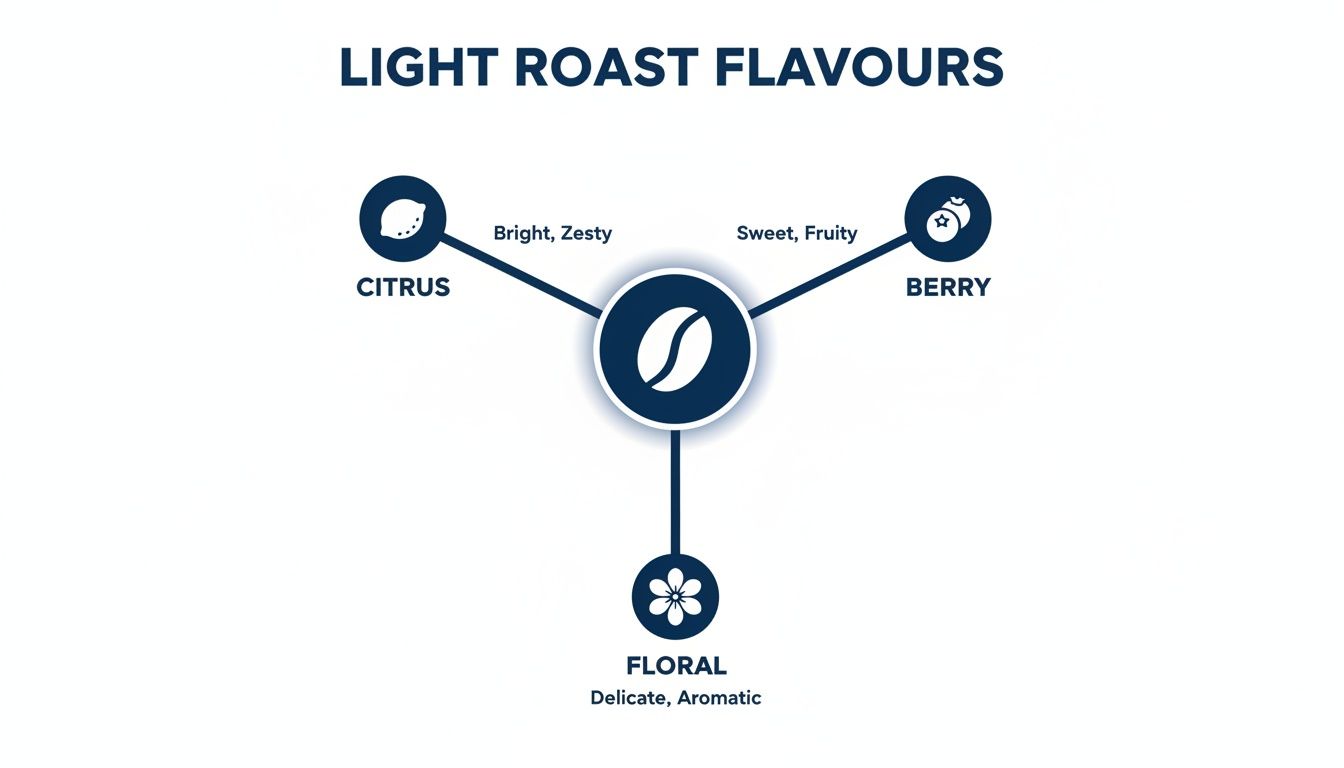
As you can see, a well-brewed light roast is all about clarity, revealing those clean notes of citrus, berry, and florals that tell the story of the coffee's origin.
Choosing Your Brewing Method
Some brew methods are just made for light roasts. Anything that gives you plenty of control, like immersion and pour-over techniques, is going to be your best bet for coaxing out those delicate flavours.
The right brewing equipment doesn't just make coffee; it reveals it. Methods that offer greater control over variables like water flow and contact time are ideal for coaxing out the subtle complexities of a high-quality light roast.
Let’s look at a couple of the most popular options:
-
Pour-Over (V60 & Chemex): There’s a reason coffee lovers swear by these. Pour-over brewers give you total control over how you pour the water, which results in an incredibly clean, crisp cup that puts bright acidity and beautiful aromatics front and centre. The paper filters also ensure exceptional clarity in the final brew.
-
AeroPress: This little brewer is wonderfully versatile and surprisingly forgiving. It uses a combination of immersion and pressure to create a smooth, full-flavoured cup. Its shorter brew time is fantastic for bringing out the sweetness in a coffee while keeping bitterness in check, making it a brilliant choice for experimenting with different light roasts.
How to Choose and Store Your Coffee Beans
You’ve done the hard work of finding a coffee that sounds delicious, but making sure every cup lives up to that promise comes down to choosing and storing your beans properly. When you’re looking at a bag of speciality coffee, your eyes should go to one thing first: the roast date. It’s the single most important clue to freshness.
Coffee is at its most vibrant and expressive within a few weeks of being roasted. After that, those beautiful, nuanced flavours start to fade. That’s why we roast to order here at Seven Sisters Coffee Co.—your beans are as fresh as they can possibly be when they land on your doorstep.
The shift towards fresh, high-quality beans is clear. The UK coffee market pulled in $4.83 billion in revenue and is on track to hit $7.02 billion by 2030. Roasted coffee is the engine driving that growth, which tells you just how much people are turning away from mass-produced stuff in favour of artisanal quality.
Keeping Your Light Roast Coffees Fresh
Once you have a bag of beautiful beans, you need to protect them. Think of your coffee beans as delicate pantry items with four mortal enemies: oxygen, light, heat, and moisture. Protecting them is non-negotiable if you want to preserve those complex flavours.
The best defence is simple: store them in an airtight, opaque container at room temperature. A cool, dark cupboard is the perfect spot. This little step keeps oxygen from making the beans stale and stops sunlight from breaking down the fragile aromatic oils that give your coffee its incredible scent.
Storing your coffee correctly is just as important as brewing it well. Whatever you do, never put your beans in the fridge or freezer. The constant temperature changes and moisture create condensation, which is a fast track to ruining the coffee's flavour and aroma.
For anyone serious about long-term freshness, understanding the best storage methods, including options like specialized coffee storage bags and liners, is a game-changer. If you want to go a bit deeper, have a look at our complete guide on how to store coffee beans for more expert tips.
Your Light Roast Coffee Questions Answered
Diving into the world of light roast coffee always sparks a bit of curiosity. From getting the brewing just right to sorting fact from fiction, finding clear answers makes the whole experience so much more rewarding. This section is all about tackling the most common questions we hear, offering straight-to-the-point insights to help you brew with confidence.
Think of this as a chat with a friendly expert. We're here to clear up any lingering doubts so you can explore, brew, and enjoy light roast coffee to its absolute fullest.
Do Light Roasts Really Have More Caffeine?
Yes, they do, but the difference might not be as huge as you've heard. Caffeine is a pretty tough compound that barely breaks down during roasting. Since light roast coffees are roasted for a shorter time and don't get as hot as dark roasts, they hold onto slightly more of their original caffeine.
The bigger difference actually comes down to density. Light roast beans are denser and smaller because they haven't expanded and lost mass like their dark-roasted cousins. So, if you're measuring your coffee with a scoop, you'll physically fit more light roast beans in there, which naturally leads to a brew with a slightly bigger caffeine kick.
Why Do My Light Roasts Sometimes Taste Sour?
This is a classic hurdle for newcomers, and it almost always points to one thing: under-extraction. When your coffee tastes sour or unpleasantly sharp, it means the water didn't have enough time or heat to pull out all the sweet, complex compounds, leaving you with only the bright acids that come out first.
Getting it right is just a matter of small tweaks. Here are a few things to try:
- Grind Finer: This creates more surface area for the water to work its magic, leading to a much more efficient extraction.
- Turn Up the Heat: Denser light roast beans need hotter water to properly dissolve all those lovely flavour compounds. Aim for a temperature between 92-96°C.
- Brew a Little Longer: Giving the water more contact time with the coffee grounds helps to balance out that initial acidity with sweetness.
Don't think of it as a problem. It's really just a sign that you're on the cusp of unlocking a perfectly balanced and delicious cup.
What is the Best Grind Size for Light Roast Coffee?
While the perfect grind size really depends on your brewer, the golden rule is to go slightly finer for light roasts than you would for darker ones. The beans are just denser, so a finer grind is needed to help the water efficiently pull out all those complex, delicate flavours.
Here’s a quick starting guide:
| Brew Method | Recommended Grind | Why It Works |
|---|---|---|
| Pour-Over (V60) | Medium-Fine | Hits the sweet spot between extraction time and flow rate to showcase bright acidity and clarity. |
| AeroPress | Fine to Medium-Fine | The quick brew time of an AeroPress really benefits from a finer grind to achieve a full extraction. |
| French Press | Medium-Coarse | You'll still want it coarser than other methods, but dial it just a touch finer than you would for a dark roast. |
Nailing the perfect setting on your grinder will take a little bit of trial and error, but starting a little finer is always a solid strategy for brewing incredible light roast coffees.
Can I Use Light Roast Coffee for Espresso?
Absolutely! And you really should try it. Light roast espresso is a brilliant way to experience the bright, fruity, and floral notes of a coffee in their most concentrated form. Be warned, though: it demands a bit more precision than a traditional dark roast espresso. Those dense beans put up more of a fight, making them trickier to extract perfectly.
When you're pulling a light roast espresso, you're chasing a "sweet spot" that captures all those vibrant origin notes without tipping over into sourness. This often means adjusting your technique—maybe trying a longer pre-infusion or a slightly hotter water temperature to get a balanced, flavour-packed shot.
Many speciality coffee shops now proudly feature light roasts as their main or guest espresso. It's a completely different sensory experience—less about that classic roasty bitterness and more about celebrating the bean's true character. If you're giving it a go at home, be ready to dial in your grinder with care and play around with your recipe. The reward is a uniquely complex and lively shot of espresso that's well worth the effort.
Ready to put all this new knowledge to the test? At Seven Sisters Coffee Co, we meticulously source and roast some of the world's most exciting coffees. Explore our collection and discover the perfect light roast to kickstart your flavour adventure. Find your new favourite today.