A Guide to Indonesian Sumatra Coffee: The Pride of the Archipelago

Step into the world of Indonesian Sumatra coffee, a brew that’s as rich and complex as the volcanic island it comes from. For those who love a coffee with a full body, low acidity, and a distinctly earthy flavour, Sumatra is a name that commands respect. It’s a world away from the bright, acidic coffees of Africa or Central America, offering a deep, satisfying taste that has won it a legion of fans.
Your Guide to Sumatra Coffee
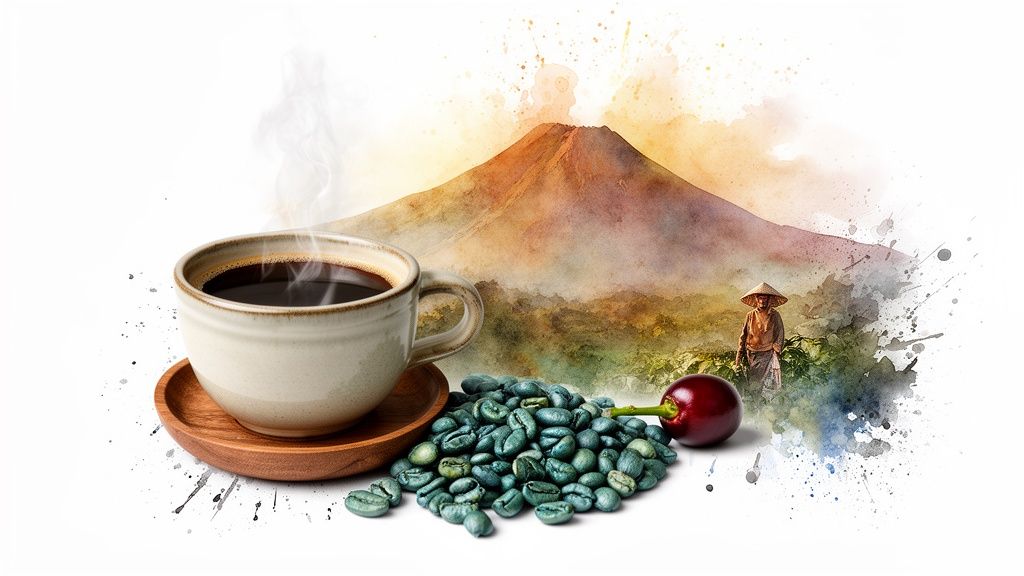
This coffee tells the story of its home in every sip. Grown on the lush, tropical island of Sumatra—the largest island entirely within Indonesia—it’s the product of a unique environment and traditional farming practices handed down through generations.
Forget sprawling, industrial plantations. Most Sumatran coffee is cultivated by smallholder farmers on plots often no larger than a single hectare. This intimate connection to the land and its heritage is something you can genuinely taste in the final cup.
A UK Favourite with Deep Roots
The UK's love for interesting and flavourful coffee is no secret. In 2023 alone, the United Kingdom imported a staggering 160,782,000 kilograms of unroasted, non-decaffeinated coffee beans. While Brazil might be a major supplier, it's unique origins like Indonesia that truly fuel the speciality coffee scene, delivering the complex, memorable flavours that British enthusiasts are always searching for.
To really get a feel for this coffee, it helps to see it within the broader world of Indonesian cuisine, which is celebrated for its bold, aromatic character. Sumatran coffee fits right in.
What Makes Sumatran Coffee Special?
So, what’s the secret behind its signature taste? It’s not just one thing, but a perfect storm of factors we’ll be exploring. Here’s a little preview of what makes this coffee so exceptional:
- Volcanic Terroir: The fertile, mineral-rich volcanic soil of the island provides the perfect foundation for growing flavour-packed Arabica beans.
- Unique Processing: A special method known as ‘Giling Basah’ (wet-hulling) is almost entirely responsible for its famous heavy body and earthy notes. It’s a game-changer.
- Dedicated Farmers: Small, family-run farms use traditional, sustainable methods that contribute not only to the quality of the coffee but also to the biodiversity of the region.
At ADS Coffee Supplies, we're proud to source and share exceptional beans that tell this story, like our Sumatra Mandheling. It's a perfect example of what makes this origin so incredible. Come with us as we dive deeper into what makes Indonesian Sumatra coffee a true treasure of the coffee world.
The Unique Terroir and Regions of Sumatra
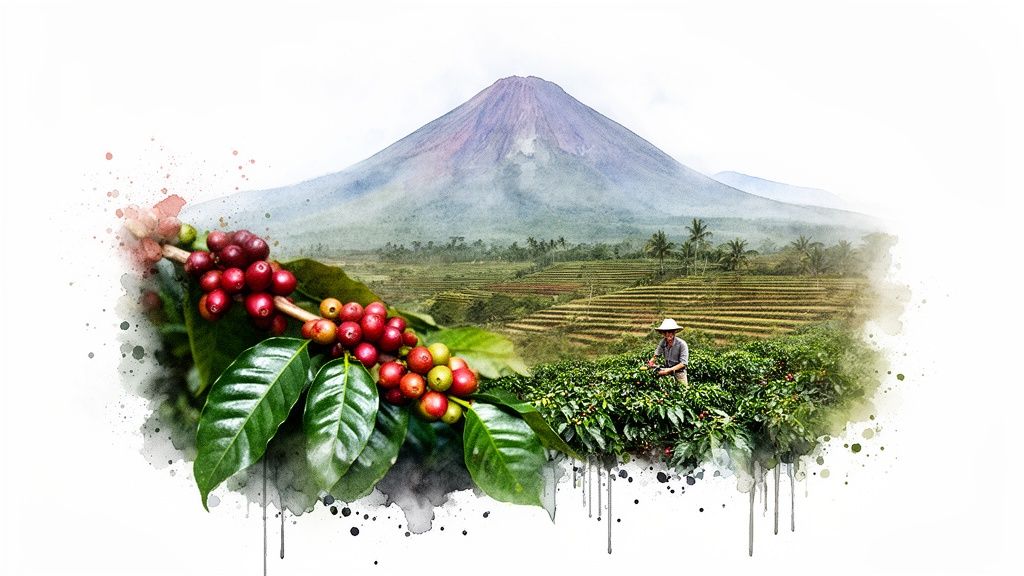
To really get to grips with what makes Sumatran coffee so special, you first have to understand the island itself. It's a land of incredible contrasts, from steamy, dense jungles to colossal volcanoes that pierce the clouds. This raw, dramatic environment is the secret ingredient that gives the coffee its soul.
This unique combination of soil, climate, and altitude is what we call terroir. And in Sumatra, the terroir is truly one of a kind.
Imagine an island sitting right on the Ring of Fire, a hotbed of tectonic activity. This geological lottery has blessed Sumatra with incredibly rich volcanic soil, packed with minerals that coffee plants absolutely thrive on. This fertile earth is the foundation, giving the beans the essential nutrients to build those deep, complex flavours we look for in the cup. It’s this very soil that first introduces that signature earthy, almost wild-herb quality.
When you pair that soil with high altitudes and a consistently warm, humid climate, you get the perfect storm for growing dense, flavour-packed coffee cherries. Every sip of Sumatran coffee is a direct taste of its wild, untamed origins.
Key Coffee Growing Regions
While coffee is grown all over the island, a few key regions have earned a reputation for producing the absolute best of the best when it comes to Indonesian Sumatra coffee. Each one brings its own subtle environmental twists, which means you get fascinating nuances in the final flavour.
Three of the most celebrated spots are:
- Aceh: Tucked away at the northern tip of Sumatra, the highlands around Takengon are famous for producing Gayo coffee. It's often noted for having a slightly cleaner cup and brighter notes than other Sumatran coffees, but it still holds onto that classic full body.
- Lintong: Situated near Lake Toba—the largest volcanic lake in the world—the Lintong region produces coffees that are unapologetically full-bodied and earthy, with unmistakable notes of cedar and spice. The unique microclimate here is crucial for developing that quintessential Sumatran profile.
- Mandheling: This isn't a specific town or district, but rather a name tied to the Mandailing people who have traditionally grown coffee in the Tapanuli region. Mandheling coffee is perhaps the most famous of all, loved for its exceptionally smooth, heavy body and rich notes of dark chocolate and tobacco.
The Human Element
Of course, the environment is only half the story. The human touch is just as vital. The vast majority of Sumatran coffee isn't grown on massive, sprawling estates. Instead, it comes from small, family-run farms, often no bigger than a single hectare.
These smallholder farmers use traditional, shade-grown methods, cultivating coffee plants under the protective canopy of native trees. This approach doesn't just produce healthier, slower-maturing coffee cherries with more developed sugars; it also supports local biodiversity, creating a sustainable ecosystem where nature and agriculture work in harmony.
Giling Basah: The Secret Behind Sumatra's Flavour
If Sumatra’s terroir is the foundation of its flavour, then its unique processing method is the architectural blueprint giving it that unmistakable shape. This technique, known as Giling Basah (literally "wet grinding" or wet-hulling), is the single biggest reason why Sumatran coffee tastes the way it does. It’s a method born from pure necessity that has become the island's signature.
The humid, unpredictable climate in Sumatra makes conventional washed or natural drying processes a real challenge. To get around this, farmers developed Giling Basah, a faster, more practical approach that works with the local environment, not against it. The key difference? This process doesn't wait for the coffee bean to be fully dry before removing its protective layers.
To get your head around it, think about peeling a fruit. With most coffee processing, you’d let the fruit dry out completely until the skin is brittle and flakes off easily. With Giling Basah, you're essentially peeling that fruit while it's still damp and sticky. This is where the magic really begins.
How Giling Basah Works
This unique timing creates a direct interaction between the bean and its environment during a crucial phase of its development. Because the bean is hulled (its parchment layer removed) while its moisture content is still incredibly high—around 30-50% compared to the usual 11%—it remains exposed and vulnerable during the final drying stages.
Here's a quick rundown of the steps involved:
- Pulping: Farmers kick things off by removing the outer skin of the coffee cherry, usually with small, hand-cranked machines right there on the farm.
- Overnight Fermentation: The beans, still coated in their sticky mucilage, are left in bags to ferment overnight. This helps break down that sugary layer.
- Washing and Partial Drying: The next morning, the mucilage is washed off, and the beans (still inside their parchment shells) are laid out in the sun to partially dry for just a few hours.
- Wet-Hulling: This is the game-changing step. The still-damp beans are taken to a mill where a special machine strips off the parchment layer while the bean is soft and swollen with water.
- Final Drying: Finally, the "naked" green beans are laid out to finish drying, now fully exposed to the air, sun, and everything else in the atmosphere.
The Impact on Flavour and Body
This early exposure is what shapes the coffee’s final character. The semi-dried, unprotected beans act almost like sponges, absorbing ambient flavours that contribute to those famous earthy, herbal, and sometimes spicy notes that define a true Sumatran. It also dramatically lowers the coffee’s acidity while turning up the volume on its body, resulting in a rich, syrupy, and velvety texture.
Giling Basah is more than just a process; it's a direct reflection of Sumatra's climate and ingenuity. It transforms the bean, building a heavy, complex body and an earthy flavour profile that is impossible to replicate with any other method.
This process is also why the unroasted beans look so distinct. They often have a beautiful bluish-green hue and sometimes a slightly rustic, uneven shape. For coffee lovers, this is the visual signature of a genuine Giling Basah coffee. It's a perfect example of how a unique, regional approach can create one of the world's most recognisable single origin coffee profiles, and a true testament to the island's rich coffee heritage.
Tasting the Earth: What to Expect in Your Cup
Now that we’ve pulled back the curtain on the unique terroir and the Giling Basah method, it’s time to get to the good part: the sensory experience of a freshly brewed cup. Drinking a Sumatran coffee is less about bright, zesty notes and much more about a deep, resonant flavour that feels grounded and substantial. It is, quite literally, a taste of the wild, volcanic earth it comes from.
The first thing you’ll probably notice is the aroma. Expect rich, inviting scents of dark chocolate and cedarwood, maybe with a hint of sweet tobacco or spice lingering in the background. This isn’t the light, floral bouquet you’d get from an Ethiopian coffee; it’s a much deeper, more contemplative fragrance that perfectly sets the stage for the robust flavours to follow.
Unpacking the Flavour Profile
When you take that first sip, the most prominent notes are often unapologetically earthy and complex. Think of the smell of a forest floor after a good downpour or the satisfying richness of high-quality dark chocolate. These powerful, dominant flavours are beautifully balanced by subtler undertones that keep things interesting.
Depending on the specific region and how it’s been roasted, you might also pick up on:
- Herbal Notes: Faint hints of moss, dried herbs, or even a touch of bell pepper.
- Spicy Undertones: A whisper of clove, cinnamon, or black pepper.
- Muted Fruitiness: Sometimes, a subtle sweetness like dried fig or a ghost of tropical fruit can peek through the earthiness.
The diagram below shows the crucial Giling Basah steps responsible for creating this distinctive profile.
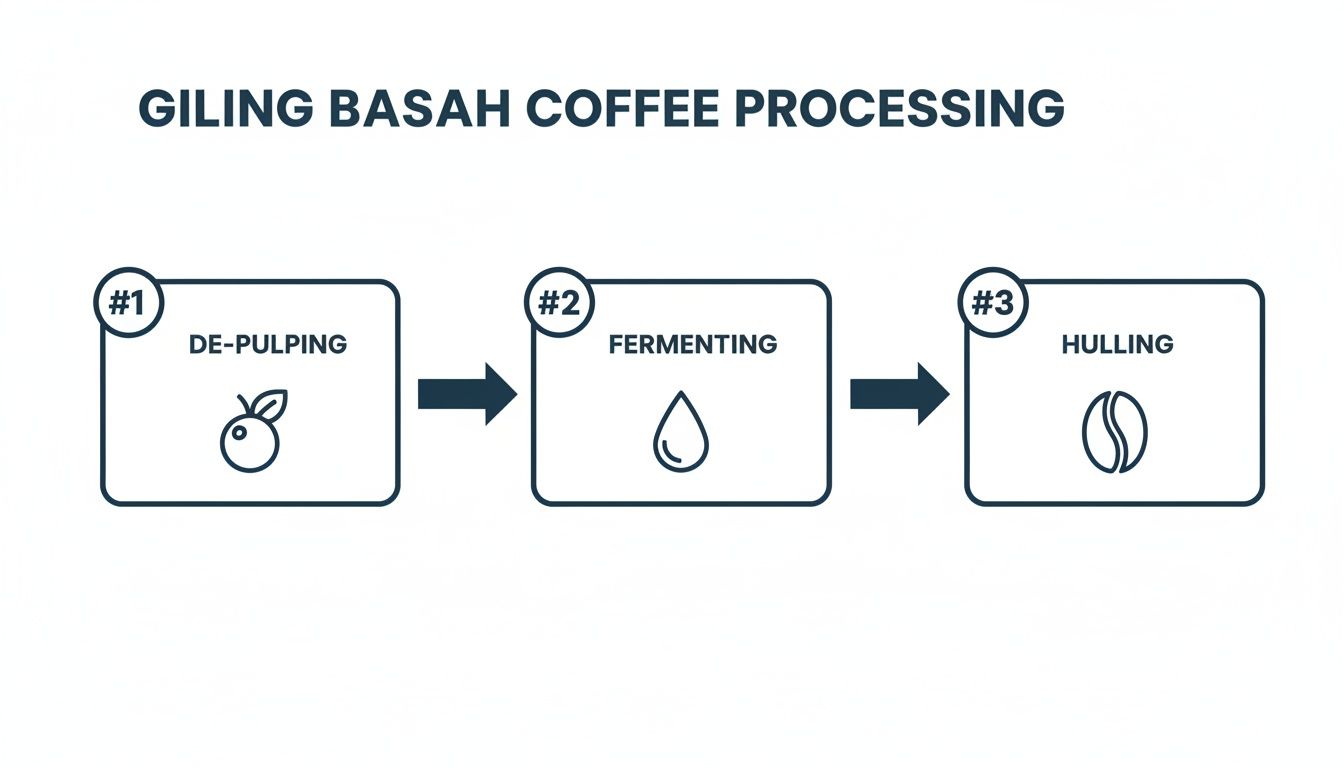
This process of hulling the bean while it's still damp is precisely what locks in that heavy body and earthy character. If you're keen to explore how different processing methods impact taste, you can learn more about the diverse notes of coffee in our detailed guide.
Body and Mouthfeel
Beyond just flavour, one of the most celebrated characteristics of Sumatran coffee is its body. This refers to the weight and texture of the coffee on your tongue—its mouthfeel. While many coffees feel light and almost tea-like, a good Sumatran is famously heavy, rich, and syrupy.
The mouthfeel is often described as velvety or creamy, coating your palate and leaving a long, satisfying finish. This incredible body is a direct result of the wet-hulling process, which preserves more of the oils and solids within the bean.
To help put this into context, it’s useful to see how Sumatran coffee stacks up against other well-known single origins you might find in UK cafés.
Sumatra Coffee Flavour Profile Compared
| Origin | Primary Flavours | Acidity | Body |
|---|---|---|---|
| Sumatra | Earthy, Dark Chocolate, Cedar, Tobacco | Low | Heavy, Syrupy |
| Ethiopia | Floral, Citrus, Berry, Tea-like | High, Bright | Light, Delicate |
| Colombia | Caramel, Nutty, Chocolate, Fruity | Medium | Medium, Smooth |
As the table shows, Sumatran coffee occupies a unique and beloved space on the global coffee stage. It offers a tasting experience that is profoundly different from its counterparts—and for those who love a deep, rich, and comforting cup, there’s simply nothing else like it.
How to Brew Indonesian Sumatra Coffee for the Best Results
Getting the best out of your Indonesian Sumatra coffee at home means leaning into its unique character. Unlike lighter, more delicate beans, Sumatran coffee really comes alive with brewing methods that celebrate its heavy body and deep, earthy notes. With the right approach, you can turn these incredible beans into a truly memorable cup.
The path to a perfect brew begins with the roast. Because of their dense structure and low acidity, Sumatran beans are wonderfully versatile, but they genuinely sing at a medium to dark roast level. This approach caramelises the natural sugars, drawing out those rich dark chocolate and cedar notes while mellowing out any overly wild, herbaceous flavours. A darker roast builds on the syrupy body, creating a cup that’s both bold and exceptionally smooth.
Choosing Your Ideal Brewing Method
To do justice to this full-bodied profile, you need a brewing method that lets the coffee’s natural oils and rich texture take centre stage. Immersion and percolation methods using a coarser grind are often your best bet for achieving that signature velvety mouthfeel.
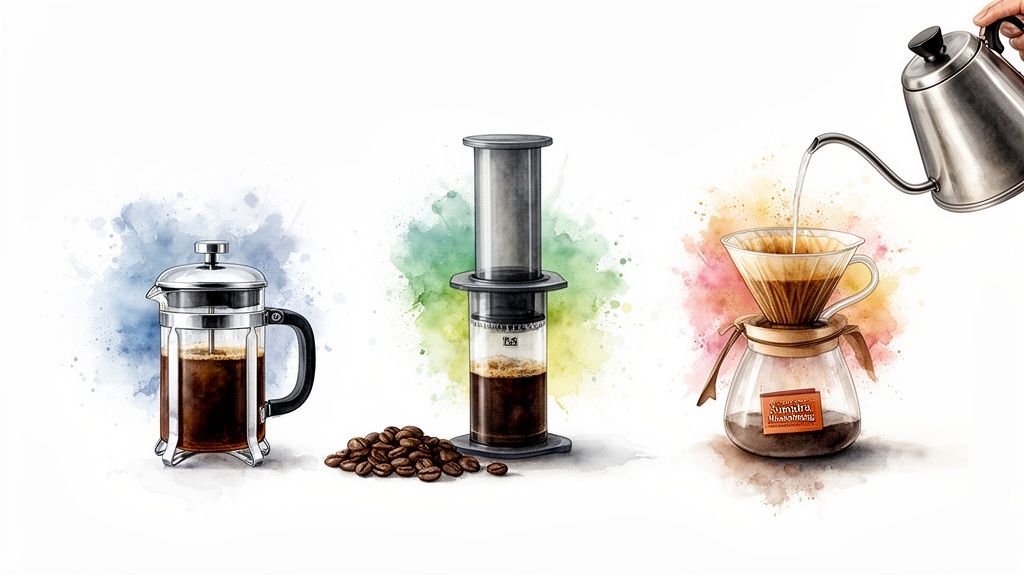
Here are three excellent ways to brew Indonesian Sumatra coffee at home:
- French Press: This classic immersion brewer is a perfect match for Sumatra. It allows the coffee grounds to steep directly in the water, which pulls out maximum flavour and results in a rich, full-bodied cup. The metal filter also lets the coffee’s natural oils pass through, enhancing its syrupy texture. You can find our recommended French presses and cafetières here.
- AeroPress: A fantastically versatile brewer, the AeroPress uses a clever combination of immersion and pressure. This technique produces a clean yet intensely flavourful cup, highlighting the coffee's sweetness while still preserving its signature heavy body. It’s also incredibly forgiving, making it a great option for brewers of all skill levels. Explore our AeroPress brewers and accessories.
- Drip Filter (Pour-Over): For those who prefer a slightly cleaner cup, a pour-over method with a quality paper filter can also deliver beautiful results. While it might give you a slightly lighter body than a French Press, it expertly balances the deep, earthy tones with a clean finish. Check out our range of pour-over equipment.
A Simple French Press Recipe
For a truly authentic taste of Sumatra in your kitchen, the French Press is an ideal place to start. It’s a straightforward method that consistently delivers a rich and satisfying brew, perfectly suited to the bean's character.
For the best results, always start with high-quality, freshly roasted beans. The complex flavours of a single-origin coffee are most vibrant within the first few weeks of roasting.
Here’s a simple recipe to get you started:
- Start with the Right Beans: Begin with a quality whole bean coffee and grind it coarsely—think the texture of sea salt. You can find quality coffee grinders here.
- Measure Your Coffee: Use a ratio of about 1:15. A good starting point is 30 grams of coffee for every 500ml of water.
- Add Hot Water: Pour water just off the boil (around 93°C) over the grounds, making sure they are all saturated.
- Steep: Let the coffee steep for 4 minutes. Don’t stir it.
- Plunge and Serve: Gently press the plunger all the way down and serve immediately to avoid over-extraction, which can make it bitter.
Follow these steps, and you’ll be well on your way to a perfect cup. If you want to refine your technique even further, check out our complete guide on how to brew coffee for more expert tips.
Sourcing Sustainably: From Sumatra to Your Mug
Choosing a bag of Indonesian Sumatra coffee goes far beyond its incredible flavour. It’s a chance to throw your support behind a more sustainable and ethical way of producing coffee. For those of us in the UK who care about where our products come from, understanding the bean's journey from the volcanic slopes of Sumatra to our morning mug tells a powerful story of community, biodiversity, and making responsible choices.
At the very heart of this story are the smallholder farmers and the cooperatives that bring them together. These groups are absolutely vital. They empower individual growers by making sure they get a fair price for their incredibly hard work, and they champion farming practices that protect the region's fragile ecosystem.
The Power of Ethical Choices
When you choose a traceable, high-grade Sumatran coffee, you're essentially casting a vote for a better system. Your choice directly benefits the farming communities while helping to protect the local biodiversity.
- Shade-Grown Cultivation: This isn't a new-fangled idea but a traditional method. Coffee is grown under a canopy of native trees, which creates a vital habitat for local wildlife and massively reduces the need for chemical fertilisers.
- Fair Prices: Cooperatives help farmers cut out the middlemen. This ensures more of the money you pay for your coffee actually goes back to the people who grew it, building economic stability for their families.
- Community Support: A steady, reliable income from coffee allows entire communities to invest in education for their children, better healthcare, and local infrastructure, creating a powerful cycle of positive development.
A sustainable coffee supply chain is built on transparency and respect for both people and the planet. Every purchase of ethically sourced coffee reinforces the value of these principles.
Interestingly, the coffee trade isn't just a one-way street. In 2023, Indonesia actually imported $172.86 thousand worth of coffee products from the UK. It’s a quirky trade dynamic that shows just how connected the global coffee scene is, and you can read more about these bilateral trade insights. This two-way relationship really drives home the importance of strong, ethical connections.
The story behind sustainably sourced Sumatra coffee is a compelling one, and it's a narrative that can be brought to life beautifully through effective food videography to tell a story. At ADS Coffee Supplies, we're fully committed to this ethical supply chain. It's why we're proud to donate a portion of every order to World Coffee Research, helping to secure a future where high-quality, sustainable coffee can thrive. To get a better handle on the wider movement, you can also check out our guide on what Fair Trade coffee really means.
Got Questions About Sumatra Coffee?
Thinking about diving into the world of Sumatran coffee but still have a few questions? You're not alone. Let's tackle some of the most common queries to help you get started.
Why Does My Sumatran Coffee Taste So Earthy?
That deep, earthy, almost mossy character is the beautiful signature of Sumatran coffee, and it all comes down to a unique processing method called 'Giling Basah', or wet-hulling.
Unlike other methods, farmers remove the bean's protective parchment layer while it’s still damp. This leaves the soft, swollen bean exposed to the elements as it dries, allowing it to soak up the aromatic character of its surroundings. This process, combined with the island’s rich volcanic soil, is what creates that iconic low-acidity, heavy-bodied cup everyone talks about.
Is Sumatran Coffee Good for Espresso?
It’s not just good; it's fantastic. If you’re a fan of a thick, syrupy espresso shot with a monster crema and almost no sharp acidity, Sumatran coffee should be at the top of your list.
Its bold notes of dark chocolate, cedar, and spice are powerful enough to punch through milk, making it a dream base for a flat white or cappuccino. Pulled as a single-origin espresso, it delivers a deeply satisfying and complex shot that lingers long after you've finished. We recommend our espresso machines for the best home experience.
You'll often find Sumatran beans forming the backbone of many award-winning espresso blends. Roasters love using it to add body, depth, and that rich, lasting finish that holds everything together.
What Is the Best Way to Store Sumatran Coffee Beans?
To protect those complex flavours you paid for, the rules are simple. Store your beans in an airtight container at room temperature, and keep them well away from sunlight, heat, and moisture.
Please, avoid the fridge or freezer! The condensation can wreak havoc on the beans and mute their delicate flavours. For the best possible taste, always buy whole beans and grind them right before you brew. It makes a world of difference. You can find our range of coffee storage solutions here.
Ready to taste this incredible coffee for yourself? Explore our freshly roasted, ethically sourced beans at ADS Coffee Supplies. A great place to start is with our superb Indonesian Sumatra Mandheling—it’s a true classic.