A Guide to Indonesia Sumatra Coffee Flavours
Sumatra coffee is one of those brews that grabs you from the first sip. It’s world-renowned for its powerful, earthy character, full body, and an incredibly low acidity that sets it apart. With deep flavour notes of dark chocolate, cedar, and spice, it delivers a profound and memorable tasting experience unlike any other coffee. It’s no wonder this unique profile has made it a beloved staple for coffee connoisseurs right here in the UK.
Discovering the Sumatran Coffee Experience
Stepping into the world of Indonesian Sumatra coffee is about more than just a morning ritual—it’s an exploration of a unique island terroir. For many UK coffee lovers, the first taste is unforgettable. It offers a rich, syrupy body and a complex flavour that stands in bold contrast to the brighter, more acidic coffees from other famous growing regions.
This special character is no accident. It’s the direct result of Sumatra's volcanic soil, tropical climate, and the traditional processing methods passed down through generations. The experience is one of depth and warmth, making it the perfect companion for a quiet moment of reflection or a robust start to your day.
A Favourite in the UK Market
The appeal of Sumatran coffee in the British market is both significant and long-standing. Its presence remains strong, even when global supply chains wobble. In 2023, Indonesia exported 4,339 metric tonnes of coffee to the United Kingdom. While this marked a decline from previous years, the consistent demand highlights the enduring passion UK drinkers have for its one-of-a-kind taste.
This map highlights the island of Sumatra within the vast Indonesian archipelago, home to some of the world's most sought-after coffee-growing regions.

Of course, embracing the full coffee culture doesn't have to stop at the brew. For true enthusiasts, showcasing your passion might even involve unique apparel and items featuring related coffee plant inspired designs.
What Makes It So Special?
So, what’s the secret behind its signature flavour? It really comes down to a combination of factors that create a truly unique coffee.
- Unique Processing: The vast majority of Sumatran coffees undergo a method called 'Giling Basah' (wet-hulling), which is the key to their heavy body and muted acidity.
- Distinct Flavour Profile: You can expect bold notes of earth, cedar, and dark chocolate, but you might also find intriguing hints of tobacco or spice.
- Rich Terroir: The volcanic soil and lush, tropical environment of the island impart a deep complexity to the beans that you can taste in the cup.
The combination of its powerful flavour and smooth, low-acid finish makes Sumatra an incredibly satisfying and versatile coffee. It’s a brew that tells the story of its origin with every sip.
Ready to start your journey? You can explore our curated selection and learn more about our specific coffee from Indonesia. This is just the beginning of understanding why this treasure is a must-try for any serious coffee enthusiast.
Exploring Sumatra's Famous Coffee Regions
To really get a feel for Sumatra coffee, you have to go to the source. The island’s incredible landscapes, what the experts call 'terroir', create distinct microclimates where unique flavour profiles are born. It’s a lot like how soil and climate shape a fine wine; Sumatra's geography nurtures coffee beans with their own personalities, from the misty highlands of Aceh to the volcanic shores of Lake Toba.
This journey through Sumatra’s celebrated coffee regions will show you why no two Sumatran coffees ever taste exactly the same. Knowing where your beans come from doesn’t just make you appreciate them more—it helps you pick a coffee that’s perfect for you. Let's dive into the three most famous coffee-growing areas: Aceh Gayo, Lintong, and the legendary Mandheling.
Aceh Gayo: The Crown Jewel of Northern Sumatra
Tucked away in the Gayo Highlands of northern Sumatra, the Aceh region is famed for producing some of the island's most refined and sought-after Arabica beans. Here, the altitudes often climb past 1,500 metres above sea level, forcing the coffee cherries to ripen slowly. This long, lazy maturation process is the secret to developing a much more complex and nuanced flavour.
Gayo coffees are known for their clean, bright character, which makes them stand out from the classic heavy, earthy Sumatran profile. While they still pack a full body, they often bring a more noticeable acidity to the cup, with subtle notes of fruit, herbs, and dark chocolate. This beautiful balance makes Aceh Gayo coffee a brilliant starting point if you're new to the world of Indonesian coffee.
Lintong: The Heart of Lake Toba
Just southwest of Lake Toba, the largest volcanic lake on the planet, you'll find the Lintongnihuta district. Coffee from this area, simply called Lintong, is celebrated for its syrupy body, complex spice notes, and a distinctive cedar aroma. The unique terroir, supercharged by the volcanic soil around the lake, gives the coffee a deep and resonant flavour.
Lintong coffees have a captivating complexity that keeps you coming back for another sip. You might taste sweet herbal notes mingling with a pleasant earthiness and a spicy finish that just hangs around. It’s a brew that is both bold and intricate, perfect for drinkers who love a coffee with layers of flavour to uncover. This remarkable profile has made Lintong a firm favourite among speciality coffee fans worldwide.
The distinct profiles of Gayo and Lintong really highlight the incredible diversity you can find on a single island. One gives you brightness and clarity, while the other delivers spice and a syrupy texture—all under the umbrella of Indonesian Sumatra coffee.
Mandheling: A Legacy of Quality
Now, Mandheling isn't actually a specific place on a map. It’s a trade name that has become totally synonymous with the highest quality coffee from northern Sumatra. The name comes from the Mandailing people, an ethnic group in the region who were key players in the early days of the coffee trade. Today, if you see a "Mandheling" coffee, it typically means you're getting a premium bean sourced from the Tapanuli region.
Known for its exceptionally smooth, full-bodied character and very low acidity, Mandheling is the classic Sumatran profile in a cup. Its flavour is often described as rich and chocolatey, with hints of liquorice, tobacco, and dried fruit. If you’re searching for that quintessential Indonesian Sumatra coffee experience, a high-quality Mandheling is exactly what you need. You can see for yourself what makes these origins so special by learning more about what makes a single-origin coffee unique.
Sumatran Coffee Regions at a Glance
To help you navigate these wonderful coffees, here’s a quick comparison of what makes each region's beans stand out. Think of it as your cheat sheet for finding your next favourite Sumatran brew.
| Region | Primary Flavour Notes | Body | Acidity |
|---|---|---|---|
| Aceh Gayo | Dark chocolate, subtle fruit, herbal | Full | Medium-High |
| Lintong | Cedar, spice, sweet herbs, earth | Syrupy, full | Medium |
| Mandheling | Rich chocolate, liquorice, tobacco | Exceptionally full | Very Low |
Each region offers a completely different experience, from Gayo's bright complexity to Mandheling's classic, smooth richness. The fun part is trying them all to see which one speaks to you.
The UK has long had a love affair with these exceptional coffees. Sumatra's beans, particularly from Aceh and South Sumatra, are a cornerstone of UK imports. Historically, Britain received up to 24,343 tonnes in peak years, putting it among top destinations like the US and Japan. While those figures have changed over time, the strong demand for these premium beans continues, highlighting their cherished place in the British coffee scene.
Understanding the Giling Basah Processing Method
The secret behind that iconic, moody flavour of Indonesian Sumatra coffee isn't just about where it's grown. It’s rooted in a unique and traditional technique known as Giling Basah, or wet-hulling. This method is a clever response to Sumatra's humid, tropical climate and is something you'll almost only find in Indonesia. It’s the main reason Sumatran beans are famous for their heavy body, low acidity, and deep, earthy notes.
Unlike the washed or natural processes common elsewhere, Giling Basah throws a fascinating twist into the mix. Think of it as a specific culinary technique, one that locks in certain flavours while encouraging others to develop in a completely different way. It's a rustic, hands-on process that fundamentally shapes the coffee's character right from the start.
What Makes Giling Basah Different?
The crucial difference is timing. In most processing methods, coffee beans are carefully dried until their moisture content hits a stable 11% before the protective parchment layer is removed. Giling Basah flips that script completely. Farmers strip off the parchment much, much earlier, when the beans are still swollen with a moisture content of 30-50%.
This early exposure leaves the soft, vulnerable bean to face the elements during the final drying stages. It’s this unique step that builds the coffee’s famous flavour profile—muting the acidity and creating that pronounced, syrupy body that coffee lovers seek out in a premium Indonesia Sumatra coffee.
The flowchart below shows the journey of coffee from some of Sumatra's key regions, each producing beans whose character is shaped by methods like Giling Basah.
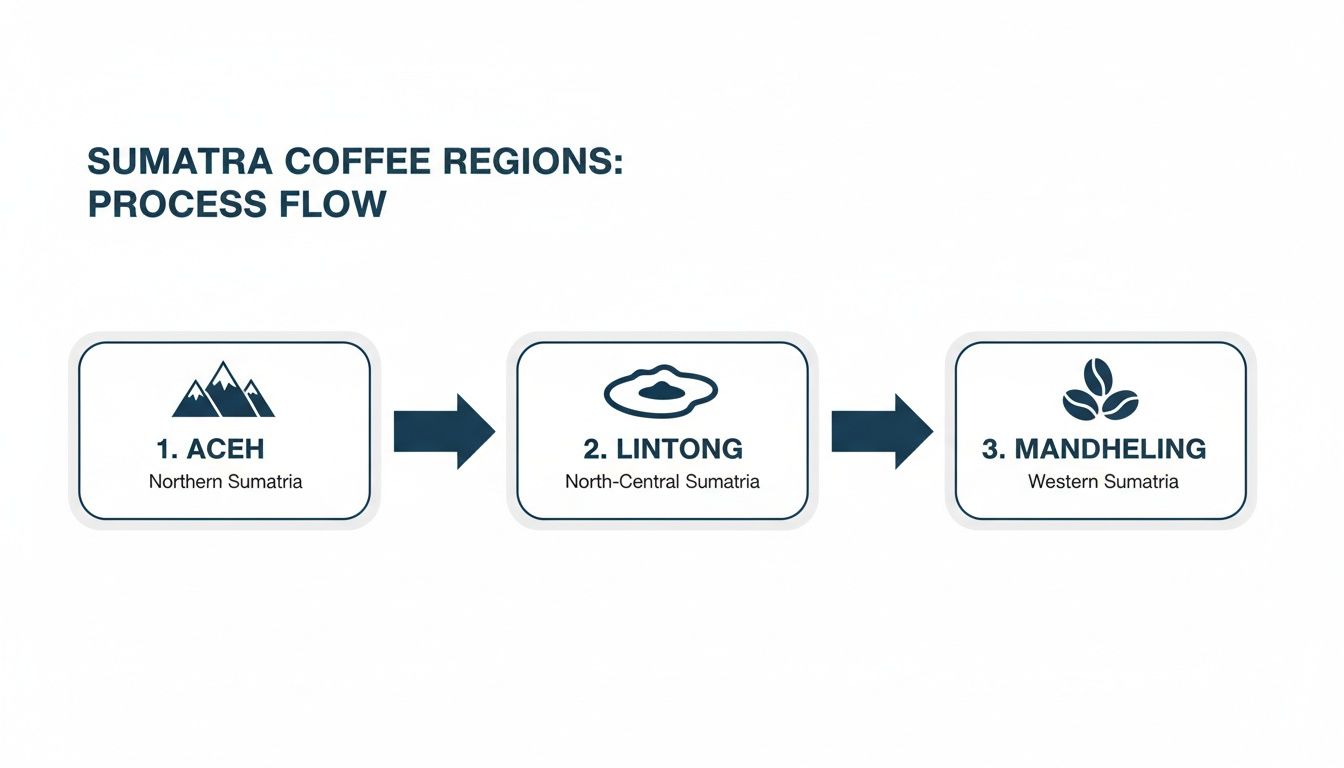
This visual highlights the distinct origins—from the mountainous terrain of Aceh to the lake-influenced Lintong and classic Mandheling—all of which produce beans that are often processed using this distinctive wet-hulling method.
A Step-by-Step Look at the Process
To really appreciate what this method does for your cup, it helps to walk through the stages. It’s a process that demands both skill and a certain tolerance for the unpredictable nature of the climate.
- Harvesting and Pulping: Like any other method, it all starts with farmers picking ripe coffee cherries. The skin and fruit pulp are removed, usually on the same day, leaving the bean wrapped in its parchment shell.
- Partial Drying: The parchment-covered beans are then dried for just a few hours or maybe a day. This is just long enough to make them less sticky and easier to handle, but their moisture level stays incredibly high.
- The Wet-Hulling (Giling Basah): Here's the critical step. The damp, parchment-covered coffee is taken to a special hulling machine that strips off the parchment layer. It’s a delicate operation, as the soft, wet beans can be easily damaged.
- Final Drying: Finally, the ‘naked’ green beans are laid out to dry, fully exposed to the air. This final phase is where much of the magic happens, developing those tell-tale earthy, spicy, and sometimes herbal flavours.
Giling Basah is more than just a process; it's a testament to the ingenuity of Sumatran farmers. They developed a method perfectly suited to their challenging climate, which in turn created one of the world's most distinctive and beloved coffee profiles.
The Impact on Flavour
So, what does all this mean for the coffee in your mug? The Giling Basah method has a direct and profound effect on the final taste and aroma. It’s the reason why a cup of Sumatran coffee is so utterly different from a bright, acidic Kenyan or a fruity Ethiopian.
- Low Acidity: By exposing the bean early, the process tones down the bright, citric acids found in many other coffees. The result is a smooth, mellow cup.
- Heavy Body: The method contributes to a rich, almost syrupy mouthfeel, giving the coffee a satisfying weight and texture on the palate.
- Complex Earthiness: The prolonged, exposed drying of the bean encourages the development of rustic, earthy flavours like cedar, tobacco, spice, and even dark chocolate.
This intricate process is a key reason why these beans are so highly prized in the world of speciality coffee. Understanding Giling Basah truly unlocks the story behind every sip of your Indonesia Sumatra coffee, giving you a deeper appreciation for the craft and climate that shaped it.
How To Brew Your Perfect Cup Of Sumatran Coffee
Getting the best out of your Sumatran coffee at home is a truly rewarding ritual. It’s all about finding that perfect sweet spot between the roast, the grind, and your brewing method to really let its unique character sing. Think of it as turning your kitchen into your very own speciality coffee bar. This guide will walk you through the practical steps to craft an exceptional cup, highlighting the techniques that make these beans shine.
First things first, let's talk about the roast. While it always comes down to personal taste, Sumatran beans have a definite sweet spot.
Finding The Ideal Roast Profile
For that classic, soul-warming Sumatran experience, a medium to medium-dark roast is the gold standard. This roast level strikes a beautiful balance, taming the bean's wilder, rustic notes while coaxing out its deeper, more comforting flavours of chocolate and spice.
A medium roast holds onto some of the bean's subtle complexity, letting those hints of cedar and baking spice peek through. Pushing it just a touch further to medium-dark caramelises the sugars more intensely, really amplifying those delicious dark chocolate and tobacco notes for a full, syrupy body. A light roast, on the other hand, can sometimes make the coffee’s earthiness a bit too front-and-centre for some palates.
Choosing Your Brewing Method
With your perfectly roasted beans in hand, the next decision is how to brew them. Since Sumatran coffee is all about that heavy body and low acidity, certain methods are naturally a better fit for showing off its strengths.
Immersion methods, where the coffee grounds get to steep fully in water, are fantastic for this. They tend to create a rich, full-bodied cup that’s a perfect match for what makes Sumatran coffee so beloved.
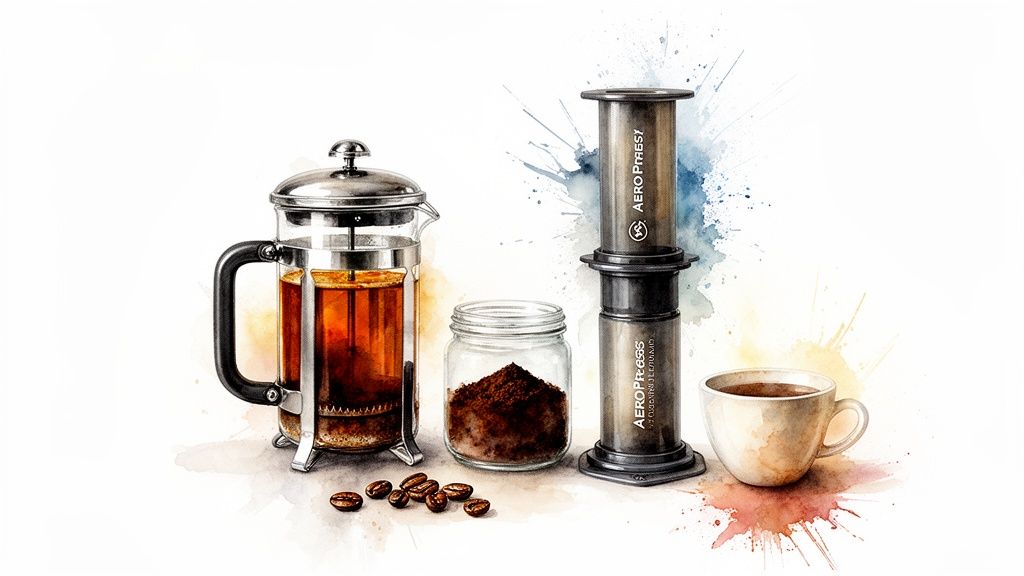
- French Press: This is arguably one of the best choices for Sumatra. It’s a classic for a reason. Because it doesn’t use a paper filter, all the natural oils stay in the final cup, giving you an incredibly rich texture and a full, velvety body.
- AeroPress: A brilliantly versatile and forgiving brewer. The AeroPress uses gentle pressure to extract flavour quickly, producing a cup that’s clean yet still full-bodied. It’s great at highlighting the coffee's chocolatey sweetness while keeping any potential bitterness at bay.
- Pour-Over (e.g., V60, Kalita Wave): While you can certainly get a fantastic cup from a pour-over, these methods are designed to emphasise clarity and brightness. For a Sumatra, this can sometimes thin out its signature heavy body, but it can also be a great way to uncover more of its subtle spicy or herbal notes if you prefer a cleaner brew.
The goal is to match the brewing method to the coffee's inherent character. For the deep, syrupy body of an Indonesian Sumatra coffee, a French press is like a perfect dance partner—it enhances every move without getting in the way.
Perfecting Your Grind And Water Temperature
You’ve got your roast and your brewer sorted. Now for the final, crucial details: grind size and water temperature. Nailing these is the key to a balanced extraction, avoiding a cup that’s either sour (under-extracted) or bitter (over-extracted).
The right grind size depends entirely on your chosen brewer. You’ll want a coarse grind for a French press to stop sediment from getting through, whereas an AeroPress needs a finer grind for its quick brew time. For a deep dive, our comprehensive coffee grind size guide has all the details you’ll need for any brewer.
When it comes to water temperature, aim for just off the boil, around 90-96°C (195-205°F). Water that’s too hot can scorch the grounds and make your coffee bitter. Too cool, and you’ll get a weak, watery brew. Playing around within this range will help you find that perfect sweet spot that unlocks the full depth of your Sumatran beans, giving you a consistently delicious cup, every single time.
Sourcing and Storing Your Sumatran Coffee Beans
Bringing that authentic, earthy taste of Sumatran coffee into your home all starts with getting your hands on the right beans. The journey from a remote Indonesian farm to your cup is a long one, and these final steps are absolutely critical for protecting the deep, complex flavours that make this coffee so unique. Where you buy your beans and how you look after them can make or break your entire brewing experience.
The single most important thing to remember is freshness. Coffee is a fresh product, simple as that. Its incredible aromas and nuanced flavours start to fade almost immediately after roasting. By choosing a UK roaster who works in small batches, you're ensuring the beans you receive are at their absolute peak, ready to deliver that full, syrupy body and rich profile you expect from a premium Sumatran coffee.
Decoding the Coffee Bag
When you pick up a bag of coffee, think of the label as its passport. It tells you everything you need to know about its journey and freshness, helping you make a smart choice. A roaster who cares about their coffee will always give you clear, detailed information.
Here’s what you should be looking for:
- Origin Information: Look for specifics like "Mandheling," "Gayo," or "Lintong." This detail tells you exactly which of Sumatra’s famous growing regions the beans are from, giving you a good idea of its potential flavour profile.
- Roast Date: This is non-negotiable. Always, always choose a bag with a clearly printed roast date, not some vague "best before" date. You want beans that were roasted within the last few weeks to experience them at their best.
- Tasting Notes: A good label will offer a few flavour clues, like "dark chocolate, cedar, and spice." These aren't just marketing fluff; they guide your expectations and help you find a coffee that truly matches your personal taste.
By making freshly roasted beans from a specific origin your top priority, you're setting yourself up for the best possible brew. It's the difference between a pretty good cup of coffee and an unforgettable one.
You can find a fantastic selection of freshly roasted beans by exploring our full range of single-origin coffees, where you can find the perfect Sumatran beans for your taste.
Protecting Your Beans at Home
Once you've got your hands on some premium beans, storing them properly is key. You need to shield them from their four biggest enemies: oxygen, light, heat, and moisture. Letting your coffee get exposed to these elements will quickly strip away its quality, leaving you with a cup that tastes stale and flat.
The goal is simple: create a stable environment that preserves the delicate oils and aromatic compounds that give coffee all its wonderful flavour. Keeping them in the bag they came in often isn't enough, as it’s rarely truly airtight after you’ve opened it.
Even though it's a different product, learning the principles of how to store matcha for peak flavour can offer some really useful parallels on protecting a delicate product from these same environmental factors.
The Golden Rules of Coffee Storage
Stick to these simple rules, and you'll keep your Indonesian Sumatra coffee tasting fantastic for as long as possible.
- Use an Airtight Container: The first thing you should do is transfer your beans into an opaque, airtight container. This protects them from both oxygen and light, two of the fastest ways to make beans go stale.
- Keep It Cool and Dry: Find a cool, dark spot for your container, like a pantry or a cupboard. Whatever you do, don't store it near the oven or on a countertop where it can get hit by sunlight or deal with big temperature swings.
- Grind Just Before Brewing: This might just be the most important tip of all. Grinding coffee drastically increases its surface area, exposing it to oxygen and causing its aroma to vanish in minutes. Grinding fresh right before you brew unlocks the full flavour potential that’s been waiting inside that bean.
To master this crucial final step, you can find more detailed advice in our guide on how to store coffee beans. By investing in good beans and storing them with a bit of care, you honour the entire journey from the Sumatran highlands to your kitchen, ensuring every single cup is as delicious as it was meant to be.
Still Curious About Sumatran Coffee?
After diving deep into the world of Indonesian Sumatra, from its famous growing regions to its one-of-a-kind processing, a few questions always seem to pop up. Let's tackle them head-on so you can brew your next cup with complete confidence.
What Makes Indonesian Sumatra Coffee So Unique?
It's a beautiful story of place and process. The real secret lies in a traditional method called ‘Giling Basah’ (wet-hulling), a clever adaptation to the island's humid climate. Unlike anywhere else, farmers remove the bean's protective parchment layer while it still has a very high moisture content.
This early exposure is what shapes the coffee’s unmistakable character. It’s the reason Sumatran coffee has that famously low acidity, a heavy, almost syrupy body, and those classic earthy notes of cedar, dark chocolate, and warm spice. It’s a bold, rustic taste that stands in stark contrast to the bright, fruity coffees you’d find in Africa or Latin America.
Is Sumatran Coffee Good for Espresso?
Absolutely. A medium-dark roast Sumatran, especially a high-quality Mandheling, makes a truly phenomenal single-origin espresso. Its naturally low acidity and full body come together to pull a rich, creamy shot with a thick, velvety crema that just lasts and lasts.
Those deep, chocolatey notes become wonderfully concentrated, creating an espresso that’s powerful yet incredibly smooth. It also works brilliantly as a base for flat whites or lattes, because its robust flavour profile has no trouble cutting through the milk. You can grab some beans that are perfect for this in our Sumatra Mandheling Grade 1 offering.
If you love a rich, intense shot without the sharp acidic bite, Sumatran espresso is a game-changer. It offers a smooth, lingering finish that feels both comforting and complex.
How Does a Sumatra Mandheling Differ from a Lintong?
While they're both premium coffees from Sumatra, think of them as cousins with slightly different personalities. They offer distinct experiences in the cup.
- Sumatra Mandheling: This is the quintessential Sumatran profile. It’s famous for its incredibly smooth, full body and very low acidity, bringing rich notes of dark chocolate, tobacco, and sometimes even a hint of liquorice.
- Sumatra Lintong: Hailing from the area around the volcanic Lake Toba, Lintong coffees often have a slightly cleaner taste and a medium body. You’ll find more complex notes of sweet herbs, fresh cedar, and baking spices, giving them a touch more brightness than a typical Mandheling.
At ADS Coffee Supplies, we're passionate about bringing the world's most incredible coffees right to your kitchen. To experience these rich, earthy flavours for yourself, why not explore our hand-picked selection of Sumatran coffee beans today?