How To Make Ristretto At Home With Expert Tips

Getting a café-style ristretto at home comes down to four essentials: a whisper-fine grind, 18 g of coffee, a solid tamp and a 20–25 s pull at 9–15 bar, aiming for 18–27 g of syrupy espresso. Tweak the final yield by a few grams and you’ll notice how sweetness blooms or acidity softens for a perfectly balanced shot.
Master Brewing A Ristretto At Home
Ristrettos are essentially shorter espressos that capture those vibrant first flavours before bitterness sets in. By limiting the yield, you boost sweetness and body while keeping harsh notes at bay.
Benefits Of A Short Shot
- A powerful burst of flavour without any over-extraction
- A thicker, almost syrup-like mouthfeel compared to a standard espresso
- A compact volume that packs more caffeine per gram
This guide lays out tried-and-tested ratios so you can start pulling consistent ristrettos and then fine-tune them to your taste.
Practical Setup Tips
- Weigh 18 g of coffee on a precision scale to nail consistency every time
- Dial in a fine grind (aim around setting 3–4) to manage the flow rate
- Tamp with around 30 lbs of pressure using a quality tamper to avoid channelled shots (Shop precision tampers and scales at ADS Coffee Supplies)
- Lock in 9–15 bar of pressure on your machine and begin extraction immediately
A shorter routine like this speeds up your morning ritual and really showcases the beans. For instance, a darker roast will reveal richer chocolate notes under that concentrated, syrupy texture.
Here’s a quick roundup of essential parameters, perfect for pinching off a reliable ristretto at home:
Ristretto Home Brewing Summary
| Parameter | Typical Value | Impact on Flavour |
|---|---|---|
| Coffee dose | 18 g | Fuller body |
| Grind setting | Fine | Balanced sweetness |
| Tamping pressure | 30 lbs | Even extraction |
| Extraction time | 20–25 s | Intense concentration |
This snapshot keeps your pulls consistent and your tastebuds happy.
“After trimming my yield from 27 g to 22 g, I noticed a sweeter, syrupy shot each time,” says home barista Alex.
A steady pull always starts with the right tools—a reliable grinder and a solid tamper make all the difference.
Home Ristretto Equipment Overview
Dialling in a ristretto at home is as much about your machine’s build as it is about your technique. In a snug city flat or a busy family kitchen, factors like noise, footprint and simple upkeep can make or break your morning ritual.
- Noise levels that won’t startle neighbours
- Compact designs to save precious counter space
- Stable pressure control for those dense ristretto pours
- Easy-to-clean parts and straightforward descaling
Choosing Your Espresso Machine
Most pump-driven home machines hit between 9–15 bar, giving you the consistent pressure needed for those syrupy, concentrated shots. Bean-to-cup units are a “one-and-done” solution, but they usually lock you into a set grind profile and offer less room to experiment.
If you’re after something small yet powerful, buy compact espresso machines from ADS Coffee Supplies. Upgrading from pods to freshly ground beans can feel like a revelation—but it also means you’ll need a burr grinder that delivers uniform particle size (purchase yours here).
Home Espresso Equipment Comparison
To help you pick a setup that matches your space and budget, here’s a quick snapshot of popular UK machines:
| Equipment | Pressure (bar) | Grind Requirement | Price Range |
|---|---|---|---|
| Sage Barista Express | 9–15 | Fine | £700–£800 |
| Ninja Luxe Cafe | 9 | Medium-Fine | £300–£350 |
| Gaggia Classic Pro | 15 | Fine | £300–£350 |
| Bean-to-Cup Machine | 9–15 | Integrated | £400–£1,200 |
Whether you’re squeezed for counter room or aiming for barista-level pressure, this chart should steer you in the right direction.
“Upgrading my grinder gave me smoother crema and steadier flow,” says Emma, a home barista.
Selecting The Right Grinder
A rock-solid grind is the backbone of a balanced ristretto. Conical and flat burrs each bring their own character to the cup.
Check out our guide on Conical vs Flat Burr Grinder Explained for the full breakdown.
- Stepped settings or continuous adjustment for precise dosing
- Low-retention designs keep beans fresher, batch after batch
- Choices range from budget-friendly manual mills to premium electric models
Many grinders also include purge trays and dosing funnels, so you keep the station tidy. You’ll find models under £200 that rival café-standard consistency. Purchase high-quality grinders at ADS Coffee Supplies.
According to the British Coffee Association, about 80% of UK households still lean on instant coffee, making dedicated espresso machines something of a rarity. Learn more about UK coffee consumption trends
Tamping And Accessories
An even puck makes for an even extraction, so invest in a good tamper. Stainless steel bases paired with aluminium or wooden handles feel pleasant in hand.
- Round base for uniform pressure distribution
- Calibrated tamper offers consistent 20 lbs of force every time
- Ergonomic grip to reduce wrist fatigue
A simple tamping mat and a compact knock box complete the setup. You can grab a basic accessory kit for under £40 from ADS Coffee Supplies.
Managing Noise And Maintenance
Silencing your grinder and machine can be crucial, especially early in the morning. Steel burr grinders often hit around 75 dB when running at full tilt.
Routine back-flushing and timely descaling will keep your shots tasting clean and protect your investment for years to come.
Brewing a true ristretto is part science, part ritual—and with the right gear, it’s a ritual you’ll look forward to every single day.
Coffee Selection And Roast Recommendations
Choosing the right beans is the first step towards a syrupy ristretto that dances with layered flavour. Origins dramatically influence acidity, sweetness and body, so whether you opt for a single origin or a carefully crafted blend, it makes all the difference.
East African coffees tend to sing with bright citrus notes, while beans from South America lean into chocolate and nutty undertones. Central American lots often hit a sweet spot, balancing vibrant fruit tones with gentle sweetness.
- Ethiopian Yirgacheffe: Floral acidity, tea-like clarity
- Colombian Supremo: Caramel sweetness, smooth mouthfeel
- Guatemalan Huehuetenango: Bright acidity meets chocolate depth
You can explore these origins and other sustainably sourced options at ADS Coffee Supplies.
Selecting Roast Profiles
Roast level can make or break a short pull. Light roasts lock in origin acidity but sometimes feel thin. Medium roasts layer in caramel sweetness while keeping those lively notes alive. Dark roasts bring heavy chocolate and smoky hints but can flatten delicate fruit.
- Light Roast: Bright, floral, higher acidity
- Medium Roast: Rounded body, balanced sweetness
- Dark Roast: Deep chocolate, low acidity, smoky undertones
Freshness is everything: beans cling to maximal flavour for up to four weeks after roasting.
Grinding within two weeks of roast date preserves peak oils and aromatics. Store beans in an airtight container, tucked away from heat and light, so each ristretto shot tastes as consistent as the last.
Sustainable Specialty Options
Ethical sourcing matters—for your cup and the planet. Seven Sisters Coffee Co leads with traceable beans and eco-friendly practices. Their oxygen-free roasting seals in aroma and keeps flavours vivid.
Discover their sustainable single-origin range in our guide on Specialty Coffee Beans.
You’ll also find UK-sourced, ethical blends at ADS Coffee Supplies to support responsible farming.
| Origin | Flavour Notes | Roast Level |
|---|---|---|
| Ethiopia | Citrus, floral | Light |
| Colombia | Caramel, nutty | Medium |
| Brazil | Chocolate, smooth | Dark |
When chasing that classic ristretto body, reach for a medium roast—it strikes the perfect compromise between sweetness and lift.
- Store beans at 12–20 °C in a dark cupboard
- Never refrigerate—moisture is the enemy
- Use within 14 days of opening for peak flavour
Fine-tuning origin or roast level lets you personalise your home-barista journey and find that perfect, syrupy mouthfeel.
Key Bean Selection Tips
- Match your bean’s origin to the acidity and sweetness you crave
- Aim to brew beans between 7 and 21 days post-roast
- Don’t hesitate to test light or dark profiles until you dial in your ideal cup
Understanding bean origin and roast profile unlocks your best ristretto pull at home. Pair these selections with precise dosing and extraction, and you’re well on your way to mastering that concentrated, blissful shot.
Choosing the right roast can amplify your ristretto’s sweetness and texture.
Recipe Guide And Extraction Parameters
Dialling in a ristretto at home starts with a carefully measured 18 g of coffee. Pre-infusion for about 2–3 s wets the grounds, priming them for an even extraction. It’s a small pause that makes a big difference.
A solid, 30 lbs tamp creates a uniform puck and keeps water from finding easy channels. Level that puck to guide the flow straight through every particle. You’ll taste the consistency in every shot.
Aim for a tight brew ratio of 1:1 to 1:1.5, yielding 18–27 g of liquid in 18–25 s under 9 bar. That’s the sweet spot where sugars and oils condense into a syrupy, intense ristretto.
For an overview of the UK coffee market’s growth, refer to Lumina Intelligence.
Let’s distil those numbers into a quick reference.
Extraction Parameters For Ristretto
| Coffee Dose (g) | Yield (g) | Time (s) | Pressure (bar) |
|---|---|---|---|
| 18 | 18–27 | 18–25 | 9 |
With these key figures in hand, each shot becomes a reliable starting point for further tweaks.
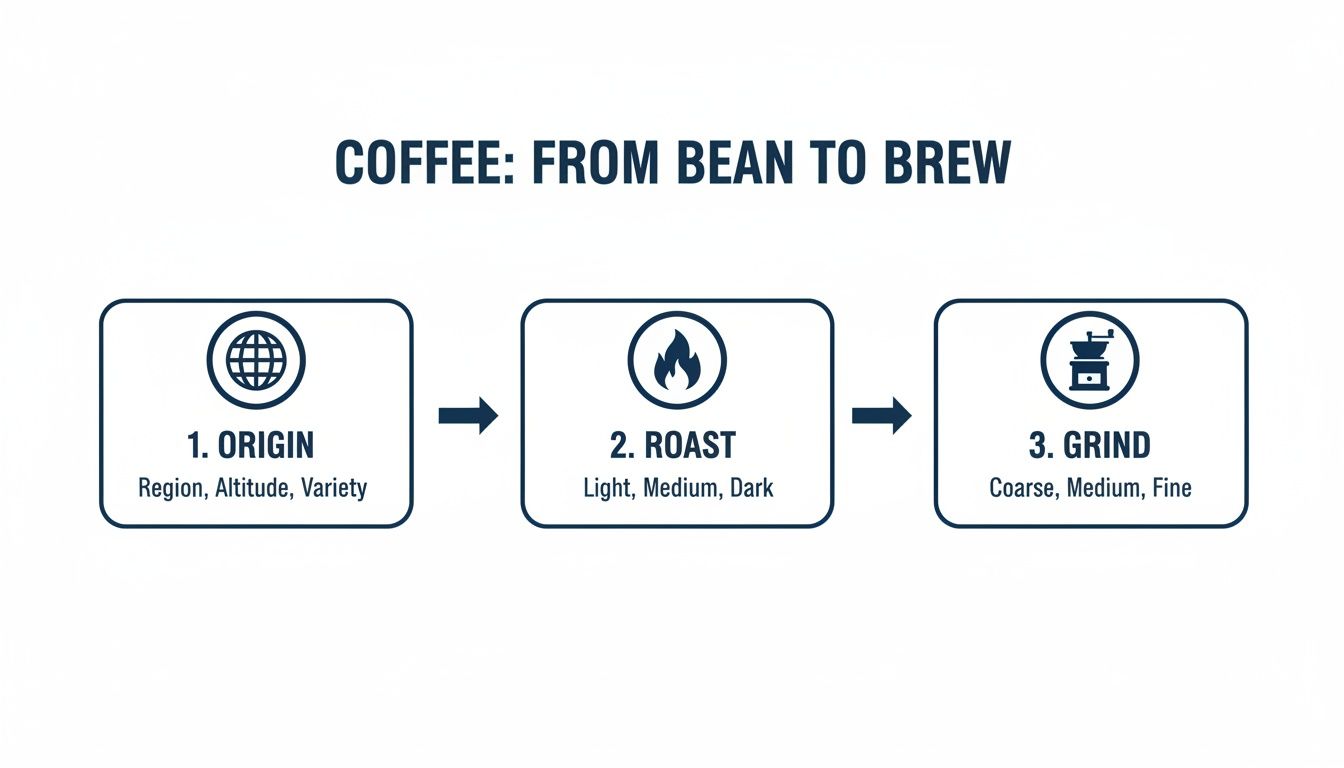
This visual unpacks how bean origin, roast profile and grind size all converge before extraction.
For deeper tips on nailing your brew ratio, check our guide on Dialling In Espresso Ratios.
Fine-Tune Your Grind Settings
Changing one variable at a time is crucial. A half-click finer grind often brings brightness and sweetness forward. If the shot gushes out too quickly, ease up to a coarser setting in half-click steps.
- Grassiness in flavour? Grind 1–2 clicks finer
- Extraction dragging? Open the burrs slightly
- Track flow rate and trust what your palate tells you
Troubleshooting Extraction Issues
Over-extracted ristrettos taste sharp and bitter; under-extracted ones feel hollow and sour. Keep an eye on how water moves through the puck—any erratic streams point to distribution or tamping faults.
A quick wipe and swirl before tamping can save your shot from wandering water.
Calibration And Pressure Adjustments
Flushing hot water through an empty group head until the gauge steadies ensures thermal stability. Bump pre-infusion by a second or two to tame harsh acidity, then aim for a smooth 9 bar plateau once extraction kicks in.
- Zero your pressure gauge at the start of each session
- Extend pre-infusion up to 4 s for rounder flavours
- Look for a gentle, even stream rather than sputtering bursts
Fine-tuning these elements shot after shot builds consistency and confidence. Happy brewing!
Tamping And Extraction Practices
A clean, level puck is where every great ristretto starts. Get this right and you’ll notice water moving evenly through the coffee bed—no shortcuts, no sore spots.
- Uniform water contact prevents unwanted channels.
- Consistent pressure delivers steady flow rates of around 1.0–1.5 g/s.
- A dense puck locks in those concentrated ristretto flavours.
Even Distribution And Calibrated Pressure
An uneven surface leads to under- or over-extracted pockets—and nobody wants sour or bitter surprises. That’s why many home baristas reach for a simple WDT needle to break up clumps before pressing.
Calibrate your tamper to 20–30 lbs of force for the best home-brew consistency. Then:
- Use your WDT tool to stir grounds in gentle concentric circles.
- Level the coffee bed by sliding a flat palm across the basket.
- Tamp straight down, keeping your wrist locked and pressure even.
| Pressure (lbs) | Impact On Extraction |
|---|---|
| 15 | Risk of under-extraction and sharp acidity |
| 25 | Balanced flow with a syrupy mouthfeel |
| 35 | Possible over-compression and slow flow |
This table is your cheat-sheet for matching tamp force with grind size. Adjust one, tweak the other.
Troubleshooting And Routine Maintenance
Even with a perfect puck, channel formation can sneak in. A quick glance at the stream tells you a lot.
- Look for erratic, worm-like flows—that’s channelling in action.
- Aim for a steady, pencil-thin stream under 9 bar pressure.
- If the shot gushes or drips unevenly, stop early and start over.
Every few brews, switch to a naked portafilter. Watching the splash pattern reveals weak spots in your puck, so you can correct them next time.
- Rotate to a naked portafilter monthly for visual feedback.
- Inspect the shower screen after each back-flush to keep seals tight.
- Replace your WDT tool needles every six months to prevent wear.
On top of that, clean group-head gaskets and back-flush regularly with a back-flush cleaning kit from ADS Coffee Supplies. A five-second descale on a quiet weekend morning once saved me from a chaotic Monday—and kept shots tasting sharp.
Pro Tips From Home Baristas
Little rituals can become big wins. One mate swears that rotating the portafilter 90° before tamping breaks stubborn clumps. Another simply taps the handle’s side to settle grounds just right.
Consistent tamping and simple upkeep can transform your daily ristretto into a café-quality experience.
And when you’re ready to dial in distribution, don’t miss our puck preparation guide for WDT distribution: Puck Prep Guide.
Fine-tuning tamp and upkeep routines really lifts your home-made ristretto from good to great. After all, consistency rewards every single morning pull.
Cost Implications And Sustainable Sourcing
Brewing a ristretto at home cuts down your daily coffee spend dramatically. Even with a £400 espresso setup, you’re looking at under £0.60 per shot over a four-year lifespan. Contrast that with café prices, and the savings stack up quickly.
Entry-level espresso machines fall between £150–£500, while a quality burr grinder will set you back another £80–£300. Factor in your monthly bean habit—around £16 on average in the UK—and the upfront investment becomes clearer. Yet, when you consider that out-of-home coffee spending is projected at £6.1 billion in 2025, a home barista station starts to look like a savvy move.
Key Figures At A Glance
- Equipment cost spread over four years
- Average monthly bean spend: £16
- Amortised per-shot machine cost: under £0.60
For a deeper dive into UK coffee consumption trends, check out Balance Coffee Blogs.
Calculating Home Ristretto Costs
Work out your true per-shot expense by adding equipment depreciation, beans and consumables. Two shots a day for four years gives you roughly 2,920 pulls—enough to spread the cost thin.
| Cost Category | Total Cost | Cost Per Shot |
|---|---|---|
| Espresso Machine | £400 | £0.14 |
| Burr Grinder | £200 | £0.07 |
| Coffee Beans | £18 (1 kg) | £0.33 |
| Consumables | – | £0.02 |
| Total | – | £0.56 |
Prioritising quality equipment and sustainable beans can cut long-term costs and environmental impact.
Sustainable Sourcing And Recycling
Eco-minded home baristas have plentiful options for responsible beans and packaging. From organic Fairtrade offerings to compostable bags, it’s never been easier to brew green.
You might be interested in: Learn more about sustainable coffee companies in our article Sustainable Coffee Companies
Practical Eco Tips
- Compost spent grounds to enrich garden soil
- Return used pods to collection points for closed-loop recycling
- Repurpose chaff as a natural air freshener or abrasive scrub
Choosing sustainable suppliers might add a few pence per shot, but it’s a small price for ethical production and lower waste. Over time, those pennies offset your initial outlay and align perfectly with eco-friendly brewing.
For a curated selection of eco beans and recycling accessories, explore ADS Coffee Supplies. Prioritise sustainable sourcing and enjoy every ristretto with a clear conscience.
Frequently Asked Questions
How To Tweak Grind Size For More Sweetness
It all comes down to flow rate. Dialling your grinder a notch finer slows extraction and highlights those sweet notes. In practice, try reducing your burr gap by half a click and watch how the shot stretches out.
- If your ristretto pours in 18 s instead of the usual 22 s, that’s a cue to back off to a coarser setting.
- Keep notes on each adjustment so you can trace what worked best in your home setup.
Looking for a grinder that lets you make micro-moves? Check out the range of precision grinders at ADS Coffee Supplies.
What’s The Perfect Water Temperature?
A steady 93–95 °C hit gives you the sweet spot between bright acidity and full body. Too hot and the cup flattens out; too cool and it feels under-extracted.
- Flush your group head until the gauge steadies for about 10 s before pulling a shot.
Consistent temperature yields predictable sweetness and avoids distracting bitterness.
Can Pre-Ground Beans Or Pods Deliver A Real Ristretto?
They’ll work in a pinch, but you’ll miss out on crema depth and flavour clarity. Here’s a quick run-down:
| Option | Consistency | Key Limitation |
|---|---|---|
| Pre-ground | Moderate | Stale flavours |
| Pods | Convenient | Fixed dose and grind |
| Fresh beans | Best | Requires a grinder |
Pod users give up control over both dose and tamp, and pre-ground coffee loses vibrancy fast. Your best bet? Fresh beans ground on demand.
Want more detail? Dive into our grinder picks at ADS Coffee Supplies here.
Common Problems And How To Fix Them
Maintaining your machine doesn’t have to be a chore if you build it into your routine.
- Back-flush weekly with a quality detergent to keep pressure and flavour on point.
- After every pull, wipe down the portafilter and basket to clear away oils.
- Once a month, soak filter baskets in a cleaning solution to prevent buildup.
Practical Tip: A dedicated cleaning kit from ADS Coffee Supplies can simplify all these steps.
Other Quick Tips
What Yield Should You Aim For?
If you want that classic syringe-like texture, stick to a 1:1 brew ratio. Feeling adventurous? Push it to 1:1.5 for around 27 g of liquid—and see how the sweetness opens up.
- Note how even a 2 g swing can shift the balance between body and acidity.
- Track every pull in a simple spreadsheet; patterns will emerge in no time.
- Little daily tweaks are the secret to consistent results.
Seven Sisters Coffee Co https://sevensisterscoffee.co.uk