How Much Caffeine in Decaffeinated Coffee: A UK Guide
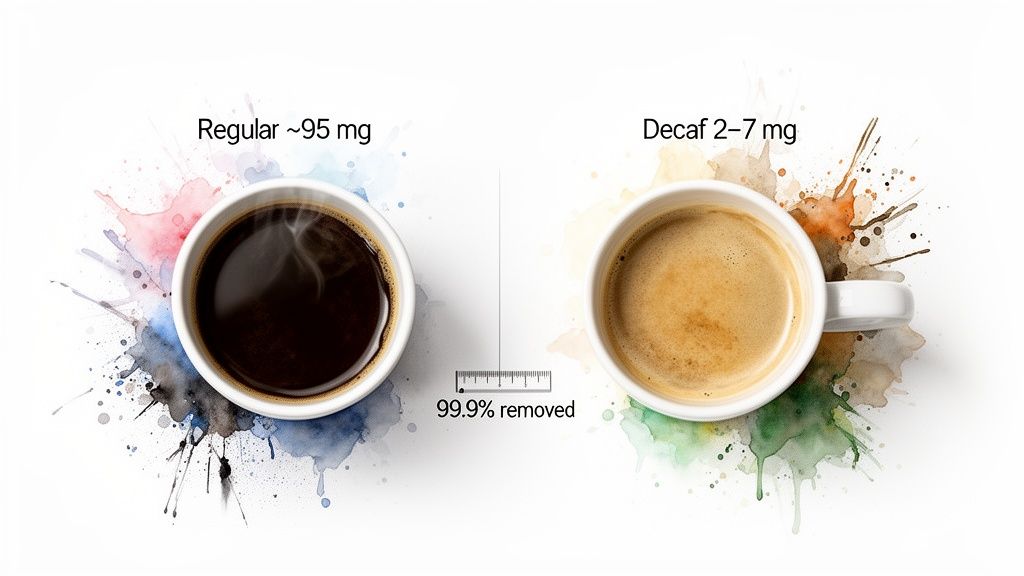
Let's get one thing straight: decaffeinated coffee isn't completely caffeine-free, but it comes incredibly close. A typical mug of decaf here in the UK will have around 2-7mg of caffeine. To put that in perspective, its fully caffeinated cousin easily packs 95mg or more.
The Real Answer to Your Decaf Caffeine Question
Many people hear 'decaffeinated' and think 'zero caffeine', but the reality is a little more nuanced than that. It's better to think of it as '99.9% caffeine-removed'.
This tiny, leftover trace is rarely enough to trigger the buzz you get from regular coffee. That makes it a fantastic choice for a relaxing evening brew or for anyone who’s sensitive to caffeine but still loves the taste and ritual of a good cup.
Understanding this subtle difference is the key to appreciating what makes a great decaf. The final amount of caffeine in your cup actually depends on a few things, like the type of coffee bean and, most importantly, the specific method used to remove the caffeine.
UK Regulations And What They Guarantee
Fortunately, you don’t have to just guess. Here in the UK and across Europe, decaf is held to a strict standard. For roasted coffee beans to be sold as decaffeinated, they must contain no more than 0.1% caffeine.
This regulation gives you a reliable baseline. It means that when you buy from a trusted UK roaster, you can be confident your cup has only a minuscule amount of caffeine—often as little as 2mg. It’s all part of the bigger picture of managing your overall caffeine intake and knowing what you’re drinking.
Choosing a high-quality decaf means you can enjoy the rich, complex flavours of speciality coffee any time of day without compromise. It’s all about the ritual and taste, not the jolt.
Of course, finding beans from roasters who genuinely care about quality is key to a great decaf experience. If you're looking for recommendations, our guide on the top places to buy specialty coffee beans in the UK is a great place to start.
What 'Decaffeinated' Really Means in the UK
When you see a bag of coffee labelled 'decaffeinated' in the UK, it’s natural to think it means zero caffeine. But in reality, the term is a technical one, promising a massive reduction in caffeine rather than its complete removal. Think of it less as 'caffeine-free' and more as 'almost entirely caffeine-removed'.
This is a really important distinction. Here in the UK and across Europe, the rules are thankfully very clear and designed to protect coffee drinkers. For a bag of roasted coffee to legally carry the 'decaffeinated' label, it must have had at least 99.9% of its original caffeine stripped out.
This regulation means that only a tiny trace amount, a maximum of 0.1% caffeine, can remain in the final beans. It's a standard that gives you a solid guarantee of quality and consistency every time you buy.
Why Not 100 Per Cent Caffeine-Free?
So why not go all the way to zero? It really comes down to the science of decaffeination and the art of preserving flavour. Trying to wring out every last molecule of caffeine from a delicate coffee bean without also stripping away its beautiful, complex flavour compounds is practically impossible.
Pushing for that final 0.1% would mean sacrificing the very taste and aroma that make coffee wonderful in the first place. It’s a trade-off no good roaster is willing to make.
A good parallel is 'fat-free' yoghurt. Legally, these products can still contain minuscule, trace amounts of fat that are considered negligible. The 'decaffeinated' label works on a similar principle; it tells you the caffeine level is so low that it’s functionally insignificant for most people.
The goal of decaffeination is to remove the stimulant while preserving the soul of the coffee—its unique origin flavours, acidity, and body. It's a delicate balancing act between caffeine reduction and taste preservation.
This precision is especially vital in the world of high-quality coffee, where every nuance of flavour matters. Understanding this helps you appreciate what goes into creating a truly exceptional decaf. If you're keen to learn more about what elevates a coffee from good to great, you can explore our guide on what is specialty coffee.
Ultimately, these strict regulations mean you can trust the label on the bag. Whether you're sensitive to caffeine or just fancy a delicious evening brew, the UK 'decaffeinated' standard ensures you’re getting a product that delivers on its promise of exceptionally low caffeine. You can sip with confidence and enjoy all the flavour without the unwanted buzz.
How Is Caffeine Actually Removed from Coffee?
Ever held a bag of decaf and wondered how they get the caffeine out? It's a fascinating process, part science and part culinary art. The method used doesn't just decide how much caffeine is in decaffeinated coffee; it has a huge impact on the final flavour in your cup.
The journey always starts with green, unroasted coffee beans. At this stage, the beans are porous and packed with their natural flavours, making it the perfect time to gently coax the caffeine out while leaving all the good stuff behind.
There are a few ways to do this, but they generally fall into two main camps: processes that use solvents and those that don't.
This simple visual breaks down the basic journey from a fully caffeinated bean to a cup that's 99.9% caffeine-free.
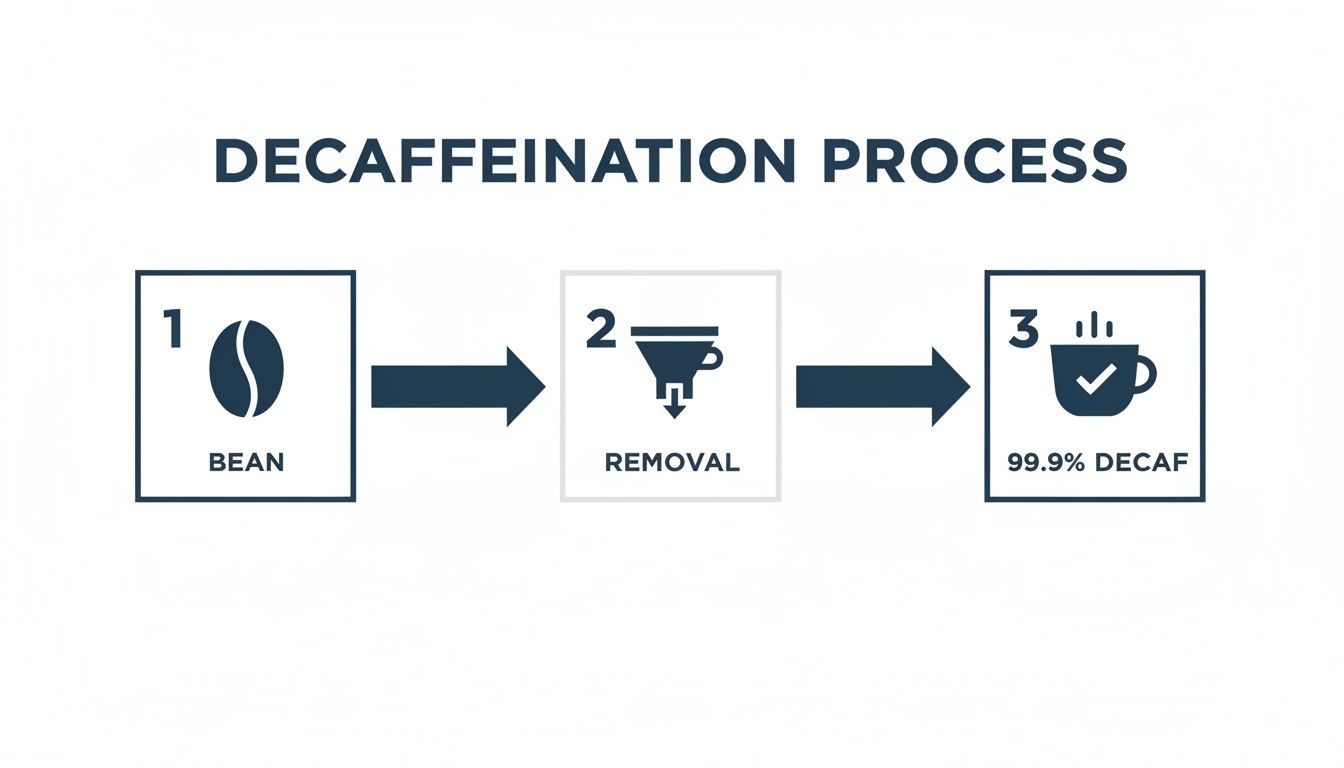
No matter the method, the goal is always the same: isolate and remove the caffeine while keeping the coffee's original character intact.
Solvent-Based Decaffeination Methods
Many commercial decafs get their start with solvents like ethyl acetate or methylene chloride. In these methods, the green coffee beans are usually steamed to open up their pores. Then, they're soaked in the solvent, which naturally bonds with the caffeine molecules and pulls them right out.
After the soak, the beans are steamed and rinsed thoroughly to make sure any leftover solvent is long gone before they're dried and roasted. While these methods are efficient and held to strict safety standards, some coffee purists argue they can subtly change the bean's true flavour.
The Swiss Water Process: A Chemical-Free Approach
Now, this is where things get really interesting. The Swiss Water Process is a unique, 100% chemical-free method that relies on just water, temperature, and time to gently ease the caffeine out of the beans. It’s a beautifully simple idea that delivers incredible results.
It all starts by soaking a batch of green beans in hot water to create a flavour-packed solution called Green Coffee Extract (GCE). This GCE is then passed through special carbon filters designed to trap only the caffeine molecules, leaving all the original flavour compounds swimming free.
The real magic happens next. This now caffeine-free GCE is used to wash the next batch of green beans. Because the water is already saturated with coffee flavour, it can’t steal any more from the new beans—but it happily absorbs their caffeine.
This clever and gentle technique removes 99.9% of the caffeine without a single added chemical, preserving the delicate, unique notes of the coffee's origin. It's a perfect example of how innovation can protect flavour. You can taste the incredible results for yourself by checking out our Swiss Water decaf single-origin beans.
At Seven Sisters Coffee, we champion the Swiss Water Process because it gives you a cleaner, brighter, and far more flavourful cup. We believe you shouldn't have to compromise on taste just to enjoy a decaf, and that's why it's the only method we trust for our premium decaffeinated coffees.
How Your Brewing Style Impacts Your Decaf Cup
You’ve got your hands on some top-notch decaf beans, but what happens next? Does the way you brew your coffee at home actually change how much caffeine ends up in your mug? The short answer is yes—but the difference is incredibly small.
Once the decaffeination process has done the heavy lifting, your brewing technique is what coaxes the last tiny traces of caffeine out of the grounds. Think of it like making a cup of tea: the longer you steep the bag, the stronger it gets. Coffee works on a similar principle.
Things like how fine you grind the beans, the temperature of your water, and how long the water hangs around with the coffee all have a say. A longer, more leisurely brew, like a French press, might pull out a fraction more caffeine than a speedy pour-over.
Fine-Tuning Your Brew for Minimal Caffeine
Even though we're talking about tiny fluctuations, you can tweak your routine to keep caffeine levels as low as possible without sacrificing that delicious, full-bodied flavour you’re after.
Every time you brew, you’re in control of these variables:
- Grind Size: Finer grounds have more surface area, leading to a faster and more thorough extraction of everything inside the bean, including caffeine. A coarser grind can mean slightly less is pulled out.
- Brew Time: The longer your coffee and water are in contact, the more caffeine will dissolve. A quick decaf espresso shot is over in seconds, whereas a cold brew decaf could steep for hours, potentially nudging the final tally.
- Water Temperature: Hotter water is a more efficient solvent for caffeine. You need hot water for a great extraction, but using water just off the boil is a smart move. For more on this, check out our guide on finding the best water temperature for coffee.
Thanks to strict UK regulations, decaf coffee is already reassuringly low in caffeine, often containing just 2mg per cup compared to the 96mg you’d find in a regular coffee. Even high-quality methods like Swiss Water, which can leave behind anywhere from 2-15mg depending on the brew strength, result in a minimal final amount.
Estimated Caffeine in Common Decaf Drinks
To give you a clearer picture, here’s a quick look at how much caffeine you can typically expect from different decaf drinks. Keep in mind these are just estimates!
| Decaf Drink Type | Typical Serving Size | Estimated Caffeine Range (mg) |
|---|---|---|
| Brewed Decaf Coffee | 8 oz (237 ml) | 2 – 5 mg |
| Decaf Espresso (Single Shot) | 1 oz (30 ml) | 1 – 4 mg |
| Decaf Instant Coffee | 8 oz (237 ml) | 2 – 4 mg |
| Decaf Pour-Over | 8 oz (237 ml) | 3 – 6 mg |
As you can see, no matter how you prepare it, the caffeine content remains incredibly low, making it a safe bet for anyone looking to cut down.
Espresso vs Filter Decaf
People often wonder if a decaf espresso packs more of a punch than a filter coffee. While a single decaf espresso shot has a higher concentration of caffeine in its small volume, a big mug of decaf filter coffee will likely have more caffeine overall simply because you’re drinking more liquid.
Ultimately, no matter how you brew it, your cup will have just a tiny fraction of the caffeine in regular coffee. The most important choice you'll make is picking high-quality beans to begin with. This guarantees a flavourful and satisfying experience every single time.
Finding a Truly Great Decaf Coffee
Ready to find a decaf you’ll actually look forward to drinking? It might seem like a maze out there, but finding an exceptional brew is simple once you know what to look for on the label. Forget those bland, lifeless coffees of the past; a genuinely great decaf delivers all the flavour without the buzz.
The secret is all in the details. Pay close attention to the decaffeination method, the coffee's origin, and its roast profile. Think of these as your roadmap to a delicious and deeply satisfying cup.
How to Read the Label Like a Pro
When you pick up a bag of decaf, the first thing your eyes should scan for is the decaffeination method. Look for the magic words: ‘Swiss Water Process’. This is your green flag, signalling a 100% chemical-free process that’s brilliant at preserving the bean's delicate flavour notes. It's the gold standard for a reason.
Next, check the origin. A single-origin decaf from a specific country or region will have a unique taste, just like its caffeinated cousins. Finally, have a look at the roast profile—light, medium, or dark—to find something that perfectly suits your taste.
Choosing a speciality roaster committed to quality, like Seven Sisters Coffee Co, makes all the difference. We focus on ethical sourcing and meticulous roasting to ensure our decaf delivers an exceptional experience in every cup.
This dedication to quality has never been more important. Here in the UK, about one in five drinkers now regularly choose decaf, a trend that’s all about a greater focus on health and wellness. This growing demand has fuelled a wave of premium options that refuse to compromise on taste.
Our Commitment to Flavourful Decaf
At Seven Sisters Coffee, we firmly believe that choosing decaf should never mean settling for second best. That’s why we exclusively use the Swiss Water Process for all our beans, guaranteeing a clean, pure, and flavour-packed coffee every single time. Our focus on single-origin beans means you can explore a world of unique tasting notes.
Whether you love the rich, chocolatey notes of a Latin American coffee or the bright, fruity tones of an African bean, we’ve got a decaf to match your palate. We invite you to explore our carefully curated selection of premium decaf coffee beans and find your next favourite brew. It's time to enjoy the ritual of coffee, any time of day, without any compromise on flavour.
Your Decaf Coffee Questions, Answered
Even with all the facts laid out, it’s natural to have a few lingering questions when you’re thinking about switching to decaf. Let's tackle some of the most common ones with straightforward answers to help you feel great about your choice.
Can I Drink Decaf Coffee Every Day?
Absolutely. For most of us, enjoying decaf daily is a perfectly healthy habit. It’s packed with the same beneficial antioxidants as regular coffee but has only a tiny amount of caffeine, making it a brilliant way to keep the coffee ritual you love without overdoing it on stimulants.
Think of it as all the comforting pleasure of a warm, flavourful brew, but without any of the potential downsides that can come with too much caffeine. It lets you simply focus on the taste and the moment.
Will Decaf Coffee Keep Me Awake at Night?
This is a common worry, but it’s one you can put to rest. A typical cup of decaf only contains 2-7mg of caffeine, which is a tiny fraction of what you'd find in a standard cup of coffee. That amount is far too low to interfere with the sleep patterns of most people.
So go ahead and enjoy a delicious cup of decaf in the evening as you unwind. It makes for the perfect nightcap for a true coffee lover, without any fear of a restless night.
Does Decaf Coffee Taste Worse Than Regular Coffee?
It certainly doesn't have to! It’s true that some of the older, harsher decaffeination methods could strip away flavour along with caffeine, but modern techniques have completely changed the game.
A high-quality, freshly roasted decaf can be every bit as complex, aromatic, and delicious as its caffeinated counterpart. The key is choosing beans that have been treated with care from the start.
Processes like the Swiss Water Process, which we champion here at ADS Coffee Supplies, are designed specifically to preserve the bean's original, delicate character. This means you get all the nuanced tasting notes from the coffee's origin, completely uncompromised. For anyone looking to manage their caffeine intake or figure out how to stop caffeine jitters, choosing a great-tasting decaf is a fantastic first step. You could buy Kimbo Decaffeinated Ground Coffee or Pellini Top Decaffeinated Coffee Beans today!
Ready to discover a decaf that truly delivers on flavour? At ADS Coffee Supplies, we’ve carefully selected the finest Swiss Water Process beans to ensure every cup is a delight. Explore our exceptional range and taste the difference for yourself by visiting our decaffeinated coffee collection.