A Guide to the Best Decaf Coffee Beans in the UK

Decaf coffee beans aren't some strange, separate species; they're genuine coffee beans that have had at least 99.9% of their caffeine gently removed before they ever meet the heat of the roaster. Thanks to some incredibly sophisticated methods, we can now preserve the rich, complex flavours of the original bean, finally shaking off decaf's old reputation as a flavourless pretender.
The Surprising World of Modern Decaf
Let's be honest, decaf has a bit of a reputation problem. For years, it was seen as the bland, watery cousin of "real" coffee—something you drank out of necessity, not for actual enjoyment. But what if we told you the best decaf available today is a world away from those disappointing cups of the past?
A quiet revolution has been brewing in the coffee world. With advanced, chemical-free processing and a sharp focus on high-quality beans, modern decaf is finally stepping into the spotlight. It's no longer just an afterthought. It's a genuine choice for a delicious, aromatic brew, any time of day.
A Growing Trend in the UK
This shift isn't just happening in niche coffee circles; it's a mainstream trend that's reshaping coffee habits across the United Kingdom. More and more people are discovering they can enjoy the comforting ritual and nuanced taste of coffee without the caffeine kick. In fact, the UK decaffeinated coffee market grew by 3% to £1.3 billion, marking its third straight year of growth.
What’s more, recent research shows that one in five UK coffee drinkers now regularly opts for decaf, proving its popularity is on the rise.
This growing appreciation comes down to one simple fact: great decaf starts with great coffee. Roasters are now using the same high-grade, single-origin beans for their decaf as they do for their main lineup. When you pair exceptional raw ingredients with a meticulous decaffeination process, the results are simply stunning. This approach aligns perfectly with the core principles of the craft, which you can read more about in our guide to what is specialty coffee.
Today's speciality decaf is crafted with the same care and expertise as any other premium coffee. The goal is to remove the caffeine while preserving the soul of the bean—its unique origin characteristics, flavour notes, and aroma.
So, forget everything you thought you knew. This guide is your journey into the rich, complex, and surprisingly flavourful world of modern decaf coffee beans. We'll show you how we unlock incredible taste, proving that a fantastic coffee experience is waiting for you, caffeine optional.
How Caffeine Is Gently Removed from Coffee Beans
Ever wondered how the caffeine actually gets out of the bean? It's a fascinating process, one that has a massive impact on the final taste in your cup. Modern decaffeination isn't about harshly stripping the bean of everything; it's more of a delicate extraction, designed to keep the coffee's soul intact.
Crucially, all decaffeination happens when the beans are still green—raw, unroasted, and full of potential. The goal is simple but incredibly tricky: coax the caffeine out while leaving behind the hundreds of other flavour compounds that make the coffee special. Let's look at the main ways the industry does it.
The Swiss Water Process: A Chemical-Free Soak
In the world of speciality coffee, the Swiss Water Process is famous for its gentle, completely chemical-free approach. Think of it as giving the green beans a clever, purifying bath. It starts by soaking a batch of green beans in hot water, which draws out both the caffeine and all the soluble flavour compounds.
This first lot of beans is discarded, but the water—now a flavour-rich solution called Green Coffee Extract (GCE)—is the magic ingredient. This GCE is passed through special carbon filters that are designed to capture only the larger caffeine molecules, letting all the lovely flavour compounds pass right through.
Now, this caffeine-free GCE is used to wash the next batch of high-quality green coffee beans. Since the water is already saturated with flavour, it can’t absorb any more from the new beans. It has only one thing on its mind: drawing out the caffeine. This selective process leaves the bean's original character right where it belongs. The result is a coffee that is 99.9% caffeine-free and bursting with a clean, bright flavour. It's the method we put our trust in for our own delicious Swiss Water Decaf single-origin beans.
This shift towards better-tasting decaf, driven by superior methods, is changing perceptions and growing the market for coffee lovers who want flavour without the buzz.
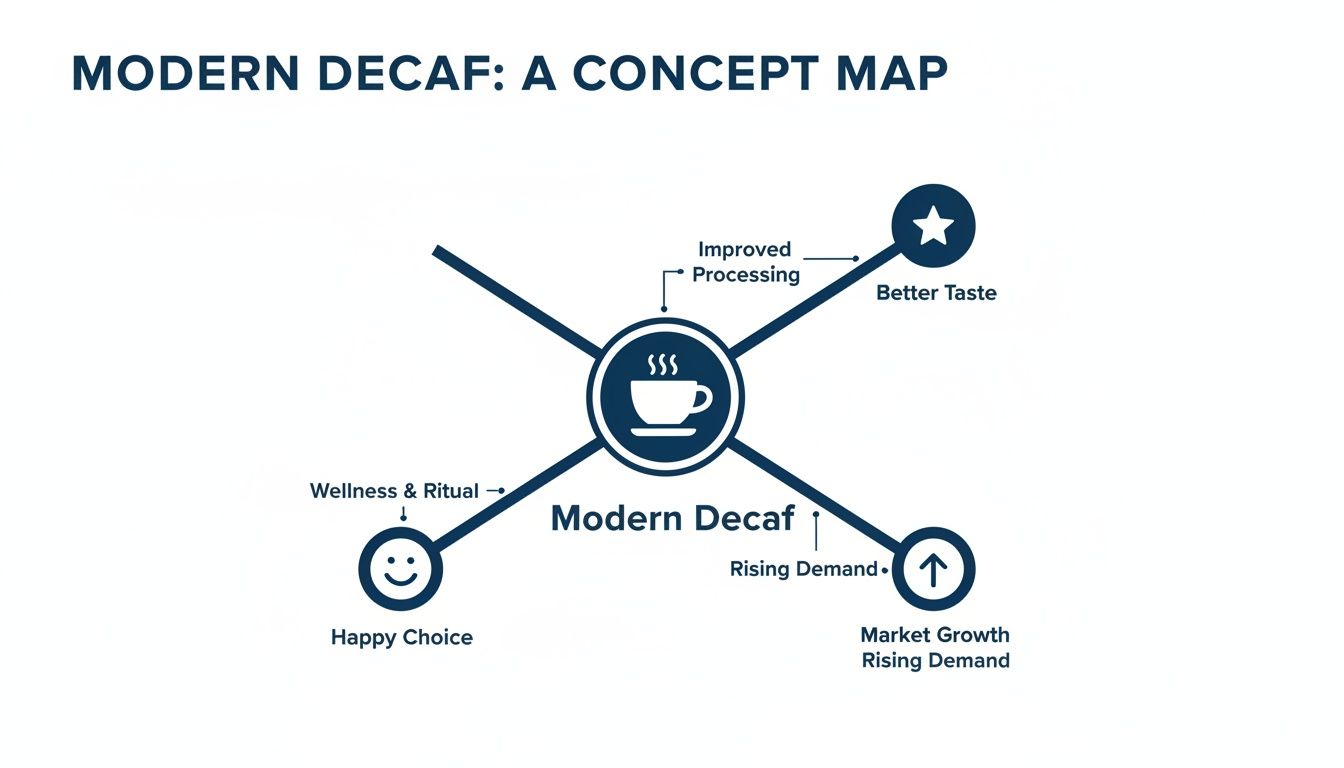
As the infographic shows, the rise of modern decaf is a story of improved quality leading to greater consumer happiness and a stronger market presence.
Supercritical CO2: A Pressure-Based Method
Another brilliant, chemical-free technique is the Supercritical CO2 method. This process uses carbon dioxide—yes, the same gas we breathe out—but in a special, highly pressurised state where it behaves like both a liquid and a gas at the same time.
Here's a breakdown of how it works:
- Soaking: First, the green coffee beans are soaked in water. This makes them swell up, expanding their cellular structure and getting the caffeine molecules ready to move.
- Pressurisation: The damp beans are then moved into a pressurised chamber, which is flooded with supercritical CO2.
- Extraction: The CO2 acts like a highly selective magnet, bonding with and pulling out only the caffeine molecules. It leaves the smaller flavour compounds completely untouched.
- Separation: Finally, the caffeine-rich CO2 is piped into a separate chamber where the pressure is released. The CO2 turns back into a regular gas and floats away, leaving behind pure caffeine powder. The CO2 is then ready to be used again.
This method is incredibly efficient and is well-regarded for preserving the coffee's natural body and sweetness, making it another top choice for high-quality decaf.
Solvent-Based Methods: The Traditional Approach
The oldest methods for decaffeination rely on solvents to get the job done. While the word "chemical" might sound a bit unsettling, these processes are tightly regulated and considered perfectly safe. The two most common solvents you'll come across are methylene chloride and ethyl acetate.
Ethyl acetate is often positioned as a more "natural" option because it can be derived from things like fruit or sugar cane. The process itself is quite direct: the green beans are soaked in the solvent, which binds to the caffeine, and are then steamed and rinsed repeatedly to ensure any trace of the solvent is removed long before roasting.
While these methods are effective, they can sometimes have a subtle impact on the coffee's more delicate flavour notes. It's for this reason that many speciality roasters and discerning UK coffee drinkers tend to lean towards the cleaner taste profiles you get from the Swiss Water and CO2 processes.
To make sense of these different techniques, here's a quick comparison to help you see how they stack up against each other.
Decaffeination Methods at a Glance
| Method | Process Summary | Flavour Impact | Chemicals Used |
|---|---|---|---|
| Swiss Water | Beans are soaked in a caffeine-free Green Coffee Extract, which selectively removes caffeine. | Excellent preservation of origin flavour; clean, bright, and full-bodied. | None (Uses only water) |
| Supercritical CO2 | Pressurised carbon dioxide acts as a solvent to extract caffeine from water-soaked beans. | Very good preservation of flavour and aroma; often retains sweetness and body. | Carbon Dioxide |
| Solvent-Based | Solvents like Methylene Chloride or Ethyl Acetate directly bond with and remove caffeine. | Can sometimes mute delicate notes, though modern methods are much improved. | Methylene Chloride or Ethyl Acetate |
Ultimately, understanding these differences is the key to finding a decaf you’ll genuinely look forward to drinking. Each method tells a different story in the cup, and knowing which one you prefer can transform your entire decaf experience.
Finding Your Perfect Flavour Profile
Now that we’ve pulled back the curtain on the decaffeination process, let’s get to the part that really matters: how the coffee actually tastes. The journey from a caffeinated green bean to its decaf counterpart has a huge effect on flavour, and the method used is the single biggest factor in shaping the final character in your cup. Choosing the right decaf coffee beans is all about matching a process to what you love to taste.
This is where the line between a decent decaf and a truly great one is drawn. Each method leaves its own subtle signature on the beans, influencing everything from the brightness of the acidity to the richness of the body. Think of it like a filter on a photograph—the subject is the same, but the tool you use changes the final mood and texture.
Swiss Water Process: The Flavour Preserver
For many speciality coffee roasters, ourselves included, the Swiss Water Process is the gold standard. Its genius lies in its gentle, chemical-free approach that excels at preserving the coffee's original, delicate flavour compounds. By using a flavour-charged water solution, it cleverly targets only the caffeine molecules, leaving the bean’s intrinsic character almost completely untouched.
The result? A decaf that is remarkably clean, bright, and complex. This method works wonders on high-quality, single-origin beans where those nuanced floral, fruity, or citrus notes are the star of the show. If you love a coffee that tells the story of its origin with clarity and vibrancy, decafs processed this way will be your perfect match. You can get a feel for what might appeal by exploring the different flavour profiles of single-origin coffee beans.
Key Takeaway: The Swiss Water Process is celebrated for its ability to maintain the bright, clean, and complex notes of a coffee's origin, making it a favourite in the speciality coffee community.
This laser focus on quality and flavour is driving a huge shift in how people see decaf. The international decaffeinated coffee market is projected to soar past USD 28.8 billion by 2030, with Europe, including the UK, making up over 35% of global revenue. It's clear that decaf is no longer a compromise but a sought-after choice for discerning coffee drinkers.
CO2 Process: The Body Builder
While the Swiss Water Process champions brightness, the Supercritical CO2 method is brilliant at holding onto a coffee’s body and sweetness. This technique uses pressurised carbon dioxide to gently isolate caffeine without disturbing the larger molecules responsible for a coffee's mouthfeel and deeper flavour notes.
Coffees decaffeinated using the CO2 method often have a fuller body, a rounder mouthfeel, and a lovely lingering sweetness. This makes it an excellent choice for beans that naturally lean towards rich, chocolatey, or nutty profiles. If you prefer a decaf that feels substantial and comforting, especially for an espresso or milky drink, a CO2-processed coffee is a fantastic shout.
When you're exploring the world of decaf, the packaging itself can be your guide. Well-designed food labels for coffee products can offer crucial clues about the decaffeination method, origin, and the taste notes you can expect inside.
A Showcase of Exceptional Flavour: Seven Sisters Decaf
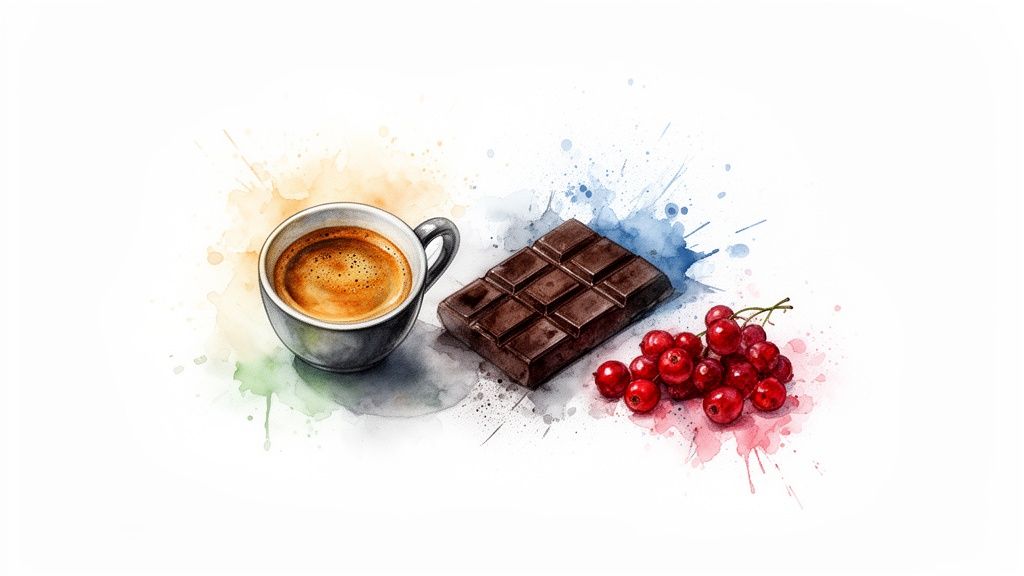
We firmly believe that decaf drinkers deserve a coffee experience that’s second to none. That’s why we chose the Swiss Water Process for our signature Seven Sisters Decaf Coffee Blend. We start with meticulously selected beans celebrated for their inherent richness, creating a decaf that delivers delightful notes of smooth chocolate and sweet fruit.
But our commitment to flavour doesn’t stop there. We take these outstanding decaffeinated beans and apply our unique oxygen-free roasting technique. Roasting in a sealed, oxygen-free environment prevents the oxidative damage that can dull a coffee's delicate aromatic compounds. This careful process protects and elevates the subtle flavours, resulting in a cup that is remarkably vibrant, aromatic, and completely free from the bitterness that plagued older decaf styles. It’s proof that modern techniques can produce a decaf that’s every bit as satisfying as its caffeinated cousin.
How to Brew Amazing Decaf Coffee at Home
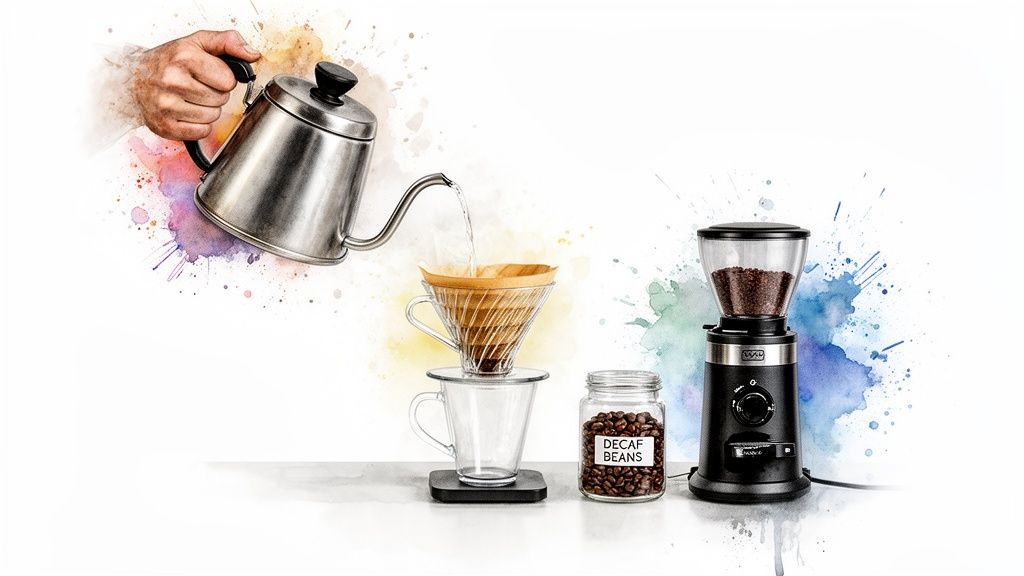
Having incredible decaf coffee beans is only half the story; bringing out their best flavour comes down to how you brew them. There’s a persistent myth that decaf is fussy or difficult to get right, but that’s just not true. With a couple of minor tweaks to your usual routine, you can pull a café-quality cup right in your own kitchen.
Here’s the thing to remember: the decaffeination process makes the beans slightly more porous and a touch softer than their caffeinated cousins. This small physical change means they behave a little differently when you grind them and hit them with hot water, but don’t worry—it’s nothing you can’t easily manage.
Think of it like baking with a slightly different type of flour. You wouldn't throw out the recipe; you'd just adjust things slightly to get that perfect result. The exact same logic applies here.
Adjusting Your Grind Size for Decaf
Because decaf beans are a little softer, they tend to break down more easily in the grinder. At the same setting you’d use for regular beans, you might end up with more fine particles than you want, which can lead to over-extraction and a bitter, harsh brew.
The fix is surprisingly simple: go for a slightly coarser grind than you normally would.
This little adjustment helps the water flow through the grounds at an even pace, pulling out all those lovely, sweet notes without dragging the unwanted bitterness along with it. It’s a tiny change that makes a huge difference in the final cup.
For a balanced brew, start by adjusting your grinder one or two clicks coarser than your usual setting for caffeinated coffee. This simple step can prevent over-extraction and bring out the natural sweetness of your decaf beans.
And, of course, always buy whole beans and grind them right before you brew. The leap in aroma and flavour is massive.
Nailing the Perfect Water Temperature
Water temperature is always a big deal in coffee brewing, but it’s especially critical for decaf. Since the beans are a bit more soluble, water that’s too hot can scorch the grounds and extract those bitter compounds way too quickly, completely overpowering the delicate notes we’re trying to taste.
We suggest aiming for a slightly cooler temperature than you might for regular coffee. A good starting point is between 88°C and 92°C. This gentler heat coaxes out the full spectrum of flavour without scalding the coffee.
- For Pour-Over (V60, Chemex): Try around 90°C. This gives you a controlled extraction that really lets the coffee's clean, bright notes shine.
- For French Press: Start a touch hotter, at about 92°C. This works well for a full-immersion method and helps develop a richer body.
- For Espresso: This is machine-dependent, but a small drop in temperature can work wonders. Keep an eye on your shot times and taste to dial it in perfectly.
If you don't have a temperature-controlled kettle, no problem. Just let your boiled water rest for about 45-60 seconds before you start pouring. For a more in-depth look, our guide on the best water temperature for coffee has even more detail.
Storing Your Decaf Beans for Lasting Freshness
Finally, you’ve got to store your beans properly to protect all those delicate aromas. The enemies of fresh coffee are always the same: oxygen, light, heat, and moisture.
Keep your decaf coffee beans in an airtight container and stash it in a cool, dark place like a cupboard or pantry. Steer clear of the fridge or freezer—condensation is the fastest way to ruin good beans and mute their flavour. A little care here ensures every cup you brew is as vibrant and delicious as the last.
Why More People Are Choosing Decaf
The decision to drink decaf has moved far beyond just avoiding a caffeine buzz. Nowadays, reaching for a bag of high-quality decaf coffee beans is a deliberate lifestyle choice, driven by a deeper focus on wellness, comfort, and ethical consumption.
People are listening to their bodies more, realising that too much caffeine can sabotage a good night's sleep, amplify anxiety, or lead to an upset stomach. Opting for decaf means they can still enjoy the rich, comforting ritual of a warm cup of coffee without any of the drawbacks. It’s the perfect brew for the evening or a soothing afternoon treat.
Health and Wellbeing as a Motivator
One of the biggest drivers behind the shift to decaf is the growing emphasis on mental and physical health. For many, cutting back on caffeine brings some pretty significant benefits.
These positive changes often include:
- Improved Sleep Quality: Ditching caffeine, particularly in the afternoon, can lead to much deeper and more restorative sleep.
- Reduced Anxiety and Jitters: For anyone sensitive to stimulants, decaf provides all the flavour of coffee without the restlessness or anxious feelings caffeine can trigger.
- Better Digestion: Some people find that a high caffeine intake irritates their stomach, making decaf a much gentler alternative.
This wellness-first mindset is fuelling a major market trend. The UK's Decaffeinated Coffee Market was recently valued at USD 132.88 million and is on track to hit USD 208.01 million by 2033. That projected 56% growth is a clear signal of a sustained move towards quality decaf.
A Commitment to Sustainability and Ethics
Today’s decaf drinker is often just as curious about where their coffee comes from as they are about its caffeine content. The choice of decaffeination method has a direct impact on both the environment and the purity of the final product.
Methods like the Swiss Water process really stand out because they’re completely chemical-free, using only water to gently remove the caffeine. This approach avoids industrial solvents, making it a cleaner choice for you and the planet.
At Seven Sisters, our commitment to ethical sourcing is at the heart of everything we do. We believe a great cup of coffee shouldn't come at the expense of the environment or the farmers who grow it.
That’s why we not only opt for sustainable decaffeination methods but also donate a percentage of every order to World Coffee Research. This organisation is dedicated to protecting the future of coffee for generations to come. By supporting their work, we help ensure the long-term viability of coffee farming worldwide. You can find out more about what it takes to be one of the UK's truly sustainable coffee companies in our detailed guide.
As demand for high-quality decaf grows, cafes are also adapting to serve their customers better. For those interested in the business side of things, it's worth exploring different cafe operational solutions. Ultimately, choosing today's decaf is about more than what you take out; it’s about what you put back in—to your body, the environment, and the global coffee community.
Your Decaf Coffee Questions Answered
We’ve travelled the entire journey of the humble decaf bean, from its gentle processing right through to the perfect home brew. To wrap things up, let’s tackle some of the most common questions we hear. This is all about clearing up any last doubts so you can feel completely confident in your next cup of decaf.
Does Decaf Coffee Still Contain Caffeine?
This is a brilliant question. The short answer is that while it’s not 100% caffeine-free, the amount left is incredibly small. In the UK and Europe, regulations are strict: decaffeinated beans must have at least 99.9% of their original caffeine removed.
So, what does that look like in your cup? A typical mug of decaf contains just 2-5mg of caffeine. Compare that to a standard cup of caffeinated coffee, which can easily pack 80-100mg or more. For almost everyone, this trace amount is negligible and won't bring on the familiar buzz, making it the perfect choice for an evening brew.
Does Decaffeination Ruin Coffee Flavour?
This is a stubborn myth, a hangover from the early days of decaf when harsh chemical processes really did strip away flavour along with caffeine. Thankfully, modern methods have completely changed the game.
Processes like the Swiss Water Process, which we proudly use for our Seven Sisters Decaf Blend, are designed to be incredibly gentle. They work by cleverly targeting only the caffeine molecules, leaving the hundreds of delicate compounds that create flavour and aroma completely untouched.
When you start with high-quality, speciality-grade beans and pair them with a meticulous decaffeination process, the result is a decaf that is every bit as delicious, complex, and aromatic as its caffeinated counterpart.
The idea that decaf means bad coffee is simply outdated.
Are Chemical-Free Decaf Methods Better?
While all regulated decaffeination methods are considered perfectly safe, many coffee lovers simply prefer a process that uses no added chemicals at all. It often comes down to wanting a product that feels as natural and clean as possible.
This is where methods like the Swiss Water Process and Supercritical CO2 truly shine.
- The Swiss Water Process relies on nothing more than pure water and a flavour-charged Green Coffee Extract.
- The Supercritical CO2 Process uses natural, pressurised carbon dioxide to do the work.
Opting for one of these methods offers total peace of mind and often results in a cleaner, clearer taste profile. It allows the coffee's unique origin character to come through beautifully, which is a big reason why the speciality coffee community has embraced these natural, eco-friendly approaches.
What Is the Best Way to Store Decaf Beans?
To keep your decaf tasting its absolute best, you need to treat it with the same care as any premium coffee. The mission is simple: protect the beans from their four biggest enemies—air, moisture, heat, and light.
The best approach is to store your decaf coffee beans in an airtight container in a cool, dark cupboard. It’s really important to avoid the fridge or freezer. The condensation that forms when you take them out can damage the beans and dull their delicate flavours.
For the most vibrant cup possible, we always recommend buying whole beans and grinding them just seconds before you brew. It's a small step that makes a world of difference to the final taste, ensuring every cup is as fresh and satisfying as it can be.
At ADS Coffee Supplies, we are passionate about showing just how incredible modern decaf can be. Our Seven Sisters Decaf is a testament to quality, processed using the gentle Swiss Water method and roasted in an oxygen-free environment to lock in every delicious note.
Ready to discover a truly exceptional decaf? Explore our Seven Sisters Decaf Coffee Beans and taste the difference for yourself.