The Ultimate Guide to the Darkest Coffee Roast
When you think of the darkest coffee roast, what comes to mind? Probably a powerful, smoky, and intensely bold cup of coffee. You’re picturing the French and Italian roasts of the coffee world, famous for their rich flavour, low acidity, and heavy body. These beans aren't just dark brown; they're almost black, often glistening with a characteristic oily sheen on their surface.
This guide gives you practical advice on what makes the darkest roasts unique, how to choose the right one for you, and how to brew it perfectly every time.
What Makes a Dark Roast 'Dark'?
Imagine taking a green coffee bean far beyond the familiar cinnamon colour of a light roast. The darkest coffee roasts happen when beans are heated well past the “second crack”—an audible popping sound that signals a critical stage in the roasting process. This intense heat completely transforms the bean’s internal structure and chemistry.
It’s a delicate balancing act. As the natural sugars inside the bean first caramelise and then begin to carbonise, the original, nuanced flavours from the coffee’s origin—like delicate fruity or floral notes—are almost entirely muted. In their place, new, bolder characteristics emerge.
Think of it like toasting a marshmallow. A light toast brings out its simple sweetness, but a deep, dark toast creates smoky, rich, and bittersweet flavours. This transformation is why you’ll often hear dark roasts described with powerful notes like:
- Dark or baker's chocolate
- Smoky char and woodsmoke
- Molasses and burnt sugar
- A rich, bittersweet finish
This intense profile is more popular than you might think. In the UK, the roasted coffee market, which includes these deep roasts, hit a value of USD 2,457.75 million in 2024. Forecasts show it surging to USD 4,084.74 million by 2033, which tells us there’s a real growing appetite for these powerful brews among home coffee lovers.
A common myth is that a dark roast is just "burnt" coffee. But a masterfully crafted dark roast is an art form. It takes immense skill to push the beans to this extreme without creating a harsh, acrid taste.
Darkest Roast Levels at a Glance
Navigating the world of very dark roasts can be confusing, with terms like French, Italian, and Spanish often used. This table gives you a quick summary of the most common darkest roast levels, helping you understand their key differences at a glance.
| Roast Name | Common Colour | Oil on Surface | Dominant Flavour Notes |
|---|---|---|---|
| French Roast | Deep, dark brown, nearly black | Very oily | Smoky, bittersweet, thin body |
| Italian Roast | Black and shiny | Heavily coated in oil | Intensely smoky, charcoal, often acrid |
| Spanish Roast | Jet black, brittle | Extremely oily | Almost pure charcoal, burnt, very bitter |
As you can see, each step deeper into the roast intensifies the smoky notes while diminishing the coffee's original character. It's a trade-off between origin flavour and roast-imparted boldness.
Modern Techniques in Dark Roasting
Skilled roasters use modern techniques, like oxygen-free roasting, to achieve these deep profiles with more precision. By carefully controlling the environment inside the roaster, we can develop that desired smoky complexity while preventing the harsh bitterness that comes from uncontrolled combustion.
This method ensures the final cup is bold and powerful, yet still smooth and enjoyable. To get a better sense of how this fits into the broader spectrum, you can explore our full guide where we explain various coffee roasting profiles in detail. The result is a profoundly satisfying coffee experience, perfect for those who crave intensity in their daily brew.
The Roasting Journey: From Green Bean to Dark and Oily
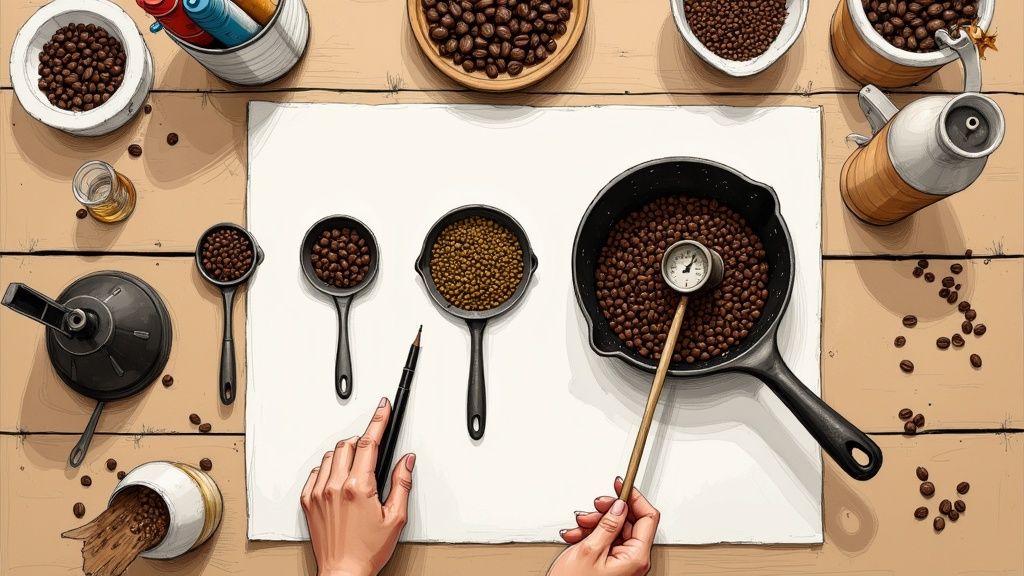
Every coffee bean you’ve ever tasted, whether it ended up in a bright, fruity brew or the darkest coffee roast, began its life as a humble green seed. The transformation that happens inside a roaster is nothing short of alchemy—a dramatic journey of sound, sight, and aroma. A skilled roaster is both scientist and artist, racing against the clock to push the bean to its absolute limit, coaxing out deep and complex flavours.
The first major milestone is an audible one, known in the trade as the “first crack”. This is the moment moisture trapped inside the bean flashes into steam, forcing it to expand and pop open with a sound just like popcorn. At this point, the bean officially becomes a light roast, holding onto most of its bright, acidic, and origin-specific character. But for a dark roast, the real work has only just begun.
Pushing Past the First Crack
Once the first crack subsides, the magic of dark roasting truly begins. The bean’s colour deepens with surprising speed, shifting from a light cinnamon to rich milk chocolate, and then onward to a deep, dark brown. All the while, a crucial chemical reaction called caramelisation is in full swing, turning the bean’s natural sugars into the sweet, toasty notes that are the bedrock of any good dark roast.
As the temperature keeps climbing, the beans approach another critical threshold: the “second crack”. This sound is much softer and more rapid than the first, almost like Rice Krispies crackling in milk. This is the point where the bean’s cellular structure starts to fracture, forcing its natural oils to migrate to the surface. That glossy, oily sheen is the signature of a true dark roast.
The second crack is the defining moment for any dark roast. It tells you the bean’s internal structure is breaking down, releasing the rich oils that create that heavy body and intense flavour. It’s a razor-thin line between a perfect dark roast and a carbonised, burnt-out bean.
From Caramelisation to Controlled Carbonisation
As the roast pushes into and beyond the second crack, the process shifts from simple caramelisation to a more intense stage of controlled carbonisation. This is where the signature smoky and bittersweet notes of a classic dark roast are forged. The sugars darken even further, creating flavours that bring to mind baker’s chocolate, molasses, and even a pleasant wisp of woodsmoke.
The timeline below shows just how deeply these roasting traditions, like the classic French and Italian styles, are embedded in coffee history.

As you can see, dark roasting isn’t a new fad; it’s a tradition that was a cornerstone of European coffee culture long before it took the world by storm.
The challenge is to stop the roast at the precise moment these desirable flavours are at their peak, right before they’re consumed by a harsh, acrid burnt taste. This takes immense skill and experience. If you’re curious to learn more about the hands-on side of things, our guide on how to roast coffee beans offers a deeper dive for aspiring home roasters.
The Role of an Oxygen-Free Environment
Modern roasting has given us ways to make this process even more precise. By roasting in an oxygen-free or low-oxygen environment, roasters can minimise the risk of uncontrolled burning. Oxygen is fuel for fire, so taking it out of the equation allows for a much more even and gentle application of extreme heat.
This method helps develop the profound complexity of the darkest coffee roast without accidentally tipping it over into a simply burnt flavour. The result is a bean that is dark, oily, and intensely flavourful, but with a smooth finish that showcases notes of dark chocolate and smoky sweetness instead of sharp bitterness.
Decoding French, Italian, and Other Dark Roast Names

As you wade deeper into the world of dark roasts, you’ll inevitably come across a confusing mix of names like ‘French’, ‘Italian’, and ‘Spanish’. Do these coffees actually come from France or Italy? Almost never. These are historical terms, a traditional language roasters use to describe a style of roast, not the origin of the beans themselves.
Think of them as signposts on a map leading you through the powerful flavours of the darkest coffee roasts. While not strictly regulated, they give you a reliable idea of what to expect. Understanding this lingo is the key to seeing past marketing fluff and choosing a coffee that genuinely delivers the bold taste you’re after.
Vienna Roast: The Gateway to Dark
The Vienna Roast sits right on the fence, a perfect bridge between medium-dark and true dark roast territory. If you’re just starting to dip your toes into darker profiles, this is the perfect place to begin.
- Appearance: The beans are a slightly deeper brown than a standard medium roast, and you’ll notice the first hints of oil appearing as small, shiny patches on the surface.
- Roast Level: They’re roasted right up to the very beginning of the "second crack," or just a few moments into it. This timing is crucial, as it preserves a whisper of the bean’s original character.
- Flavour Profile: You get a lovely, delicate balance. There’s a bittersweet caramel sweetness, but it’s met with a more noticeable smoky flavour from the roast. It has more body than a medium roast but stops short of the intensity of a French Roast.
French Roast: The Classic Dark Profile
French Roast is arguably the most famous name in the dark roast game. This is where the beans are taken well into the second crack, triggering a dramatic transformation. The flavour focus shifts almost entirely away from the bean's origin and onto the character of the roast itself.
A well-executed French Roast is intensely bold, but it should never taste acrid or like straight-up charcoal. It takes tremendous skill from the roaster to develop that deep, smoky complexity without scorching the bean. This is the profile most people imagine when they think of a classic, strong, dark coffee.
These roast names are guides, not legally binding definitions. One roaster’s ‘French Roast’ might be a touch lighter or darker than another’s. The trick is to find a roaster whose interpretation of these styles you truly enjoy.
Italian Roast: The Espresso Standard
Pushing the roast even further, we arrive at the Italian Roast. This style is the heart and soul of traditional Italian espresso—intensely strong, low in acidity, and engineered to produce a thick, lasting crema. And no, despite the name, it's not made from beans grown in Italy.
- Appearance: The beans are a very dark brown, almost black, and are coated in a heavy, glossy layer of oil.
- Roast Level: The process is stopped late into the second crack, taking the beans right to the edge of becoming pure carbon.
- Flavour Profile: The taste is powerful and unapologetically smoky, with strong bittersweet notes that can even lean towards charcoal. The body becomes thinner as the bean’s physical structure starts to break down under the intense heat.
Spanish Roast: The Darkest of the Dark
At the absolute extreme end of the roasting spectrum, you'll find the Spanish Roast. This is the darkest a coffee roast can possibly get before the beans are nothing more than charcoal. It's a highly niche style, as its flavour is often considered too overpowering for most coffee drinkers.
The beans are shiny, black, and almost weightless, having lost a huge amount of their mass during the roasting process. The flavour is overwhelmingly smoky and carbony, with a sharp, lingering bitterness. This style completely obliterates any of the bean’s inherent origin characteristics, offering a pure, unadulterated expression of extreme heat.
If you're keen to explore how different origins and preparations influence flavour, it can be useful to learn about the difference between various types of coffees. By understanding these roast names, you can finally decode coffee shop menus and retail bags with confidence.
Understanding Dark Roast Flavour Profiles
Let's have an honest conversation about what the darkest coffee roasts actually taste like. While terms like ‘French’ or ‘Italian’ give us a rough map, the real journey happens in the cup. A truly well-executed dark roast is all about intensity, a rich body, and a complete departure from the flavours of the coffee’s origin.
When you take a sip, the first thing you'll probably register is the heavy body. Think of the difference between single and double cream – that’s the weight and texture we're talking about. During the roast, oils are forced to the bean's surface, and these create that rich, viscous mouthfeel that so many coffee drinkers find deeply satisfying.
Right after that, you’ll notice the low acidity. Those bright, tangy, almost citrusy notes you find in many light roasts? They're gone. The intense heat of the roasting process breaks down the organic acids, leaving behind a smooth, mellow profile that’s incredibly gentle on the palate.
The Bold Flavours of a Dark Roast
With the origin notes out of the picture, the real star of the show becomes the powerful flavour palette created by the roast itself. Instead of the fruity or floral notes from the bean, you can expect deep, rich, and often smoky characteristics.
Here are some of the common tasting notes you'll find in a well-made dark roast:
- Dark Chocolate: Not milk chocolate, but a high-cacao baker’s chocolate—intense, bittersweet, and wonderfully complex.
- Smokiness: A pleasant hint of woodsmoke or char, like the aroma from a crackling fire. It shouldn't taste like an ashtray.
- Molasses and Burnt Sugar: That deep, dark sweetness left behind when sugars have been caramelised to their absolute limit.
- Nutty Tones: You'll often find notes of roasted nuts, like walnut or dark almond, rounding out the profile.
These elements come together to create a robust and powerful brew. To get a better feel for how roasters identify and describe these flavours, you can explore our deep dive into the common notes of coffee, which is a great way to start training your own palate.
The Inevitable Trade-Off
This bold character, however, comes with a significant trade-off. The same intense heat that unlocks these smoky and chocolatey notes also completely masks the bean's delicate origin flavours. A high-grown Ethiopian coffee might have beautiful notes of jasmine and blueberry as a light roast, but those subtleties will be totally lost in a French Roast.
The goal of a dark roast isn't to showcase the bean's origin; it's to showcase the roaster's skill. It’s a deliberate choice to prioritise bold, roast-imparted flavours over the terroir of the coffee cherry.
This is exactly why roasters are so selective about which beans they take into the darkest roast territory. It would make no sense to use a rare, expensive Geisha coffee—famous for its delicate floral notes—for a style that will just erase them. Instead, roasters look for dense, high-altitude beans that can physically withstand the intense heat and provide a solid foundation for these powerful flavours.
This preference is clear across the market. In Europe, where dark roasts are a staple, there's a strong 60-65% market preference for mixed-origin dark beans, which are valued for their bold consistency. Within that, Arabica dark roasts lead with a 57.60% revenue share, chosen for their sweeter, more complex intensity compared to other bean types. Digging into these market trends really shows how consumer taste shapes what roasters produce.
How to Perfectly Brew Your Dark Roast Coffee
Nailing the perfect cup of dark roast coffee is a beautiful art, but it asks for a slightly different touch than you might use for lighter beans. Because the beans have been through such an intense roasting process, they become more porous and brittle. This means hot water can pull flavour out very quickly—a little too quickly, in fact. If you’re not careful, you can easily end up with a bitter, unpleasant mug.
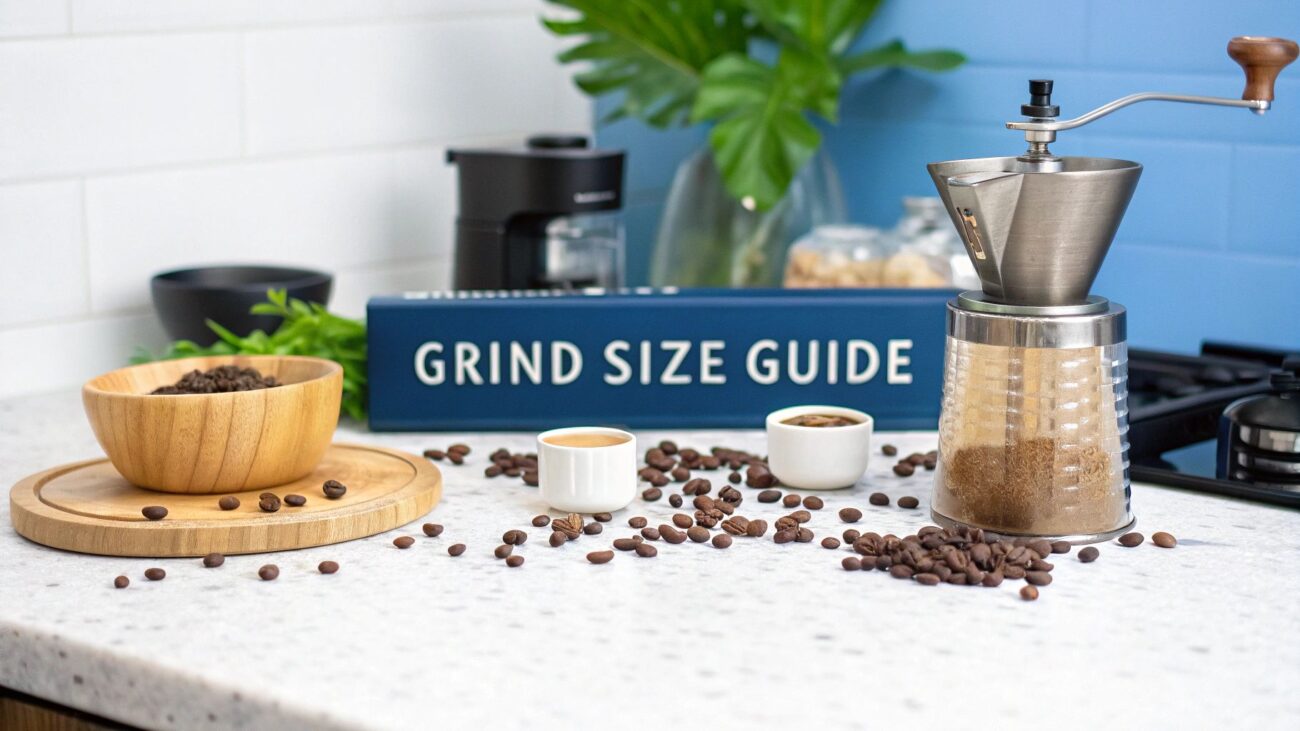
The secret to a beautifully balanced brew comes down to two simple tweaks: your grind size and your water temperature. Since these beans are so generous with their flavour, you’ll want to reach for a coarser grind. Think of the texture of chunky sea salt. A coarser grind reduces the total surface area, which slows down the extraction and stops your coffee from becoming over-brewed.
At the same time, it’s a good idea to pull back on the heat. Instead of using boiling water at 100°C, let it cool for a minute and aim for a temperature between 90°C and 93°C. This gentler heat is just right for coaxing out those deep, smoky, sweet notes without scalding the grounds and unleashing any harsh bitterness.
Best Brewing Methods for Dark Roasts
While you can technically use any brewer you like, some methods are naturally better at showcasing the rich, heavy body that makes dark roasts so special. They give you the control you need to sidestep bitterness and let those deep flavours take centre stage.
Here are a few of our top contenders:
- French Press: This classic immersion brewer is a match made in heaven for dark roasts. Because it doesn’t use a paper filter, all the natural oils and fine coffee particles make their way into your cup. The result is a full-bodied, rich, and incredibly satisfying brew.
- Moka Pot: If you’re after a strong, espresso-like experience without a pricey machine, the Moka Pot is a fantastic choice. The coffee it produces is intense and bold, perfect for capturing those classic Italian coffee bar flavours.
- AeroPress: This versatile little brewer gives you complete control over your brew time and temperature. You can whip up a clean, rich, and full-flavoured cup in just a minute or two, making it an excellent and surprisingly forgiving option for dark roasts.
A high-quality burr grinder is your best friend when brewing dark roasts. The consistency of a coarser grind from a burr grinder is something blade grinders simply can't match, and it makes all the difference in achieving a balanced, non-bitter cup.
Pulling the Perfect Dark Roast Espresso
For espresso lovers, a dark roast is the traditional go-to for a shot with a thick, stable, and beautifully dark crema. The trick is to manage the extraction with care. You’ll likely need to grind a little coarser than you would for a medium roast and be ready to pull a slightly shorter shot to avoid any bitterness creeping in.
When you get it just right, you’ll be rewarded with a powerful, syrupy shot bursting with notes of dark chocolate and smoky sweetness. It’s the perfect base for a flat white or simply to be enjoyed on its own. If you’re getting serious about your home coffee setup, exploring the best coffee brewing methods can open up a whole new world of flavour.
The growing fascination with brewing speciality coffee at home is a huge trend in the UK. This passion for the darkest coffee roast is clear, with home use topping application forecasts for the years 2019-2032. This movement is largely supported by online B2C channels, which are expanding at a rate of 6.0% and enabling coffee connoisseurs to experiment with various blends right from their kitchens. If you want to dive deeper into this trend, you can discover more insights about the UK coffee market's projected growth towards USD 4,084.74 million by 2033 on marketresearchfuture.com.
Buying and Storing Dark Roast Beans for Peak Freshness

Getting your hands on a quality bag of the darkest coffee roast is a great first step, but the real work starts the moment you get it home. To make sure every single cup is as fresh and intense as it should be, you need to know what to look for at the shop and how to protect those precious beans afterwards.
When you're picking out your next bag, the roast date is the first thing you should check. Freshness is everything, and any roaster worth their salt will print it clearly on the bag. Try to grab beans roasted within the last couple of weeks. Next, take a look at the beans. A true dark roast will have a definite oily sheen, but they shouldn't look like they've been swimming in oil. Excessive oiliness can be a red flag for a botched roast or simply old beans.
Choosing a Reputable Roaster
Honestly, the easiest way to guarantee you're getting the good stuff is to buy from a roaster who is open about their craft. A supplier who’s truly passionate about their coffee will be more than happy to chat about the beans' origin, their unique roasting style, and the kind of flavour profile you should expect. That sort of transparency is a sure sign of quality.
For instance, if you browse our collection of exceptional single-origin coffees, you'll see clear, helpful descriptions for each one. This level of detail shows you're getting a product made with real expertise and care. Think of a reputable roaster as your trusted guide in the quest for an incredible dark roast.
The most critical factor for a dark roast is its freshness. The oils on the bean's surface, which give it such a rich body, are also highly susceptible to oxidation. This means dark roasts go stale much faster than lighter roasts.
The Do’s and Don'ts of Storing Dark Roast Coffee
Once you've got your beans, storing them properly is non-negotiable. The four horsemen of stale coffee are oxygen, light, heat, and moisture. Your job is to keep your beans safe from all of them. Here are a few simple rules to live by:
Do:
- Use an airtight container: Get those beans out of the bag and into a proper coffee canister. Look for one with a one-way valve that lets CO2 escape without letting oxygen in. We have a fantastic range of airtight coffee storage solutions that are perfect for this.
- Store in a cool, dark place: A cupboard or pantry is ideal, just make sure it's away from the oven or any sunny spots. Consistency is your friend here.
Don't:
- Store beans in the freezer: This is a surprisingly common myth. Freezing can create condensation, which introduces moisture and ruins the delicate oils responsible for all that amazing flavour.
- Keep beans in the original bag (unless it’s high-quality): Most standard paper bags just aren't airtight and will let your coffee go stale much faster.
Following these simple tips will protect the bold, smoky character of your coffee, making sure the last cup you pour is just as impressive as the first.
FAQs: Your Dark Roast Coffee Questions Answered
The world of dark roasts can be a little confusing. Let's clear up some of the most common questions with straightforward answers, so you can choose and enjoy your coffee with total confidence.
Does the darkest coffee roast have more caffeine?
This is one of the biggest myths in coffee. It feels like a bolder, more intense-tasting coffee should pack a bigger caffeine punch, but the opposite is actually true. The high heat and longer time needed for a dark roast burn off a tiny bit of caffeine along the way.
While the difference isn't massive, it comes down to how you measure. If you measure by scoops (volume), a light roast will have a smidge more caffeine because the beans are denser. If you measure by weight, the difference is practically zero. So, if you're chasing that caffeine high, a dark roast isn't your most potent choice.
Can you use any coffee bean for a dark roast?
Absolutely not. Not all coffee beans are created equal, and many just can't take the heat of a dark roast. Softer, lower-grown beans would simply turn into bitter charcoal before they ever develop those lovely smoky or chocolatey notes.
A good roaster will choose beans that are dense and tough enough to stand up to the fire. High-altitude beans are a popular choice because their slow, steady growth cycle makes them harder and more resilient. Roasters might also put together special blends, combining different beans to create a foundation that really shines when roasted dark, giving you a rich flavour without turning to ash. You can see this dedication in hand-picked selections like our award-winning coffee blends, where every bean is chosen for its ability to deliver a specific, delicious profile.
Is dark roast coffee just burnt coffee?
There's a world of difference between a masterfully crafted dark roast and coffee that's just plain burnt. Burnt coffee is a mistake—it's what happens when a roast gets out of control, leaving you with an acrid, harsh, and one-dimensional taste of pure carbon.
A great dark roast is all about precision and control. The roaster pushes the bean right to the very edge, teasing out complex, bittersweet notes of dark chocolate and smoke, and then pulls it back at the perfect moment.
It’s an art that demands careful temperature management and impeccable timing to transform the bean’s natural sugars into something deep and truly satisfying. When you taste an exceptional dark roast, you’re tasting the roaster’s skill, not a happy accident. That’s why finding a roaster you trust is so important. For a taste of what’s possible, have a look at our gourmet coffee selection.
At ADS Coffee Supplies, we are passionate about bringing you expertly roasted coffee that brings out the very best in every bean. Discover our full range of carefully crafted coffees and find your new favourite today at https://www.ads-coffee-supplies.co.uk/.