
Crema too thin causes: Quick fixes for a perfect espresso
That thin, lifeless layer of foam staring back at you from your espresso cup? It’s often a tell-tale sign of a few classic issues, most commonly starting with stale coffee beans or an incorrect grind size.
These two are the usual suspects behind a disappointing shot, but don’t overlook things like your tamping technique or even the water temperature. Nailing these elements is what gives you that rich, velvety finish we’re all chasing.
Your Instant Guide to Fixing Thin Crema
That gorgeous, reddish-brown foam isn’t just for show; it’s the hallmark of a well-extracted shot, brimming with aroma and flavour. When your crema is looking a bit sad and thin, it’s basically your coffee’s way of telling you something in your process needs a tweak.
The good news? The fix is usually simple. A small adjustment to your beans, grind, or technique is often all it takes to get back on track.
Figuring out the problem is the first step towards a better brew. More often than not, home baristas run into one of three hurdles: the freshness of their beans, how fine their grind is, or whether their tamping pressure is consistent. Each of these directly affects how water flows through the coffee grounds, which ultimately shapes the quality of your crema.
To help you zero in on what’s going wrong, think of it like this:
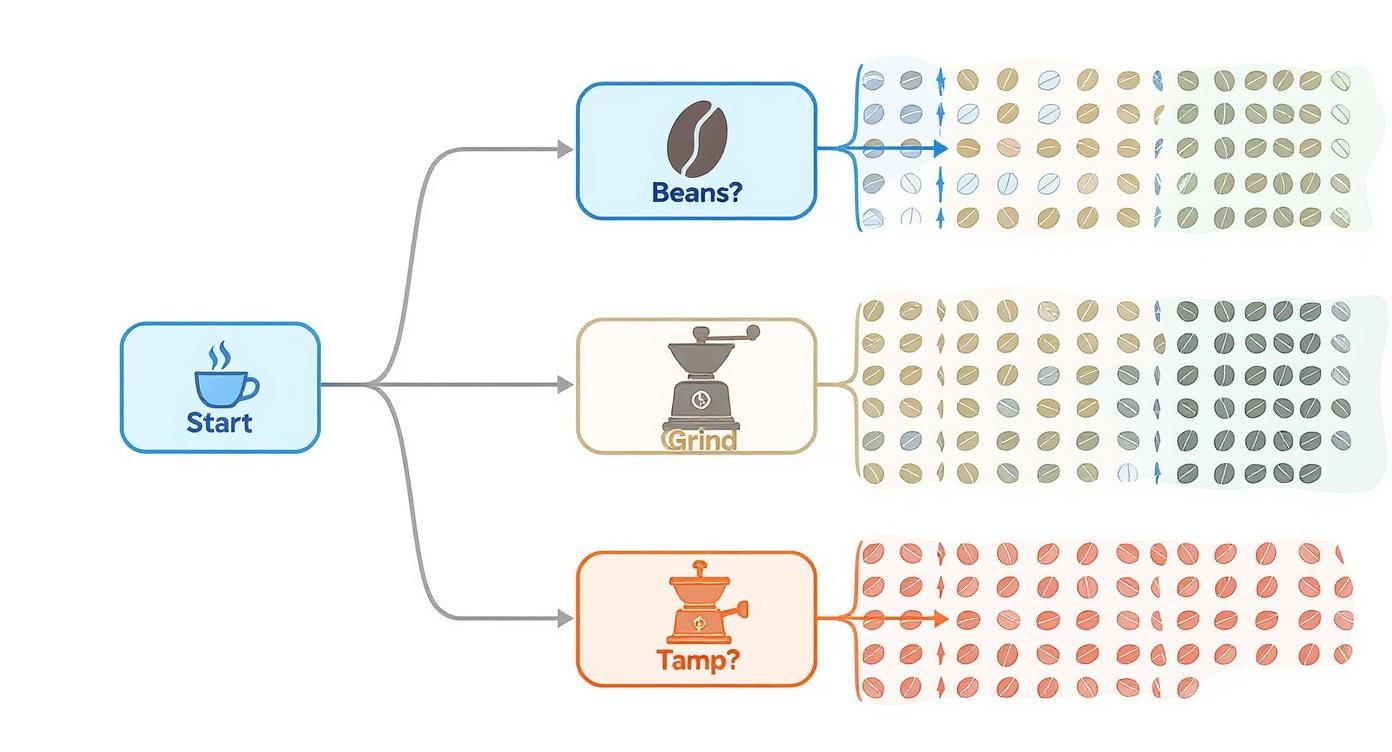
As the diagram shows, your coffee beans, grind settings, and tamping method are the three pillars of a great espresso. Get these right, and you'll solve most thin crema problems before they even start. For a deeper dive into mastering the whole process, check out our complete guide on how to make perfect espresso.
Quick Fixes for Common Crema Problems
If you're in a rush and just want a fast solution, this little table is your new best friend. It connects the most common symptoms of poor crema to their likely cause and gives you an immediate fix to try. Use it as a quick reference before you pull your next shot.
| Symptom | Most Likely Cause | Quick Fix |
|---|---|---|
| Crema is pale and vanishes quickly | Stale coffee beans | Use beans roasted within the last 3 weeks. |
| Espresso shot runs too fast (<20 secs) | Grind is too coarse | Adjust your grinder to a finer setting. |
| Crema is thin and shot tastes weak | Not enough coffee (under-dosing) | Use the correct dose for your basket (e.g., 18-20g). |
| Shot is uneven and crema is patchy | Inconsistent or uneven tamping | Apply firm, level pressure (around 15kg) consistently. |
With these quick checks, you should be able to diagnose and correct the issue on your very next attempt. Happy brewing.
Why Bean Freshness Is Your Secret Weapon
The journey to a rich, velvety crema begins long before you even think about grinding. It starts with the most fundamental ingredient: the coffee bean itself. Freshness isn’t just a nice-to-have; it's a non-negotiable for achieving that perfect, stable foam on top of your espresso.
Think of freshly roasted coffee beans like a bottle of fizzy pop. The moment you open it, it’s alive with bubbles and energy. Left on the counter, it quickly goes flat. Your coffee beans go through a similar process called degassing, where they gradually release the carbon dioxide (CO₂) that built up during roasting.
This trapped CO₂ is the magic ingredient. Under the intense pressure of an espresso machine, it emulsifies with the coffee oils to create crema. Without enough of it, your shot will look lacklustre and thin, no matter how perfect the rest of your technique is.
The Freshness Window
There’s definitely a "sweet spot" for bean freshness. While beans need a few days post-roast to degas (otherwise the crema is too bubbly and unstable), their potential drops off a cliff after about three weeks. Using beans well past this window is one of the most common reasons for a disappointing, thin crema.
Frankly, a lot of thin espresso shots across the UK can be blamed on one simple thing: stale beans. Coffee experts agree that beans older than 2-3 weeks show a huge drop in crema production simply because they’ve lost too much CO₂. In fact, some studies show that freshness can impact crema thickness by as much as 50%, turning a potentially great espresso into a weak one. You can find more detail on why this happens in this insightful post on coffee crema.
To make sure you're always using beans at their peak, get into the habit of checking the roast date on the bag—not the "best before" date. It's a simple check that will completely transform your results. Of course, once you have fresh beans, you need to keep them that way. Our guide on how to store coffee beans correctly will help you lock in that flavour and crema-producing power.
Arabica vs Robusta: The Great Debate
Not all coffee beans are created equal, especially when it comes to crema. The two giants of the coffee world, Arabica and Robusta, have completely different personalities.
- Arabica: This is the one prized for its complex, aromatic, and nuanced flavours. The trade-off is that it naturally has a lower oil and CO₂ content, which usually means a lighter, finer, and sometimes thinner crema.
- Robusta: Known for its bold, punchy flavour and higher caffeine kick. Crucially for us, Robusta beans contain more coffee oils and produce a thick, rich, and incredibly stable crema. It’s a workhorse.
This is why so many classic Italian espresso blends incorporate a small percentage of Robusta—often 10-20%. It's added specifically to boost the body of the shot and create that iconic, hazelnut-coloured crema that holds its form beautifully.
Choosing a blend that balances the delicate flavours of Arabica with the crema-enhancing power of Robusta is a fantastic shortcut to impressive results. If you're looking for a reliable, freshly roasted option designed for a superb crema, you might want to explore the expertly crafted espresso blends at ADS Coffee Supplies to find the perfect foundation for your coffee.
Mastering Your Grind and Tamp
Now that you've got your fresh beans sorted, let's get our hands dirty. The two biggest things you control every single time you pull a shot are the grind and the tamp. Getting these right is the very heart of “dialling in” your espresso. This is where you move beyond guesswork and start crafting coffee with purpose.
Imagine your coffee puck as a filter. If it’s made of large pebbles (a coarse grind), water will gush right through. If it's made of fine sand (a fine grind), the water will struggle to find a path. Your job is to create the perfect middle ground—a grind that provides just enough resistance for the water to work its magic.
Too coarse, and you get a fast, watery shot with sad, thin crema. Too fine, and the machine chokes.
Finding the Perfect Grind Size
The gold standard we're aiming for is an extraction time of 25-30 seconds. This is the sweet spot where hot, pressurised water has enough time to properly emulsify the coffee's oils and dissolve its solids, creating that rich, stable crema we all crave.
Is your shot pouring out in 15 seconds like a tap? Your grind is too coarse. Nudge the setting on your grinder a little finer. Is it taking a painful 40 seconds to drip out? It’s too fine and choking the machine. Back it off and make it a touch coarser.
It sounds simple, but this is a massive reason for thin crema in the UK's home coffee scene. You need around 9 bars of pressure for a true espresso extraction. Yet, surveys of UK home baristas show nearly 40% rarely bother to adjust their grind, leading to wildly unpredictable results. According to UK speciality coffee trainers, just getting the grind and tamp right can boost crema density by up to 30%.
The Art of the Perfect Tamp
Once you've got your coffee ground into the portafilter, it’s time to tamp. Tamping is all about compacting those grounds into a solid, level puck so water flows through it evenly. A sloppy or weak tamp is just asking for trouble.
Water is lazy. It always takes the easiest route. If your tamp is uneven or too light, the water will find the weak spots and carve little tunnels right through the puck. This disaster is called channelling, and it leads to a fast, under-extracted, sour-tasting shot with patchy, thin crema.
The secret to a great tamp is consistency. You’re aiming for about 15kg (30lbs) of pressure and, most importantly, a puck that is perfectly level. You don’t need to be a bodybuilder; firm and even pressure is all that matters.
Perfecting your tamp takes a bit of practice, but the right tools make a world of difference. A good-quality tamper that fits your portafilter snugly is a must. For those looking to eliminate guesswork and achieve a flawless puck every time, exploring tools like WDT and distribution aids can be a complete game-changer. You might find this detailed puck prep guide on WDT and distribution really helpful.
How Your Machine and Water Shape Your Crema
You can have the most perfect beans and a flawless technique, but if your crema is still falling flat, it's time to look at two silent partners in crime: your espresso machine and your water. These two elements are the final pieces of the puzzle. They provide the heat, pressure, and chemical balance needed to turn ground coffee into liquid gold. If your crema is consistently thin, your setup might be letting you down.
At its core, your machine has two jobs: deliver hot water at a stable temperature and force it through the coffee puck at immense pressure. Get either of these wrong, and a rich, velvety crema becomes almost impossible to achieve.
The Importance of Heat and Pressure
Think of it like trying to melt butter in a cold pan. It just won’t work properly. In the same way, if your machine’s brew temperature drops below the ideal 90-96°C range, it simply won't have enough thermal energy to properly extract the coffee oils that are absolutely essential for a good crema.
Pressure is just as critical. A true espresso needs around 9 bars of consistent, unwavering pressure to be born. If your machine can't muster that, or if the pressure fluctuates wildly, the water will just trickle through the puck. It won't have the force needed to emulsify those oils, leaving you with a weak, under-extracted shot topped with a disappointingly thin foam.
A simple pro tip is to always preheat your machine and portafilter thoroughly. Run a 'blank shot' (water only) through the group head before you even start grinding. This ensures every component is at a stable temperature, preventing heat loss during extraction.
Mastering temperature control is a game-changer for any home barista. If you want to dive deeper into this crucial element, you might be interested in our guide covering the best water temperature for coffee.
Why Your Water Quality Matters
It’s easy to forget, but your finished espresso is over 98% water. The mineral content of that water has a massive impact on both the flavour of your coffee and the long-term health of your machine. Here in the UK, we often deal with one extreme or the other.
- Hard Water: Many parts of the UK are notorious for hard water, which is packed with calcium and magnesium. While some minerals are great for flavour extraction, too much hardness causes limescale to build up inside your machine. This gunk can clog tiny components, leading to unstable temperatures and pressures, and can ultimately kill your equipment.
- Soft Water: On the flip side, using overly soft or distilled water is just as bad. It lacks the necessary minerals to bond with the coffee's flavour compounds, which often results in a sour, acidic, and unpleasantly sharp-tasting espresso.
The key is finding that happy medium. Using filtered water is the single best thing you can do to protect your machine and pull consistent, delicious shots. It's also vital to keep your equipment clean from scale and old coffee oil residue. To keep your gear in top form, make sure you always have the right machine cleaning supplies on hand.
Choosing the Right Coffee Blend for Rich Crema
While your technique and gear are huge parts of the puzzle, the quest for a perfect crema really starts with the beans. Get this right, and you’re setting yourself up for success before you even grind a single bean. Understanding what’s in the bag is the first step to fixing a thin, disappointing crema.
First off, not all thin crema is a sign of failure. If you're brewing with a 100% single-origin Arabica, a lighter, more delicate crema is actually part of its charm. These beans are all about complex, nuanced flavours and beautiful aromatics. A thinner crema is simply the trade-off for that elegance. So, if that's what you've chosen, embrace it—you've picked flavour complexity over a thick, heavy foam.
The Power of a Well-Crafted Blend
For those chasing that classic, thick, hazelnut-coloured crema that looks like it could hold up a spoon, the secret is almost always in the blend. This is where skilled UK roasters work their magic, combining different beans to create a coffee that delivers on every front: flavour, aroma, and a gloriously rich crema.
The two main players here are Arabica and Robusta, and they each bring something very different to the party.
Arabica beans are the smooth, aromatic ones. They naturally have less oil and CO₂, which means they produce a lighter, thinner crema on their own. Robusta, on the other hand, is the powerhouse. It packs roughly twice the caffeine and a much higher lipid content, which directly translates to a thicker, more stable crema that hangs around.
In fact, it's common for espresso blends to include a 10-20% portion of Robusta specifically to beef up the crema. That small addition can completely transform the shot, giving it a powerful body and that stunning visual appeal. It’s a deliberate choice roasters make to give you the best of both worlds.
By understanding the role each bean plays, you can stop fighting your coffee and start choosing the right one for your desired outcome. This knowledge moves you from simply making coffee to actively crafting your perfect espresso experience.
Selecting Your Ideal Espresso Beans
When a consistently impressive crema is your main goal, your best bet is to pick a blend specifically designed for espresso. These have been carefully balanced by roasters to perform perfectly under the intense pressure and heat of an espresso machine. To help you on your journey, we have a curated selection of expertly crafted coffee beans for espresso machines that are built for the job.
Ultimately, it’s all about matching the coffee’s natural character with what you love to drink. Whether you’re a purist who adores the subtlety of a single-origin Arabica or someone who loves the bold look of a Robusta-boosted crema, the right beans are out there waiting for you.
Your Espresso Crema Questions Answered
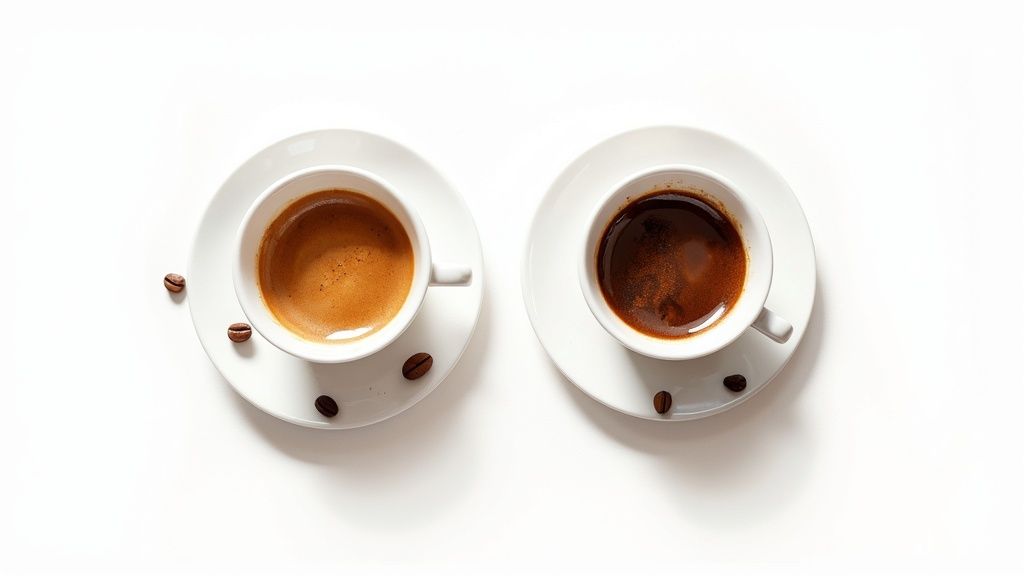
Even when you feel you've mastered the basics, espresso has a knack for throwing a few curveballs. If you've dialled in your grind and are using perfectly fresh beans but still can't get that crema right, you're not alone. Let's tackle some of the more nuanced problems that crop up for UK home baristas.
Why Is My Crema Bubbly and Disappearing Quickly?
This is a classic sign of coffee that’s too fresh. When you see big, soapy bubbles that pop and vanish within seconds, it usually means the beans have been roasted in the last three days.
What's happening is the beans are still releasing a huge amount of CO₂, a process called degassing. This intense gas release creates a frothy, unstable foam rather than that silky, dense crema we're all chasing. The fix is simple: patience.
Most beans hit their sweet spot for espresso somewhere between 5 and 21 days after their roast date. Just let them rest in the bag for a few more days, and you'll be rewarded with a much finer, more stable, and longer-lasting crema.
Does My Espresso Machine Really Affect Crema?
Absolutely. You can have the best beans in the world, but if your machine isn't up to the task, you'll always be fighting an uphill battle. A proper crema is born from a precise environment: stable temperature and consistent 9-bar pressure. This is what forces the water through the coffee grounds, emulsifying the oils and dissolving the solids into that iconic layer.
Many entry-level machines use a trick to get around this—a pressurised portafilter. This device creates a 'fake' crema that looks the part from a distance but is mostly just air. It lacks the rich texture, mouthfeel, and flavour of the real deal. While you can improve your shots with a better grinder and fresh beans, a quality espresso machine provides the solid foundation you need for truly exceptional espresso.
Think of a consistent machine as your silent partner in the pursuit of perfect coffee. It takes variables off the table, letting you focus on the things you can control, like your beans and your technique.
Can I Get Good Crema with Pre-Ground Coffee?
Honestly, it's almost impossible. This is probably the single biggest reason people struggle with thin crema. The moment coffee is ground, it starts losing the CO₂ and volatile oils that are essential for crema formation. By the time that bag of pre-ground coffee makes it to your kitchen, its crema-producing potential has plummeted.
Worse still, pre-ground coffee is almost never the exact fineness your specific machine needs for a given bean. It's a one-size-fits-all solution for a problem that demands precision. The result is almost always a fast, under-extracted shot that tastes weak and looks disappointing. Investing in a good burr grinder is the most significant upgrade you can make to your home coffee setup.
Is Dark Roast or Light Roast Better for Crema?
Generally speaking, darker roasts are crema champions. The roasting process makes the coffee beans more porous and brings their natural oils to the surface, both of which are a huge help when it comes to forming a thick, robust crema during extraction.
But there's a limit. An extremely dark, oily roast can sometimes produce a crema that looks impressive at first but is actually quite thin and collapses quickly. It often carries a bitter, ashy taste because the bean's internal structure has started to break down too much. For a rich, stable, and delicious crema that truly complements the coffee's flavour, a medium to medium-dark roast is usually the perfect spot for most espresso lovers.
At ADS Coffee Supplies, we believe everyone deserves a brilliant cup of coffee. To find the perfect beans and essential gear to transform your home brewing, explore our curated collection of espresso blends and accessories today.