Finding Your Perfect Cold Brew Coffee Ratios

Getting the cold brew coffee ratio right is the key to unlocking that signature smooth, low-acid flavour everyone’s after. People often throw around a 1:8 ratio of coffee to water as a good starting point for a concentrate, but honestly, that’s just the beginning of the journey.
Why Your Cold Brew Ratio Is Everything
Moving beyond guesswork to truly master the balance of coffee and water is the single most important thing you can do to make exceptional cold brew at home. This ratio is what dictates the strength, body, and overall flavour profile of your final drink. It fundamentally shapes the entire experience.
It's the difference between a rich, satisfying brew and a glass of disappointing, watery coffee. Nobody wants that.
Essentially, you have two main paths to choose from. Your choice will boil down to your personal preference and how you plan to enjoy your drink.
Choose Your Brewing Path
The first option is to brew a strong cold brew concentrate. This means using a much higher proportion of coffee to water—think ratios like 1:4 or 1:8. What you get is a potent, flavour-packed liquid that you’ll need to dilute later with water, milk, or ice. This method is brilliant for batch brewing; a small bottle of concentrate in the fridge can set you up with delicious coffee for days.
The second path is to brew a ready-to-drink batch. This uses a milder ratio, often somewhere around 1:12 or 1:15, creating a finished drink that doesn’t need any dilution. It’s a more direct approach, perfect if you just want to pour a glass straight from your brewing vessel and get on with your day.
Before we dive deeper, here's a quick summary to help you decide which path is right for you.
Quick Guide to Cold Brew Ratios
| Brew Type | Coffee to Water Ratio | Characteristics |
|---|---|---|
| Concentrate | 1:4 to 1:8 | Strong, potent, and syrupy. Requires dilution before drinking. Ideal for making large batches that last. |
| Ready-to-Drink | 1:12 to 1:15 | Smooth, mellow, and immediately drinkable. No dilution needed. Perfect for a grab-and-go brew. |
As you can see, each style offers a different experience, so it's worth experimenting to see what you prefer.
The real beauty of cold brew is its flexibility. Whether you prefer a bold concentrate or a mellow ready-to-drink version, the power to perfect your brew lies entirely in the ratio you choose.
This level of control is a key reason for the drink's booming popularity across the United Kingdom. In fact, the UK cold brew market was valued at USD 274.12 million and is projected to soar to USD 1632.19 million by 2033. This growth is driven by home enthusiasts just like you, all seeking smoother, less acidic coffee experiences. This trend also highlights the demand for high-quality beans designed for these methods. If you want to dig into the numbers, you can discover more insights into the growing cold brew market and its future trends.
To get that flavour clarity everyone’s chasing, starting with exceptional beans is non-negotiable. You need freshly roasted, coarse-ground coffee to allow for optimal extraction over the long steep, preventing any bitterness while maximising the natural sweetness. For a truly remarkable cold brew, consider trying something special like the Nicaragua Matagalpa beans—their notes of dark chocolate and almond are a perfect match for the cold brew method.
Breaking Down The Ratios For Your Brew
Getting the numbers right is the secret to making a brilliant cold brew every single time. Whether you're after a punchy concentrate that you can dilute later or a smooth, sippable brew ready straight from the fridge, it all comes down to the perfect balance of coffee and water. Let's get into the most common ratios, breaking them down so you can brew with real confidence.
The journey from a bag of beans to a finished brew really only involves a few key choices. This little visual guide keeps things simple, showing the basic path you’ll follow.
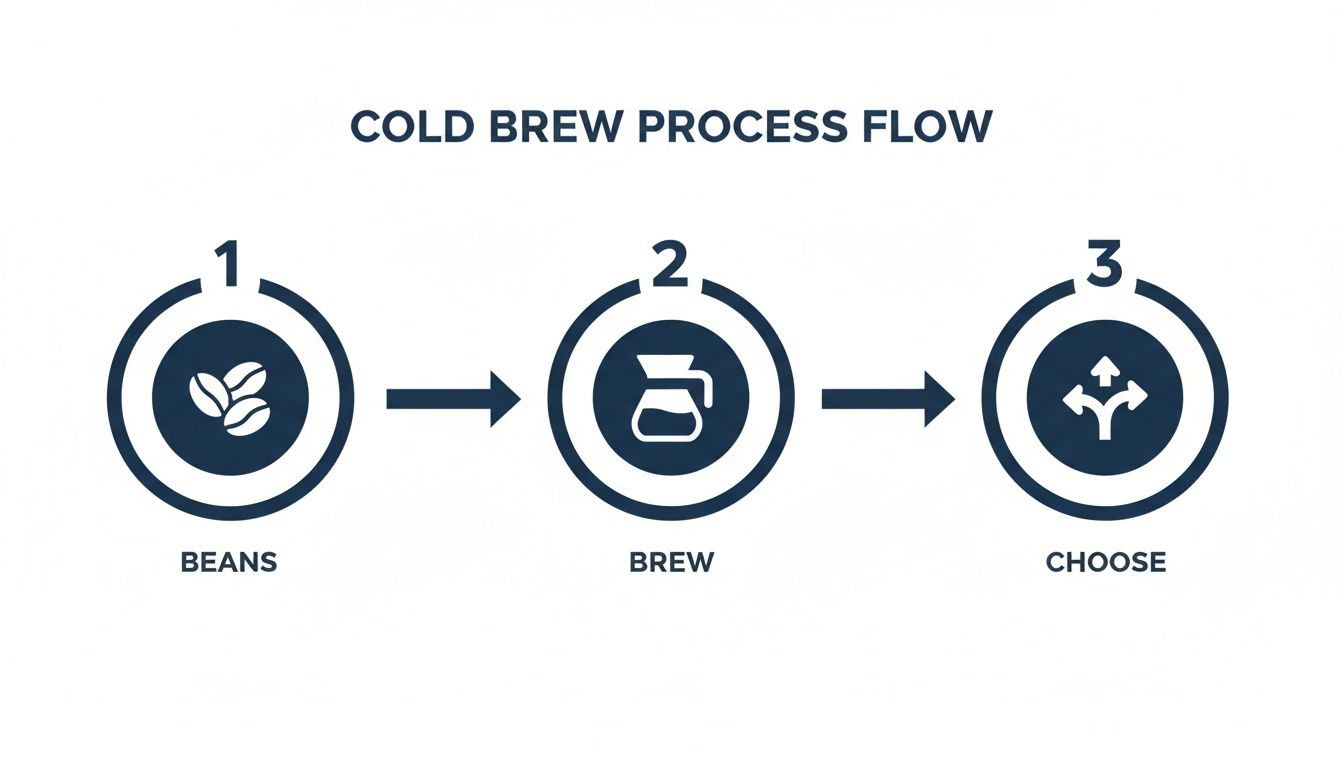
As you can see, once you've picked your beans and started the brew, the final decision—your ratio—is what truly defines the end result in your glass.
Ratios For Cold Brew Concentrate
Think of a concentrate as your secret weapon for incredible coffee on demand. You use a lot more coffee in relation to water, creating a potent base that you can dilute with water, milk, or whatever you fancy.
- 1:4 Ratio (e.g., 100g coffee to 400g water): This is the heavyweight champion of cold brew ratios. It produces a rich, almost syrupy concentrate with a massive flavour profile and intense body. It's the perfect choice if you're mixing coffee cocktails or want something that stands up to plenty of milk and ice without getting lost.
- 1:5 Ratio (e.g., 100g coffee to 500g water): A touch less intense than the 1:4, but still seriously potent. This ratio gives you a robust concentrate that often brings out deep, chocolatey notes. It's a favourite for its versatility and holds up beautifully when diluted.
- 1:8 Ratio (e.g., 100g coffee to 800g water): This is arguably the most common and forgiving ratio, especially if you're just starting out. It makes a strong yet balanced brew that’s super easy to dilute to your liking without ever feeling overpowering.
When you're making a strong concentrate, a bold blend with classic flavours really sings. Something like our Seven Sisters House Blend is ideal, as its notes of milk chocolate and caramel are amplified into a deeply satisfying cold brew base.
Ratios For Ready-To-Drink Cold Brew
If you're all about convenience and want a brew you can pour and enjoy immediately, then a ready-to-drink ratio is your best bet. These recipes use more water from the get-go, creating a smoother, milder coffee that doesn’t need any dilution.
- 1:12 Ratio (e.g., 60g coffee to 720g water): This gives you a brew with a very clear coffee flavour and a lovely, smooth body. It’s definitely stronger than your average hot filter coffee but is still incredibly drinkable straight from the bottle.
- 1:15 Ratio (e.g., 60g coffee to 900g water): For something lighter and more refreshing, the 1:15 ratio is perfect. It produces a really clean, crisp coffee with a more delicate flavour profile. This is where the subtle nuances of a great single-origin bean can really come to life.
With these gentler ratios, a more delicate single-origin coffee is a fantastic match. The light body and bright, fruity notes of a bean like our Ethiopia Sidamo are preserved beautifully, making for an elegant and nuanced drink.
The best ratio is purely a matter of personal taste. There’s no single "right" answer—only what you enjoy drinking the most. A good starting point is 1:8 for a concentrate or 1:15 for a ready-to-drink brew. Taste it, then tweak your next batch to get it just right.
Nailing your cold brew ratio is just like any other culinary skill where precision makes all the difference. For a wider look at optimizing cooking ratios across different recipes, this is a great resource to explore.
Once you’ve nailed your preferred cold brew ratio, the next things to master are grind size and how long you let it all steep. These two elements work hand-in-hand with your ratio to really shape the final flavour, taking your brew from pretty good to genuinely exceptional. Honestly, getting them right is just as crucial as weighing out your coffee and water.
Why A Coarse Grind Is Non-Negotiable
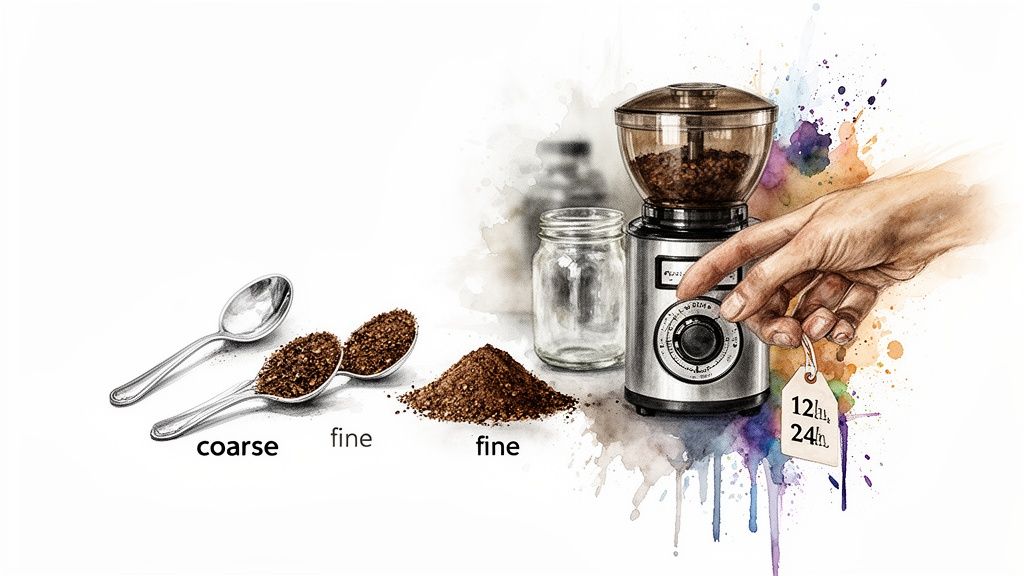
For cold brew, you absolutely need a coarse grind. We're talking about a texture similar to rough breadcrumbs or coarse sea salt. This isn't just a suggestion; it's a rule.
Using a fine grind, like you would for an espresso, creates a massive amount of surface area, which leads to a very fast—and in this case, unpleasant—extraction. If you let finely ground coffee sit for hours, it will release all sorts of bitter compounds. The result? A harsh, astringent brew that completely masks the bean's natural sweetness.
A coarse grind, on the other hand, lets the water slowly and gently pull out all the good stuff over a long period, without grabbing those harsh, bitter elements. It’s the secret to that signature smoothness cold brew is famous for. For this, consistency is key, which is why a quality coffee grinder can make a world of difference. To get a better handle on this, you can always check out our guide on choosing the right coffee grind size.
Finding Your Perfect Steep Time
The sweet spot for steeping cold brew is usually somewhere between 12 and 24 hours at room temperature. Where your brew lands within that window will have a massive impact on the final taste.
- 12-16 Hours: A shorter steep time generally gives you a brighter, lighter-bodied coffee. This is where the more delicate, fruity, and floral notes of the beans really come forward. It's a great choice for single-origin coffees where you want those nuanced flavours to be the star.
- 18-24 Hours: Let it steep longer, and you'll get a richer, bolder, and more full-bodied brew. This is where you’ll find those deep, chocolatey, and nutty notes. It creates that classic, velvety cold brew profile that works so well with blends.
In the UK, the demand for high-quality cold brew has exploded, giving home brewers access to better beans and equipment than ever before. With 98 million cups of coffee drunk every day in the UK, it’s no surprise that people are getting serious about perfecting their home setup. Many enthusiasts find that a classic 1:5 concentrate ratio steeped for around 18 hours hits that perfect balance.
Think of your steep time as a powerful flavour lever. Start at 18 hours for a balanced concentrate and then tweak future batches from there. If it tastes a bit weak, steep it for longer. If it's too strong or verging on bitter, dial back the time.
How To Dilute Your Cold Brew Concentrate
You’ve patiently steeped your coffee, and now you’re holding a jar of rich, potent cold brew concentrate. This liquid gold is your ticket to amazing coffee for days, but it needs one final touch before it's ready to drink: dilution. Honestly, mastering this step is just as important as choosing the right cold brew coffee ratio in the first place.
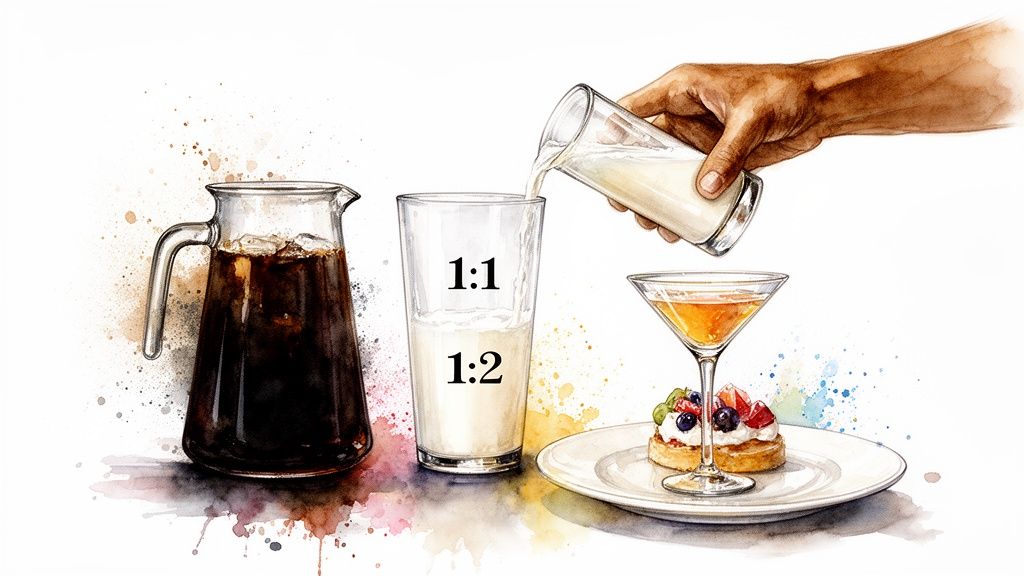
The most common starting point for dilution is a simple 1:1 or 1:2 ratio of concentrate to your chosen mixer. This just means for every part of concentrate, you’ll add one or two parts of water, milk, or your favourite milk alternative.
So, if you pour 100ml of that beautiful concentrate into a glass, you'd add 100ml of water for a 1:1 dilution, or 200ml for a 1:2 dilution. The 1:1 mix gives you a really bold, strong coffee, whereas the 1:2 results in a smoother, more mellow drink that’s closer in strength to a standard iced coffee.
Finding Your Perfect Dilution Ratio
The "best" dilution ratio is completely down to your personal taste and how strong your initial concentrate is. A powerful 1:4 concentrate is naturally going to need a bit more dilution than a milder 1:8 batch.
Here are a few common scenarios to get you started:
- For a classic iced coffee: Begin with a 1:2 ratio of concentrate to water. This usually hits the sweet spot, giving you a balanced, refreshing drink that’s strong but not overwhelming.
- For a creamy cold brew latte: Try a 1:2 or 1:3 ratio of concentrate to milk. The extra milk beautifully softens the intensity of the coffee, creating that velvety smooth texture we all love.
- For a bold, coffee-forward drink: A 1:1 ratio is your best bet. This lets the complex flavours of the coffee really shine, perfect for savouring the unique notes of a great single-origin bean.
The quality of your mixer matters, too. For a really crisp, clean finish, using filtered water can make a surprising difference to the final taste. If you're curious, you can learn more about how different types of water affect your coffee.
Think of your concentrate as a canvas. Start with a 1:2 dilution, take a sip, and adjust from there. Too strong? Add a splash more water. Too weak? Use a little less next time. The perfect cup is the one you love.
To help you visualise how dilution affects your final drink, I've put together a simple guide. This should give you a great starting point for crafting everything from a strong black cold brew to a creamy latte.
Cold Brew Concentrate Dilution Guide
| Desired Drink | Concentrate Ratio (Example 1:5) | Dilution Ratio (Concentrate to Mixer) | Final Flavour Profile |
|---|---|---|---|
| Strong Black Cold Brew | 1:5 | 1:1 | Bold, intense, and coffee-forward. Highlights the bean's origin. |
| Classic Iced Coffee | 1:5 | 1:2 | Balanced and refreshing. Similar strength to a good filter coffee. |
| Creamy Cold Brew Latte | 1:5 | 1:3 | Smooth, mellow, and milky. The coffee notes are softened. |
| Light & Refreshing Sip | 1:5 | 1:4 | Very light and easy-drinking. A subtle coffee flavour. |
Remember, the initial concentrate strength (like the 1:5 example used here) will change how these dilutions taste, so always be prepared to tweak things slightly to get it just right for you.
Beyond The Glass: Creative Uses For Concentrate
Don't let that amazing concentrate sit in the fridge just for iced coffee! It’s far more versatile than you might think, so feel free to get creative.
For an impressive after-dinner treat, pour a shot of undiluted concentrate over a scoop of vanilla ice cream for a quick affogato. It's also a fantastic ingredient in coffee cocktails, adding a deep, smooth coffee flavour to an espresso martini without any of the bitterness you can get from a hot shot of espresso.
You can even add it to baking recipes like brownies or tiramisu for a seriously rich flavour boost. It’s these little touches that can take something from good to great.
Fixing Common Cold Brew Problems
Even when you follow the best cold brew coffee ratios, sometimes a batch just doesn't turn out quite right. Don't worry, it happens to everyone. Brewing is a craft of small adjustments, and learning to troubleshoot is part of the fun.
Most issues are pretty easy to diagnose and fix with a few simple tweaks. Just think of your ratio, grind, and steep time as the three main levers you can pull to control the final flavour. By adjusting one at a time, you can confidently steer your brew back in the right direction.
Is Your Cold Brew Weak Or Watery?
A thin, lifeless brew is one of the most common frustrations, but thankfully, it's also the easiest to solve. A weak flavour almost always comes down to under-extraction, which is just a fancy way of saying the water didn't have enough time or contact with the grounds to pull out all the good stuff.
Before you even think about tossing the batch, consider these quick fixes:
- Adjust Your Ratio: The most direct solution is simply to use more coffee. If you started with a 1:15 ratio, try bumping it up to 1:12 next time to give it more oomph.
- Steep for Longer: Give the coffee grounds more time to work their magic. If a 12-hour steep felt underwhelming, push it to 18 or even 20 hours to develop a much richer flavour.
- Check Your Grind: A grind that’s too coarse can also lead to a watery result. You're aiming for a consistency like coarse sea salt, not chunky pebbles. A decent grinder is essential for getting this right.
Is Your Cold Brew Too Bitter?
The opposite problem is a brew that tastes harsh, astringent, or unpleasantly bitter. This is a classic sign of over-extraction, where the water has pulled out too many of the undesirable bitter compounds from the coffee.
Don’t confuse bitterness with strength. A strong cold brew should be rich and intense, not unpleasantly sharp. If it makes you pucker, it's likely over-extracted.
Here’s how you can dial it back and chase that signature smoothness cold brew is known for:
- Shorten the Steep Time: This is your number one tool for fighting bitterness. If a 24-hour brew came out too harsh, try pulling it back to 18 hours on your next attempt.
- Coarsen Your Grind: A grind that’s too fine will over-extract incredibly quickly in any brewing method, cold brew included. Make sure you’re using a proper coarse grind to slow things down.
- Use High-Quality Beans: Sometimes, low-quality or unevenly roasted beans can introduce unwanted bitter notes, no matter how perfect your technique is.
Is Your Cold Brew Cloudy?
A cloudy or murky cold brew isn’t necessarily a sign of bad flavour, but it can be visually unappealing. More importantly, it often means your brew contains fine coffee sediment, or "fines", which can create a gritty, silty texture at the bottom of your cup.
The fix for this is straightforward and just requires a little extra patience during the filtering stage. Simply strain your cold brew a second time through something finer, like a paper coffee filter or a double layer of cheesecloth. This extra step will catch those tiny particles, leaving you with a beautifully clear and smooth final product.
For more detailed brewing guidance, you might find our guide on how to make cold brew coffee at home helpful.
Your Cold Brew Ratio Questions Answered
Even after getting the hang of ratios, grind sizes, and steep times, a few questions nearly always pop up. That’s completely normal. Nailing the finer points of cold brew is part of the fun, and this section is all about giving you clear, straightforward answers to the most common queries we hear.
We’ve put together the questions that surface time and time again, so you can feel totally confident before you kick off your next brew. Think of it as a final checklist before you get started.
Can I Use Any Type Of Coffee For Cold Brew?
You absolutely can, but the results will be quite different! Medium to dark roasts are a popular go-to because their rich, chocolatey, and nutty notes come through beautifully in cold brew, creating that classic smooth flavour profile. A good, versatile option like a well-rounded house blend almost always produces a dependably delicious and balanced brew.
That said, don't overlook single-origin light roasts. They can be fantastic, producing a wonderfully complex and fruity drink that really lets the bean's unique character shine. The most important thing, no matter the roast, is to use freshly roasted, coarse-ground beans to get the best possible extraction. For a deeper dive, check out our guide on choosing the best coffee for your cold brew.
What Is The Best Cold Brew Ratio For A Beginner?
If you're just starting out, making a concentrate using a 1:8 ratio by weight is a brilliant entry point. For example, use 100g of coffee to 800g of water. This creates a versatile concentrate that's strong but not intimidatingly so.
From there, you can dilute it with an equal part of water or milk (a 1:1 dilution) to find the strength you enjoy most. It's an incredibly forgiving ratio that gives you plenty of room to play around with dilution and figure out your personal preference without getting too complicated.
The 1:8 ratio is your safety net. It’s strong enough to be diluted but smooth enough that you won’t easily make it too intense. It's the perfect middle-ground to begin your cold brew adventure.
How Long Does Cold Brew Concentrate Last In The Fridge?
Stored properly in a sealed, airtight container in the fridge, your cold brew concentrate will stay fresh for up to two weeks. It's perfectly safe to drink throughout this period.
However, its flavour will be at its absolute peak within the first week. After seven days, you might start to notice the more delicate, nuanced flavours begin to fade or taste a bit stale. For the freshest and most vibrant taste, we always recommend brewing smaller batches more often.
Does A Stronger Cold Brew Ratio Mean More Caffeine?
Yes, as a general rule, a stronger cold brew ratio (meaning more coffee to water, like 1:4) will give you a concentrate with a higher caffeine concentration per millilitre. The long steeping time of cold brewing already tends to pull out more caffeine than many hot brewing methods.
But here's the catch: the total caffeine in your final cup depends entirely on how you dilute it. A small amount of a very potent concentrate that's been watered down significantly might end up having less caffeine than a larger serving of a weaker, ready-to-drink brew. The key is how much of the original concentrate actually makes it into your glass.
Ready to start brewing with confidence? The foundation of any great cold brew is exceptional coffee. At Seven Sisters Coffee Co, we source and roast beans that are perfect for bringing out that signature smoothness you’re looking for.
Explore our full range of specialty coffee beans and find your perfect match for cold brew today!