Your Guide to Coffee with the Lowest Acidity: Smoother, Stomach-Friendly Cups

If you’ve ever had to deal with that sharp, burning sensation after your first few sips of morning coffee, you know exactly what we’re talking about. It’s a common complaint, and while many people jump to blame the caffeine, the real culprit is often the coffee’s natural acidity. That familiar warmth can sometimes bring an unwelcome side of heartburn or digestive unease.
But here's the good news: you don't have to give up your daily ritual. This guide is for anyone who loves the taste of a rich, flavourful brew but could do without the acid reflux that sometimes follows. The solution isn't to quit coffee; it's about choosing and brewing smarter.

Why Does My Coffee Cause Discomfort?
Let’s get into the science of it, but keep it simple. The acidity in coffee is measured on the pH scale. Your average cup of coffee sits at a pH of around 5.0, which is mildly acidic. Compare that to your stomach, which is a highly acidic environment with a pH between 1.5 and 3.5. For some people, adding an acidic drink like coffee to the mix can prompt the stomach to produce even more gastric acid.
When that happens, you might experience a few tell-tale symptoms:
- Heartburn: That classic burning feeling rising in your chest.
- Acid Reflux: This is when stomach acid actually flows back into the oesophagus.
- General Stomach Upset: A vague feeling of indigestion or just plain discomfort.
While you're looking for ways to keep your gut happy, it can be helpful to understand how different supplements work. For instance, knowing the roles of digestive enzymes vs probiotics can give you a clearer picture of what might help your specific needs.
The key takeaway is this: you don’t have to suffer for your love of coffee. A few simple tweaks to your routine can lead to a much smoother, more enjoyable experience.
This isn’t just about putting a plaster on the problem. It's about fundamentally changing your coffee experience from one that irritates to one that invigorates. Luckily, everything from where the bean is grown to how you brew it can be adjusted to lower the acidity. Even swapping to a different type of bean can make a massive difference. For instance, some decaffeination processes can also reduce acidity, a topic we touch on in our guide on finding the best decaf coffee beans.
What Coffee Acidity Actually Means
When you hear “acidity” mentioned with coffee, your mind probably jumps straight to stomach trouble and heartburn. It’s a completely understandable connection to make, but in the world of coffee tasting, acidity means something else entirely—and it’s actually one of the most prized qualities a bean can have.
Let’s clear up the confusion.
Think about the bright, zesty bite of a crisp green apple, or the tangy finish in a glass of dry white wine. That sharp, lively sensation on your tongue? That’s what coffee pros are talking about when they say acidity. It’s the key flavour note that gives a coffee its sparkle, complexity, and clean finish. Without it, coffee would just taste flat and lifeless.
Taste Acidity vs. pH Acidity
So, we’re dealing with two very different kinds of acidity here. The easiest way to get your head around it is to separate them into two distinct camps: the one that delights your taste buds, and the one that can upset your stomach.
Taste Acidity: This is all about the sensory experience—the bright, tangy, and fruity notes that make a great coffee pop. It’s a vital part of the overall flavour profile, which you can explore in more detail by learning about the different notes of coffee.
pH Acidity: This is the scientific measurement of acidity on the pH scale. Black coffee typically sits at a pH of around 5.0. For context, pure water is a neutral 7.0, so while coffee is more acidic than water, it’s far less acidic than your own stomach. Still, for some people, it’s this pH level that can irritate a sensitive digestive system.
Our goal isn’t to get rid of acidity completely. That would be like taking the fizz out of champagne. Instead, the hunt for the coffee with lowest acidity is about finding a brew that has a lower, more balanced pH while still tasting complex and delicious.
The secret is to distinguish between the bright flavours that delight your palate and the chemical compounds that upset your stomach. A great low-acid coffee keeps the former while minimising the latter.
This distinction is crucial, especially for a nation of dedicated coffee drinkers. It’s interesting that while UK coffee consumption statistics tell us a lot about market trends, they rarely touch on the growing demand for stomach-friendly options. This makes it even more important for anyone looking for a comfortable cup to understand what’s really going on. For a broader look at the UK's coffee habits, you can discover comprehensive coffee consumption statistics in the UK on balancecoffee.co.uk.
Ultimately, finding a coffee that’s gentle on your system doesn't mean you have to settle for a boring, one-dimensional brew. By understanding what acidity truly means, you've taken the first and most important step toward choosing a coffee that delivers all the flavour you love, without any of the discomfort.
The Four Factors That Control Coffee Acidity
The acidity in your cup is no accident. It’s the final chapter in a long story that starts on a farm and ends in your mug. By understanding the four key factors that shape a coffee's final profile, you can take control, choosing beans and brewing methods that promise a smoother, gentler experience.
Think of it like baking a cake. The ingredients you choose (the bean's origin and how it’s prepared), how you bake it (the roast), and your final recipe (the brew method) all work together. A tiny change in any one of these steps can completely transform the final result.
To help you visualise this, here is a simple map distinguishing between the two types of acidity we’ve discussed.
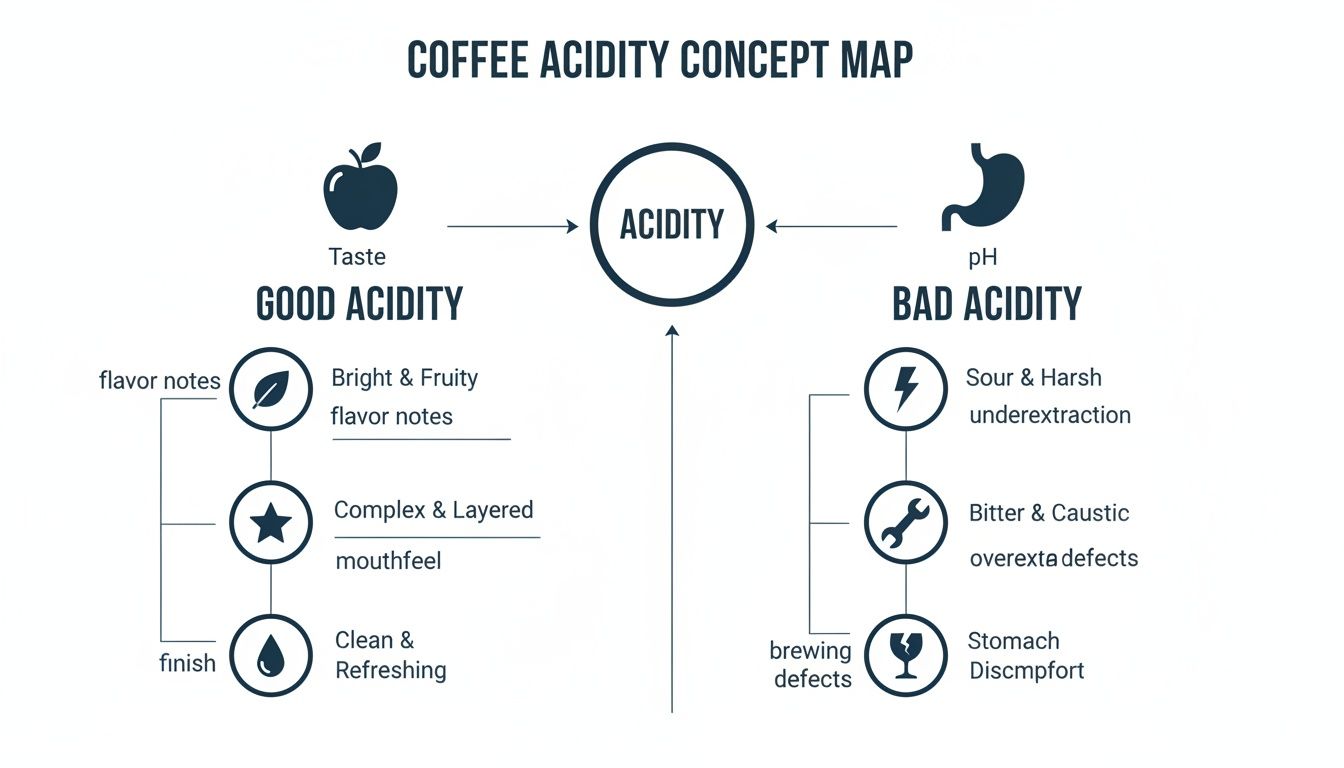
This graphic clearly separates the desirable "taste acidity" linked to flavour from the "pH acidity" tied to digestive comfort, which is what we’re aiming to minimise.
Roast Level: The Darker The Smoother
One of the most direct ways to manage acidity is through the roast. As coffee beans are heated for longer, the chlorogenic acids responsible for much of their sharpness start to break down. It’s a simple rule: darker roasts are almost always lower in acidity than their lighter cousins.
- Light Roasts: These roasts hang onto the bean’s original character—bright, fruity, or floral notes—which results in higher perceived acidity.
- Dark Roasts: The extended roasting time mutes those bright notes, swapping them for deeper, richer flavours of chocolate and nuts while creating a coffee that’s much kinder to your stomach.
Bean Origin: Geography in a Cup
Where a coffee bean is grown has a massive impact on its natural acidity. Beans from high-altitude regions like Kenya or Costa Rica tend to grow more slowly. This patient maturation process allows them to develop complex chemical compounds that translate into a bright, vibrant acidity.
On the other hand, beans grown at lower elevations—especially in places like Brazil and Sumatra—are naturally lower in acid. The warmer climate and different soil makeup give you a coffee with a smoother, earthier, and fuller-bodied profile right from the get-go.
Choosing a coffee from a low-altitude origin is one of the simplest and most effective first steps towards finding a naturally low-acid brew.
Processing Method: How the Bean Is Prepared
After being picked, coffee cherries need to be processed to remove the fruit and dry the seed (the bean) inside. The method used can dramatically steer the final acidity.
- Washed Process: A very common method where the fruit pulp is washed off the bean before drying. This creates a clean, crisp cup with more pronounced acidity.
- Natural Process: Here, the entire coffee cherry is dried intact. This allows the fruit's natural sugars to seep into the bean, resulting in a sweeter, fruitier, and noticeably less acidic coffee.
Brewing Method: The Final Step
Finally, how you brew your coffee can either ramp up or dial down its acidity. The two big variables are water temperature and extraction time. Simply put, hot water extracts acids more efficiently than cold water.
For instance, a standard drip machine uses hot water and a quick extraction, pulling out many of the coffee’s acidic compounds. Cold brew, in contrast, steeps grounds in cold water for 12–24 hours. This slow, gentle process extracts up to 70% less acid than hot brewing, creating an incredibly smooth cup. For more on this, have a look at our guide on the best water for brewing coffee.
Each of these factors plays a crucial role in determining the final acidity of your coffee. The table below breaks down how each variable influences the acidity level, helping you make informed choices for a smoother cup.
How Different Factors Influence Coffee Acidity
| Factor | Higher Acidity | Lower Acidity |
|---|---|---|
| Roast Level | Light roasts | Dark roasts |
| Bean Origin | High-altitude regions (e.g., Kenya) | Low-altitude regions (e.g., Brazil) |
| Processing | Washed process | Natural process |
| Brew Method | Hot and fast (e.g., Drip, Espresso) | Cold and slow (e.g., Cold Brew) |
By keeping these relationships in mind, you can start to piece together the perfect low-acid coffee for you. It’s all about understanding how these elements interact, giving you the power to brew a cup that’s not just delicious but also perfectly suited to your needs.
How to Brew the Perfect Low Acid Coffee at Home
Knowing what makes coffee acidic is one thing, but putting that knowledge into practice is where the real magic happens. The good news? Crafting a beautifully smooth, low-acid coffee in your own kitchen is much easier than you might think. It all boils down to a few smart choices before you even grind a bean, followed by some simple tweaks to your brewing routine.
The first step is learning to read coffee labels like a pro. When you're on the hunt for a coffee with lowest acidity, your eyes should immediately scan for a few key clues that point you towards a gentler brew.
Reading the Label for Low Acidity
When you're browsing for your next bag of beans, keep an eye out for these terms on the packaging. They're strong signals that the coffee inside will be smoother and kinder to your stomach.
- Roast Level: Look for descriptions like ‘Dark Roast’ or ‘Espresso Roast’. The extended roasting time does a fantastic job of breaking down the chlorogenic acids that can cause that sharp, acidic bite.
- Origin: Scan for single-origin coffees from low-altitude growing regions. Beans from Brazil and Sumatra are classic examples, celebrated for their naturally low-acid, full-bodied profiles.
- Processing Method: Although it's less commonly advertised, a ‘Natural Process’ or ‘Honey Process’ coffee often results in lower acidity and a sweeter flavour compared to its 'Washed' counterparts.
Choosing the right bean is half the battle won. A dark-roasted Brazilian coffee is an excellent starting point for anyone seeking a reliably smooth and stomach-friendly cup.
Master Your Brew for a Smoother Cup
Once you’ve got the right beans, your brewing method is the final piece of the puzzle. A few simple adjustments here can make a world of difference to the final cup.
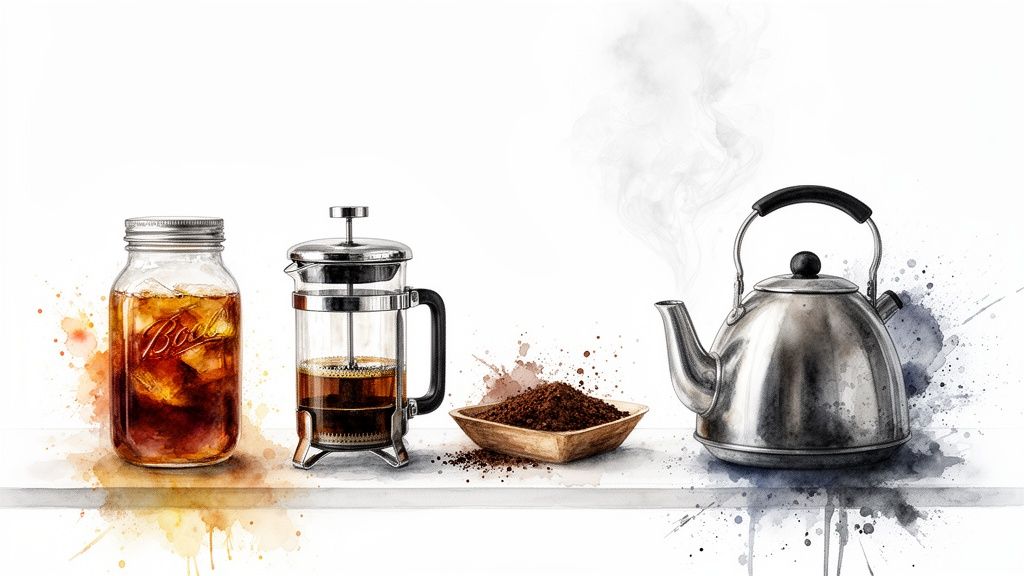
First off, think about your equipment. Brewing methods that rely on full immersion and a longer, gentler extraction are your best friends here. A French press is a fantastic choice, as is a dedicated cold brew maker.
Next, it's time to fine-tune the details:
- Use a Coarser Grind: A coarser grind means less surface area is exposed to the water, which slows down the extraction of those acidic compounds we want to avoid.
- Lower Your Water Temperature: If you’re brewing hot, don’t pour straight from a boiling kettle. Let it cool for a minute. Using water around 90-93°C will pull out far less acid.
- Try Cold Brewing: This is the undisputed champion for low-acidity coffee. Steeping coarse grounds in cold water for 12-24 hours can slash acidity by up to 70%. For a simple recipe that delivers every time, you can learn how to make cold brew coffee with our step-by-step guide.
By pairing a naturally low-acid bean with a gentle brewing technique, you can craft the perfect cup—one that delivers all the rich, deep flavour you love, without any of the harshness.
The Seven Sisters Approach to a Smoother Cup
Finding that perfect low-acid coffee is what we live for. Here at Seven Sisters Coffee Co, we've fine-tuned every single step of our process, all to give you a smoother, more comfortable brew without sacrificing an ounce of the deep, rich flavour you expect. It's a delicate dance, but one we've mastered through sheer dedication, precision, and a couple of unique tricks up our sleeve.
It all starts with the roast itself. We’ve moved beyond conventional methods and developed our own oxygen-free roasting technique. By meticulously controlling the roasting environment, we can sidestep the formation of quinic acid—one of the harsher compounds that often leads to stomach irritation. This precise approach allows us to dial down the sharpness while fully developing the bean's natural sweetness and complex, deep notes.
Crafting the Perfect Low-Acid Profile
Beyond our roasting tech, we obsess over the fundamentals that create a genuinely gentle coffee. It’s not just one thing; it's a series of deliberate choices that all come together to produce that perfect cup. We focus intently on:
- Sourcing from Low-Altitude Regions: We hand-pick beans from origins known for their naturally smooth character. Our single-origin from Brazil is a fantastic example, grown at lower elevations where the beans develop a full body with minimal bite.
- Embracing the Dark Roast: We ensure our dark roasts are developed just enough to break down those problematic chlorogenic acids, resulting in a coffee that's consistently easy on the stomach. This isn’t about burning away flavour; it’s about skilfully unlocking a smoother side of the bean.
At Seven Sisters, we don’t just sell coffee; we are dedicated craft roasters focused on delivering a superior brew. Our goal is to make every cup a pleasure, especially for those with sensitive systems.
Our Commitment to Quality and Ethics
Our passion doesn't stop at the taste. We firmly believe that a truly great coffee is also one that’s sourced with integrity. That’s why we only partner with farms that share our commitment to sustainable and ethical practices. This not only guarantees the highest quality beans but also supports the communities and environments that make our coffee possible.
For anyone looking for a reliably smooth and delicious brew, our dark-roasted single-origin from Brazil is the perfect place to start. It embodies everything we strive for: rich flavour, a comforting profile, and the peace of mind that comes from meticulous craftsmanship. You can explore more fantastic options by checking out our guide on the best low acid coffee brands available. Ultimately, our mission is simple: to provide a coffee experience that is as gentle as it is enjoyable.
Got Questions About Low-Acidity Coffee?
To help you on your journey to a smoother cup, we’ve put together answers to some of the questions we hear the most. Think of this as a quick-fire round to clear up any lingering doubts and help you find that perfect, stomach-friendly brew with confidence.
Whether you're wondering about decaf, the magic of milk, or if you're stuck with dark roasts forever, we've got you covered.
Is Decaf Coffee Less Acidic?
It can be, but it’s not a given. The decaffeination process itself can play a role—a gentle, water-based method like the Swiss Water Process often reduces some acidic compounds along with the caffeine. However, the bean’s origin and roast level are still the biggest players in the acidity game.
A dark-roasted decaf from a low-altitude region will almost always be smoother than a light-roasted caffeinated coffee from a high-altitude origin like Kenya. So, while decaf is a great starting point for many, always check the roast and origin to be sure you're getting the gentlest cup possible.
Does Adding Milk to Coffee Reduce Acidity?
Absolutely. Adding a splash of milk or a plant-based alternative is one of the easiest ways to make your coffee gentler on your stomach. Milk contains calcium, which is alkaline and helps to buffer or neutralise some of the acid in your cup.
The fat and protein in milk also slow down digestion, which can soften the acid’s impact on your stomach lining.
While milk doesn't chemically alter the coffee's pH, it does a brilliant job of toning down the perceived sharpness, creating a much milder drinking experience for anyone with a sensitive system.
It’s a simple trick that works with any brew, making it a fantastic tool in your quest for a comfortable cup.
Are Dark Roasts My Only Option for Low-Acid Coffee?
Not at all! While dark roasts are a reliably good bet for finding a coffee with the lowest acidity, they certainly aren’t your only choice. The long, hot roasting process is fantastic at breaking down those sharp-tasting chlorogenic acids, but it's not the only path to a smooth brew.
Plenty of medium-roast coffees offer a beautifully mellow, low-acid profile without the intense, smoky notes of a super-dark roast. It’s all about knowing what to look for:
- Origin is Key: Keep an eye out for medium roasts from low-altitude countries like Sumatra, Mexico, or Peru. These beans are naturally lower in acid to begin with.
- Brewing Method Matters: How you brew makes a huge difference. Cold brewing a medium roast, for example, will extract far less acid than a standard drip machine ever could.
- Combine Your Knowledge: The smartest approach is to layer these factors. Try a medium-to-dark roast from a low-altitude origin and pair it with a gentle brewing method like a French press or cold brew. That’s the recipe for an incredibly smooth cup.
By thinking about the whole picture—from the bean's home to how it hits the hot water—you open up a whole world of flavourful, low-acid coffees that go far beyond the usual dark roasts.
Ready to discover a smoother, more flavourful cup that's kind to your stomach? The team at Seven Sisters Coffee Co has perfected the art of low-acidity coffee through our unique oxygen-free roasting and meticulous sourcing. Explore our collection and find your perfect brew today at https://sevensisterscoffee.co.uk.