A Practical Guide to Coffee Roasting Equipment in the UK 2026

Diving into the world of coffee roasting is a game-changer. It fundamentally alters how you taste and think about every single cup. For enthusiasts and aspiring pros alike, picking the right coffee roasting equipment is the most important first step. This guide is designed to be your map, helping you navigate the options and find the perfect machine for your goals, whether you're a home hobbyist or a budding café owner here in the UK.
Your Roasting Journey Begins Here
Deciding to roast your own coffee beans is an exciting step, one that promises incredible freshness and total control over the flavour in your cup. The journey from a raw green bean to a perfectly roasted one is a genuine craft, and like any craft, you need the right tools for the job. This guide will cut through the noise and demystify the world of coffee roasting equipment, giving you a clear path from curious newcomer to confident roaster.
The rewards for taking control of your roast are massive. Just imagine the aroma of freshly roasted coffee filling your kitchen—a scent far richer and more complex than anything you can get from a pre-packaged bag.
Roasting your own beans lets you:
- Unlock Peak Freshness: Coffee's flavour starts to fade almost immediately after roasting. By roasting in small, frequent batches, you guarantee that every single cup you brew is at its absolute peak.
- Customise Your Flavour: You become the artist. Prefer bright, fruity notes or a deep, chocolatey richness? With your own roaster, you can experiment with different roast levels to dial in the exact taste you love.
- Explore Global Origins: Roasting opens up a whole world of single-origin green beans. You can source beans from Ethiopia to Colombia and personally craft the ideal roast to make their unique characteristics shine.
For many, roasting is the ultimate expression of coffee passion. It connects you to the entire process, from the farm to the final sip, offering a deeper appreciation for the complexity and nuance that makes coffee so special.
This isn't just about adding another gadget to your counter; it's about elevating your entire coffee experience. Whether your goal is to perfect your morning espresso or to launch a small-batch roasting business, understanding the equipment is fundamental. To get a feel for the first steps, you can find some great insights by reading about coffee roasting at home.
This guide will be your partner, breaking down the technical details and helping you make a smart decision that fits your budget, space, and passion for incredible coffee. Let’s get started.
What are the Main Types of Coffee Roasting Equipment?
When you first dip your toes into the world of coffee roasting equipment, you'll quickly find two main technologies steal the show: drum roasters and air roasters. They both turn green beans brown, but how they transfer heat is a completely different story.
This fundamental difference creates distinctly different results in the final cup. Getting your head around it is the first step to choosing a machine that will bring out the coffee flavours you truly love.
The Classic Drum Roaster
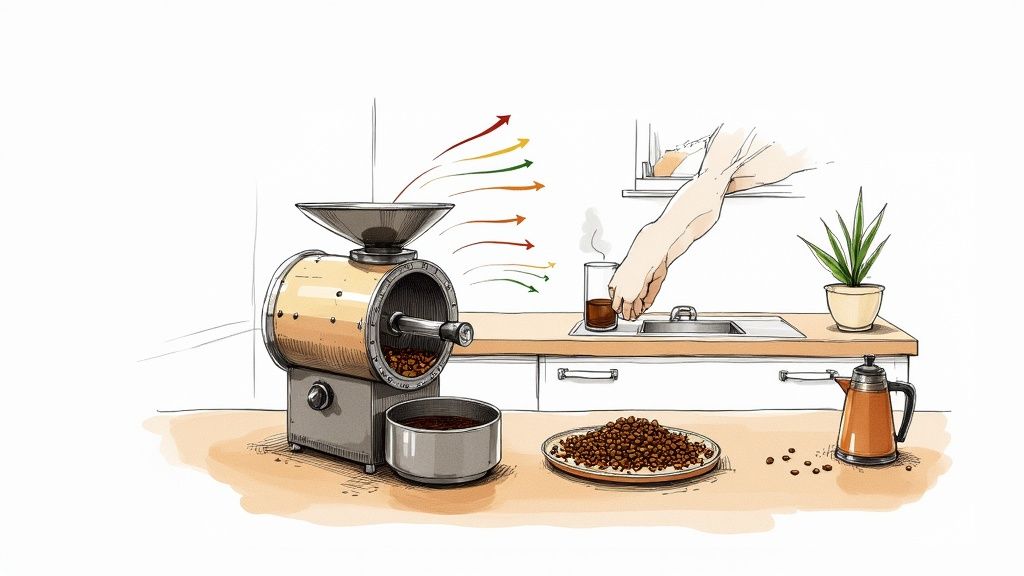
Think of a traditional drum roaster as a miniature, high-precision tumble dryer. You load the beans into a hot, rotating drum where they tumble around, making constant contact with the heated metal surfaces. This method relies heavily on conductive heat—a steady, direct transfer of energy from the drum to the beans.
It's a classic, time-tested approach favoured for its remarkable ability to produce roasts with excellent body, deep sweetness, and those rich, chocolatey notes we all crave. This is why many commercial roasteries and serious home enthusiasts lean on drum roasters for their consistency and fine-tuned control over roast development.
The slow, even roast that comes from this constant contact helps to mellow out acidity and build complex sugars. This often results in a full-bodied coffee that performs brilliantly in espresso and milk-based drinks. You'll find many impressive examples, from the robust Cormorant CR600 to smaller, more accessible models designed for home use.
The Dynamics of Air Roasting
Now, let's switch gears. To understand an air roaster, picture a very powerful, very precise popcorn maker. Instead of tumbling in a drum, the coffee beans are lifted and agitated on a bed of super-hot air, dancing as they roast.
This method primarily uses convective heat, where energy is transferred through the hot air circulating around each individual bean.
Air roasters are celebrated for their speed and responsiveness. The intense airflow and direct heat can produce a stunningly clean and bright cup profile. This makes them fantastic for highlighting delicate, acidic, and floral notes—the kind you find in high-quality single-origin beans, particularly from Africa.
Because the beans are essentially floating, there’s less direct contact with scorching-hot metal, which can reduce the risk of tipping or burning if not managed carefully. These machines are a popular gateway into home roasting, thanks to their smaller footprint and often lower price point.
Drum Roaster vs Air Roaster: A Quick Comparison
The choice between drum and air roasting really boils down to the flavour profile you want to create and the level of control you're after. Each method has its own unique strengths and is better suited to different goals.
To make it easier, here’s a quick-reference table comparing the key characteristics of these two titans of roasting.
| Feature | Drum Roaster | Air Roaster |
|---|---|---|
| Heat Transfer | Primarily conductive (contact with hot drum) | Primarily convective (hot air) |
| Typical Flavour | Full-bodied, sweet, chocolatey, mellow acidity | Bright, clean, acidic, highlights floral/fruity notes |
| Best For | Espresso blends, comfort coffees, developing body | Single-origin coffees, highlighting delicate notes |
| Control | Excellent control over slow, even development | Highly responsive, but can be fast and less forgiving |
| Batch Size | Ranges from very small to massive commercial scale | Typically smaller, ideal for home and sample roasting |
| Cost | Generally more expensive | Often more affordable, a great entry point |
As you can see, there isn't a "better" option—just the right option for the coffee you want to produce. Your choice of equipment is the foundation of your entire roasting philosophy.
How Heat Transfer Affects Flavour
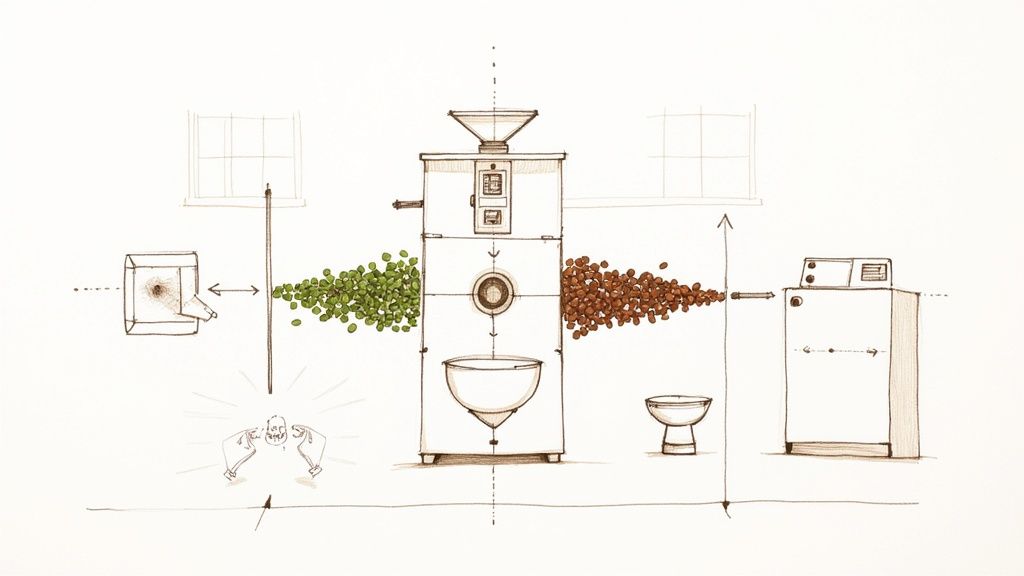
The connection between your equipment and the final flavour is direct and undeniable. The infographic below beautifully illustrates how your choice of roaster is central to manipulating flavour, ensuring freshness, and maintaining control over every batch.

As the graphic shows, these three pillars—flavour, freshness, and control—are what every roaster strives to master, and your machine is your primary tool for getting there.
Of course, the lines between these two technologies are starting to blur. Some innovative machines, like the popular Gene Cafe CBR-101, use a clever hybrid approach. It features an off-axis rotating chamber where beans are tumbled while hot air is forced through, blending both conductive and convective heating.
This design offers a unique balance, giving you some of the body from a drum roaster with the brightness of an air roaster. It's a versatile choice for home roasters who want to experiment with a wide range of beans and profiles. Ultimately, the best coffee roasting equipment is the one that aligns with your personal taste, your budget, and your roasting ambitions.
The Evolution of Roasting Technology
Before we dive into the gleaming, data-driven roasters of today, it's worth taking a look back. Understanding where this technology came from helps us appreciate the incredible control we now have over every single bean. The history of coffee roasting equipment is a story of relentless innovation, all in the pursuit of a more consistent, delicious cup.
It all started simply. Long before commercial roasters even existed, coffee was roasted in small batches over open flames. Picture simple metal pans or clay pots held over a fire, with cylinders turned by hand. It worked, but consistency was almost impossible. The results were often uneven—a mix of scorched and underdeveloped beans in the same batch.
The Dawn of Mechanical Roasting
The Industrial Revolution was the turning point. As coffee’s popularity surged, the demand for a more reliable way to roast grew with it. This era gave birth to the first mechanical roasters, automating the manual labour and marking a massive leap in quality. One of the most important moments was the 1864 patent filed by Jabez Burns in New York.
His machine introduced a tilting mechanism to easily load green beans and discharge the finished roast. It sounds simple, but this clever design is still visible in some modern roasters. It was more than just a convenience; it was a foundational step towards a repeatable, controlled process. You can explore more about this pivotal development and its impact on the history of coffee roaster equipment.
This move from manual guesswork to mechanical precision allowed for bigger batches and a much more uniform product. It paved the way for coffee to become the global commodity it is today and signalled the beginning of the end for haphazard, inconsistent roasting.
The Modern Era of Precision and Control
Following those early breakthroughs, the 20th century was a period of constant refinement. Roaster manufacturers started adding features that gave roasters a level of control they could previously only dream of. The introduction of gas as a clean, responsive heat source, powerful fans for managing airflow, and thermocouples for tracking temperature with precision were all game-changers.
These advancements meant roasters could finally move beyond just browning the beans. They could now artfully guide the roast, tweaking heat and airflow to tease out specific flavour profiles. This is the very essence of modern roasting: using technology to unlock the full potential hidden inside each green bean.
Today’s coffee roasting machines are incredibly sophisticated tools. Many now connect directly to software that logs every detail of a roast—from temperature curves and the rate of rise to tiny airflow adjustments. This data allows a roaster to perfectly replicate a brilliant batch, time and time again.
This ability to consistently reproduce a desired flavour is the holy grail, whether you're a home hobbyist perfecting your morning brew or a commercial roastery supplying discerning cafes. If you want to get into the nitty-gritty of this, our guide on how coffee roasting profiles are explained is the perfect next step. The evolution continues, driven by the same ambition that inspired Jabez Burns all those years ago: to make every roast better than the last.
Key Features to Compare Before You Buy

Choosing the right coffee roasting equipment can feel overwhelming. The market is flooded with technical jargon and specifications, but you can cut through the noise by focusing on what truly matters: the core features that directly shape your final product and your day-to-day roasting experience.
At the end of the day, roasting is a dance between heat and time. Let's break down the most critical features to look for, so you can find a machine that aligns with your craft, ambitions, and budget.
Heat Source: Gas vs Electric
Your first big decision is the heat source. This isn’t just a practical choice; it fundamentally shapes how you interact with the roast and the kind of flavour profiles you can coax from the beans.
- Gas Roasters: Prized by artisans and traditionalists, gas offers incredibly responsive heat control. A quick turn of the dial gives you an immediate temperature shift, allowing you to make dynamic adjustments on the fly. This hands-on feel is perfect for roasters who want to be deeply connected to the process.
- Electric Roasters: Modern electric models, especially those with infrared elements, provide exceptionally clean and consistent heat. They are often simpler to install and excel at repeatability, making them a fantastic choice for locking in a profile and hitting it perfectly, batch after batch.
Neither is inherently "better." It's all about matching the roaster's personality to your own roasting style.
Airflow Control: The Secret Weapon
If heat is the engine, then airflow is the steering. You simply can't take your roasting seriously without powerful and adjustable airflow control. It dictates how efficiently chaff is pulled from the drum, how evenly heat envelops the beans, and how certain flavour compounds are either highlighted or muted.
Think of airflow as your tool for fine-tuning the cup. It gives you the power to manage acidity, clear out smoke, and develop those delicate, nuanced aromas. It's one of the most effective ways to shape the final taste.
A machine with poor or non-existent airflow control is like driving a car with no steering wheel. You're left with one less tool to guide a roast, making it much harder to save a batch that’s running away from you or to bring out the subtle notes in a truly special green coffee.
Build Materials and Heat Retention
The very metal your roaster is made from plays a massive role in its thermal stability. A machine that holds heat well creates a stable environment, which translates to more predictable and evenly developed roasts.
- Cast Iron: The classic choice for drum roasters, cast iron is brilliant at retaining heat. This thermal mass acts as a buffer, creating a steady roasting environment that isn't prone to sudden temperature swings. It’s excellent for developing body and deep sweetness.
- Stainless Steel: Lighter and quicker to heat up and cool down, stainless steel creates a more responsive roasting environment. It's also durable, easy to clean, and a common choice for both internal components and external panels.
The quality of the build doesn't just affect performance; it dictates the machine's lifespan. A well-built roaster is a long-term investment. When looking at a purchase of this size, understanding equipment financing can be an essential step in making an informed decision.
Data Logging and Software Integration
In modern roasting, intuition is guided by information. The ability to track, record, and analyse every roast is what separates guesswork from genuine craft. Software integration lets you see what's happening inside the drum in real-time, mapping variables like bean temperature, environmental temperature, and the all-important Rate of Rise.
This data is indispensable for two key reasons:
- Consistency: It lets you save the profile of a "golden batch" and then repeat it with incredible precision, time after time.
- Improvement: By analysing the data, you can see exactly what went right—or wrong. This allows you to make tiny, informed adjustments to perfect your next roast.
For anyone serious about mastering this craft, data logging isn't a luxury; it’s an absolute essential. Of course, a perfect roast is only half the battle. You’ll need the right tools for the next step, which starts with a quality coffee bean grinder.
Finding the Right Roaster for Your Needs
The best coffee roasting equipment isn’t the one with the biggest price tag or the most complicated controls. It's the machine that perfectly fits your space, your scale, and your ambitions.
Choosing a roaster is a deeply personal decision, one that hinges on where you are in your coffee journey. A machine that’s a dream for a home hobbyist would be a nightmare for a growing café, and vice versa.
To find your perfect match, it helps to think in terms of scale. Are you roasting for the sheer joy of it, dipping a toe into a potential side business, or ready to scale up a commercial operation? Each stage comes with its own needs for capacity, control, and of course, budget. Let's break down the options.
For the Home Hobbyist
If you’re just starting out, the goal is simple: learn the craft without breaking the bank. You need a machine that’s forgiving, compact, and lets you experiment with small, low-risk batches. A roaster with a 100g-250g capacity is the ideal starting point.
This size is brilliant for a few reasons:
- Low Waste: You can afford to make mistakes. A bad roast means losing a handful of beans, not a whole kilogram of your best stock.
- Fast Feedback: Smaller roasters heat up and cool down quickly, letting you run several tests in one session to speed up your learning curve.
- Space Saving: These machines are small enough to sit on a kitchen counter or in a well-ventilated utility room.
For home use, look at high-quality air roasters or small-capacity drum roasters. They offer just enough control to grasp the fundamentals of time and temperature without feeling overwhelming. Of course, before buying a roaster, you'll need a steady supply of great beans; you can explore a wide variety of green coffee beans here.
For the Ambitious 'Prosumer' and Micro-Roastery
This is where passion starts to look a lot like profit. You’ve mastered the basics and are now dreaming of selling your beans at local markets or supplying a neighbourhood café. It’s time to bridge the gap between home and commercial roasting. A 1-3kg drum roaster is the quintessential machine for this stage.
These roasters are the sweet spot for serious enthusiasts and new business owners. They offer the professional-grade control needed to develop unique, repeatable profiles while still being manageable in size and cost. This is the workhorse that can turn a side project into a viable brand.
With a 1kg roaster like the Aillio Bullet R1 V2, you can produce enough coffee in just a few hours to supply a small but loyal customer base. The real game-changer at this level is the ability to connect to roasting software. This lets you log data, refine your profiles, and guarantee every bag of coffee you sell meets your exacting standards.
For the Growing Coffee Business
When your customer list gets longer and demand starts to outstrip your small machine's capacity, it’s time to think bigger. For a busy coffee shop or a dedicated roastery, efficiency becomes everything. This is where 5-15kg commercial coffee roasting equipment comes into play.
These machines are serious investments, so thinking about the return on investment is critical. A larger roaster dramatically lowers your cost per kilogram by enabling you to roast much larger batches in one go.
This sharp focus on efficiency and scalability was heavily influenced by early American commercial pioneers. Brands like Folgers, Maxwell House, and the Arbuckle Brothers drove innovations in large-scale production to meet national demand, shaping the design of commercial equipment we see today. You can read more about these historical roasting innovations.
Investing in a machine of this size means you’re ready to handle wholesale orders, expand your reach, and build a truly sustainable coffee business.
Setup, Safety, and Maintenance Essentials

Bringing coffee roasting equipment into your space is a serious commitment, one that goes far beyond the excitement of crafting that first perfect batch. A roaster is a powerful piece of machinery, juggling intense heat, high-voltage electricity or gas, and flammable by-products like chaff.
Getting your setup and maintenance right isn't just a good idea—it’s absolutely fundamental to protecting yourself, your property, and your investment. Proper installation is the bedrock of a safe roasting environment, and overlooking it can lead to poor performance at best, and a genuine disaster at worst.
Critical Safety and Installation Steps
Before you even dream of hitting the ‘on’ switch, a few key safety checks are in order. A methodical approach here will pay off massively in both peace of mind and the quality of your roasts.
- Ventilation is Non-Negotiable: Roasting creates smoke, steam, and carbon monoxide. Inadequate ventilation isn’t just unpleasant; it’s a serious health hazard. Your setup must include dedicated ducting that vents all fumes directly outside, well away from any windows or air intakes.
- Check Your Connections: If you’re using a gas roaster, get all connections professionally installed and meticulously checked for leaks. For electric models, make sure your circuits can handle the electrical load. You don't want to be dealing with tripped breakers or, worse, an electrical fire mid-roast.
- Fire Safety First: Always keep a Class ABC fire extinguisher within easy reach. Never, ever leave a running roaster unattended, and make sure the area around it is completely clear of flammable materials.
The Importance of Regular Maintenance
A well-maintained roaster is a safe roaster, an efficient roaster, and a consistent roaster. Think of it like a high-end espresso machine—it demands regular care to perform at its best. This routine doesn't just prevent hazards; it ensures every batch is produced under the same clean conditions, making your results far more repeatable.
Regular maintenance is the single most important thing you can do to extend the lifespan of your roaster and guarantee consistent quality. It stops coffee oils and chaff from building up, which can taint flavour and pose a significant fire risk.
When you neglect cleaning, that residue accumulates. It can mess with airflow, alter how heat transfers to the beans, and ultimately make that perfect roast profile you worked so hard on impossible to replicate.
A Practical Maintenance Checklist
The best way to stay on top of maintenance is to build a simple schedule. Breaking tasks down into daily, weekly, and monthly jobs makes it all feel much less daunting.
Daily Tasks (After Each Roasting Session):
- Empty the Chaff Collector: Chaff—the papery skin that comes off the bean—is incredibly flammable. It absolutely must be emptied after every single session to prevent a fire.
- Clean the Cooling Tray: Get rid of any leftover beans or chaff from the cooling tray. This ensures you get proper airflow for your next batch.
- Wipe Down Exterior Surfaces: A quick wipe-down keeps the machine free from dust and sticky coffee oils.
Weekly Tasks:
- Inspect and Clean Ducting: Check for any residue building up inside your ventilation ducts. Clogged ducts are a major fire hazard, so take this seriously.
- Deep Clean Chaff Collector: Go beyond just emptying it. Give the chaff collection chamber a proper clean with a brush or vacuum to remove any stubborn bits.
- Check Probes: Gently wipe down your temperature probes. A build-up of oil can insulate them, skewing your data and throwing off your roast profile.
By weaving these safety and maintenance steps into your regular workflow, you’re creating a professional and secure environment for your craft. You'd take care to store your roasted beans properly to preserve their freshness, and as you can see in this guide to the best coffee storage containers, giving your equipment that same level of attention is non-negotiable.
Your Roasting Questions, Answered
Dipping your toes into the world of coffee roasting is an exciting prospect, but it naturally comes with a whole host of questions. Let's tackle some of the most common queries we hear, clearing the path for your own roasting journey with some straightforward, expert advice.
How Much Does Coffee Roasting Equipment Cost in the UK?
The investment in roasting equipment can range wildly, depending on where you are in your coffee journey and the scale you're aiming for.
- Entry-Level Home Roasters: For those just starting out, a basic air roaster can be found for around £200–£500. These machines are fantastic for getting a feel for the process with small, manageable batches.
- Prosumer and Serious Hobbyist Roasters: If you're ready to get more serious, a high-quality drum roaster built for home use will typically fall between £1,000 and £3,500.
- Commercial Roasters: For a small café or budding micro-roastery, a 1–5 kg machine is a common starting point. Expect costs to range from £5,000 to over £25,000, with the price reflecting features like automation and overall build quality.
Is Roasting Coffee at Home Difficult?
There’s certainly a learning curve, but it’s an incredibly rewarding and surprisingly accessible craft. The secret is to begin small, meticulously log your time and temperatures, and tune into all your senses—sight, sound, and smell are your best guides.
While the science can be complex, you don’t need to be an expert to get started. The craft generously rewards practice and attention to detail. With a bit of patience, even a complete beginner can achieve fantastic results and uncover a deeply satisfying new hobby.
What Is Chaff and Why Is It Important?
Chaff is the papery outer skin of the coffee bean, and it flakes off as the beans expand and tumble during the roast. Because it’s incredibly light and highly flammable, managing it is a critical safety consideration.
Every roaster has a chaff collection system that needs to be emptied regularly—often after every single batch. Allowing it to build up is not just a serious fire hazard; it can also impede airflow and negatively impact your roast consistency. To keep your machine running smoothly and safely, always use dedicated roaster equipment cleaning products.
Do I Need Special Ventilation for a Home Roaster?
Yes, without a doubt. Proper ventilation is absolutely essential. All coffee roasting equipment generates smoke, steam, and potent odours during operation.
For your very first few roasts with a tiny home unit, positioning it next to an open window with a strong fan might seem sufficient. However, for any serious or regular indoor roasting, dedicated ducting that vents all smoke and fumes directly outside is the only truly safe and effective practice. This isn't just about protecting your health; it's about preventing your home from being permanently perfumed with the smell of smoke.
Ready to explore the world of coffee with beans roasted to perfection? At Seven Sisters Coffee Co, we source and roast exceptional coffees to bring out their unique flavours. Discover your next favourite brew in our online shop.