Boost Your UK Garden: coffee grounds in compost pile for thriving soil

Absolutely, and in fact, you really should be putting coffee grounds in your compost pile. It’s one of those brilliant little garden hacks that feels almost too good to be true. Despite their dark, earthy colour, used coffee grounds act as a nitrogen-rich 'green' material. They kickstart the decomposition process, helping you create that beautiful, nutrient-dense compost your garden loves, and often much faster.
Why Your Compost Pile Needs Coffee Grounds
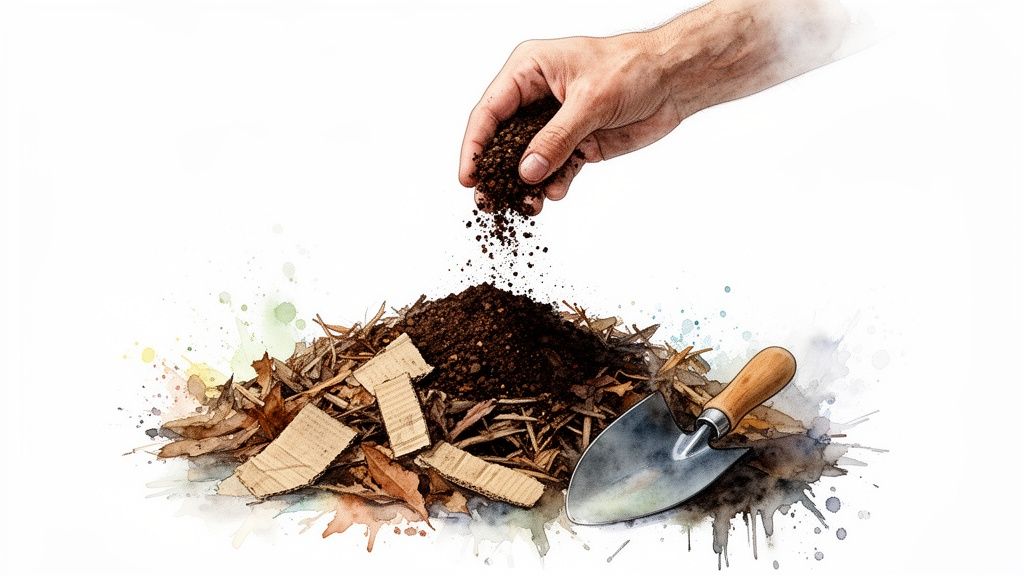
If you're a keen gardener who also enjoys a daily brew, you're sitting on a pile of what many of us in the know call 'black gold'. Adding your used grounds to the compost bin is one of the simplest and most effective ways to supercharge its quality. It’s the perfect final step for your coffee ritual, turning what would be waste into a precious resource for your soil.
But what exactly is going on that makes them so valuable? It all comes down to their chemical makeup. While they look like a classic 'brown' (carbon-rich) material, they're secretly packed with nitrogen.
The Power of 'Green' Material
Think of nitrogen as the fuel that powers the tiny microorganisms doing all the hard work in your compost. It’s the accelerator pedal for your pile. When you mix in coffee grounds, you’re giving these microbes a high-energy meal, which makes them work faster and generates heat. This heat is vital for a few key reasons:
- Quicker Breakdown: A hotter pile tears through organic waste much more efficiently, meaning you get your finished compost sooner.
- Killing Off the Nasties: Sustained high temperatures are fantastic for eliminating unwanted pathogens and stubborn weed seeds.
- Creating Rich Humus: The end result of this supercharged process is that dark, crumbly, sweet-smelling compost that does wonders for your soil structure.
Here in the UK, our love for coffee is creating a mountain of used grounds. In 2024 alone, total coffee purchases hit a staggering 103.4 million kilograms. For gardeners and eco-conscious coffee drinkers, this is a massive opportunity. Coffee grounds can contain 2-3% nitrogen by weight, and adding them to a pile has been shown to speed up decomposition by up to 30%.
By simply tipping the remnants of your daily brew into the compost, you’re actively improving your soil’s structure, helping it hold more water, and reducing your reliance on chemical fertilisers. It’s a tiny change that delivers a huge impact.
For those looking to build an even greener garden, exploring sustainable landscaping solutions can provide some brilliant ideas for a healthier, more eco-friendly yard. And if you're curious about other ways to use your coffee leftovers, you might want to read our guide on whether coffee grounds are good for plants.
Balancing Carbon and Nitrogen For Perfect Compost
Getting composting right boils down to a single, crucial principle: creating a balanced diet for your pile. Think of it like a recipe with just two main ingredient types – 'greens' and 'browns'. Nailing this blend is the secret to producing that rich, crumbly compost every gardener dreams of, instead of ending up with a slimy, smelly mess.
Right in your own UK garden, you have everything you need. Your 'greens' are the nitrogen-rich materials that provide the heat and energy. Your 'browns' are the carbon-rich materials that give the pile structure and allow air to circulate.
Understanding Greens And Browns
So, what exactly falls into each category? It's far simpler than it sounds.
Green Materials (Nitrogen): These are usually the fresh, moist bits. We're talking about grass clippings from the mower, fruit and vegetable scraps from your kitchen, and fresh plant trimmings. Coffee grounds, despite their dark colour, are a potent 'green' material, supercharging your pile with a serious hit of nitrogen.
Brown Materials (Carbon): These are typically dry, woody, and structural. Think of dried leaves you've swept up in autumn, small twigs, straw, sawdust, and perhaps the most convenient of all, torn-up cardboard from delivery boxes or shredded newspaper.
A healthy compost pile needs a good mix of both. Throw in too much green stuff, and you'll get a dense, soggy sludge that smells sour because it's gone anaerobic (meaning it lacks oxygen). On the flip side, if you add too many browns, the whole decomposition process will grind to a halt. The microbes simply won't have enough nitrogen to fuel their work.
If you're curious about the science behind it, we explore this in our complete guide to composting coffee grounds.
A simple rule of thumb for a healthy compost pile is to aim for a ratio of roughly one part green material to every three or four parts brown material by volume. This ratio ensures there's enough fuel (nitrogen) and enough structure (carbon) for optimal decomposition.
Putting The Ratio Into Practice
Let's walk through a real-world scenario. Say you've just mown the lawn and have a bucket full of fresh grass clippings. You also have a week's worth of coffee grounds in your compost pile caddy, plus some vegetable peelings from preparing dinner. All of this is fantastic 'green' fuel for the pile.
To balance this out, you'll need to add about three to four times that volume in 'browns'. This could be a generous layer of shredded cardboard, a bag of dried leaves you saved from the autumn clear-up, or even some wood shavings. By layering or mixing these materials, you create the perfect environment for microbes to thrive, turning your waste into black gold without any unpleasant odours.
Having a quick reference guide can make balancing your pile so much easier when you're standing there with a bucket of scraps.
Balancing Your Compost Pile Greens and Browns
Here’s a quick-glance table to help you get the balance right every time. It breaks down the role of each material type and gives you that all-important ratio.
| Material Type | Role in Compost | Examples | Ideal Ratio (by volume) |
|---|---|---|---|
| Green | Provides Nitrogen (Energy) | Coffee grounds, grass cuttings, veg scraps | 1 Part |
| Brown | Provides Carbon (Structure) | Dry leaves, cardboard, twigs, paper | 3-4 Parts |
Keep this simple chart in mind, and you'll find it's easy to build a healthy, efficient compost pile that consistently produces brilliant results for your garden.
Adding Coffee Grounds to Different Compost Systems
There’s no single, universal rule for adding coffee grounds to your compost; the best method really hinges on your specific setup. Whether you’re working with a classic heap at the bottom of the garden or a compact wormery on the balcony, you can easily put your daily coffee waste to good use.
The trick is to adapt your technique to the system you have. For most gardeners, this simply means figuring out how to stop the grounds from clumping together and making sure air can still circulate. Get that right, and they’ll break down beautifully without a hitch.
For Traditional Cold Compost Piles
A traditional 'cold' compost heap is a wonderfully low-maintenance friend to have in the garden. When you’re adding coffee grounds here, your main job is to stop them from forming a dense, solid layer.
It's surprisingly easy for used grounds to compact into a solid mat, which blocks air and water from getting through. This is a fast track to creating anaerobic pockets in your pile, which can get smelly and slow the whole decomposition process down. The fix is simple: just sprinkle your grounds in thin layers. Even better, mix them with a good handful of 'brown' material like shredded cardboard or dry leaves before you toss them in.
This quick visual guide is a great way to check what your compost pile needs to stay balanced.
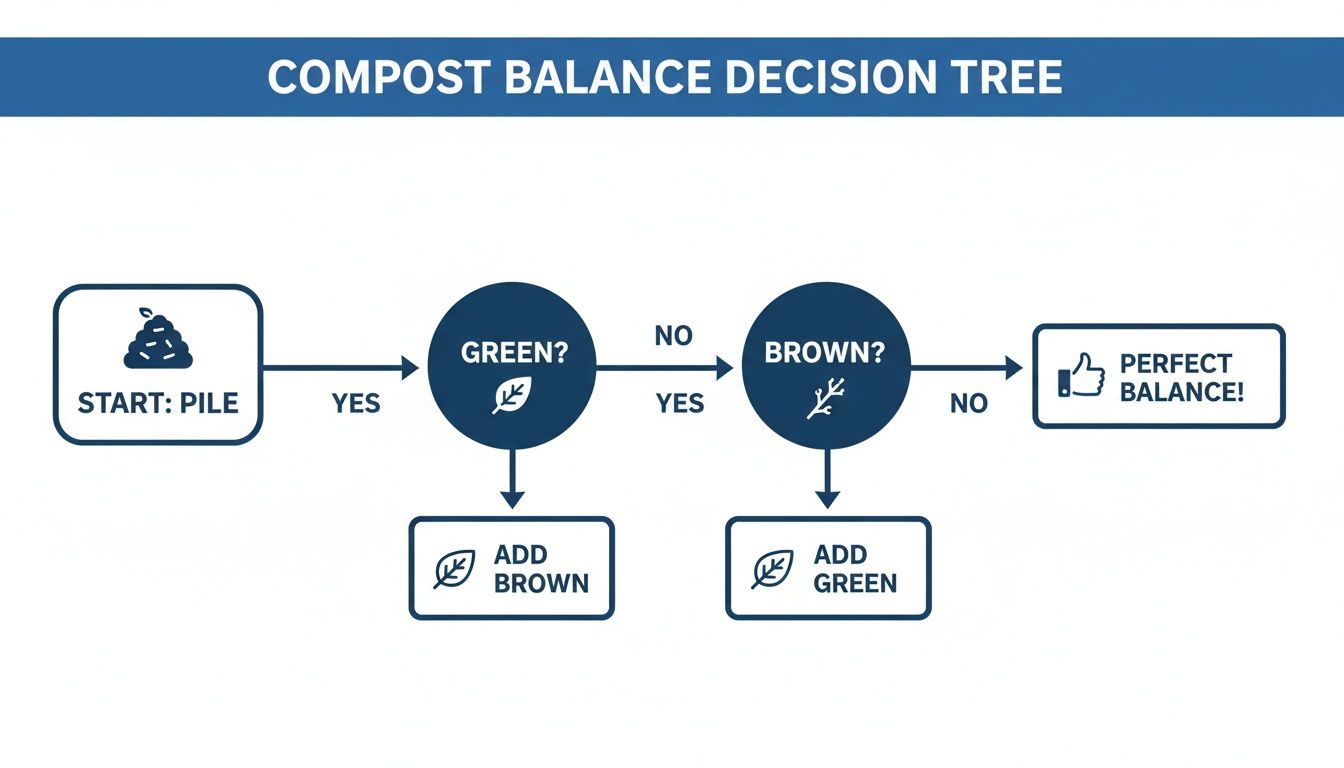
As the flowchart shows, it’s a straightforward balancing act. When you add 'greens' like coffee grounds, you just need to add some 'browns' to keep the pile healthy and odour-free.
For Hot Composting Bins
If you’re running an enclosed 'hot' composting bin, coffee grounds are an absolute powerhouse. Their high nitrogen content acts as a brilliant activator, helping to get the internal temperature of the bin soaring. This heat is what you need to kill off pesky weed seeds and pathogens, giving you top-quality compost in a fraction of the time.
Just add your grounds along with other green materials, but always remember to layer them with plenty of browns. It’s worth keeping a compost thermometer handy to monitor the heat. If it creeps over 65°C, you might need to mix in more browns and give everything a good turn to cool it down a bit.
Recent trials show just how effective this is. RHS UK studies found that compost piles containing 20% coffee grounds by volume broke down 25% faster. On top of that, East Sussex council trials in 2024 discovered that community compost bins with added coffee produced 15% richer humus and boosted water retention by 18%.
For Wormeries or Vermicomposting
Wormeries are a fantastic choice for smaller spaces, and the worms inside them absolutely adore coffee grounds. The golden rule here, though, is moderation. Tipping in too much at once can overwhelm the system and make the bedding a bit too acidic for the worms' comfort.
Start by adding just a small handful of grounds once a week. It's a wise practice to mix them with a sprinkle of crushed eggshells, which helps to buffer the pH and keep the environment balanced for your worms.
See how they get on. If the worms seem to be munching through the grounds quickly, you can start to gradually add a little more. Just remember that in a wormery, coffee grounds are a treat—part of a varied diet, not the main course. For more detailed tips, you can learn more about using coffee grounds in a compost bin in our dedicated guide.
Solving Common Composting Problems with Coffee Grounds
Adding coffee grounds to your compost is a brilliant move for just about any gardener, but it's not unusual for a few worries to crop up along the way. The good news is that the solutions are almost always straightforward, keeping your composting journey smooth and your garden happy.
Let's walk through some of the most common concerns gardeners have when they start mixing coffee grounds into their compost. You'll find that most issues are easily sorted by remembering the golden rule of composting: balance is everything.
Addressing Unpleasant Odours
If your compost pile starts to smell sour or a bit like vinegar, that's its way of telling you something is off-balance. This almost always points to too much 'green' (nitrogen-rich) material and not enough air, creating what’s known as anaerobic conditions.
The fix is surprisingly simple. Grab a garden fork and give the whole pile a good turn to introduce a blast of much-needed oxygen. While you're at it, toss in a generous amount of 'brown' (carbon-rich) materials—think shredded newspaper, torn-up cardboard, or dry leaves—to soak up excess moisture and restore that crucial balance.
A healthy compost pile should smell earthy and pleasant, like a forest floor after rain. A sour smell is your compost telling you it's suffocating and needs more carbon and air.
If you're just getting started and want to nail the basics, this easy guide for beginners to composting is a fantastic resource for setting up different systems.
Dealing with Pests
There’s a stubborn myth that coffee grounds will attract rats and other unwanted critters to your garden. In my experience, this is largely untrue. Pests are usually drawn to other things you might be adding, like meat, dairy, or cooked food scraps, not the grounds themselves.
To keep your pile pest-free, make a habit of burying kitchen scraps, including your coffee grounds in the compost pile, right in the centre. A good, thick layer of 'browns' or some finished compost on top will mask any tempting smells and keep curious visitors away.
Worries About Acidity
One of the biggest questions I get is whether coffee will make the compost too acidic for most plants. While fresh, unbrewed coffee grounds are acidic, the brewing process neutralises them quite a bit. Used coffee grounds typically have a pH level that hovers around 6.5, which is very close to neutral.
This means they won't throw off the overall pH of your finished compost. If you're still concerned, especially if you grow acid-sensitive plants, you can always add some crushed eggshells to the mix. They act as a natural liming agent, adding valuable calcium and ensuring your final product is perfectly balanced for the garden.
For more clever ideas on recycling your kitchen leftovers, check out these other brilliant uses for coffee grounds.
More Ways to Use Coffee Grounds in Your Garden
While your compost pile is a brilliant destination for used coffee grounds, their garden tour doesn't have to end there. Think of them as a multi-purpose resource for your entire patch, helping you get one step closer to a zero-waste brew.
Beyond the compost bin, these grounds are packed with residual nutrients just waiting to be put to work in other creative and surprisingly effective ways. They can transform from a simple kitchen byproduct into one of your most valuable garden assets.
Direct Soil Amendment
One of the most popular ways to use grounds directly is as a slow-release fertiliser, especially for plants that enjoy slightly acidic soil. All you need to do is work a small amount into the top layer of soil around established plants to give them a gentle, long-term nutrient boost.
This technique is a real winner for:
- Acid-Loving Plants: Rhododendrons, azaleas, camellias, and blueberries will thank you for the subtle conditioning.
- Roses: Many rose growers swear by a light application of coffee grounds to encourage vigorous growth and vibrant blooms.
- Root Vegetables: Carrots and radishes often benefit from the improved soil structure when grounds are dug in before planting.
This isn't just garden folklore, either. DEFRA's 2024 compost survey found that 22% of UK gardeners now use coffee grounds directly on their soil. It's been linked to boosting worm populations by 40% and increasing soil nitrogen by 25%. With a near-neutral pH of around 6.2, the grounds also help balance alkaline compost—perfect for blueberries, which saw an 18% yield increase in recent RHS trials.
Natural Pest Deterrent
Slugs and snails are the bane of many a UK gardener, but coffee grounds offer a simple, organic line of defence. It turns out these soft-bodied pests really don't like crawling over the abrasive texture.
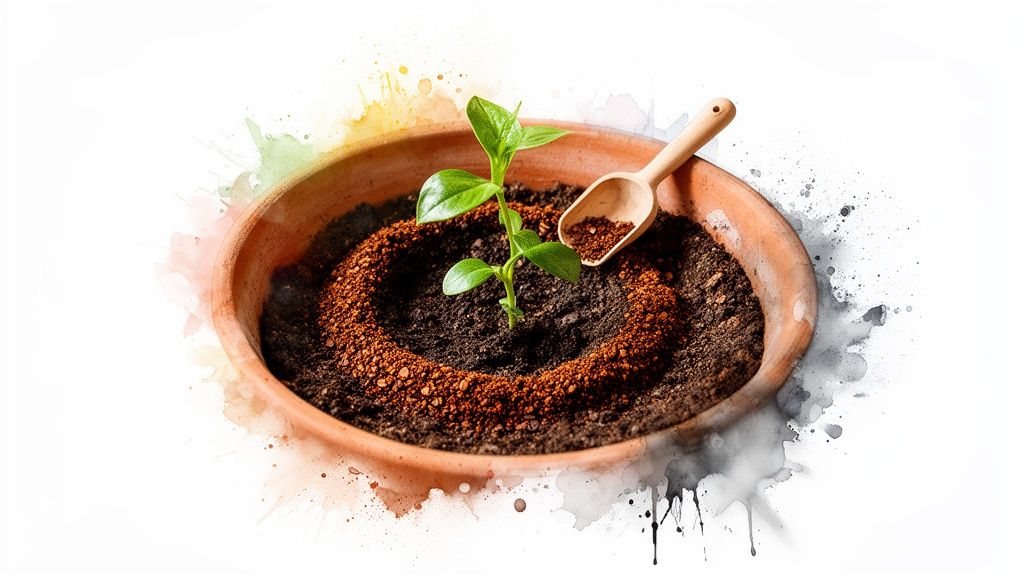
Simply sprinkle a ring of used, dry coffee grounds around the base of vulnerable plants like hostas or young lettuces to create a coarse barrier. It's a non-toxic way to protect your prized specimens without reaching for the chemical pellets.
You'll need to top up your coffee ground fortress after heavy rain, but it’s a brilliant way to deter pests. If you're looking for more clever tricks, you can find plenty of other uses for coffee grounds in the garden to make the most of every last drop.
Got Questions About Coffee in Your Compost?
As you've seen, adding coffee grounds to your compost pile is a fantastic way to boost its health and reduce waste. But it's only natural to have a few lingering questions before you get started. Let's run through the most common queries I hear from fellow gardeners, making sure you feel completely confident turning your daily brew into black gold.
Think of this as your quick-fire troubleshooting guide. With these answers, you’ll be ready to handle anything that comes up.
Can I Put Coffee Filters in the Compost Pile Too?
Absolutely! Most paper coffee filters are completely compostable and are a brilliant source of carbon for your pile. They count as a ‘brown’ material, helping you nail that perfect green-to-brown ratio we talked about earlier.
To give them a head start, I always recommend tearing the filters into smaller pieces before chucking them in. If you're aiming for a purely organic compost, go for unbleached paper filters. They’ll break down cleanly without leaving anything unwanted behind.
Do I Need to Dry My Coffee Grounds Before Composting?
Nope, there's no need to dry your coffee grounds first. Just tip them straight from your coffee maker into the compost bin. It's much easier that way.
If you save up your grounds in a caddy for a few days, you might spot some mould growing on them. Don't panic! This is actually a good sign. It just means the decomposition process is already kicking off. Go ahead and mix the whole lot, mould included, into your compost—the microbes will love you for it.
How Much Coffee Is Too Much for a Compost Pile?
This is a worry for many, but honestly, it’s pretty hard for a typical household to overdo it. A great rule of thumb is to keep coffee grounds to no more than 20-25% of the total volume of your compost. So, for every bucket of coffee grounds you add, aim to mix in three or four buckets of brown materials like dried leaves or cardboard.
Balance is everything. As long as you’re regularly adding plenty of ‘browns’ like dry leaves, shredded paper, and cardboard, your coffee grounds in the compost pile will mix in beautifully and won't cause any problems.
Getting that mix right stops the grounds from clumping together, which keeps your pile nicely aerated and healthy. It's all about feeding the microorganisms a balanced diet.
Are Coffee Grounds Good for All Plants?
Once your coffee grounds have fully broken down in the compost, the finished product is fantastic for almost every plant in your garden. The brewing process washes away most of the acid, leaving used grounds with a near-neutral pH of around 6.5.
This means your final compost won’t be too acidic and is perfectly safe for everything from your veggie patch to your flower beds. One little caveat: if you ever use fresh, unbrewed grounds directly on the soil (which I wouldn't recommend in large amounts), save them for acid-loving plants like blueberries, rhododendrons, and azaleas.
At Seven Sisters Coffee Co, we believe a great cup of coffee should be a pleasure from the first sip to the final grounds. By composting your coffee, you’re closing a beautiful, sustainable loop that gives back to your garden. Explore our collection of ethically sourced, freshly roasted coffee at https://sevensisterscoffee.co.uk and make every part of your coffee ritual count.