Why Your Coffee Filter Paper Matters More Than You Think
That little piece of paper tucked inside your brewer does so much more than just hold the coffee grounds. It’s actually one of the most important tools in your kit, shaping the final taste in your cup. The right coffee filter paper controls everything from how fast your coffee brews to its final clarity and body. A simple switch can unlock brighter flavours, a richer texture, and a much cleaner finish.
Why Your Coffee Filter Paper Matters More Than You Think
Think of your coffee filter as a gatekeeper. As hot water flows through the coffee grounds, it pulls out hundreds of flavour compounds, oils, and tiny particles known as 'fines'. The filter's job is to decide which of these make it into your mug and which get left behind.
This filtering process has a massive impact on the final brew. A more porous paper might let more oils pass through, giving you a coffee with a heavier body and a fuller mouthfeel. On the other hand, a denser filter will trap those oils and fines, producing a cleaner, brighter cup that lets delicate flavour notes really sing.
The Role of the Filter in Your Daily Ritual
Once you understand what your filter is doing, you can start tailoring every brew to exactly how you like it. It’s not just a disposable bit of kit; it's an active player in creating flavour. And it seems plenty of people are catching on. The UK now represents a huge part of Europe’s coffee filter paper market, holding a 24.6% market share—just behind Germany. It’s a clear sign of how much the UK's speciality coffee scene and home brewing culture have grown.
Here at Seven Sisters Coffee Co, we're big believers that knowing the small details helps you get the absolute best from our beans.
Your filter is the final editor of your coffee’s story. It refines the narrative, clarifies the key points, and presents a polished final product, ensuring every sip is exactly as the roaster intended.
By exploring everything from the material to the shape, you’ll feel more confident picking the right filter and taking your home coffee game to the next level. For a deeper dive, you might like our guide on how to make the perfect cup of filter coffee.
Bleached vs Unbleached Filters: The Great Taste Debate
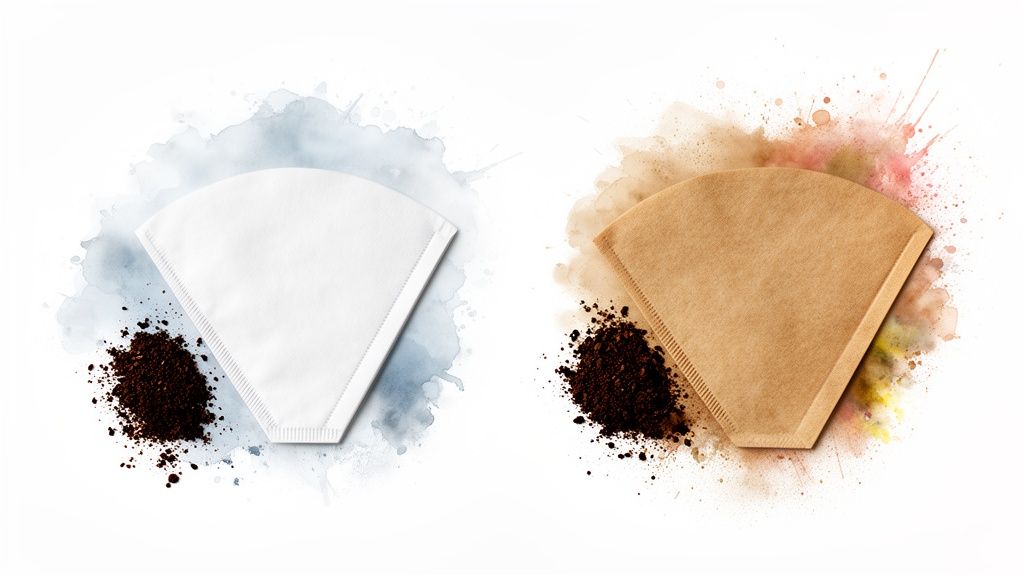
When you’re standing in front of the coffee aisle, one of the first decisions you’ll face is a simple one: white or brown filters? It might seem like a small detail, but whether you go for bleached or unbleached coffee filter paper has a real impact on the final taste in your cup. It's a choice worth understanding.
Think of it like an artist choosing a canvas. A bleached filter is a clean, white canvas, totally neutral. It’s designed to stay in the background, letting the most delicate and complex notes of your coffee—say, the bright citrus of a light roast—shine through without any interference.
On the other hand, an unbleached filter is more like a natural, textured canvas. That brown colour comes from lignin, a natural polymer found in wood pulp. While it has a more 'raw' look, it can sometimes impart a subtle woody or papery taste to your brew if you don't give it a good rinse first.
Understanding the Bleaching Process
It's a common myth that "bleached" equals harsh chemicals seeping into your coffee. While it’s true that chlorine was used in the past, raising valid environmental concerns, modern bleached coffee filters have moved on. Today, they almost exclusively use oxygen-based whitening processes.
This method is far gentler and cleaner. It breaks down the lignin without leaving behind any nasty residues or flavour taints. The result is a pure, flavour-neutral paper that gives you a clean slate for brewing.
A great coffee filter paper should be an invisible participant in the brewing process. The goal is for it to remove grounds and control flow, not add its own character to the finished cup. Rinsing is key to achieving this neutrality.
Despite the clean process of modern bleaching, unbleached filters are gaining traction with eco-conscious brewers. The global unbleached coffee filter papers market is growing fast, with a projected annual growth rate of 9% between 2026 and 2033. This highlights a clear shift in the UK towards more sustainable coffee solutions. You can discover the insights into sustainable coffee filtration to learn more about this trend.
To make the choice a bit easier, here’s a quick breakdown of how the two types of filters stack up against each other.
Bleached vs Unbleached Filters: A Quick Comparison
| Feature | Bleached Filter Paper | Unbleached Filter Paper |
|---|---|---|
| Colour | Bright white | Natural light brown |
| Flavour Impact | Completely neutral; no paper taste | Can have a faint papery or woody taste if not rinsed |
| Processing | Whitened using an oxygen-based process | Minimally processed; retains natural wood pulp colour |
| Rinsing Need | Recommended to pre-heat the brewer | Essential to remove potential paper taste |
| Best For | Highlighting delicate, complex notes in light roasts | Brewers who prioritise a less-processed product |
Ultimately, both can make a fantastic cup of coffee, provided you handle them correctly. It really boils down to what you're looking for in your brew.
How to Get the Best from Your Filter
Regardless of which side of the debate you land on, there’s one step you should never skip: always pre-rinse your filter. Popping the paper in your brewer and pouring hot water over it before adding your coffee grounds does two critical things:
- It removes paper taste: This is especially important for unbleached filters. A good rinse washes away any loose fibres and that residual papery flavour.
- It pre-heats your brewer: Rinsing warms up your brewing device and carafe, helping to maintain a stable temperature throughout the brew for a more even extraction.
So, which is right for you? It really comes down to personal preference. If you’re chasing the subtle, bright notes in a single-origin light roast, a bleached filter will give you the clarity you need to taste them. If you don't mind a slightly earthier undertone or simply prefer a less processed product, an unbleached filter—when properly rinsed—can work beautifully too.
How Filter Shape Impacts Your Brew’s Flavour
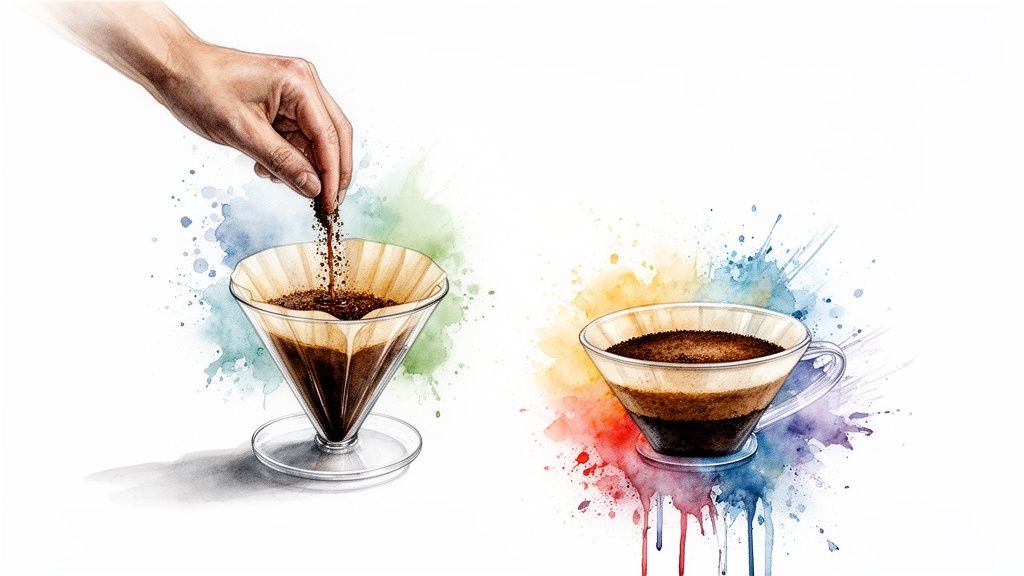
It’s easy to overlook, but the shape of your coffee filter is just as important as the paper it’s made from. This isn’t just about making it fit your brewer; the filter's geometry is a secret weapon that dictates how water moves through your coffee grounds, directly shaping the extraction and, ultimately, the final taste in your mug.
You’ll generally come across two main contenders: cone-shaped filters and their flat-bottomed basket cousins. Each creates a totally different brewing environment, capable of producing remarkably distinct results from the very same beans. Getting to grips with this difference is your next step to taking full control of your coffee.
The Cone-Shaped Filter
Cone-shaped filters, the stars of brewers like the Hario V60, are designed to taper down to a single point. This geometry forces all the water to funnel through one central exit, giving it a clear path and purpose.
This design naturally creates a deeper bed of coffee. As you pour, water has to travel further to get through, increasing the contact time and ensuring a more thorough, even saturation. It’s this extended journey that coaxes out the more complex, nuanced, and often brighter flavours hiding in the beans. Many coffee lovers swear by this method for its clarity and ability to spotlight the delicate acidity in speciality coffees.
If you’re keen to master this style, you can learn more about brewing with a Hario V-60 pour-over.
The shape of your filter paper is like the conductor of an orchestra. It controls the tempo and flow of the water, ensuring every section of the coffee grounds contributes to the final symphony of flavour.
The focused flow of a cone does ask for a bit more from you. You’ll need a steady, controlled pour to get all the grounds evenly wet. But the payoff is a beautifully vibrant and articulate cup of coffee.
The Flat-Bottomed Basket Filter
On the other hand, the flat-bottomed basket filter is the workhorse you’ll find in most automatic drip machines and brewers like the Kalita Wave. Its shape is more like a shallow, wide basin. Here, the water spreads out across a larger, flatter surface before draining through several small holes.
Because the coffee bed is wider, this style can be much more forgiving. You don’t need the same pinpoint accuracy with your pour, which makes it a fantastic choice for consistency, especially when you’re brewing a bigger batch.
The downside? That shallow bed can sometimes lead to uneven extraction if the water isn’t perfectly distributed. Water can find quick escape routes, or "channels," through the grounds, leaving some parts under-extracted while over-extracting others. This can produce a brew that’s less complex—often with a heavier body but less defined flavour notes compared to its cone-brewed counterpart. It’s the classic trade-off between forgiveness and flavour clarity.
Paper Thickness: The Gatekeeper of Taste and Texture
Beyond the material and shape of your filter lies a more subtle, yet incredibly powerful, factor: its thickness. This single characteristic acts as the final gatekeeper, deciding exactly which oils and microscopic coffee particles—what we call 'fines'—make it into your cup.
Think of it like a sieve. The tightness of the paper's weave dictates the final texture and clarity of your coffee. It's this property that allows you to fine-tune your brew with remarkable precision, tailoring the mouthfeel to exactly what you love.
A thicker, more tightly woven paper, like the kind made for a Chemex, is a very fine sieve indeed. It’s far more restrictive, trapping almost all the oils and sediment.
The result is a brew of exceptional clarity—bright, clean, and often described as almost tea-like. This style of filter lets the delicate, nuanced flavours of a single-origin coffee stand out without the weight of a heavy body.
This meticulous filtration really highlights acidity and floral notes, making it perfect for anyone who savours a light, articulate cup.
Thinner Paper for a Bolder Brew
On the other hand, a thinner and more porous coffee filter paper tells a completely different story. It behaves more like a coarse sieve, allowing a greater amount of oils and fine particles to pass through into your final brew.
This creates a coffee with a noticeably heavier body, a richer texture, and a more robust, lingering mouthfeel. It’s a fantastic choice for roasts where you want to emphasise depth, sweetness, and that classic, full-bodied coffee experience. The extra oils can round out any sharp edges and really boost those chocolatey or nutty notes.
Understanding this relationship between paper thickness and texture is crucial. It’s directly linked to another key variable in brewing: grind size. Thicker filters generally need a slightly coarser grind to stop the brew from stalling, while thinner filters work well with finer settings. To master this balance, you can explore our detailed coffee grind size guide and learn how to pair them perfectly. By controlling both the filter and the grind, you gain complete command over your coffee's final character.
Choosing the Right Filter for Your Coffee
We’ve covered the fundamentals—the material, shape, and thickness of coffee filters. Now it's time for the fun part: putting that knowledge into practice and matching the right filter to your coffee beans. This is where you can truly dial in your daily brew, turning a good cup into an exceptional one.
Every coffee has its own unique character, a story shaped by its origin and roast. The filter you choose can either let that story sing or muffle its voice. A thoughtful pairing isn't just a technical step; it's about making sure you taste the coffee exactly as the roaster intended.
Matching Filters to Roast Profiles
Take a light-roasted, floral coffee like an Ethiopian Yirgacheffe. The goal here is to preserve its delicate acidity and clean, bright finish. For a coffee like this, a bleached V60-style paper is a fantastic choice. Its neutral flavour and cone shape encourage a clean, even extraction that allows those subtle, tea-like notes to shine through without anything getting in the way.
Now, think about a rich, chocolatey dark roast. It tells a completely different story. With these beans, you might want a filter that allows more of the natural oils to pass into the cup, like a slightly more porous basket-style paper or even a metal filter. This choice enhances the coffee's full body and creamy texture, creating a deeply satisfying, robust brew.
To make things even simpler, this decision tree can help guide you based on your preferred coffee texture and mouthfeel.
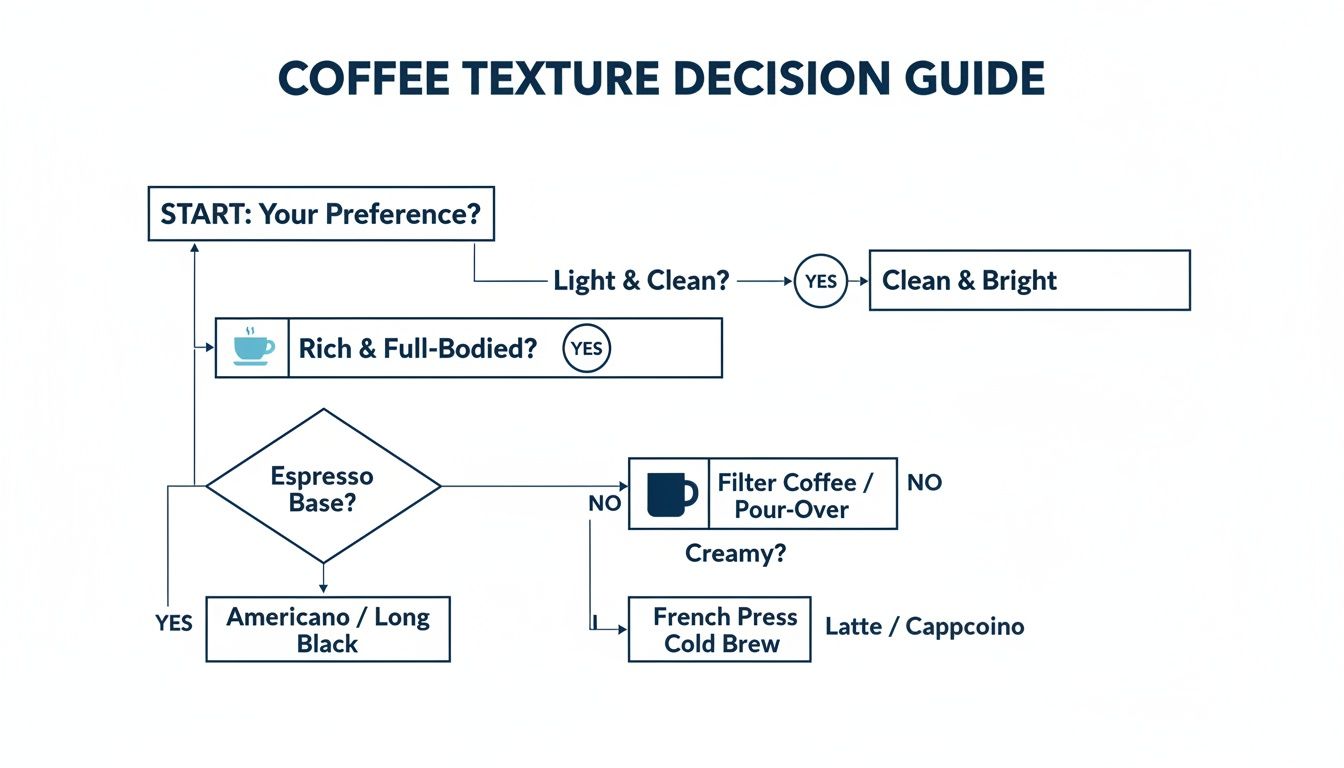
As the flowchart shows, whether you're chasing a "Clean & Bright" experience or something more "Rich & Full" should directly influence your filter choice to achieve that perfect texture in the cup.
Filter Pairing Guide for Seven Sisters Coffee Roasts
To help you get started right away, we’ve put together a simple guide for pairing filters with some of our most popular Seven Sisters Coffee Co roasts. Think of this as a launchpad for your own brewing experiments, designed to help you unlock the full potential of our coffees.
| Seven Sisters Roast Profile | Recommended Filter Type | Reasoning |
|---|---|---|
| Light & Floral (e.g., Ethiopian Yirgacheffe) | Bleached Cone Paper (Hario V60) | Preserves delicate acidity and ensures a clean, bright finish, letting floral notes dominate. |
| Medium & Balanced (e.g., Colombian Supremo) | Flat-Bottomed Paper (Kalita Wave) | Offers a forgiving brew, balancing sweetness and body for a consistently smooth and rounded cup. |
| Dark & Rich (e.g., Sumatran Mandheling) | Thicker Paper (Chemex) or Metal Filter | Traps bitterness while allowing for a full body (Chemex), or maximises oils for a creamy texture (metal). |
By consciously selecting your filter, you’re no longer just a spectator in the brewing process—you become an active participant, fine-tuning the final cup to highlight the specific qualities you love most.
This hands-on approach builds your skills and confidence as a home brewer, empowering you to experiment and discover what you enjoy. If you're looking for the perfect paper to start with for your pour-over, we highly recommend giving our Hario V60 Filter Papers Size 02 a try to experience the incredible clarity they can bring to your brew.
Sustainable Brewing: Your Guide to Filter Disposal
For anyone who loves coffee but is also conscious of their environmental footprint, what happens after the brew is just as important as the coffee itself. The good news? Making a sustainable choice is surprisingly easy.
Whether you prefer unbleached filters or modern, oxygen-bleached coffee filter paper, both are fully compostable. This means your used paper filter and the coffee grounds nestled inside don’t have to end up in landfill. They can be transformed into a brilliant resource for your garden.
Just toss the whole lot—filter and all—into your home compost bin. The paper breaks down right alongside the grounds, adding vital nitrogen and improving the soil structure. If you're keen to learn more, have a look at our detailed guide on composting coffee grounds.
Exploring Reusable Alternatives
While paper filters are a fantastic compostable option, some coffee lovers go a step further and opt for reusable filters to cut out waste completely. These generally fall into two categories: cloth and metal.
- Cloth Filters: These can brew a cup with a rich, velvety body, much like a French press, because they let more of the coffee's natural oils pass through. The trade-off is that they need a thorough clean and dry after every single use to stop mould from growing or old flavours from lingering.
- Metal Filters: Usually made from stainless steel, these are the most durable choice. They allow even more oils and fine coffee particles into the cup, creating a full-bodied and sometimes slightly silty brew. They’re simple to rinse out but can get clogged up over time if not maintained.
Deciding between disposable and reusable filters really comes down to what you value most. It’s a classic trade-off: the convenience and crisp flavour of paper versus the long-term waste reduction of metal or cloth, which ask for a bit more hands-on care.
At the end of the day, the right choice is the one that fits your lifestyle and your taste in coffee. For some handy general advice on improving your household’s green efforts, you can find some great tips for recycling more effectively.
Ultimately, whether you choose compostable paper or a reusable filter, you’re taking a positive step towards a more sustainable coffee ritual.
Your Coffee Filter Paper Questions Answered
We’ve dug into the materials, shapes, and science behind the humble coffee filter. To wrap things up, let’s tackle some of the most common questions we hear from home brewers. Here are the clear, straightforward answers you need to perfect your daily ritual.
Does the Brand of Coffee Filter Paper Really Matter?
Absolutely. It’s one of those small details that makes a surprising difference. Different brands use their own unique paper thicknesses, material blends, and manufacturing processes, all of which directly impact your brew time and flavour.
A high-quality paper from a trusted brand will give you consistency and a clean, neutral taste profile, letting your coffee’s character shine through. Cheaper papers, on the other hand, can sometimes add a noticeable papery flavour or have inconsistent flow rates. That inconsistency is what leads to an unbalanced brew, where one cup is fantastic and the next is just… off. We always say it's worth investing in good filters to match your good beans.
How Should I Store My Coffee Filter Papers?
To keep them fresh and stop them from absorbing unwanted odours, store your filter papers in a cool, dry, and dark place. An airtight container is ideal, but even their original packaging, closed up tight, works perfectly well.
The main thing is to keep them well away from anything with a strong smell, like spices, onions, or cleaning supplies. This simple step ensures they stay neutral and don’t introduce any strange, off-putting flavours into your carefully brewed coffee.
Why Do I Need to Rinse My Paper Filter Before Brewing?
Rinsing your paper filter with hot water before adding the coffee grounds is a game-changer. It serves two key purposes that will dramatically improve your final cup.
- It removes any paper taste. The rinse washes away loose paper fibres and any residue left over from the manufacturing process. This is particularly important for unbleached filters, which can sometimes have a faint woody character.
- It preheats your equipment. This simple step warms up your brewer, whether it’s a V60 or a Chemex, as well as your mug or server below. Keeping a stable temperature throughout the brewing process is vital for a consistent, even extraction.
Rinsing is the easiest step you can add to your routine for the biggest impact on quality. It’s a non-negotiable for achieving a clean, professional-tasting cup of coffee at home, every single time.
At Seven Sisters Coffee Co, we believe that understanding every detail helps you create the perfect brew. Explore our full range of speciality coffees and high-quality accessories to elevate your home coffee experience. Find your next favourite roast at https://sevensisterscoffee.co.uk.