Coffee bean storage container: Keep Fresh Beans with Smart Canister Picks

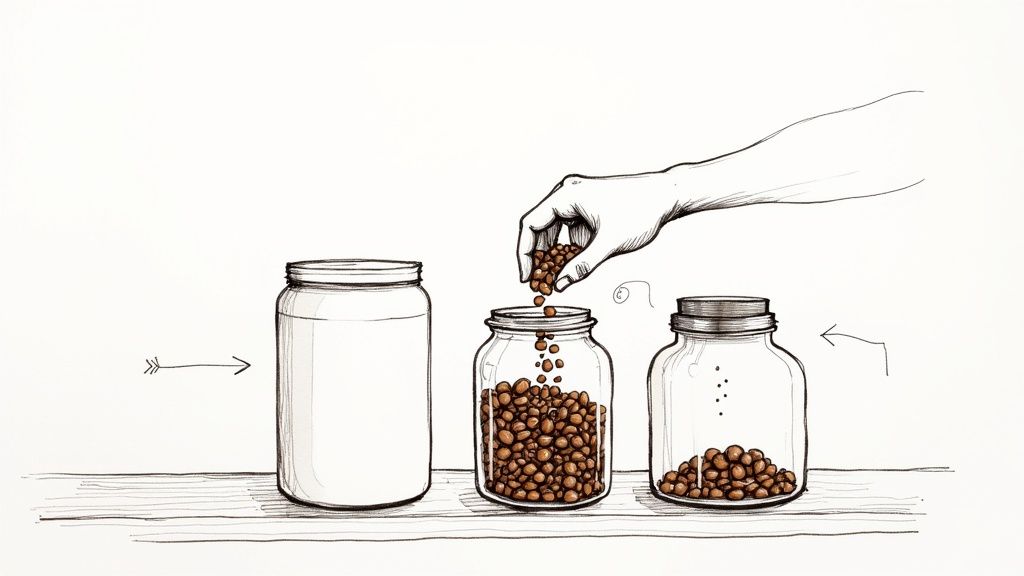
A quality coffee bean storage container is the single most important tool for protecting the flavour of your coffee once the roaster has done their part. Think of it as a personal vault, shielding your precious beans from the elements that begin to dull their taste and aroma the moment you snip open a new bag. It’s the final, crucial step in the journey from farm to cup.
Your Guide To Preserving Peak Coffee Flavour
You’ve carefully picked out a bag of beautifully roasted beans from Seven Sisters Coffee, already imagining that perfect first brew. But the real secret to a consistently brilliant cup isn’t just about the bean or your brewing gadgetry—it’s about what happens in between. Proper storage is the unsung hero of your daily coffee ritual.
This guide will show you how to lock in those delicate, complex notes that make speciality coffee worth savouring. By getting to know the common enemies of freshness, you can protect your investment, cut down on waste, and make sure every single cup you brew is a true reflection of its artisanal origins.
The Real Cost of Poor Storage
Bad storage doesn't just lead to a disappointing morning brew; it contributes to a staggering amount of waste. Statistics from the British Coffee Association reveal that UK households waste up to 20% of their coffee beans simply due to improper storage. That’s over 7 million kilograms of coffee lost to staleness every year.
This problem gets even worse in humid coastal areas like our home in East Sussex, where the damp air speeds up the staling process. To truly keep your coffee at its best, it's vital to think about understanding product shelf life. Just like any fresh food, coffee has a limited window where it tastes absolutely incredible.
A dedicated coffee bean storage container is your first line of defence, working to extend this window and lock in the vibrant flavours you paid for. It’s an essential piece of equipment for anyone who values a great cup of coffee.
Our own guide on https://sevensisterscoffee.co.uk/how-to-store-coffee-beans/ dives even deeper into the practical tips you can use right away. By the end of this article, you’ll have all the knowledge you need to pick the perfect container and build a simple routine that guarantees freshness in every single brew.
Understanding The Four Foes Of Fresh Coffee
To really get why a quality coffee bean storage container is so important, we first need to meet the culprits trying to rob your coffee of its delicious flavour. Think of them as a rogues' gallery, a team of four villains working around the clock to turn your vibrant, aromatic beans into a dull, lifeless shadow of their former selves.
These four foes are Oxygen, Light, Heat, and Moisture. Every single time you open a bag of coffee, you’re basically inviting them in, and the clock on peak freshness starts ticking. Getting to grips with how each one operates is the first step towards defeating them and keeping every bean tasting its best.
Oxygen The Oxidiser
Oxygen is probably the most relentless enemy of fresh coffee. The moment roasted beans meet the air, a process called oxidation kicks off. It’s the very same chemical reaction that makes a sliced apple turn brown or an open bottle of wine lose its character after a day or two.
When it comes to coffee, oxidation attacks the delicate aromatic oils and soluble compounds that create its complex flavour and aroma. In just a matter of days, this constant exposure breaks down those compounds, leaving you with a flat, stale, and often rancid taste. Those lovely notes of chocolate, fruit, or caramel just disappear, replaced by a generic, one-dimensional bitterness.
Light The Flavour Thief
Just like a villain who works in the shadows, ultraviolet (UV) light quietly wreaks havoc on your coffee beans. I know so many people who love displaying their beans in a beautiful glass jar right on the kitchen counter, but honestly, it's one of the fastest ways to kill their quality.
UV rays act as a catalyst, speeding up the breakdown of the fragile oils and aromatic molecules inside the bean. Even the indirect sunlight filtering through your window has enough UV radiation to start this damaging process.
The impact is huge: long-term exposure to light can make coffee taste papery or metallic, stripping away all the nuanced flavours our roasters work so hard to develop. This is exactly why an opaque container will always be better than a clear one for storage.
Heat The Accelerator
Heat is the accomplice that makes every other foe far more effective. It’s an accelerator, speeding up all the chemical reactions that cause coffee to go stale. Storing your beans near any heat source—like next to the oven, in a sunny spot, or even on top of the fridge—is a recipe for rapid flavour loss.
Higher temperatures cause the volatile aromatic compounds in the coffee to evaporate much faster. These are the very compounds you smell when you first open a fresh bag; once they're gone, the flavour is gone with them. To get a better sense of how temperature changes the bean, have a look at our guide on how to roast coffee beans, where managing heat is everything.
Moisture The Mould-Maker
Finally, we have moisture. Coffee beans are porous and act like tiny sponges, eagerly soaking up any moisture from the air around them. This is precisely why storing them in the fridge is such a terrible idea; the humid environment creates condensation that is incredibly damaging.
Moisture doesn’t just dilute the precious oils, leading to a weak and tasteless brew. It also creates the perfect breeding ground for mould and bacteria. Even a tiny amount of moisture can ruin an entire batch of coffee, making it completely undrinkable. Keeping your beans dry isn't just a suggestion—it's non-negotiable for preserving both flavour and safety.
How To Choose The Right Coffee Canister
Now that we know what makes coffee go stale, it’s time to choose your champion. Picking the right coffee bean storage container is less about kitchen aesthetics and more about science. The best canisters are like a fortress for your beans, actively fighting back against oxygen, light, heat, and moisture.
This choice really matters. Imagine this: a study involving 1,500 households found that beans left in their original bags lose around 50% of their aromatic compounds within just 72 hours. That’s a massive drop in flavour. In contrast, beans kept in proper airtight ceramic or steel containers with one-way valves held onto 92% of those compounds for a full 30 days, leading to a 35% drop in complaints about staleness. It’s a game-changer.
Material Matters Most
The material your container is made from is your first line of defence. That clear glass jar might look lovely on the counter, but it’s essentially leaving your beans exposed to the flavour-stealing effects of UV light.
Here’s a quick rundown of the most common materials and how they stack up:
- Stainless Steel: This is the gold standard. It’s completely opaque, blocking out all light, and it’s non-reactive, meaning it won’t absorb or pass on any unwanted flavours. You can find excellent stainless steel coffee canisters at ADS Coffee Supplies.
- Ceramic: Another excellent choice, ceramic is opaque and offers fantastic protection from light and heat. Just make sure it comes with a high-quality, airtight seal.
- Glass: Only ever use glass if it's opaque or has a UV-protective coating. Standard clear glass gives your beans zero protection from light, making it a poor choice for anything other than short-term display.
This diagram breaks down the main threats your container needs to defeat.

As you can see, every single one of these four foes—oxygen, light, heat, and moisture—has to be managed to keep your coffee tasting its best.
Understanding Seals and Valves
Beyond the material, the way a container seals is crucial. This is where you’ll hear terms like ‘airtight’, ‘vacuum-sealed’, and ‘one-way valve’.
An airtight seal is the absolute minimum. It stops new oxygen from getting into the container once it's closed. Simple enough. But it doesn’t do anything about the air that was already trapped inside with the beans when you sealed it.
This is where the more advanced canisters really shine. A vacuum canister lets you physically pump the air out. By twisting the lid or using a plunger, you remove the oxygen, creating a near-vacuum that dramatically slows down the oxidation process. The Fellow Atmos Vacuum Canister, available from ADS Coffee Supplies, is a fantastic example of this technology.
The One-Way CO2 Valve
A one-way valve is a vital feature for freshly roasted beans. In the first few days after roasting, beans release a lot of carbon dioxide in a process called de-gassing. A one-way valve lets this CO2 escape without allowing any damaging oxygen back in. It’s a clever little bit of engineering that makes a huge difference.
Coffee Storage Container Comparison
To help you decide, here’s a quick comparison of the most common types of coffee containers and how they perform against the four enemies of freshness.
| Container Type | Protection vs Oxygen | Protection vs Light | Protection vs Moisture | Best For |
|---|---|---|---|---|
| Vacuum Canister | Excellent | Excellent | Excellent | The freshness perfectionist who wants maximum flavour preservation. |
| Opaque Airtight Tin | Good | Excellent | Good | Everyday storage; a solid, reliable choice for most coffee drinkers. |
| Clear Glass Jar | Poor to Good | Poor | Good | Displaying beans you plan to use within a day or two. Not for storage. |
| Original Coffee Bag | Poor | Good | Poor | Short-term (a few days at most) if it has a zip-lock and one-way valve. |
Ultimately, the best container is one that removes as many of the risks as possible, keeping your beans in peak condition for longer.
Making The Right Choice
Choosing the perfect container comes down to balancing these features with your daily coffee habits. For a broader look at what makes a good container in general, this guide on choosing the best container with a lid offers some great foundational tips that also apply here.
At the end of the day, investing in a high-quality canister is one of the easiest and most effective ways to elevate your daily brew. We’ve handpicked a selection of proven coffee storage accessories on our website to help you find the perfect match for your kitchen.
A Daily Workflow For Perfect Coffee Storage
Owning a great coffee bean storage container is the first step, but how you use it day-to-day is what really protects those delicate flavours. Let's move from theory to practice with a simple, consistent routine. We’ll build an easy workflow that starts the moment you bring home a fresh bag of Seven Sisters coffee, making sure every bean is shielded from its four main enemies.
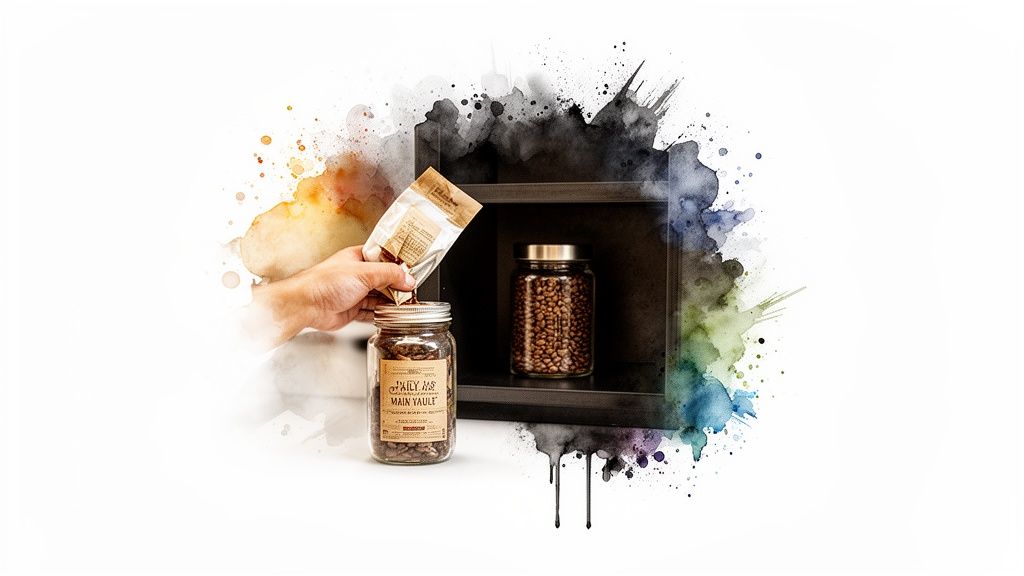
The goal here is simple: keep your coffee’s exposure to air at an absolute minimum. Every single time you open your main storage container, fresh oxygen rushes in, and the clock on staling starts ticking all over again. A clever way to get around this is what I call the ‘daily jar, main vault’ system.
This approach is wonderfully straightforward. You keep the bulk of your coffee in a large, primary container (the 'vault') and only decant a small amount—just enough for a couple of days—into a smaller canister on your worktop (the 'daily jar'). It means the main batch is only disturbed once a week or so, dramatically cutting down its contact with damaging air.
The Daily Jar And Main Vault Method
Setting this system up is easy and makes a genuine, noticeable difference to the quality of your brew. It's a small change in habit for a huge gain in flavour.
-
Select Your Vault: Choose a large, high-quality container for your main supply. When a new bag of Seven Sisters coffee arrives, empty the entire contents into this vault. Now, tuck it away in a cool, dark cupboard, well away from the oven or any sunny spots.
-
Choose Your Daily Jar: Grab a smaller canister for your daily beans. This is the one you’ll keep on your kitchen counter for easy access when you're ready to make a coffee.
-
Refill Weekly: Once a week, open your main vault and top up the smaller daily jar. This quick transfer is the only time your main stash of beans gets exposed to air, keeping them exceptionally fresh for longer.
This method ensures the beans you grind each morning are always at their peak, while the rest of the batch stays perfectly preserved. If you're looking to refine your entire process, our guide on how to make coffee with beans is a great next step.
Common Storage Mistakes To Avoid
Even with the best kit, a few common slip-ups can undo all your hard work. Storing beans in the freezer, for instance, is a popular but damaging myth. The cycle of freezing and thawing creates condensation, and moisture is one of coffee’s worst enemies, leading to a dull, lifeless taste.
Another classic mistake is keeping your coffee right next to the oven or hob. The constant spikes in heat accelerate the breakdown of the delicate oils, rapidly stripping the beans of their aromatic compounds and unique flavour profile. A stable, cool environment is always your best bet.
The material of your container also plays a massive role. A trial from the University of Sussex showed that beans stored in opaque, airtight containers retained 88% of their antioxidants, a stark contrast to just 62% in clear jars. In a place like East Sussex with its variable climate, UV light alone can degrade crucial flavour acids by 25% in just one week if the beans are left in an unprotected glass jar.
Maximising The Flavour Of Seven Sisters Coffee
When you choose Seven Sisters, you're starting with coffee that already has a head start. Our unique oxygen-free roasting process creates a fresher, more stable bean right out of the gate. Using the right coffee bean storage container at home is how you safeguard that initial quality, ensuring the last cup from the bag is just as vibrant as the first.
We see exceptional coffee as a journey, not just a product. While our bags are designed to protect the beans on their way to you, moving them into a dedicated container is the crucial next step. This simple act is the final handover from our roastery to your kitchen, locking in the complex flavour notes we work so hard to create.
From Our Roastery To Your Cup
To get the absolute best from our coffee, we suggest enjoying any of our specialty coffee beans within four weeks of the roast date printed on the bag. This is the peak flavour window, where the bean’s unique character—whether it's fruity, floral, or rich with chocolate—is at its most expressive.
A high-quality container is your best ally in hitting that target. By shielding the beans from their enemies, oxygen and light, you dramatically slow the staling process. It gives you more time to appreciate the coffee at its absolute best. Think of it as hitting the pause button on flavour degradation.
Proper storage isn't just about taste; it’s about honouring the entire process. From the farmer's hard work to our precise roasting, every step is focused on quality. Your storage routine is the final, essential act of care that allows the coffee to fulfil its potential.
A Commitment To Sustainability
Our passion for quality is matched by our commitment to sustainability. When you use a proper coffee storage container, you're also actively reducing waste. Fresher beans mean fewer stale batches get tossed out, which is not only kinder to your wallet but also much better for the planet.
This mindful approach to coffee fits perfectly with our values and our support for World Coffee Research. Every bag of coffee you preserve and enjoy helps us contribute to a more sustainable future for the industry. So, when you invest in a good container, you're not just buying another kitchen gadget—you're joining us in a commitment to quality, sustainability, and truly exceptional coffee.
Your Coffee Storage Questions, Answered
We’ve covered the science and the daily routines, but a few common questions always pop up when it comes to coffee bean storage containers. Let's tackle those lingering queries head-on. Getting these details right is what separates a decent cup of coffee from a truly exceptional one.
Should I Store My Coffee Beans In The Freezer Or Fridge?
This is probably the most common question we get, and the answer is a firm no. We strongly advise against storing your coffee in either the fridge or the freezer. The fridge is a humid environment packed with other food odours, and since coffee beans are porous, they’ll soak up both moisture and smells like a sponge. Nobody wants a garlic-infused flat white.
The freezer seems like a safer bet, but the real damage happens during the freeze-thaw cycle. Every time you take the beans out, condensation forms, introducing moisture directly onto the beans. This is one of coffee's biggest enemies and it will rapidly degrade the quality. For the best flavour, stick to an airtight container in a cool, dark place like a pantry.
Is It Okay To Keep Coffee Beans In Their Original Bag?
Our bags are designed to get the beans to you safely and can work as a short-term home for a week or so, especially since they have a one-way valve. But once opened, they're no longer perfectly airtight. Every time you open it and reach in, you're letting in a fresh wave of damaging oxygen.
For lasting freshness, we always recommend moving your beans to a dedicated airtight or vacuum-sealed canister. This becomes especially important if it takes you more than a week to get through a bag.
A purpose-built container provides a far more robust defence against the elements. If you're looking for an upgrade, you can find excellent options like the Airscape Classic Coffee Canister at ADS Coffee Supplies.
What Size Coffee Bean Storage Container Should I Buy?
The perfect size really depends on how quickly you drink your coffee. As a rule of thumb, aim for a container that holds about one to two weeks' worth of beans for you.
Why? It’s all about minimising headspace—that pocket of air trapped between the beans and the lid. If you buy a massive container but only ever keep it half-full, you're just leaving your precious beans to hang out with a whole lot of oxygen. A smaller canister that you refill more often is a much smarter strategy for keeping things fresh.
How Often Should I Clean My Storage Container?
It’s crucial to give your container a good clean between each new batch of beans. Over time, coffee beans release natural oils that build up on the surfaces of your canister. If left unchecked, these oils can go rancid and transfer a stale, unpleasant taste to your brand-new, fresh beans.
We recommend washing your container with warm, soapy water and making sure it is completely dry before you even think about refilling it. If you have a specialised container like a vacuum canister, always double-check the manufacturer’s instructions to avoid damaging any seals or valves.
At Seven Sisters Coffee Co, we believe that exceptional coffee deserves exceptional care, from our roastery all the way to your cup. By following these simple storage principles, you can make sure every single brew is as fresh and flavourful as we intended it to be.