A Home Roaster’s Guide to Coffee Bean Green

Before the rich aroma and complex flavours of your morning brew can even begin, every coffee starts its life as a humble coffee bean green. This is the raw, unroasted seed tucked away inside the coffee cherry, and it holds all the potential for a masterpiece. It's coffee in its purest, most natural state before heat works its magic to create the familiar brown bean we all know.
The Secret Inside Every Great Cup of Coffee
Think of a green coffee bean like a chef’s raw ingredients—all the flavour is there, locked inside, just waiting for the right technique to bring it to life. In its raw form, the bean is dense, surprisingly hard, and has a distinct grassy smell. You wouldn't want to grind and brew it directly; the taste would be vegetal and astringent, a world away from the comforting, aromatic drink we love.
This unassuming little seed is the true foundation of quality coffee. The journey from a vibrant green bean to a perfectly roasted one is a delicate art, a process that unlocks hundreds of aromatic compounds and complex flavours. Every single characteristic of the final cup—its acidity, its body, its unique tasting notes—originates from the potential stored within this raw seed. It’s exactly why sourcing the finest green beans is the most important job for any serious roaster.
From Cherry to Unroasted Bean
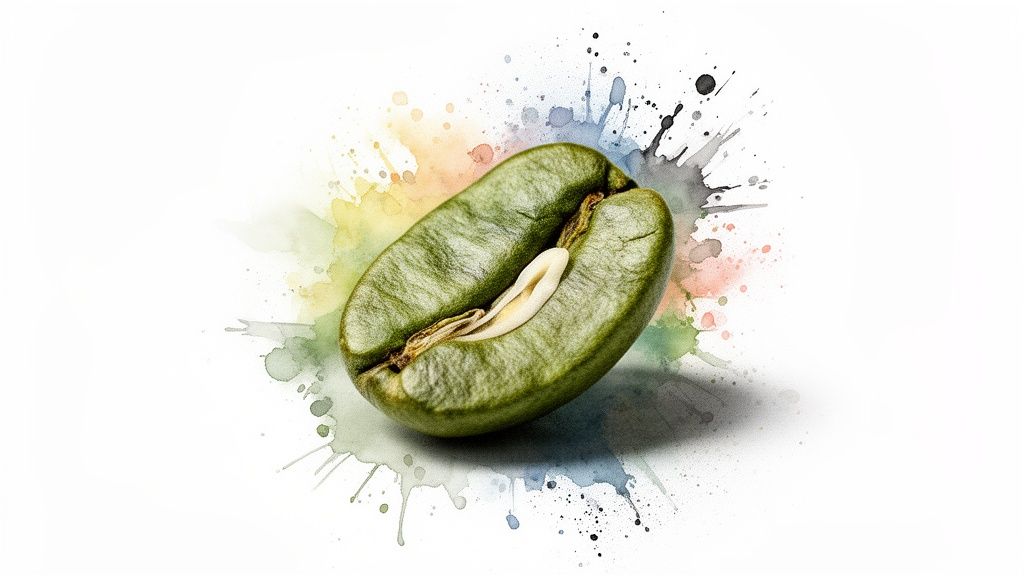
To really appreciate its importance, it helps to know where green coffee comes from. The process starts with the coffee cherry, a small, bright red fruit. Inside each cherry, you’ll typically find two seeds, which are our coffee beans. To get to them, the outer fruit pulp has to be removed. This is done through different processing methods—like washed, natural, or honey processing—and each one leaves its own unique fingerprint on the final flavour profile of the bean.
After processing, the beans are carefully dried to a specific moisture content, usually around 11%. At this point, they are officially ‘green coffee’—stable, ready for storage, and prepared for their ultimate transformation in the roaster.
The Foundation of Quality
You can't overstate this: the quality of the green coffee bean dictates the absolute ceiling for the final roasted product. No amount of roasting wizardry can fix a poor-quality green bean. The key factors that determine its quality include:
- Origin: The country, region, and even the specific farm where the coffee is grown create a unique flavour profile, a concept often called terroir.
- Variety: Just like with wine grapes, there are many different varieties of coffee plants (like Arabica and Robusta) and sub-varieties (like Gesha or Typica), each with its own distinct taste.
- Processing: How the cherry is removed and the bean is dried has a massive impact on the coffee's sweetness, acidity, and body.
This intense focus on quality right from the source is the cornerstone of what we mean when we talk about specialty coffee. It’s a commitment to excellence from the very beginning, ensuring every bean has the potential to become something extraordinary.
At Seven Sisters Coffee Co, our passion for exceptional coffee starts right here. We meticulously source high-quality green beans because we know this is the first and most critical step in delivering an outstanding cup to our customers across the UK. This foundational knowledge is essential for anyone who wants to truly understand their coffee. If you're curious to learn more, you can delve deeper into what is specialty coffee on our blog.
From Raw Seed to Aromatic Brew
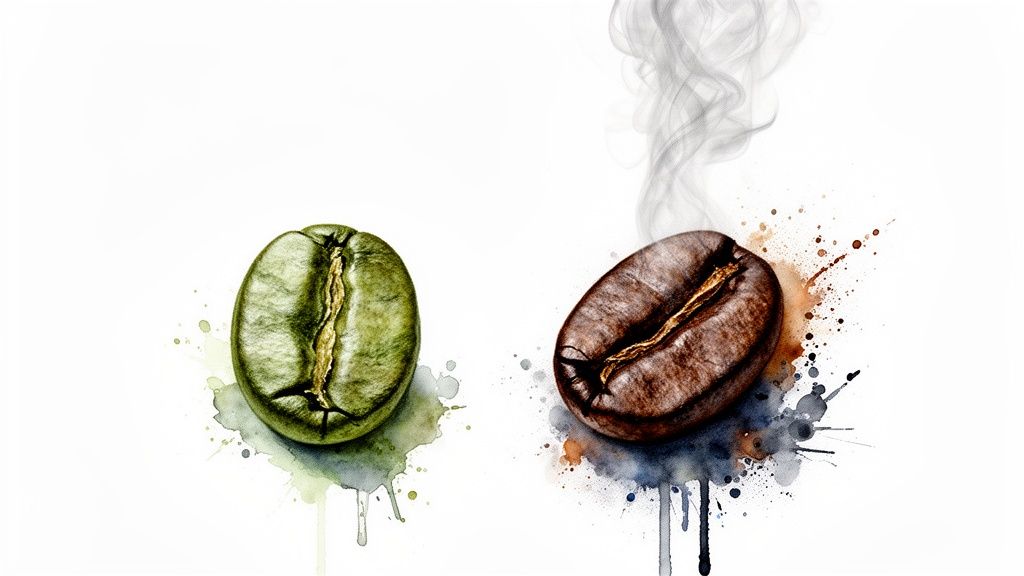
The journey from a raw green coffee bean to the rich, brown treasure ready for grinding is nothing short of alchemy. It’s so much more than a simple colour change; it's a profound metamorphosis. Think of the difference between raw dough and a perfectly baked loaf of bread—one is plain and undeveloped, while the other is a symphony of complex flavours and irresistible aromas.
This transformation happens inside the roaster, where controlled heat sets off a cascade of intricate chemical reactions. The dense, hard green bean, which has a grassy, hay-like scent and is full of moisture, first sheds that water content. This initial drying phase is crucial, as it sets the stage for the real magic to begin.
As the temperature climbs, two key processes—the Maillard reaction and caramelisation—get to work, creating the hundreds of aromatic compounds that give coffee its signature character.
The Science of Flavour Creation
The Maillard reaction is what happens when amino acids and sugars react under heat, giving browned food its distinct flavour. It’s the very same process that creates the golden-brown crust on bread or gives a steak its perfect sear. In coffee, this reaction is responsible for developing those comforting nutty, toasty, and chocolatey notes.
Soon after, caramelisation kicks in at higher temperatures. This is the breakdown of sugar molecules, which creates the sweet, slightly bitter, and buttery notes we all recognise as caramel. It also deepens the bean’s colour and adds another layer of complexity to the final taste.
The art of roasting lies in skilfully navigating these reactions. A roaster must control the temperature and timing with absolute precision to coax out the desired flavours locked within each green bean, all while avoiding any burnt or ashy tastes.
This is exactly why starting with a high-quality green coffee bean is non-negotiable. A roaster can only unlock the potential that's already there; they can't create brilliant flavours from a mediocre bean. A superb green bean from a trusted source provides the rich chemical foundation needed for these reactions to produce something truly special.
Physical and Chemical Transformation
Beyond just flavour, the bean undergoes dramatic physical changes. As moisture evaporates and organic compounds transform, the bean loses between 15-20% of its weight but nearly doubles in size. It becomes lighter, more porous, and brittle—which is why roasted beans are so much easier to grind than their rock-hard green counterparts.
Chemically, the changes are even more significant. Green coffee beans are packed with chlorogenic acid, a potent antioxidant that gives the raw bean its characteristic astringency. During roasting, much of this acid breaks down, giving way to the rich aromatic compounds and different types of antioxidants that we find in our brewed coffee.
To make it simple, let's break down the key differences in a quick comparison.
Green vs Roasted Coffee Beans at a Glance
This table offers a quick look at the core differences separating raw green coffee beans from their roasted counterparts.
| Characteristic | Green Coffee Bean | Roasted Coffee Bean |
|---|---|---|
| Colour | Pale to deep green | Light to dark brown |
| Aroma | Grassy, vegetal, or hay-like | Toasty, sweet, fruity, floral |
| Density | Very high and hard | Lower and more porous |
| Moisture | High (around 11%) | Low (around 1-2%) |
| Flavour Profile | Astringent, sour, undeveloped | Complex, sweet, acidic, bitter |
| Key Compound | High in Chlorogenic Acid | Rich in aromatic compounds |
In the end, this incredible journey from a humble seed to an aromatic gem highlights just how crucial the starting material is. Every sip of a truly brilliant coffee is a testament to the quality of the green bean it came from.
For home roasters eager to experiment, you can find a curated selection of exceptional green beans at ADS Coffee Supplies, a perfect starting point for your own flavour adventures.
How to Select High-Quality Green Coffee Beans
Choosing the right green coffee is hands down the most important step in your home roasting adventure. Think of it like a chef picking out produce at the market; the quality of your raw ingredients sets the ceiling for what your final dish can become. It might seem a bit daunting at first, but making a great choice really just boils down to a few key factors that shape the flavour in your cup.
Your first consideration should always be the bean's origin. Just like the terroir of a vineyard gives a wine its unique character, the specific region, altitude, and soil where coffee is grown will leave a distinct fingerprint on its flavour profile. This is exactly why a bean from Ethiopia tastes worlds apart from one grown in Peru.
At Seven Sisters, we're all about celebrating these differences. We focus our sourcing on finding beans that are a perfect expression of where they came from. Having a look through our single-origin coffee beans is a fantastic way to start exploring this incredible diversity of flavours. We make sure every batch you roast starts with exceptional potential.
Understanding Processing Methods
Right after origin, the next biggest influence on a bean's flavour is how it was processed. This is simply the technique used to get the coffee cherry's fruit off the seed—the bean—that’s tucked inside. Every method leaves its own signature on the green bean's character.
- Washed (Wet) Process: With this method, the fruit is completely washed away from the bean before it's laid out to dry. This produces a really clean, crisp flavour profile that lets the bean's natural acidity and delicate floral or citrus notes shine through. You'll find this a lot in places like Colombia and Kenya.
- Natural (Dry) Process: Here, the entire coffee cherry is dried whole, which allows the sugars from the fruit to slowly soak into the bean. This results in coffees with a much heavier body, lower acidity, and really intense, fruity flavours like berries or tropical fruit. It's an ancient method, very common in Ethiopia and parts of Brazil.
- Honey Process: This is a fantastic middle ground. The skin of the cherry is removed, but some of the sticky fruit pulp—the "honey"—is left on the bean while it dries. This can create a whole spectrum of flavours, from the clean sweetness of a "white honey" to the rich, syrupy complexity of a "black honey."
Choosing a processing method is a bit like picking a cooking style. The washed process is like steaming vegetables to keep their natural crispness, whereas the natural process is more like slow-roasting them with herbs to bring out deep, sweet flavours. Neither is better than the other—they just create wonderfully different results.
Physical Qualities to Look For
Beyond where it's from and how it's processed, you can tell a lot about a green coffee bean just by looking at it. These physical clues can reveal the quality and care that went into producing it.
First, check out the bean's size and density. As a general rule, beans grown at higher altitudes are denser, which often means more complex and concentrated flavours. Uniformity in size is another good sign, as it helps the beans roast much more evenly.
Next, have a look at the defect count. High-quality green coffee should have very few defects—things like broken, insect-damaged, or immature beans. An immature bean, often called a "quaker" after it's roasted, can add a nasty grassy or woody taste to your final brew. While a few minor defects are to be expected, a high number is a definite red flag.
The United Kingdom is Europe's eighth-largest importer of green coffee beans, bringing in around 148,000 tonnes each year. A huge 96% of these imports are sourced directly from producing countries, which gives UK home roasters incredible access to some truly high-quality, single-origin gems. You can explore a wide range of these at ADS Coffee Supplies.
Getting Started with Home Roasting
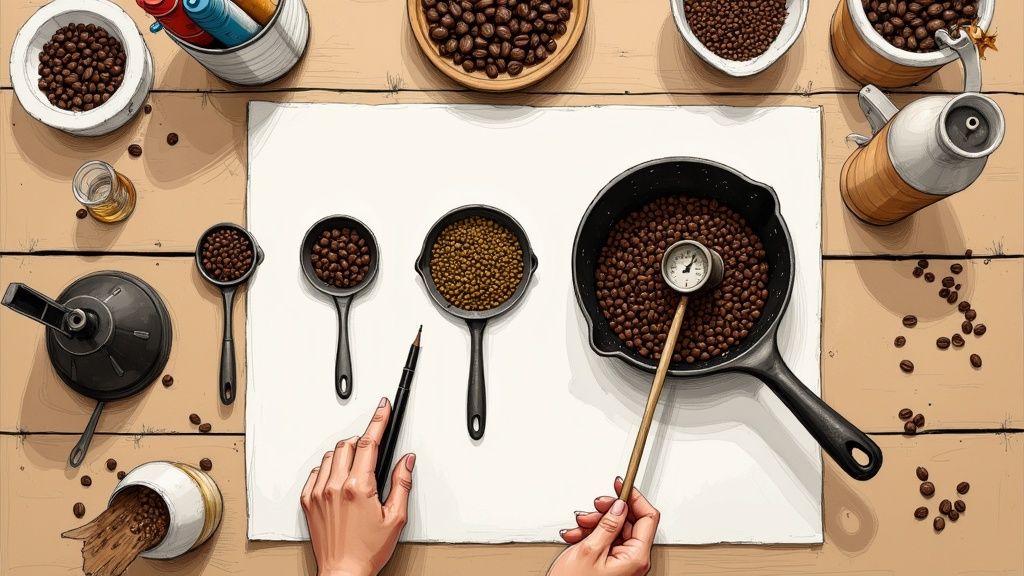
This is where the magic happens. Roasting your own green coffee beans at home pulls back the curtain on the whole process, putting you firmly in the driver's seat of the final flavour. You don’t need a massive, professional setup to get going either; simple tools like a frying pan or even your kitchen oven can work surprisingly well for your first few batches.
Of course, once you get the bug, you might start looking at dedicated home roasters. These machines give you far greater control over temperature and airflow, which is the key to getting consistent, repeatable results. When you're ready to take that next step, our guide on home coffee roasting equipment has some excellent advice on what to look for.
The fluctuating import prices of green coffee beans also mean that home roasting can be a pretty smart hobby for UK coffee lovers. It’s this cost-effectiveness that allows roasters like us here at Seven Sisters Coffee Co. to offer exceptional value, so you can experiment with different roast profiles without worrying about the cost.
The Key Stages of Roasting
No matter which method you use, the roasting process follows a predictable path. Learning to recognise the sensory cues—the sights, sounds, and smells—is what separates a good roast from a great one. Think of yourself as a conductor, guiding an orchestra of flavour where each stage brings a new instrument to the forefront.
The main stages you’ll get to know are:
- Drying: The beans begin shedding their moisture, turning from a muted green to a pale, yellowish colour. At this point, they'll give off a smell a bit like grass or hay.
- Yellowing/Browning: As the heat climbs, the Maillard reaction kicks in. The beans turn a light brown, almost like cinnamon, and start to smell like toast or even popcorn.
- First Crack: This is the big moment. The beans rapidly expand and you'll hear an audible crack or pop, very similar to popcorn. This sound signals the start of a "light roast."
- Development: The time after that first crack is where you really shape the final flavour. A short development time gives you a lighter, more acidic coffee. Let it go longer, and you'll build a darker, fuller-bodied brew.
Paying close attention during the first crack is paramount. The seconds following this stage are where the coffee’s character is truly defined. Pulling the roast too soon can result in an underdeveloped, sour taste, while waiting too long can quickly lead to a burnt, bitter flavour.
From Light to Dark: A Single Bean's Potential
One of the most thrilling parts of home roasting is discovering how one type of green bean can produce wildly different flavours. Just by tweaking the roast time, you can unlock a whole spectrum of tastes from the very same batch.
A light roast, stopped just as the first crack gets going, will hang onto the bean's unique origin characteristics. You'll taste bright, acidic notes, often with delicate floral or fruity hints. A medium roast brings out more sweetness and body as caramelisation takes over, introducing lovely nutty or chocolatey flavours. If you push on into a dark roast, you'll hear a "second crack," and the flavours will become bold, smoky, and rich, with the bean's origin notes making way for the character of the roast itself.
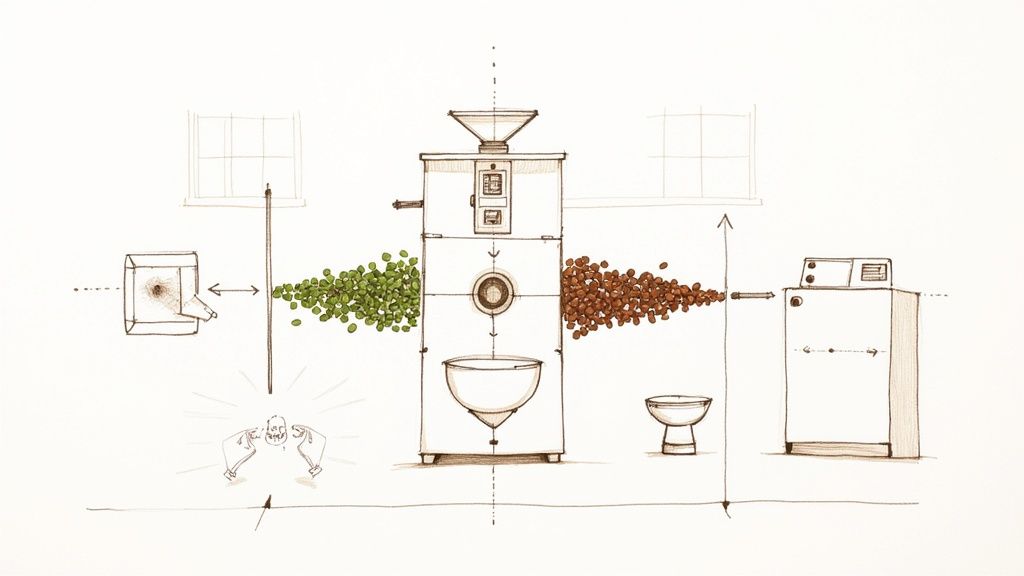
This diagram breaks down the key decision points when you're choosing a green bean for your roasting experiments.
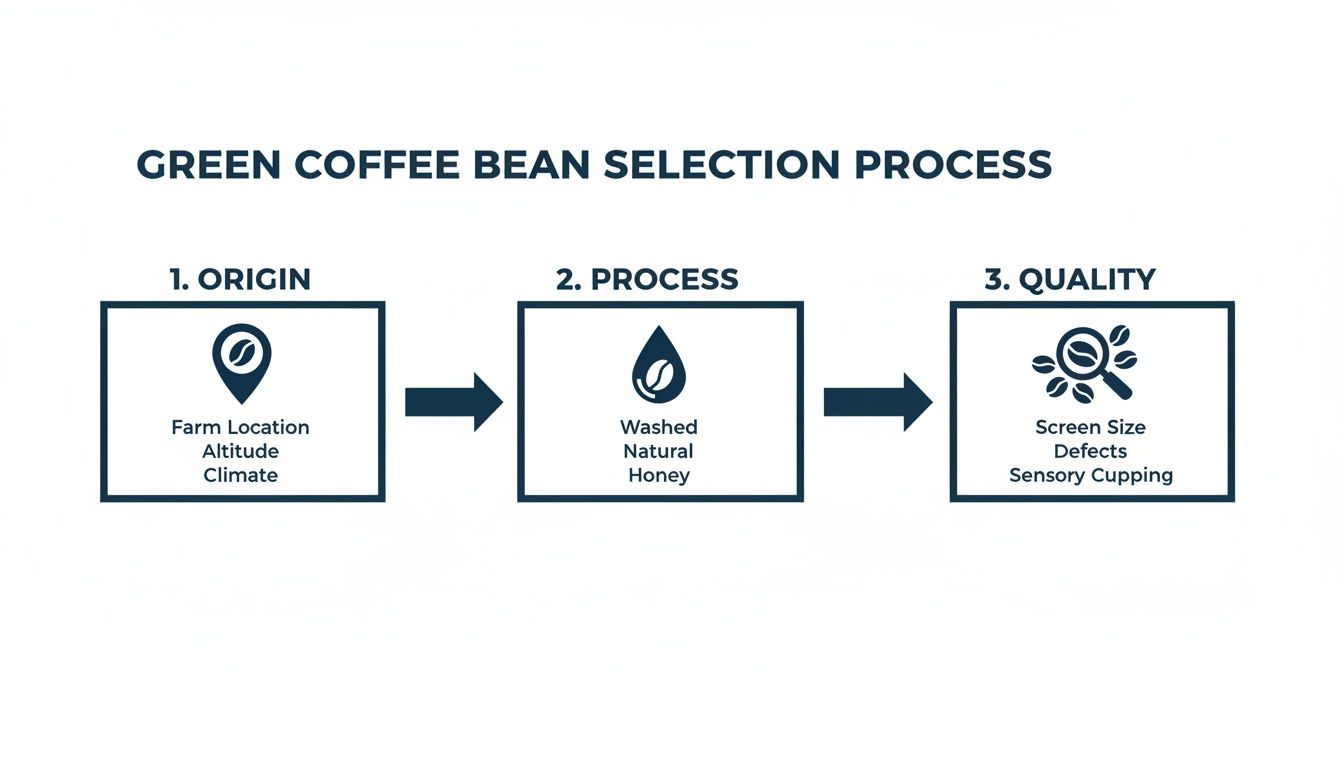
It shows how the bean's origin, how it was processed, and its quality all come together to define its potential—long before you even turn on the heat.
Essential Roasting Safety Tips
Safety has to be your number one priority when you're roasting coffee at home. The process creates smoke and chaff (the thin, papery skin that flakes off the beans), and if you don't manage it properly, it can become a fire hazard.
Always, always make sure you have excellent ventilation. Roasting outside is perfect, but if you have to be indoors, open the windows and get an extractor fan going. Never leave your roaster unattended, because the temperature can shoot up in seconds. It’s also a good idea to keep a fire extinguisher handy, just in case.
Once the roast is done, you need to cool the beans quickly to stop them from continuing to cook. A metal colander and a simple fan work wonders for this.
How to Properly Store Your Green Beans
So, you’ve carefully picked out the perfect green coffee beans. The final hurdle before you start roasting is making sure you protect that quality. Nailing your storage is absolutely crucial for preserving the delicate potential locked inside each bean, ensuring every single roast is as fantastic as the last.
Fortunately, green coffee beans are remarkably stable—far more so than their roasted cousins. Think of them as dormant seeds, patiently waiting for the right moment to awaken their flavour. They're not invincible, though, and have a few key enemies that can slowly chip away at their quality.
Your main goal is to shield them from moisture, strong odours, extreme temperatures, and pests. Get this right, and your investment in top-tier beans will pay delicious dividends for many months.
Creating the Ideal Environment
The golden rule for storing any coffee bean green is beautifully simple: keep it cool, dark, and dry. A pantry, a cupboard, or even a cool corner of your basement are all excellent choices. You're looking for a stable spot, well away from direct sunlight and any appliances that kick out heat, like an oven or a radiator.
Consistency is everything. Wild swings in temperature and humidity can cause the beans to sweat and reabsorb moisture, which is a fast track to musty or even mouldy flavours. Just aim for a room temperature that doesn’t fluctuate too much throughout the day.
Storing green beans correctly is a bit like cellaring a fine wine. You’re preserving its inherent character, making sure it reaches its absolute peak potential when you decide it's time to enjoy it. A little care goes a long, long way.
To learn more about how storage needs differ for various beans, you can check out our detailed guide on how to store coffee beans for a complete overview.
Choosing the Right Container
What you store your beans in is just as important as where you store them. Green coffee needs to breathe a little, so completely airtight containers aren't usually the best bet for long-term storage. The ideal materials are those that allow for slight air exchange while still protecting the beans from the outside world.
Here are the top options for home roasters:
- Jute or Burlap Sacks: These are the traditional bags used to ship green coffee across the globe. They're perfect for allowing airflow and preventing any moisture build-up.
- GrainPro Bags: These are high-tech plastic liners often slipped inside jute sacks. They create a hermetically sealed environment that defends against moisture and odours while still letting the beans degas slowly.
- Cotton or Canvas Bags: For smaller batches, a simple, clean cotton or canvas bag works wonderfully. It offers great breathability and solid protection.
With proper care, your green coffee beans can easily maintain their quality for up to a year, and sometimes even longer. This incredible shelf life is what makes buying in larger quantities from a supplier like ADS Coffee Supplies such a smart and cost-effective move for any dedicated home roaster.
The Health Benefits of Green Coffee Extract
Beyond the rich, aromatic brew we know and love, the humble coffee bean green holds another secret. Before it ever meets the heat of a roaster, it's the source of a popular health supplement: green coffee extract. This extract taps into the bean's raw chemical profile, offering a completely different set of benefits from your morning cup.
The process is quite simple. Unroasted beans are soaked in water, which pulls out their active compounds. This liquid is then concentrated and dried into a powder, preserving key ingredients that are normally destroyed by heat during roasting. The real star of the show here is chlorogenic acid, a potent antioxidant found in heaps in raw coffee.
The Power of Chlorogenic Acid
Roasting dramatically reduces the amount of chlorogenic acid in a coffee bean, which is exactly why green coffee extract is so unique. This one compound is the main reason behind the supplement's health claims, setting it worlds apart from traditionally brewed coffee.
While the science is still evolving, studies have started to unpack the effects of chlorogenic acid on our bodies. It’s thought to influence how we handle blood sugar and metabolism, which has made it a hot topic for health-conscious people.
The main potential benefits linked to green coffee extract are:
- Antioxidant Properties: Chlorogenic acids are powerful antioxidants that help your body fight the oxidative stress caused by free radicals.
- Weight Management Support: Some studies suggest the extract might help with weight management by affecting how the body absorbs and uses carbohydrates.
- Blood Sugar Regulation: There’s some emerging evidence that it could help maintain healthy blood sugar levels, but it should never be a substitute for proper medical advice or treatment.
Is Green Coffee Extract Right for You?
Green coffee extract is a fascinating way to access the natural properties of the coffee bean in its purest form. It's a great alternative for those who want the potential benefits of chlorogenic acid without the full caffeine kick of a roasted coffee, as the extract usually contains less.
It's crucial to remember that supplements aren't a magic fix. They're meant to support a balanced diet and a healthy lifestyle, not replace them. Always have a chat with a healthcare professional before adding any new supplement to your daily routine.
If it's the acidity in your daily brew that you're sensitive to, exploring different coffee options is also a great idea. For anyone looking for a gentler cup, our guide to the best low acid coffee brands is full of excellent recommendations for a smoother coffee experience.
Your Green Coffee Bean Questions Answered
So, you're intrigued by the idea of roasting your own coffee. Fantastic. It’s a rewarding journey, but it’s natural to have a few questions before you dive in. We’ve pulled together the most common queries to clear up any lingering doubts and help you get started with confidence.
Can I Grind and Brew Green Coffee Beans Without Roasting Them?
While you technically could, you really, really wouldn't want to. Unroasted green beans are incredibly dense—almost rock-hard—and would likely break a standard domestic grinder.
Even if you managed to grind them, the resulting drink would be grassy, sour, and intensely acidic. It would be completely missing the rich, complex aromas we all associate with coffee. Roasting is the magic step; it's a chemical transformation that unlocks hundreds of delicious flavour compounds, turning a raw seed into the beloved drink we know.
How Long Do Green Coffee Beans Last?
Here’s one of the best things about home roasting: green coffee beans have an impressive shelf life. When you store them correctly in a cool, dark, and dry place, they’ll easily maintain their quality for 6 to 12 months, sometimes even longer. This makes them a brilliant pantry staple for any coffee lover.
You'll know they're in good shape if they have a consistent green colour and a fresh, slightly grassy smell. If you spot any mould, notice a musty odour, or the beans look pale and faded, it's time to let them go.
The remarkable stability of green coffee is a huge advantage for hobbyists. It allows you to buy larger quantities, reducing costs and ensuring you always have a supply of your favourite beans ready for a fresh roast.
Is It Cheaper to Roast My Own Coffee?
Absolutely. In the long run, buying coffee bean green and roasting at home is significantly more cost-effective than buying pre-roasted beans. You’re essentially cutting out the costs of a commercial roaster's labour, packaging, and expertise.
There’s a small initial investment in equipment, of course, but for anyone who drinks coffee regularly, the savings add up surprisingly quickly. And beyond the financial perks, you get unbeatable freshness and complete creative freedom over the flavour of your final cup.
What Does Ethically Sourced Green Coffee Mean?
Ethical sourcing is a promise. It’s a commitment to ensuring that the farmers who grow our coffee receive fair prices for their hard work, allowing them to earn a sustainable livelihood and support their communities with safe working conditions. It's about building a coffee supply chain that’s fair and responsible, from the farm right through to your cup.
This principle is at the very heart of what we do. It’s why we take our sourcing so seriously and why we are proud to support the future of coffee.
At Seven Sisters Coffee Co, our commitment to ethical practices is more than just a statement. We demonstrate this by donating a percentage of every single order to World Coffee Research, an organisation dedicated to securing a sustainable and equitable future for coffee across the globe.
Ready to start your own roasting experiments? At ADS Coffee Supplies, you can find a fantastic selection of high-quality green coffee beans from around the world. Explore their range and discover the perfect beans to begin your journey at ADS Coffee Supplies Green Coffee Beans.