Bleached vs Unbleached Filter Papers A Brewer’s Guide
The choice between bleached vs unbleached filter papers really boils down to this: bleached (white) filters are all about a neutral taste profile, letting your coffee's unique flavours come through loud and clear. On the other hand, unbleached (brown) filters are less processed but can introduce a slight papery taste if you don't rinse them properly. It's a classic case of flavour purity versus a more natural, minimally touched product.
The Great Filter Debate: Bleached or Unbleached?
Standing in the coffee aisle, the choice between a stack of white filters and a stack of brown ones seems pretty minor. But believe it or not, this simple decision has a direct impact on the final taste, aroma, and clarity of your morning brew. It's a debate that splits even the most seasoned coffee lovers, with passionate arguments on both sides.
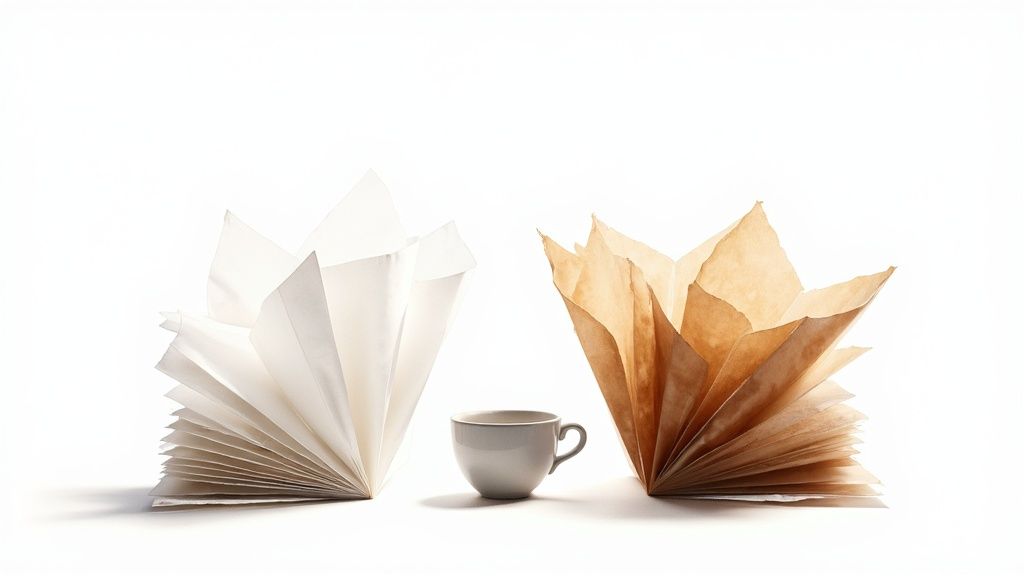
The real difference is rooted in how they’re made. All paper filters begin life as brown wood pulp. Unbleached filters, like these natural brown filters from ADS Coffee Supplies, keep their natural colour because they simply skip the whitening stage of production.
Bleached filters, however, go through an extra step to remove the wood lignins responsible for the brown colour. This is what gives them that clean, white appearance you see in products like these popular white filter papers. It's important to know that modern bleaching isn't what it used to be; today's methods are perfectly safe and rely on oxygen-based processes, a far cry from the harmful chlorine methods of the past.
A common myth is that one type is just flat-out "better." The truth is, the best choice is entirely personal. It hinges on what you want out of your brew, how sensitive your palate is, and what your priorities are.
To help you figure out which camp you're in, let's break down how they compare.
Bleached vs Unbleached Filters At a Glance
This quick table cuts straight to the chase, comparing the key differences between bleached and unbleached filter papers. Use it as a handy reference to see how they stack up.
| Characteristic | Bleached Filter Paper | Unbleached Filter Paper |
|---|---|---|
| Taste Impact | Neutral; does not impart flavour | Can impart a slight papery or woody taste if not well-rinsed |
| Appearance | Clean, bright white | Natural, light to medium brown |
| Rinsing | Recommended to heat brewer | Essential to remove paper taste |
| Environmental Note | Uses a whitening process; look for TCF/ECF certified | Less processing, often seen as more "natural" |
Ultimately, this table shows the trade-offs at a glance: bleached filters offer flavour neutrality at the cost of an extra processing step, while unbleached filters are more "au naturel" but demand a bit more prep work to avoid affecting your coffee's taste.
Understanding How Filter Papers Are Made
Before you can really get to grips with the whole bleached vs. unbleached debate, it’s helpful to know how these papers actually come to be. Funnily enough, they both start life in exactly the same way: as a slurry of raw wood pulp. Think of it as a watery mix of natural plant fibres, which at this stage is always brown.
It’s only after this initial step that their paths fork. For unbleached filter papers, the process is pretty straightforward. The pulp is simply pressed, dried out, and cut into shape. It keeps its natural light brown colour because nothing extra has been done to it, which is precisely why it appeals to so many eco-conscious coffee lovers.
Bleached paper, on the other hand, goes through one more carefully managed stage to get that classic, clean white look. This step is all about removing lignin, a natural polymer in wood that gives it its structure and, you guessed it, its brown colour.
The Modern Bleaching Process
It’s really important to draw a line between today's bleaching methods and the dodgy, environmentally harmful practices of the past. Years ago, the industry used elemental chlorine, which created some valid worries about nasty by-products like dioxins. Thankfully, things have moved on, and modern techniques are worlds apart in terms of safety.
Today, there are two main methods you’ll find:
- Oxygen Bleaching: This is a clean and simple process that uses oxygen and hydrogen peroxide to whiten the pulp. It breaks down into nothing more than harmless water and oxygen, leaving zero dangerous residues.
- Elemental Chlorine-Free (ECF): This method uses chlorine dioxide, not elemental chlorine gas. The ECF process slashes the creation of dioxins by over 90% compared to the old ways, making it a much safer bet for us and for the environment.
Reputable manufacturers have all switched to these modern, safe whitening processes. It means you can grab a pack of white filters, like the ever-popular Hario V60 Filter Papers, and feel completely confident that you’re not getting any harmful chemicals in your coffee.
How Manufacturing Affects Paper Structure
This split in the manufacturing process does more than just alter the paper's colour; it also subtly changes its physical makeup. The bleaching process tends to refine the paper's fibres, which can lead to a slightly different porosity and texture compared to its unbleached cousin.
This structural difference is the key. It directly impacts how water travels through your coffee grounds, which in turn affects everything from the extraction rate to the final flavour profile in your cup. Getting your head around this manufacturing foundation is the first step to figuring out how each type of filter will perform when you brew your next coffee.
How Filters Affect Coffee Flavour and Extraction
When it comes to the bleached vs. unbleached filter paper debate, everything really boils down to one thing: flavour. The way your paper filter interacts with hot water and delicate coffee grounds in those few minutes of brewing is what ultimately shapes the final character of your cup. This is where the two types of filters show their true colours.
Unbleached papers, because they haven't been processed to the same extent, hold onto more of their original wood fibres and compounds like lignin. When you pour hot water over them, these elements can leach out, introducing a noticeable woody or papery taste into the coffee. For a high-quality single-origin bean with delicate floral or fruity notes, this papery interference can easily mask its best qualities.
On the other hand, high-quality bleached papers are engineered to be a completely neutral brewing medium. The whitening process strips away the very compounds that cause that papery flavour, giving you a clean slate that lets your coffee's true profile shine. Think of it like painting on a pristine white canvas versus a light brown one; the colours just pop more on a neutral background.
The Role of Rinsing
Regardless of which filter you grab, a pre-brew rinse is non-negotiable. But its importance is cranked up to ten when you're using unbleached papers.
A good rinse with hot water (think 100-200ml) does two crucial things:
- It washes away any loose paper fibres, drastically cutting down on the unwanted papery taste in your brew.
- It pre-heats your brewer and server, creating a stable brewing temperature from the very first pour.
While a quick rinse is always a good idea for bleached papers to get rid of any dust and warm things up, it is absolutely essential for unbleached filters if you want a clean-tasting cup.
With unbleached filters, the rinse isn't just prep work; it's an active step in flavour management. Skipping it is like adding a splash of woody tea to your perfectly sourced coffee—it just changes the whole profile.
Paper Structure and Extraction Dynamics
Beyond the direct impact on taste, the physical structure of the paper itself plays a massive role in extraction. Extraction is all about dissolving coffee solubles into water, and getting it even is the secret to a balanced, delicious brew. The filter paper's porosity is what controls the flow rate—how fast water drains through the coffee bed.
Many bleached papers, as a result of the refining process their fibres undergo, tend to have a more consistent and often slightly faster flow rate. This is a huge plus when you're brewing with delicate, light-roast coffees. A steady, reliable flow stops water from stalling, which can quickly lead to over-extraction and bitterness. It puts you, the brewer, in control, allowing the coffee's natural sweetness and acidity to come through cleanly.
Unbleached papers can sometimes have a less uniform structure, which might lead to a slower or more unpredictable drawdown. This isn't inherently a bad thing, but it does make it trickier to nail a perfectly balanced extraction, especially if you're following a precise recipe. An inconsistent flow can cause channelling—where water finds the path of least resistance and bypasses some grounds while over-saturating others—leaving you with a muddled cup that's somehow both sour and bitter. The grind size of your beans is another critical part of this puzzle, and knowing how it works with your filter is key. You can dive deeper into this relationship in our detailed coffee grind size guide.
Navigating Health and Environmental Factors
When you’re weighing up bleached versus unbleached filter papers, the conversation inevitably drifts towards two big topics: your health and the planet. It’s an area full of myths and outdated ideas, but modern manufacturing has actually made the choice a lot simpler and safer than it used to be. Let's cut through the noise and get to the facts, so you can pick a filter that feels right for you.
A common worry that still lingers is whether the bleaching process leaches nasty chemicals into your morning brew. Decades ago, this was a legitimate concern. The industry standard was elemental chlorine, a process that created harmful by-products known as dioxins.
Thankfully, things have moved on. Today’s reputable filter paper brands have completely abandoned those old methods. The vast majority now rely on one of two incredibly clean and safe processes: oxygen bleaching or Elemental Chlorine-Free (ECF) bleaching.
Are Modern Bleached Filters Safe?
The short answer? A definite yes. The methods used today are specifically designed to be harmless to coffee drinkers, leaving absolutely no nasty residue behind.
- Oxygen Bleaching: This process is as clean as it sounds. It uses oxygen and hydrogen peroxide to whiten the paper pulp, and the only by-products are water and oxygen. Zero risk to your health.
- Elemental Chlorine-Free (ECF): This technique uses chlorine dioxide instead of pure elemental chlorine gas. This crucial chemical switch cuts the formation of dioxins down to levels that are negligible and completely safe.
If you want to dig deeper into the science, understanding substances like food grade hydrogen peroxide can offer more insight. The main takeaway, though, is that high-quality, modern bleached filters are perfectly safe for daily use and won't taint your coffee with anything harmful.
Environmental Considerations and Compostability
The environmental side of the argument is a bit more nuanced. At first glance, unbleached paper seems the clear winner—it uses fewer chemicals and processing steps, right? While it does have a slightly smaller manufacturing footprint, that’s not the whole story.
Many top manufacturers of bleached papers have a serious commitment to sustainability. They source their wood pulp from responsibly managed forests, often certified by the Forest Stewardship Council (FSC). This certification is your guarantee that the raw materials come from forests that are being renewed and managed to protect biodiversity. When you pair this with coffee from what makes a coffee company sustainable, you create a truly eco-conscious ritual.
The biggest environmental factor isn't just the bleaching process itself, but the product's entire lifecycle—from how the forest is managed to how you dispose of the filter. A certified bleached paper from a sustainable forest can easily be a more responsible choice than an uncertified unbleached paper from a questionable source.
In the end, both types of filter share one fantastic environmental perk: they are 100% compostable. Whether you go for bleached or unbleached, you can toss the used filter and coffee grounds straight into your home compost bin. They’ll break down naturally, adding valuable nitrogen to your soil and closing the loop on a sustainable cycle. This makes either option a great move away from single-use plastics and landfill waste.
Choosing the Right Filter for Your Brewing Method
Let's move from the theory to the brew bar. When you get right down to it, the choice between bleached and unbleached filter papers often boils down to your go-to brewing method. The way your brewer is designed—whether it’s all about clarity or body, a fast drip or a long soak—will naturally point you toward the filter that plays to its strengths. Think of the paper as a crucial partner in the process; get the pairing right, and you'll nail your desired taste profile every time.
To make things simple, this decision tree can help you quickly match your priorities to the right filter.
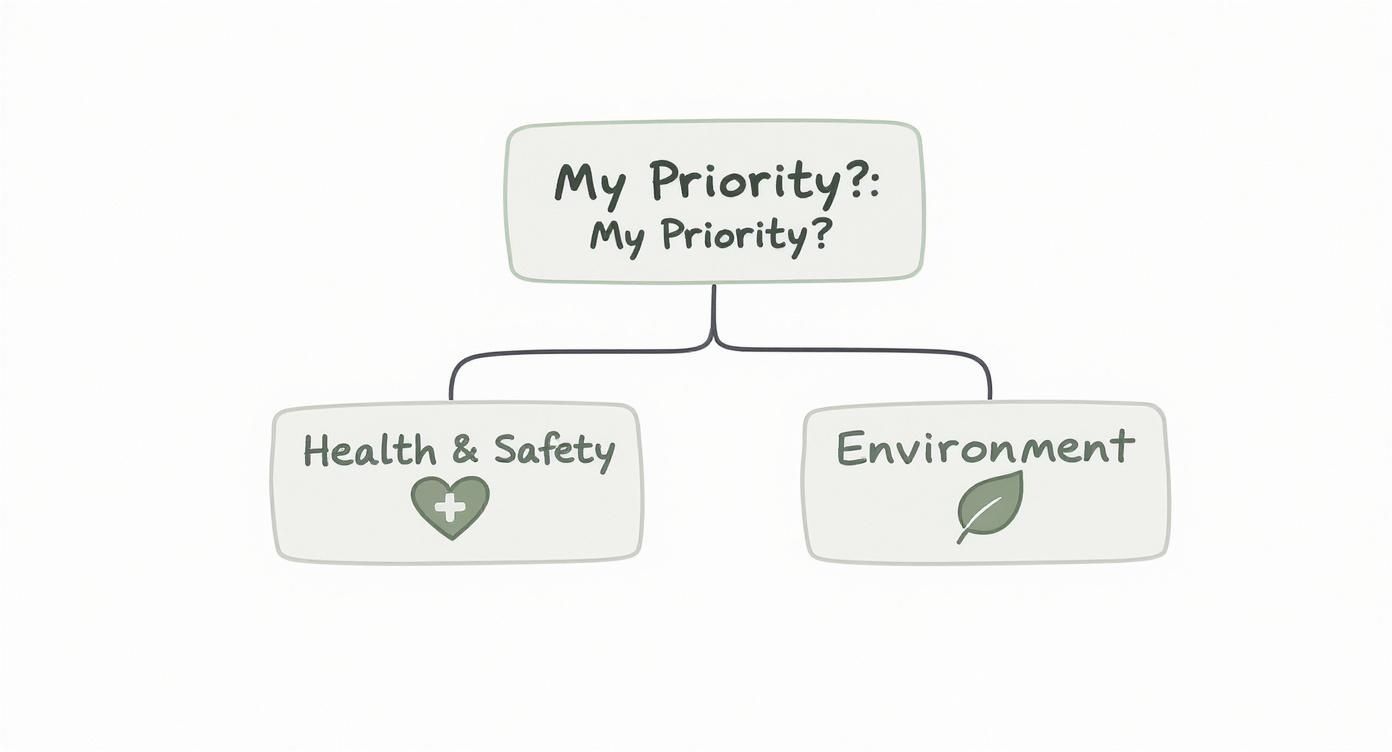
As the graphic shows, if your main concern is one or the other, the choice becomes pretty clear. Modern bleached papers are perfectly safe, while unbleached ones offer a less processed, more natural alternative. Now, let’s see how this works with specific brewers.
Pour-Over Brewers: The Quest for Clarity
For pour-over methods like the Hario V60 or the iconic Chemex, the end goal is almost always the same: a supremely clean, bright, and nuanced cup. These brewers are built to showcase the delicate acidity and complex aromatics of single-origin coffees, which makes a neutral filter absolutely essential.
This is where a high-quality bleached filter really shines. Its neutral character means no papery or woody notes get in the way of the coffee’s own story. On top of that, the refined structure of most bleached papers encourages a consistent flow rate, which is vital for achieving an even extraction and dodging any unwanted bitterness.
For brewers that celebrate flavour transparency, a bleached filter is the professional standard. It acts as an invisible hand, guiding the water through the grounds without leaving its own fingerprint on the final taste.
To get the absolute best out of your V60, a filter designed for optimal flow is non-negotiable. We highly recommend the official Hario V60 Filter Papers 02 to unlock exceptional clarity and consistency. And for those who love the unique demands of a Chemex, you can refine your brew even further with our guide on how to brew with a Chemex.
Immersion and Hybrid Brewers: Balancing Body and Brightness
When you’re brewing with immersion methods like the AeroPress, Clever Dripper, or even a French press with an added paper filter, the rules get a bit more flexible. Here, the coffee and water steep together for a set time, so the paper’s flow rate isn’t quite as critical to the extraction. This opens the door to using either bleached or unbleached filters, depending on what you’re aiming for.
- For Maximum Clarity: A bleached filter will still give you the cleanest taste. It helps reduce sediment and pull out brighter notes, even in a full-bodied immersion brew.
- For Enhanced Body: An unbleached filter, with its slightly thicker structure, can subtly boost the coffee’s body and texture. This can add a lovely touch of richness that really complements medium or dark roasts.
The choice here is less about right or wrong and more about fine-tuning the final cup. While we're focused on coffee, it’s interesting to see how other traditions use various beverage filtration methods, like teapots with built-in filters for a similarly clean brew. Ultimately, it’s your brewer that dictates which paper will serve your coffee best.
Your Questions on Coffee Filters Answered
When you're fine-tuning your brew, the small details matter. Bleached or unbleached? To rinse or not to rinse? We get these questions all the time from fellow coffee lovers, so let's clear up any lingering doubts you might have.
Do I Really Need to Rinse My Filter Paper?
Yes, you absolutely should. Rinsing your filter paper before adding coffee grounds is a non-negotiable step for a better brew, no matter which type you use. It’s a simple action that tackles several key things at once.
First and foremost, it washes away any of that residual paper taste. This is especially crucial for unbleached filters, which can otherwise sneak a noticeable woody or papery flavour into your cup, masking the coffee's more delicate notes. Hot water also pre-heats your brewing device, giving you a more stable and consistent temperature during extraction. Lastly, it helps the paper settle perfectly into the brewer, getting rid of any air pockets that could lead to uneven saturation and a disappointing brew.
Are Bleached Coffee Filters Bad for My Health?
No, modern bleached coffee filters are perfectly safe. This is a common worry that comes from outdated manufacturing practices that used elemental chlorine, a process which could create harmful by-products called dioxins.
Thankfully, things have moved on. Today, reputable manufacturers use entirely safe methods like oxygen-based bleaching or Elemental Chlorine-Free (ECF) processes. These modern techniques don't create harmful dioxins and leave no dangerous residues behind. You can use modern white filters every day with complete peace of mind, knowing they won’t introduce anything nasty into your coffee.
Which Filter Is Genuinely Better for the Environment?
Figuring out the most environmentally friendly option is a bit more nuanced than you might think. On the surface, unbleached papers seem like the obvious winner because they undergo less chemical processing.
However, you have to look at the bigger picture, including the entire supply chain. Many top-quality bleached paper brands are deeply committed to sustainability, sourcing their wood pulp from forests certified by the Forest Stewardship Council (FSC). This ensures responsible forest management. When you combine that with eco-friendly bleaching methods, the environmental impact is significantly smaller.
The most sustainable choice isn’t just about the colour of the paper. It's about choosing a product from a brand that prioritises responsible sourcing and eco-conscious production, which often means looking for certifications like FSC.
Can I Compost My Used Coffee Filters and Grounds?
Absolutely! Both bleached and unbleached paper coffee filters are 100% compostable. Once you've finished brewing, you can toss the used filter and the coffee grounds straight into your compost bin or pile.
Coffee grounds are a fantastic nitrogen-rich component for compost, perfectly balancing out carbon-rich materials like dry leaves. By composting them, you not only reduce household waste but also create a nutrient-rich amendment for your garden soil. It’s a simple, effective way to make your coffee ritual more sustainable. Whether you use an AeroPress or another brewer, composting is always a great option. If you're an AeroPress user, you can find the perfect AeroPress filter papers to complement your sustainable routine.
At Seven Sisters Coffee Co, we believe the perfect cup starts with the right choices. Explore our range of freshly roasted, sustainably sourced coffees and brewing accessories to elevate your home coffee experience.