Your Ultimate Guide to Coffee Dark Roast

A coffee dark roast isn’t about a specific type of bean, but rather the intense journey it takes in the roaster. The result is a coffee that’s famously rich and bold, with a satisfyingly low acidity. You’ll know one when you see it: that characteristic deep colour and oily sheen are tell-tale signs of a bean roasted to high temperatures, promising a full-bodied and intense flavour.
Exploring the Bold World of Dark Roast Coffee
For so many coffee lovers here in the UK, the day doesn’t really start until that deep, comforting aroma of a dark roast hits the air. But what actually makes a coffee a ‘dark roast’? It’s got less to do with where the bean came from and everything to do with what happens inside a hot, spinning roaster.
It’s a bit like toasting a slice of bread. A light toast is golden and you can still taste the original grain. Leave it under the grill a little longer, though, and it darkens, developing those richer, smokier notes. A dark roast coffee bean goes through a similar transformation, only it’s a whole lot more complex.
The Transformation Process
To achieve a dark roast, roasters push the beans to much higher temperatures. They’re taken past the ‘first crack’ and well into or even beyond the ‘second crack’ – a distinct popping sound that signals the beans are entering a deep roast level. This intense heat caramelises all the natural sugars and forces the bean’s oils to the surface, which is what creates that signature glossy sheen.
This whole process completely changes the bean's original character. Any delicate fruity or floral notes from its origin are replaced by new flavours created by the roast itself.
The magic of a dark roast lies in its ability to transform a simple green coffee bean into a complex tapestry of deep, smoky, and sweet flavours. It’s a bold expression of the roaster’s craft.
Signature Flavours and Modern Techniques
So, what should you expect to taste? You're looking at a coffee with a heavy, full body and a smooth finish, often with notes of:
- Dark Chocolate: That rich, slightly bitter cocoa flavour is a classic hallmark of a great dark roast.
- Caramel and Molasses: You get these deep, sweet notes from all those wonderfully caramelised sugars.
- Toasted Nuts: Think almonds, walnuts, or even a hint of smoky pecan.
Modern roasters are always looking for ways to refine this classic profile. Specialised techniques, like roasting in an oxygen-free environment, are becoming more common because they stop the oils from oxidising. This helps preserve the more delicate aromas and gives the coffee a smoother, less bitter finish—a brilliant evolution for anyone who truly appreciates a quality brew.
The Art and Science of Roasting Dark Coffee Beans
Transforming a raw, green coffee bean into the bold, rich foundation of a dark roast coffee is a process that demands precision, skill, and a deep understanding of chemistry. Think of it as a delicate dance with heat and time, where a few seconds can be the difference between a perfectly developed roast and a burnt, disappointing one. A master roaster is part artist, part scientist, guiding the beans through a dramatic transformation.
The journey starts when green beans are tumbled in a large, rotating drum. As the temperature climbs, the beans shift from green to yellow, then to a light cinnamon brown. At this point, roasters are listening intently for a crucial sound: the 'first crack'. This distinct popping, much like popcorn, signals that the beans are expanding as moisture escapes.
For a light roast, this might be the end of the line. But to achieve a true dark roast, the process has to push further.
The Decisive Second Crack
As the beans soak up more heat, they edge closer to the 'second crack', a quieter, more rapid crackling sound that marks the gateway to the dark roast spectrum. It’s at this stage that the bean’s internal structure begins to break down. You’ll see oils migrate from the inside to the surface, creating that characteristic oily sheen.
This is where the roaster’s expertise is put to the test. Stopping the roast just as the second crack begins gives you a medium-dark roast, while pushing on develops those classic, smoky flavours. If you go too far, the sugars will completely carbonise, leaving you with a thin body and a harsh, ashy taste. It’s all about hitting that fine balance. You can explore the different outcomes in our guide to coffee roasting profiles.
This simple timeline shows the key stages in the transformation of a green bean into a dark roast coffee.
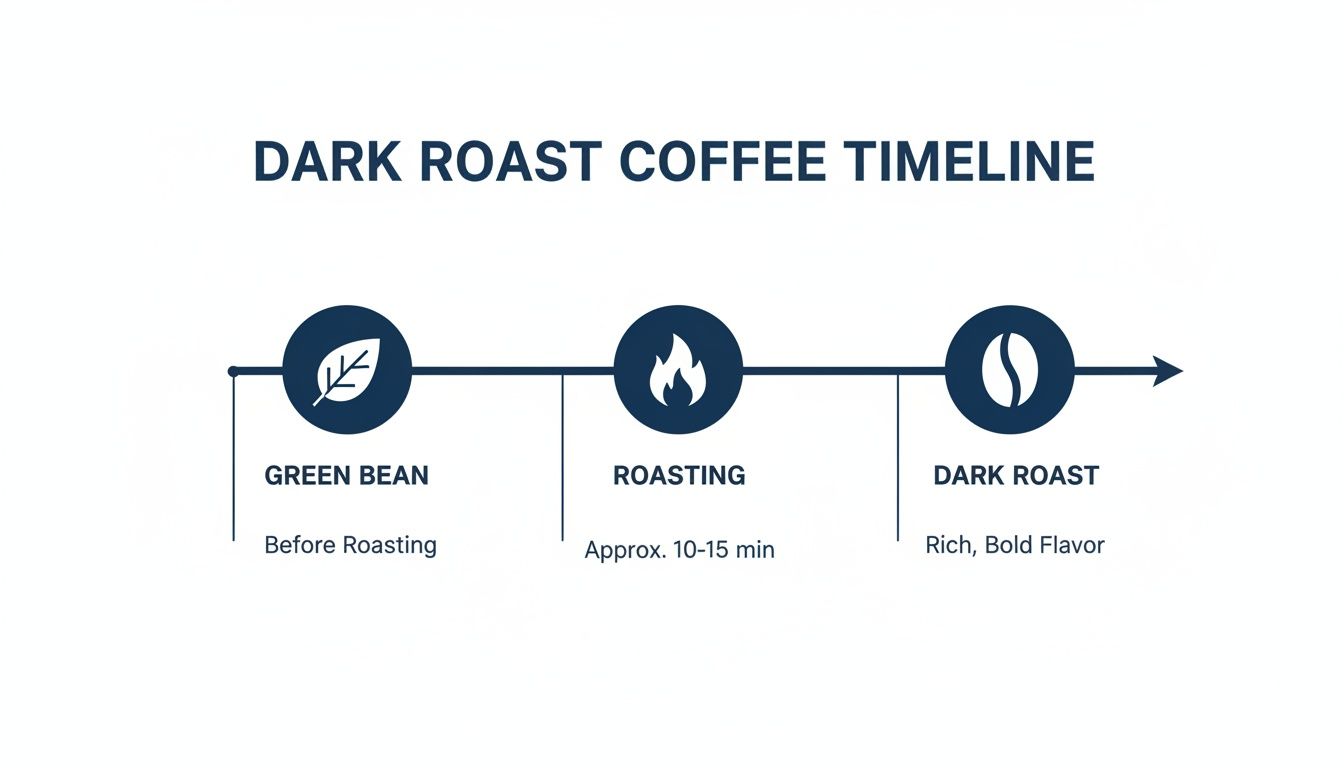
The visualisation clearly shows that the roasting phase is where heat and time work their magic, creating the deep colour and flavour we all associate with a proper dark roast.
Innovations in Roasting
To really elevate the quality of dark roasts, roasters are now using more advanced techniques. One of the most effective is roasting in an oxygen-free environment. Oxygen is the enemy of freshness; it causes the delicate oils on the surface of dark beans to oxidise, which can quickly produce harsh, stale flavours.
By removing oxygen during the roasting process, we can protect the bean's natural oils. This allows the pure, deep notes of chocolate and caramel to shine through without any bitterness from oxidation, ensuring a consistently smooth and flavourful cup.
This scientific approach preserves the intended flavour profile, allowing the roaster to fully express the rich character of a beautifully executed dark roast coffee.
Unlocking the Dark Roast Flavour Profile
When we talk about a dark roast, words like ‘strong’ and ‘bold’ are usually the first to come to mind. While that’s certainly true, it only scratches the surface of a rich and complex sensory experience. To really get what’s going on in your cup, we need to dig a little deeper into the flavour vocabulary.
Think of it like cooking vegetables. A raw carrot tastes fresh and grassy, but once you roast it at a high heat, its natural sugars caramelise, creating deep, sweet, and even slightly smoky notes. A dark roast does something very similar to a coffee bean, fundamentally changing its flavour from something bright and fruity to deep and roast-developed.
The intense heat brings these new characteristics right to the forefront. These aren’t just subtle hints in the background; they are the defining features of the brew.
Tasting Notes to Look For
As you take a sip, try to move beyond the simple idea of ‘strong coffee’ and start identifying specific tastes. This little bit of practice can seriously deepen your appreciation and help you pinpoint the perfect beans for your palate.
Here are some of the most common notes you can expect to find:
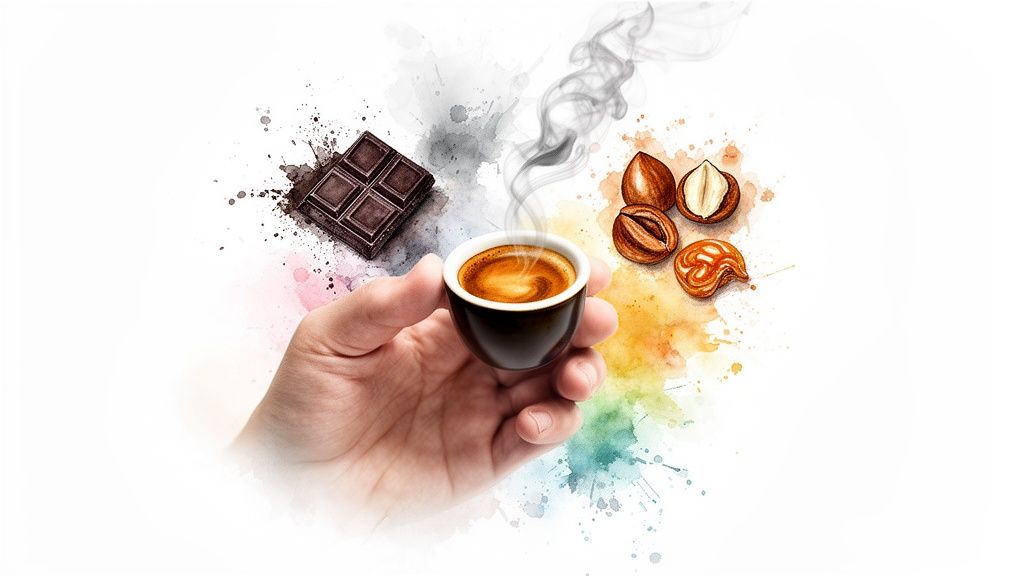
- Dark Chocolate or Cacao: This is perhaps the most classic dark roast flavour, offering a rich, bittersweet complexity that’s a lot like a high-quality dark chocolate bar.
- Toasted Nuts: See if you can pick out the comforting taste of roasted almonds, walnuts, or hazelnuts, which add a smooth, earthy dimension.
- Molasses and Caramel: The caramelisation of sugars during the roast creates a deep, lingering sweetness that beautifully balances the bolder notes.
- Subtle Smokiness: A well-executed dark roast will often have a pleasant, woody smokiness, reminiscent of a cosy fireside.
This shift towards more intense taste experiences is gaining real traction across the United Kingdom. Market analysis shows that dark roasted beans are a highly sought-after segment, driven by coffee drinkers who are actively demanding stronger flavours. The trend is also getting a boost from the rise of cold brew, where the smooth and robust profile of dark roasts is a particularly good fit.
Debunking Common Myths
Let's clear up a couple of common misconceptions about dark roast coffee. A lot of people assume that its bold flavour means it must be bitter and absolutely packed with caffeine.
A common myth is that darker means stronger in caffeine. In reality, the prolonged exposure to heat during a dark roast slightly reduces the caffeine content, making it a bit less potent than its lighter counterparts.
Properly roasted dark coffee shouldn't be excessively bitter, either. While it has a characteristic roasty flavour, a burnt or unpleasantly bitter taste is often just a sign of over-roasting or improper brewing. The goal is always a rich, smooth, and balanced cup.
For more guidance on identifying specific aromas and tastes, check out our detailed guide to the notes of coffee.
Comparing Light, Medium, and Dark Roasts
To really get what makes a dark roast coffee special, you need to see where it sits on the whole coffee map. Think of the roast level as the main dial that controls a coffee's flavour. Each setting unlocks a totally different experience, from zesty and fruity to rich and smoky. Getting to grips with these differences is the secret to finding the brew that’s perfect for you.
Light roasts are all about celebrating where the bean came from. The shorter time in the roaster preserves the natural character of the coffee cherry, which means you get higher acidity, a lighter body, and clear floral or fruity notes. They have a cinnamon-brown colour with no oil on the surface, making for a crisp, vibrant cup. If you love digging into subtle flavours, you can learn more about the unique qualities of light roast coffee in our dedicated guide.
Moving along the spectrum, we find medium roasts, which hit a sweet spot for many coffee drinkers. They have a medium brown colour and a fuller body than their lighter cousins. Here, the richer, sweeter notes from caramelisation start to come through, but you still get a hint of the bean’s original personality. It’s a beautifully rounded and balanced cup—less sharp than a light roast, but not nearly as bold as a dark one.
The Defining Features of Each Roast
A dark roast coffee stands at the complete opposite end of the scale from a light roast. With dark roasts, the spotlight shifts away from the bean's origin and onto the flavours created by the roasting process itself. The beans turn a deep, dark brown, often with a visible oily sheen on their surface. This intense roast dials the acidity way down, creating a heavy, full-bodied coffee bursting with notes of dark chocolate, caramel, and a lovely smokiness.
The journey from a light to a dark roast is a trade-off. You exchange the bright, acidic notes that reflect a coffee's origin for the deep, rich, and comforting flavours developed through the art of roasting.
To make things a little easier, we've put together a simple table that breaks down the key differences at a glance. It’s a quick way to see which profile sounds like your perfect match.
Coffee Roast Levels at a Glance
A direct comparison of light, medium, and dark coffee roasts across key characteristics to help you find your perfect match.
| Characteristic | Light Roast | Medium Roast | Dark Roast |
|---|---|---|---|
| Appearance | Light, cinnamon brown colour with a dry surface. | Medium brown colour, typically with a non-oily surface. | Deep, dark brown to nearly black with an oily sheen. |
| Acidity | High and bright, often described as tangy or zesty. | Balanced and moderate, offering a smoother profile. | Very low, resulting in a smooth and mellow finish. |
| Body | Light and delicate, similar to the consistency of tea. | Medium and rounded, with a more substantial mouthfeel. | Heavy and full-bodied, providing a rich, velvety texture. |
| Flavour | Highlights the bean's origin with floral and fruity notes. | A balanced mix of origin flavours and roast notes. | Dominated by roast-developed notes of chocolate and caramel. |
| Caffeine | Highest caffeine content per bean. | Slightly less caffeine than a light roast. | Lowest caffeine content of the three roast levels. |
As you can see, there’s no single "best" roast—just the one that’s best for you. Whether you crave the lively personality of a light roast or the deep, comforting embrace of a dark one, understanding these profiles is the first step toward brewing your perfect cup.
How To Brew Your Perfect Cup of Dark Roast Coffee
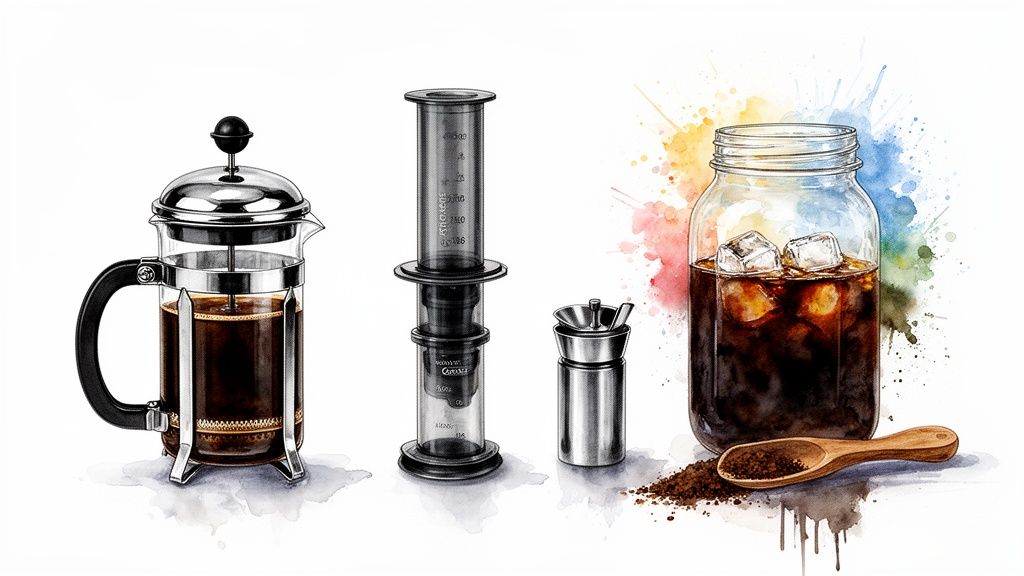
Nailing a great cup of dark roast coffee really comes down to technique. Because these beans are more porous and soluble, they give up their flavour fast. This means tiny tweaks in how you brew can make a world of difference. Get it right, and you’ll unlock those deep chocolate and caramel notes; get it wrong, and you can easily stray into bitter territory.
Some brewing methods just feel made for the bold character of a dark roast. Full-immersion styles, where the coffee grounds get to steep directly in water, are brilliant for drawing out the rich body and low acidity that make these coffees so deeply satisfying.
French Press: The Classic Immersion Method
The French press, or cafetière, is a fantastic place to start. Its straightforward immersion process and simple metal filter let all the natural oils and fine particles through into your cup. The result is a heavy, almost velvety texture that perfectly carries the coffee's robust flavour.
For the best results, you’ll want a coarse grind—think the texture of rough sea salt. This stops the coffee from over-extracting and keeps the brew beautifully smooth. We recommend a coffee-to-water ratio of about 1:15 (so, 30g of coffee for 450ml of water). Let it steep for four minutes, then plunge. You can find more detailed steps in our complete guide on how to use a cafetière.
Getting the water temperature right is crucial. Aim for just off the boil, around 90-94°C. Water that's too hot will scald the grounds and produce a harsh, bitter taste.
Espresso and AeroPress For Intense Flavour
If you’re after a more concentrated, punchy brew, both espresso and AeroPress are excellent choices. An espresso machine uses high pressure to force hot water through finely-ground coffee, pulling a shot that’s rich, intense, and crowned with a gorgeous crema. The naturally low acidity of a dark roast makes for an incredibly smooth and balanced espresso.
The AeroPress gives you a similar intensity but with far more manual control, letting you play with different ratios and brew times. A fine-to-medium grind usually works best, and you can create anything from a short, sharp espresso-style shot to a longer, Americano-style cup. To truly get the best out of your beans, understanding the equipment is key. For anyone looking to invest, exploring the best coffee machine for a cafe can offer some valuable insights.
The Rise of Dark Roast Cold Brew
Cold brew is where dark roasts truly come into their own. The slow, gentle extraction—using cold water over 12-24 hours—creates a brew that is exceptionally smooth, naturally sweet, and almost entirely free of acidity. It’s the perfect method for capturing those deep chocolatey and nutty notes without a hint of bitterness.
The incredible popularity of cold brew has created a huge demand for dark roast beans in the UK. Market trends show that weekly coffee consumption outside the home has grown significantly, with market penetration jumping from 13.0% to 15.1% in recent years. That’s more than 7.9 million regular consumers enjoying their coffee out and about.
Choosing and Storing Your Dark Roast Beans
You’ve got your brewing method dialled in, but there’s one final piece to the puzzle for a truly exceptional cup of coffee dark roast: picking the right beans and making sure they stay fresh. Not all dark roasts are created equal, and the way you store them at home plays a massive role in preserving that deep, satisfying flavour you’re after.
When you’re browsing for beans, the single most important detail is the ‘roasted on’ date. Freshness is everything in the world of coffee, and this little date tells you exactly when the beans were at their absolute peak. Any quality roaster will print this clearly, not some vague ‘best before’ date.
Another good sign you’re holding a quality bag is information about the bean's origin. Even though the dark roasting process brings its own bold flavours to the party, knowing where the coffee was grown shows the roaster is committed to transparency and starting with a great product.
How to Keep Your Dark Roast Fresh
Proper storage is absolutely critical, especially for a dark roast. Why? The intense roasting process forces the bean’s natural oils to the surface, leaving them shiny and exposed to oxygen. This exposure means they can go stale much faster than their lighter roasted cousins.
To stop that from happening, your goal is simple: protect the beans from their four biggest enemies.
- Oxygen: This is the number one culprit for stale coffee. An airtight container isn't a suggestion; it's a necessity.
- Light: Those UV rays break down the delicate compounds that make coffee taste great, so an opaque container is your best bet.
- Heat: Find a cool, dark spot for your container, like a pantry. Keep it well away from the oven or a sunny windowsill.
- Moisture: Coffee beans are like little sponges—they’ll soak up moisture and any weird smells around them. Keep them dry at all costs.
A surprisingly common mistake is chucking coffee beans in the freezer. The constant temperature changes and moisture can seriously damage the oils and ruin the flavour. Your best friend here is a simple, airtight container kept at room temperature.
Following these simple rules is the foundation for a great coffee experience. If you want to dive deeper, our comprehensive guide on how to store coffee beans has even more advice to ensure every single cup you brew is as flavourful as the last.
A Few Lingering Questions About Dark Roast
We've journeyed deep into the world of dark roast coffee, covering everything from the science of the roast to the art of the perfect brew. But even with all that ground covered, a few questions always seem to surface. Let's tackle them head-on.
Does Dark Roast Have More Caffeine?
It’s a classic coffee myth: bigger, bolder flavour must mean a bigger caffeine kick, right? Surprisingly, it’s the other way around. The intense heat and longer time dark roast beans spend in the roaster actually burn off a tiny bit of caffeine. So, bean for bean, a light roast technically packs a slightly bigger punch.
Is Dark Roast Coffee Healthier?
There's no simple winner here. All coffee is packed with beneficial antioxidants, but different roasts bring different things to the table. Some research hints that the dark roasting process creates a specific antioxidant that’s particularly effective. At the end of the day, the healthiest coffee is the one you enjoy in moderation as part of a good lifestyle.
For anyone running a café, of course, keeping things fresh goes beyond the beans themselves. Having the right kit, like a proper display fridge for your coffee shop, is a whole other side to the business.
Is Dark Roast Always Bitter?
Absolutely not. A well-crafted dark roast should have a satisfying "roasty" depth, but it should never be harsh or unpleasantly bitter. If your dark roast tastes acrid, it’s usually a red flag for a botched roast or a brew gone wrong—not a feature of the style itself.
Ready to taste a dark roast that’s rich and smooth, without a trace of bitterness? At Seven Sisters Coffee Co, our oxygen-free roasting method locks in all the deep, satisfying flavour you want. Explore our collection today and see for yourself.