The UK Guide to Light Roast Coffee

Light roast coffee is all about one thing: celebrating the natural, delicate flavours locked inside the coffee bean itself. Unlike its darker cousins, which are defined by deep, roasty notes from the roasting process, a light roast serves up a vibrant, bright, and often surprisingly complex cup. It’s where you’ll find the fruity, floral, and lively characteristics that tell the story of a coffee’s origin.
What Is Light Roast Coffee, Really?
Forget the dry, textbook definitions for a moment. The best way to get your head around light roast coffee is to think about toasting bread.
A dark roast is like a piece of well-done toast. The main flavour you get is from the toasting itself—it's bold, a bit smoky, maybe even a little charred. But a light roast? That’s like a slice of artisan sourdough toasted to a perfect, even gold. You still taste the wonderful, complex notes of the original grain, but now they’re sweeter, warmer, and more developed.
This careful, gentle approach is exactly why light roasts are so treasured in the speciality coffee world. The roaster’s goal isn't to stamp a heavy 'roast' flavour onto the bean. Instead, it’s to delicately unlock the character that’s already there—the subtle notes created by the coffee's unique origin, the altitude it was grown at, and the way it was processed.
Letting the Bean’s True Character Shine
At its heart, a light roast is the purest expression of a coffee bean you can get. It’s a showcase of terroir—that magical combination of soil, climate, and environment that makes a coffee from one farm taste completely different from another just down the road. You're tasting the story of its home, not just the signature of the roaster.
So, what can you expect from a great light roast?
- Vibrant Acidity: Don’t think sour. Think of the bright, pleasant snap of a crisp green apple or the zesty tang of a citrus fruit. It's a desirable quality that gives the coffee a lively, clean finish.
- Complex Aromatics: Light roasts are famous for their stunning aromas. You'll often find notes of jasmine, bergamot, or other delicate florals wafting from your cup.
- Nuanced Flavours: Instead of the familiar chocolate and smoke of darker roasts, your palate might discover a whole spectrum of tastes, from sweet berries and stone fruits to zesty lemon and even sweet tea.
- Lighter Body: The coffee will generally feel less heavy or thick in your mouth compared to a dark roast. This creates a clean, refreshing, and often tea-like experience.
A light roast is a conversation with the coffee's origin. The roaster's job is to let the bean speak for itself, carefully developing its natural sweetness and acidity without masking its unique voice. It’s a delicate dance between heat and time.
To give you a clearer picture, let's break down how light roasts stack up against other styles.
Light Roast Coffee at a Glance
This table gives a quick rundown of the key differences you’ll find between light, medium, and dark roasts. It's a handy guide for understanding what to expect in the cup.
| Characteristic | Light Roast | Medium Roast | Dark Roast |
|---|---|---|---|
| Flavour | Bright, fruity, floral, origin-focused | Balanced, sweet, nutty, chocolatey | Roasty, smoky, bitter, bold |
| Acidity | High and vibrant | Medium and balanced | Low |
| Body | Light, often tea-like | Medium and smooth | Heavy and full |
| Appearance | Light brown, no surface oils | Medium brown, maybe a few oil spots | Dark brown to black, oily surface |
| Caffeine | Slightly higher by scoop | Slightly lower | Lowest |
As you can see, each roast level offers a completely different experience. There's no right or wrong—it all comes down to what you enjoy.
Here at Seven Sisters, our roasting philosophy is built on this very principle. We fine-tune our roasting environment to make sure every single batch of light roast coffee perfectly expresses the qualities it was born with. By doing this, we bring out the bright, intricate flavours that make these coffees so special. To see how this fits into the bigger picture, our guide covering different types of coffee is the perfect next step. It’s a great way to start appreciating the vibrant world waiting in your cup.
The Roasting Science Behind Great Flavour
Turning a dense, green coffee bean into the fragrant, light-brown gem that makes your morning brew is a delicate dance of chemistry and precision. It’s not just about turning up the heat; it's about carefully guiding a series of chemical reactions to develop flavour and sweetness without wiping out the bean’s unique backstory. To really get what makes your light roast special, it helps to understand a little of the science behind it.
At the heart of this transformation are two key players: the Maillard reaction and caramelisation. The Maillard reaction is the magic behind browning – it’s what gives bread its golden crust and a seared steak its savoury depth. In coffee, this reaction between amino acids and sugars creates hundreds of new aromatic compounds, unlocking the nutty, floral, and malty notes we look for in a great cup.
Hot on its heels, as temperatures climb, caramelisation kicks in. This is simply the breakdown of sugars, which brings out the sweet, buttery, and slightly fruity notes that give coffee its welcoming sweetness. With a light roast, the goal is to coax these reactions along just enough to build complexity, but stop before they overpower the bean’s natural character.
The Crucial First Crack
The most important moment in any light roast is what we call the "first crack." As the water inside the bean turns to steam, pressure builds until the bean literally cracks open with an audible pop, a bit like popcorn. For a roaster, this sound is a critical signal.
First crack tells us the bean is expanding and those key flavour developments are happening. For a light roast, we stop the process very soon after this point. By cutting the heat here, we lock in the bean's natural acidity and delicate origin flavours. Pushing it any further would start to introduce more of the roast's own character, leading to the deeper, smokier notes you find in medium and dark roasts.
This timeline shows the journey from a raw green bean through to the different roast levels, pinpointing exactly where a light roast fits into the picture.
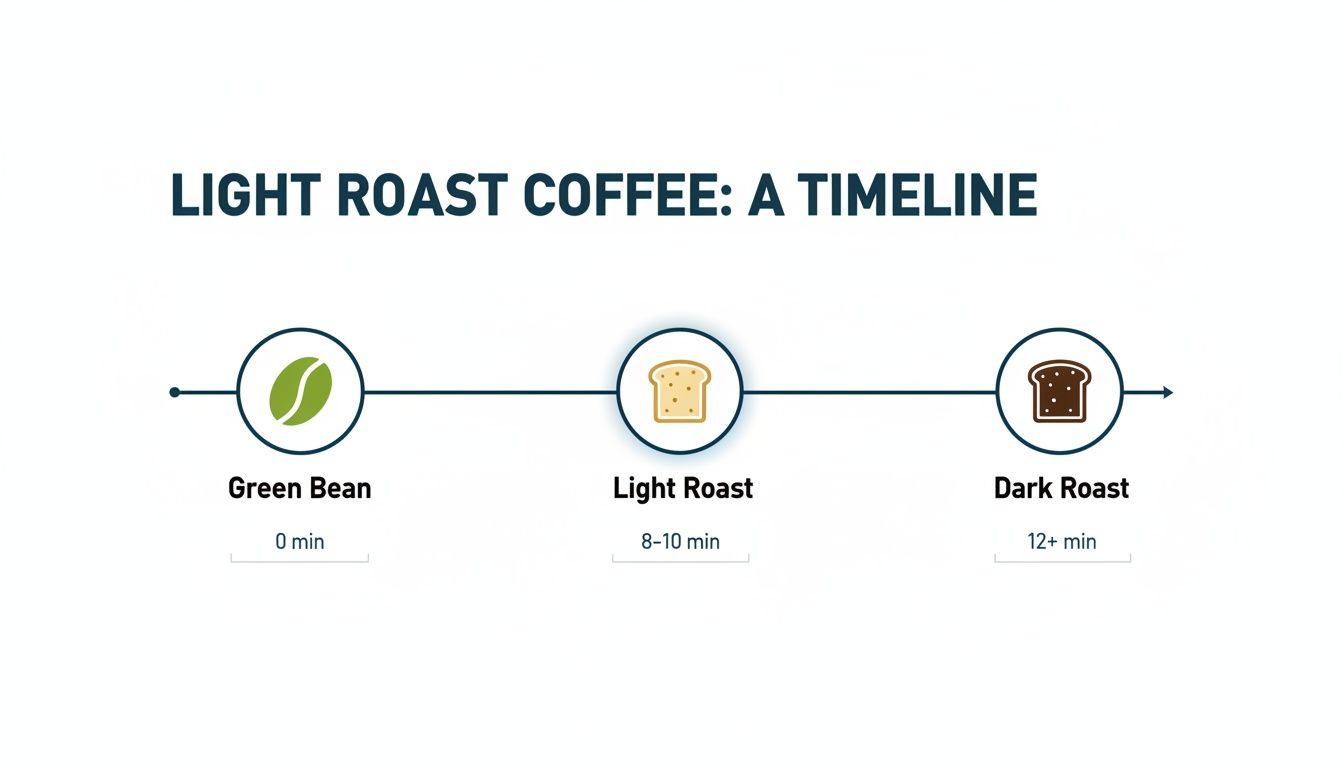
As you can see, a light roast is a brief, carefully controlled process designed to capture the bean at its most vibrant.
How Science Shapes Your Sip
This scientific approach translates directly into what you taste in the cup. Here’s how the defining features of a light roast are shaped by this careful process:
- Higher Acidity: By stopping the roast early, we preserve more of the coffee's natural organic acids. This results in the bright, crisp, and lively "acidity" that is the hallmark of a great light roast—think of the pleasant tartness of a green apple or a squeeze of citrus.
- Lighter Body: The bean’s structure hasn't broken down as much as it would in a darker roast. This means fewer oils have migrated to the surface, resulting in a cleaner, often tea-like body that feels less heavy on the palate.
- Enhanced Sweetness: Precise control over the Maillard reaction and the initial stages of caramelisation develops the bean's natural sugars without scorching them. This creates a nuanced sweetness that beautifully complements the bright acidity.
"The art of light roasting is knowing precisely when to stop. It’s a delicate balance, aiming to fully develop the bean's potential sweetness while preserving the unique, vibrant flavours that tell the story of its origin."
To really appreciate the nuances of light roast coffee, it helps to understand the scientific principles behind product creation, whether it's the chemistry of coffee roasting or the mechanics of a candle's burn. Our roasting philosophy is rooted in this science. We meticulously monitor each batch to ensure that these reactions happen perfectly, unlocking the bean's true potential and delivering a consistently exceptional brew. To dig deeper into this, our detailed guide explains different coffee roasting profiles and how they shape the final cup.
A Flavour Tour of Light Roast Origins
Diving into the world of light roast coffee is a bit like becoming a globe-trotter of taste. Because this roast style is all about preserving—not masking—the bean’s natural character, the place where the coffee grew has a massive impact on what you experience in your cup. The origin, soil, altitude, and processing method all come together to create a unique flavour fingerprint.
Learning to read these origins is the key to picking a bag of coffee you’ll genuinely love.
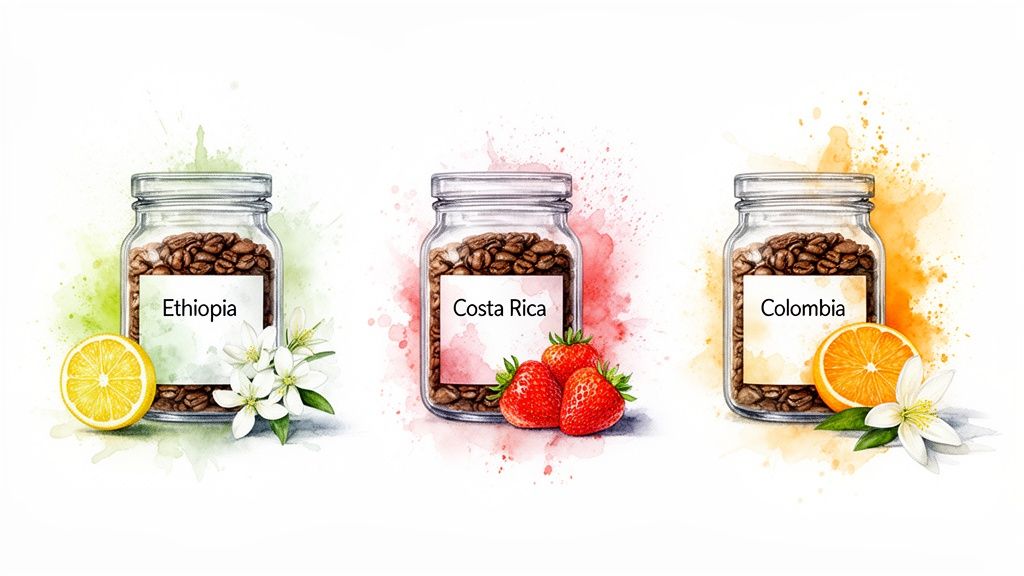
Think of it this way: a Sauvignon Blanc from Marlborough, New Zealand, tastes completely different to one from the Loire Valley in France. Coffee is no different. A light roast from Ethiopia will offer a world of flavour away from a Colombian bean. It all comes down to terroir—the unique environmental fingerprint of a specific place.
The Influence of Africa
When you think of bright, zesty, and floral light roasts, your mind should immediately go to Africa. Ethiopia, in particular, is often considered the birthplace of coffee and produces beans celebrated for their dazzling complexity.
-
Ethiopia: Coffees from regions like Yirgacheffe or Sidamo are famous for their delicate, almost tea-like body and vibrant acidity. You can expect stunning notes of lemon, bergamot, and jasmine. A washed Ethiopian is pretty much the definition of a bright, clean cup. We particularly recommend our Ethiopia Sidamo Guji.
-
Kenya: Kenyan coffees are known for their bold, wine-like acidity and rich, fruity punch. Look for powerful notes of blackcurrant, grapefruit, and even ripe tomato. They offer a juicy, intensely flavourful experience that’s hard to forget. Try our Kenya Blue Mountain for a classic example.
The Diversity of Latin America
Hop across the Atlantic, and the coffees from Central and South America offer a different—but equally exciting—spectrum of flavours. While they can certainly be bright, they often lean towards sweeter, more balanced profiles with notes of chocolate, nuts, and stone fruit.
The real magic of light roast coffee is its transparency. You're not just tasting a coffee; you're tasting a place. The processing method—washed, natural, or honey—acts like a lens, focusing and amplifying the flavours of that specific origin.
For example, a washed coffee, where the fruit is scrubbed off the bean before drying, tends to produce a super clean, crisp cup that lets the acidity sing. A natural-processed coffee, on the other hand, is dried with the fruit still intact, which imparts an intense, jammy sweetness as the bean soaks up all those fruit sugars.
Connecting Flavour to Processing
Let’s break down how origin and processing work together to create the distinct taste profiles you can find and enjoy.
| Origin & Processing | Typical Flavour Profile | Why It Tastes This Way |
|---|---|---|
| Washed Ethiopian | Bright, clean, with notes of lemon, bergamot, and jasmine. | The washed process removes the fruity pulp, allowing the bean's inherent floral and citrus notes to shine through with exceptional clarity. |
| Natural Costa Rican | Sweet and fruity, often with intense notes of strawberry, raspberry, and cherry. | By drying the bean inside the coffee cherry, the sugars from the fruit pulp are absorbed, resulting in a distinctly sweet and jam-like flavour. |
| Washed Colombian | Balanced and sweet, with notes of caramel, green apple, and orange. | This combination highlights the classic Colombian profile—a perfect balance of sweetness and gentle acidity, making it an incredibly versatile and approachable brew. |
Our own single origin Colombian beans are a fantastic example of this. We roast them lightly to preserve their natural caramel sweetness and pleasant citrus acidity, creating a brew that is both comforting and complex.
Exploring different origins is hands-down the most exciting part of the light roast adventure. Once you start paying attention to where your coffee comes from and how it was processed, you’ll begin to predict the flavours in your cup, turning every morning brew into a new discovery.
How to Brew Light Roast Coffee at Home
So, you’ve picked up a beautiful bag of light roast coffee, buzzing with the promise of bright, fruity, and floral notes. But to unlock that magic, you need to rethink your brewing game a little. Light roast beans are much denser and less porous than their darker cousins, which means they need a specific technique to get a balanced, sweet, and delicious cup.
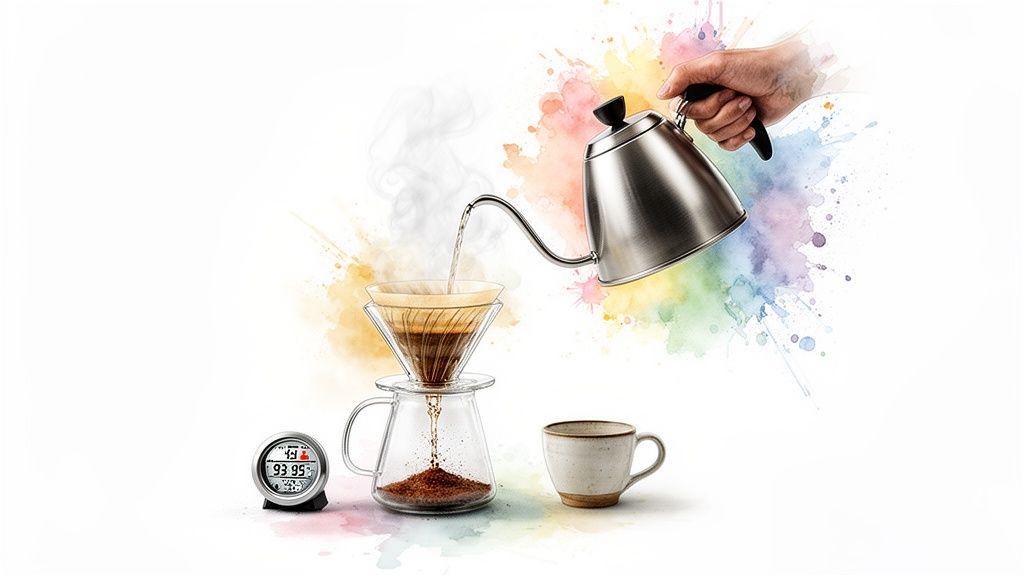
Think of it like cooking. A thick, dense cut of meat needs more time and energy to cook through properly than a thin one. It’s the same with coffee. Light roasts need a bit more persuasion to release all their complex sugars and acids. Get it wrong, and you could end up with a sour, thin, and underwhelming brew. But get it right? You’ll be rewarded with something truly spectacular.
The Golden Rules of Light Roast Brewing
To consistently nail your brew, there are a few key variables you need to get right. These principles work across most brewing methods and are all about giving the water enough energy and contact time to properly extract all the good stuff from those dense coffee grounds.
-
Use Hotter Water: Light roasts love water on the hotter end of the spectrum. You should aim for a temperature somewhere between 92-96°C. That extra heat provides the thermal energy needed to break into the bean's structure and dissolve all those lovely flavour compounds.
-
Grind a Little Finer: A finer grind dramatically increases the surface area of the coffee, giving the water more to work with. This speeds up extraction and makes sure you’re not leaving any flavour behind. For a full breakdown, check out our complete coffee grind size guide to find the perfect setting for your brewer.
-
Allow for a Longer Brew Time: Don't rush it. Because the beans are less soluble, they often need a slightly longer contact time with the water. This gives the water a chance to pull out the deeper, sweeter notes that are crucial for balancing out that bright acidity.
A sour-tasting light roast is almost always a sign of under-extraction. Before you blame the beans, check your variables. The fix is usually as simple as grinding finer, using hotter water, or extending your brew time to coax more sweetness from the grounds.
Choosing Your Brewing Method
While you can technically brew a light roast with any method, some are much better at highlighting its delicate character. Methods that use a paper filter, like pour-overs, tend to produce a cleaner, brighter cup that lets all those nuanced flavours shine.
Immersion methods like the French press can work, but they create a heavier body that can sometimes muddy the more delicate notes. If you're just starting out with light roasts, we'd recommend one of these.
Recommended Brewing Methods for Light Roasts
This table breaks down some of the most popular brewing methods, explaining how each one can shape the final taste of your light roast coffee.
| Brewing Method | Best For Highlighting | Grind Size | Water Temperature |
|---|---|---|---|
| Hario V60 | Clarity and bright acidity, allowing delicate floral and fruit notes to stand out clearly. | Medium-Fine | 94-96°C |
| Chemex | An exceptionally clean cup with a silky body, thanks to its thicker paper filter. | Medium-Coarse | 93-95°C |
| AeroPress | Versatility and sweetness, offering control over brew time and pressure for a rich result. | Fine to Medium-Fine | 92-94°C |
| Kalita Wave | Consistency and balance, with a flat bottom that promotes an even extraction. | Medium | 93-95°C |
Ultimately, the best method is the one you enjoy using. But if you’re looking for a fantastic place to start, a classic pour-over setup is hard to beat. By paying close attention to your grind, water temperature, and brew time, you’ll have the confidence and skill to brew the perfect cup, every single time. You can find all the brewing equipment you need in our online shop.
Choosing and Buying the Best Light Roast Coffee
Diving into the world of light roast coffee is a brilliant move, but knowing what to look for is the difference between a good cup and a truly memorable one. With a bit of insider knowledge, you can confidently pick out beans that deliver the bright, complex flavours you’re after. The UK’s speciality coffee scene is buzzing, and learning how to navigate it is the first step to brewing better coffee at home.
The single most important thing to look for when buying any coffee—especially a delicate light roast—is freshness. It’s that simple. Coffee’s incredible aromatic compounds start to fade almost immediately after roasting. When you buy from a roaster who works in small batches, you get your beans at their absolute peak, practically bursting with the nuanced flavours of their origin.
This shift towards quality isn't just a niche trend; it's happening across the board. The UK coffee market is valued at around £6.1 billion, and roasted coffee makes up over 54.3% of all coffee purchases. It shows a clear move away from instant coffee and towards quality beans, with the speciality sector—where light roasts shine—growing the fastest.
How to Read a Coffee Bag
Think of a coffee bag as less of a container and more of a flavour map. Learning to decode what’s on the label is your secret weapon for finding a light roast you’ll absolutely love. Here’s what you need to zero in on:
- Roast Date: This is the big one. It's non-negotiable. Look for a specific date, not a vague "best before." You really want to be buying beans that were roasted within the last couple of weeks.
- Origin: As we’ve seen, the country and even the specific region or farm tells you a huge amount about what to expect in the cup. An Ethiopian Yirgacheffe is going to be a world away from a Colombian Huila.
- Tasting Notes: These aren’t added flavours! They are the roaster’s way of describing the natural notes you can expect to taste, like "jasmine, bergamot, lemon." This is your best guide to the coffee’s personality.
- Processing Method: Keep an eye out for words like "washed," "natural," or "honey." This little detail reveals how the coffee cherry was handled after picking and gives you a massive clue about the final cup's clarity, body, and sweetness.
Think of buying light roast coffee like choosing a fine wine. The origin, processing, and tasting notes are all clues that guide you towards an experience you’ll enjoy. The fresher the roast, the more vibrant that experience will be.
Finding Your Perfect Beans with Us
Navigating the world of specialty coffee beans can feel a little overwhelming at first, but honestly, that’s all part of the fun. We've tried to make it as simple as possible to find exceptional light roasts that are fresh and full of character.
Our collection of single-origin light roasts is the perfect place to begin your journey. Each one is hand-picked and roasted with care to bring its unique origin story to life, from bright, floral notes to juicy, fruity sweetness. When you choose beans from us, you’re guaranteed a fresh roast delivered straight to your door.
For anyone who wants to keep exploring the best of what light roast coffee has to offer, a subscription is a fantastic way to do it. Our coffee subscriptions take all the guesswork out of buying by ensuring you have a steady supply of freshly roasted, high-quality beans. It frees you up to focus on the most important part—brewing and enjoying a truly stunning cup of coffee.
Why Ethical Sourcing Matters for Your Coffee
A truly exceptional cup of coffee is about more than just what’s in your mug; it’s about the story behind the beans. Your love for the bright, clean flavours of a light roast is directly connected to the people and places that bring it to life. When you understand what goes into ethical and sustainable practices, you bridge the gap between simply enjoying a brew and making a choice you can feel good about.
When you see terms like 'direct trade', it’s not just marketing jargon. It signals a real commitment to building relationships with coffee farmers. This isn't about buying a commodity off a global exchange; it’s about making sure the skilled people who grow these incredible beans get a fair price for their hard work. It helps support their communities, allows them to invest in better farming methods, and builds a sustainable future for coffee as a whole.
And this isn’t just a niche concern anymore—it’s something coffee lovers across the UK are paying close attention to.
A Conscious Choice in Every Cup
More than half of UK coffee drinkers now say that environmental and ethical considerations play a big part in what they buy. This mindset shift, along with a willingness to pay a bit more for high-quality, traceable coffee, shows a real demand for transparency. You can find more insights on this trend over at Freshground.co.uk.
What this means is that your choice of a premium light roast can be both a treat for your taste buds and a small positive action. It’s a chance to support a supply chain that values both people and the planet.
Choosing ethically sourced coffee means you're investing in a system that respects the farmer, protects the environment, and ultimately results in a higher quality bean. It's a cycle where everyone, from the grower to the drinker, benefits.
At Seven Sisters, these values are at the very heart of what we do. We genuinely believe that our dedication to ethical sourcing is something you can taste in the quality of our coffee. By working with partners who share our commitment, we can bring you beans that aren't just delicious, but are also grown with genuine care and integrity.
We know that navigating the world of sustainability can feel a bit complicated. To help, we've put together resources to help you understand what makes certain businesses stand out. You can learn more in our guide on what to look for in sustainable coffee companies.
Ultimately, making a thoughtful choice about where your coffee comes from enriches the entire experience. It turns your daily ritual from a simple pleasure into a meaningful connection with a global community, helping to secure a better, more sustainable future for coffee for years to come.
Still Have Questions About Light Roast Coffee?
As you start exploring the brighter side of coffee, a few common questions tend to bubble up. Let's tackle them head-on, clearing up some of the myths and giving you the confidence to get the most out of every cup.
Does Light Roast Coffee Really Have More Caffeine?
It’s a persistent myth that lighter roasts are packed with significantly more caffeine. The truth is a bit more nuanced. If you measure your coffee by the scoop, a light roast might have a tiny bit more caffeine. This is simply because the beans are denser; they haven't expanded and lost mass like dark roast beans, so a scoop technically holds more coffee.
However, the difference bean-for-bean is almost nothing. The real factors that dictate the caffeine in your cup are the type of coffee bean (Robusta has far more than Arabica) and how you brew it, not so much the roast level itself.
Why Does My Light Roast Coffee Taste Sour?
If your light roast makes you pucker, that sour taste is almost always a dead giveaway for under-extraction. Think of it this way: the water just didn't have enough time or heat to pull out all the good stuff from the dense, lightly roasted beans. It managed to grab the easy-to-dissolve sour acids first but left the balancing sugars behind.
The fix is all about increasing extraction. You can try:
- Grinding your coffee a little finer.
- Using hotter water (we recommend aiming for 92-96°C).
- Letting it brew for a little longer.
Your goal is to transform that sharp, unpleasant sourness into a bright, zesty acidity—more like the satisfying snap of a crisp apple than a lemon.
A well-extracted light roast should taste bright and sweet, never sour. If you’re getting a sour cup, it’s not a fault of the bean. It’s simply a sign that your brewing recipe needs a small tweak to unlock its true potential.
What’s the Best Way to Store My Beans?
To keep those delicate floral and fruity aromas intact, proper storage is non-negotiable. Your beans have four enemies: oxygen, light, heat, and moisture. Your best defence is a good offence: store them in an airtight container tucked away in a cool, dark cupboard.
The resealable bag your coffee arrives in from us is perfect for the short term. Its one-way valve is designed to let the beans de-gas (release CO2) without letting any pesky, flavour-killing oxygen in. And please, avoid the fridge or freezer! Condensation is the enemy of flavour and will quickly dull the vibrancy of your beans.
Ready to put your newfound knowledge into practice? Have a look at our carefully chosen selection of single-origin light roasts at Seven Sisters Coffee Co and discover the incredible world of flavour that’s waiting for you. Find your next favourite brew in our light roast coffee collection.