Top Picks: bottomless portafilter benefits for better espresso

The biggest wins you get from a bottomless portafilter are instant visual feedback on your espresso extraction, which leads straight to purer flavour and a much denser crema. When you ditch the spouts, you get a front-row seat to diagnose and fix problems like channelling, turning every single shot into a valuable lesson. This direct insight is easily the fastest way to dial in your puck prep and start pulling café-quality shots at home.
Understanding the Bottomless Portafilter Advantage
So, what exactly is a bottomless—or naked—portafilter, and why has it become such a prized tool for home baristas and pros alike?
Imagine trying to perfect a recipe while blindfolded. You might get close, but you’d miss all the subtle visual cues that signal success or failure. A standard spouted portafilter is a bit like that blindfold; it hides all the magic (and the mistakes) happening inside the basket.
A bottomless portafilter is beautifully simple: it's a portafilter with the base and spouts completely removed, exposing the underside of the filter basket. This small change gives you an unfiltered window right into the heart of your espresso extraction. Instead of the coffee travelling through metal channels before it hits your cup, it flows directly from the basket. You can browse our full range of bottomless portafilters here.
The Core Benefits at a Glance
This direct-flow design isn't just for show—it offers some clear advantages that genuinely improve the final cup. The immediate feedback loop it creates is invaluable for anyone serious about getting their coffee right.
- Diagnostic Power: It immediately reveals flaws in your technique. Things like uneven tamping or poor grind distribution show up as spurting or channelling, giving you clear signals on what to fix.
- Enhanced Crema: With no spouts for the espresso to travel along, those delicate oils that form the crema stay much more intact. The result is a richer, thicker, and more stable layer on top of your shot.
- Purer Flavour: By getting rid of the extra metal surfaces the espresso has to touch, the flavour profile stays cleaner and untainted. This really allows the subtle, delicate notes of your coffee beans to shine through.
- Consistency Training: Watching each shot pull helps you build muscle memory. You start to intuitively understand what a good extraction looks and feels like, leading to far more consistent and repeatable results every time you brew.
To see these differences side-by-side, let's break down how each type of portafilter works and what that means for your espresso.
Standard Spouted vs Bottomless Portafilters
Here’s a quick look at how each portafilter directs the flow of espresso and what it reveals about your shot.
| Feature | Spouted Portafilter | Bottomless Portafilter |
|---|---|---|
| Flow Path | Espresso is channelled through spouts before entering the cup. | Espresso flows directly from the basket into the cup. |
| Visual Feedback | The extraction process is completely hidden from view. | Provides a clear, real-time view of the extraction. |
| Crema Integrity | Crema can be slightly disturbed or thinned by the spouts. | Crema remains thick and undisturbed, flowing directly. |
| Diagnostics | Hides issues like channelling, making troubleshooting difficult. | Immediately exposes issues like uneven flow or spurting. |
| Flavour Purity | Extra metal contact can subtly alter the final taste. | Eliminates extra contact, preserving the coffee's pure flavour. |
As you can see, the bottomless portafilter isn't just about aesthetics; it’s a functional tool designed for precision and learning.
A Tool for Growth and Quality
Ultimately, the key benefit here is education. The visual information helps you understand the cause and effect of every variable, from your grind setting to your tamping pressure. It's an essential part of learning how to make the perfect espresso.
And this isn't just anecdotal. A survey by the UK Coffee Council found that 68% of home baristas noticed richer crema and clearer shot diagnostics after making the switch to a bottomless portafilter. This shift from pure guesswork to informed, precise adjustments is what makes it such a powerful accessory for any espresso enthusiast looking to up their game.
Diagnosing Shot Quality with Naked Portafilters
Arguably, the single greatest benefit of a bottomless portafilter is its power as a diagnostic tool. A standard spouted portafilter hides the entire show, leaving you to guess what went right or wrong based on taste alone. But a naked portafilter? It gives you a front-row seat to the extraction, turning every shot you pull into a valuable lesson.
This unfiltered view lets you become your own espresso detective. Every drip, spurt, and stream tells a story about your puck preparation—from the consistency of your grind to the evenness of your tamp. It’s the difference between hearing a description of a beautiful painting and seeing it with your own eyes.
To help you figure out if this tool is right for your coffee journey, this flowchart breaks down the key things to consider.
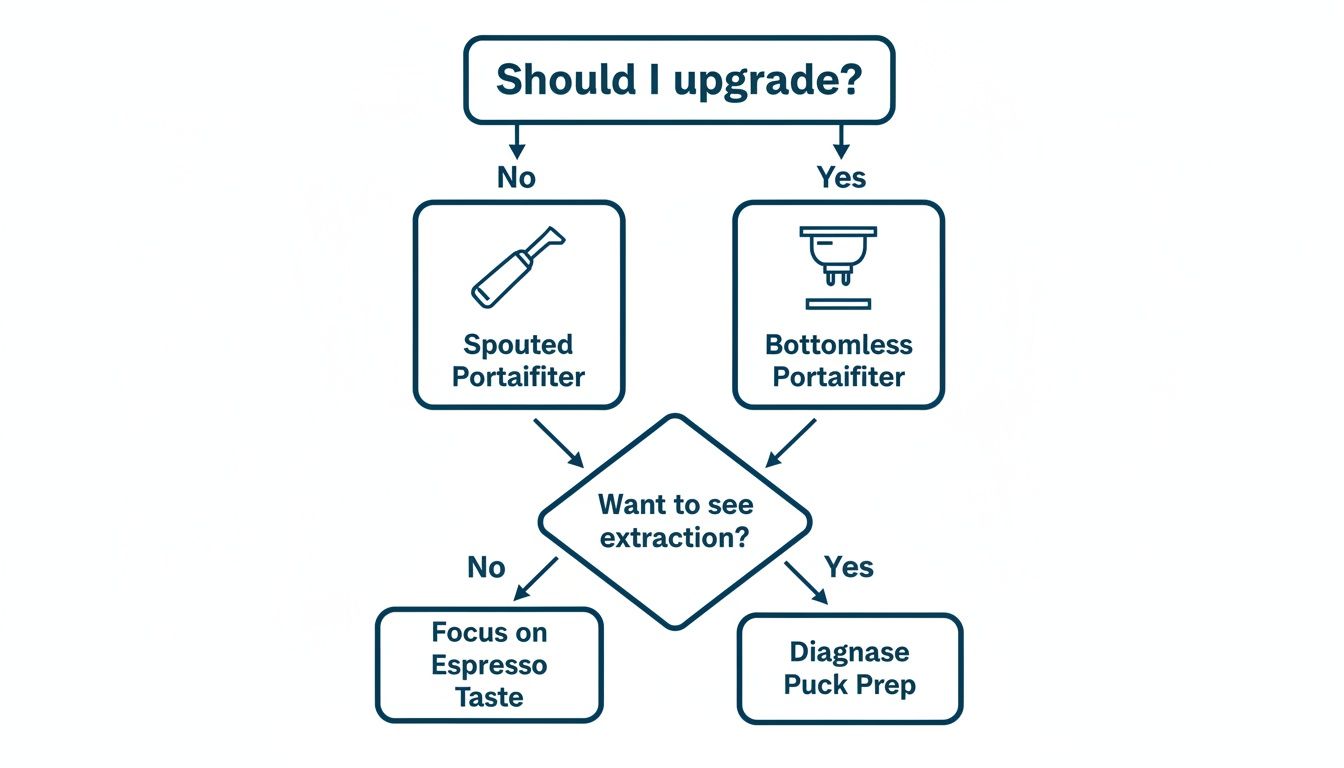
As you can see, the decision to upgrade really comes down to how keen you are to actively diagnose and improve your espresso-making technique.
Identifying and Correcting Channelling
The most common—and frustrating—issue a bottomless portafilter reveals is channelling. This is what happens when water finds a path of least resistance through the coffee puck instead of saturating it evenly. Think of it like a dam with a few tiny cracks; the water will force its way through these weak spots with high pressure, bypassing the rest of the structure entirely.
When this happens with espresso, you'll see thin, watery jets spraying from the basket, or one side will start dripping much earlier than the other. These are tell-tale signs of uneven extraction. The water over-extracts the coffee along these channels, creating bitter, harsh flavours, while the rest of the puck remains under-extracted, lending a sour taste.
The real value of a naked portafilter isn't just in making beautiful shots; it's in showing you the ugly ones. Each flaw is a direct instruction on what to fix for your next brew, accelerating your learning curve immensely.
Fixing this is a fundamental step towards consistently great coffee. By seeing exactly where and when channelling occurs, you can start troubleshooting your process with surgical precision.
Interpreting the Visual Cues of Extraction
A perfect shot pulled with a naked portafilter is a beautiful sight. It starts with a few dark drips forming across the basket, which then gracefully merge into a single, steady, syrupy stream right in the centre. The flow should look like warm honey, with a rich, tiger-striped colour.
Here’s what different visual cues might be telling you:
- Spurting or Spraying: This is the most obvious sign of channelling. It points to an uneven coffee bed, likely caused by poor distribution or an inconsistent grind.
- Blonding Too Early: If the stream turns a pale, yellowish colour too quickly, it’s a sign of over-extraction. Your grind might be too coarse or your dose too small, causing the water to rush through.
- Uneven Flow: When espresso starts flowing from one side of the basket before the other, it’s a strong indicator that your tamp was uneven. A level tamp is crucial for uniform extraction.
- Multiple Streams That Don’t Merge: This suggests several channels have formed. It’s time to revisit your distribution technique to ensure the coffee grounds are settled evenly before tamping.
By learning to read these signs, you transform from someone who just makes coffee into a skilled home barista. Each problem you spot has a direct solution, and if channelling is your main challenge, you can learn more about how to stop channelling in espresso to refine your technique even further.
Enhancing Flavour and Crema Through Direct Flow
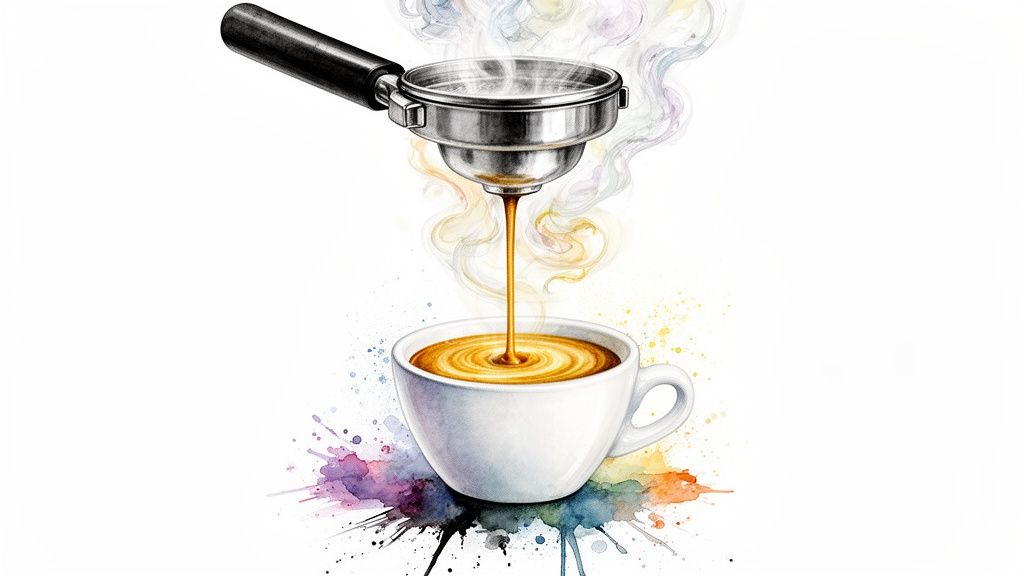
Beyond its diagnostic power, one of the most celebrated benefits of a bottomless portafilter is the dramatic improvement it can make to the taste and texture of your espresso. A standard spouted portafilter makes the freshly pulled shot travel down extra metal channels, which can ever so slightly alter its temperature and mess with delicate flavour compounds. By getting rid of the spouts, you’re creating a straight, clean path from the basket right into the cup.
This direct flow is all about preserving the integrity of your espresso. It's a bit like a wine expert tasting straight from the barrel; you get the purest expression without anything getting in the way. A bottomless portafilter does the exact same thing for your coffee, making sure the flavour is as clean, bright, and true as possible.
The Science of Luscious Crema
Crema, that gorgeous reddish-brown foam on top of an espresso, is made when hot, pressurised water emulsifies the coffee oils and traps CO₂ gas. Its quality is a fantastic sign of fresh beans and a great extraction. A bottomless portafilter is a crema-making machine for one simple reason: it causes less disturbance.
When espresso squeezes through the tight channels of a spouted portafilter, those delicate microbubbles that make up the crema get knocked about. They can even start breaking down before they hit the cup, often leading to a thinner, less impressive layer.
The uninterrupted journey from basket to cup allows the crema to settle gently, forming a thicker, more luscious, and longer-lasting blanket on your espresso. This isn’t just for looks—it adds a velvety texture to every sip, massively improving the mouthfeel.
If you’re finding your crema is always thin despite using good beans, the portafilter itself could be part of the problem. For a deeper look at this, you might find our guide on what to do when your crema is too thin helpful. This direct flow helps protect all the hard work you’ve put into pulling the perfect shot.
Unlocking a Purer Flavour Profile
The path your espresso takes has a huge say in its final taste. Taking away the spouts means the coffee doesn’t touch surfaces that might hold onto old coffee oils or cool the shot down a fraction. It might sound like a tiny thing, but it can be the difference between a good shot and an absolutely fantastic one.
- Temperature Stability: Metal spouts can act like tiny heat sinks, drawing a small amount of warmth from the espresso. A direct flow helps keep the brew temperature more consistent all the way into the cup, which is crucial for holding onto those delicate aromatic compounds.
- No Flavour Contamination: No matter how well you clean, the nooks and crannies of spouts can harbour tiny traces of old coffee oils. A bottomless portafilter completely removes this risk, guaranteeing each shot tastes purely of the beans you just ground.
- Brighter, Cleaner Notes: By keeping both the temperature and purity intact, the coffee’s natural flavour notes can really sing. You’re much more likely to pick up on the bright citrus of a Kenyan bean or the deep chocolate of a Brazilian, simply because nothing is interfering with them.
At the end of the day, this direct-flow method gives you a more honest expression of your coffee. The result is a cup that not only looks stunning but is also superior in both texture and taste.
Building Consistent Espresso Techniques
Here’s where a bottomless portafilter really shines: it turns you from someone who just makes coffee into someone who truly understands it. The immediate visual feedback isn't just about fixing one bad shot; it's a powerful training tool for building muscle memory and rock-solid, repeatable espresso techniques. Every pull becomes a live practice session.
Think of it like learning to play an instrument. You can’t get better if you can't hear the notes you’re playing. The naked portafilter lets you see every "note" of your extraction, showing you exactly how tiny changes in your puck prep translate to the final shot. After a while, you stop guessing and start knowing.
You begin to see how the espresso cone forms, notice where it flows fastest, and tweak your distribution or tamp for the next attempt. This constant loop of action and feedback is what cements your technique, making excellent puck prep feel like second nature.
From Novice to Natural
Building this kind of consistency pays off massively, especially when you bring new coffee beans into the mix. Every new bean needs a slightly different approach, and one of the biggest hurdles is "dialling in" the grind size to find that sweet spot. When your puck prep is unwavering, you've already eliminated a huge variable.
Instead of wondering if a bad shot was caused by your tamping, your distribution, or the grind setting, you can confidently narrow it down. This makes the process of figuring out how to dial in your espresso ratio faster and far less frustrating.
Your technique becomes the reliable foundation you can build on. You’re no longer changing multiple things at once but making one precise adjustment at a time. This methodical approach is the hallmark of a skilled home barista.
A Simple Drill for Better Consistency
To fast-track your skills, give this simple drill a try. The aim is to pull five consecutive shots that all have identical, centrally-formed cones of espresso, with no spraying or premature blonding.
- Prepare Your Puck: Dose, distribute, and tamp your coffee, paying close attention to keeping everything perfectly level and even.
- Pull the Shot: Watch the extraction like a hawk. Note exactly when and where the first drops appear and how they merge into one stream.
- Analyse and Repeat: If you see channelling or an uneven flow, knock out the puck and start over. Ask yourself: Was my tamp truly level? Did I spread the grounds evenly?
- Aim for Perfection: Keep going until you can pull several shots in a row that look identical. This is the repetition that builds lasting skill.
Of course, consistent espresso also depends on a well-maintained machine. For general coffee maker cleaning tips that help with both taste and hygiene, this related article is a great resource. A clean machine is a non-negotiable part of a reliable brewing process.
Selecting and Using a Bottomless Portafilter at Home
So, you're ready to embrace the naked portafilter. It's a brilliant step, but turning that beautiful theory into practice starts with picking the right tool for your machine. Not all portafilters are created equal, and getting the compatibility right from the start is absolutely essential to avoid a headache later.
The first thing to check is the size of your machine's group head. The vast majority of prosumer and commercial machines use a 58mm portafilter, which has become the industry standard. However, many of the most popular home espresso machines, especially from brands like Sage, are built around a 54mm group head. These two sizes are not interchangeable, so have a quick look at your machine’s manual before you even think about clicking "buy". We stock both 54mm portafilters and 58mm portafilters to suit most home machines.
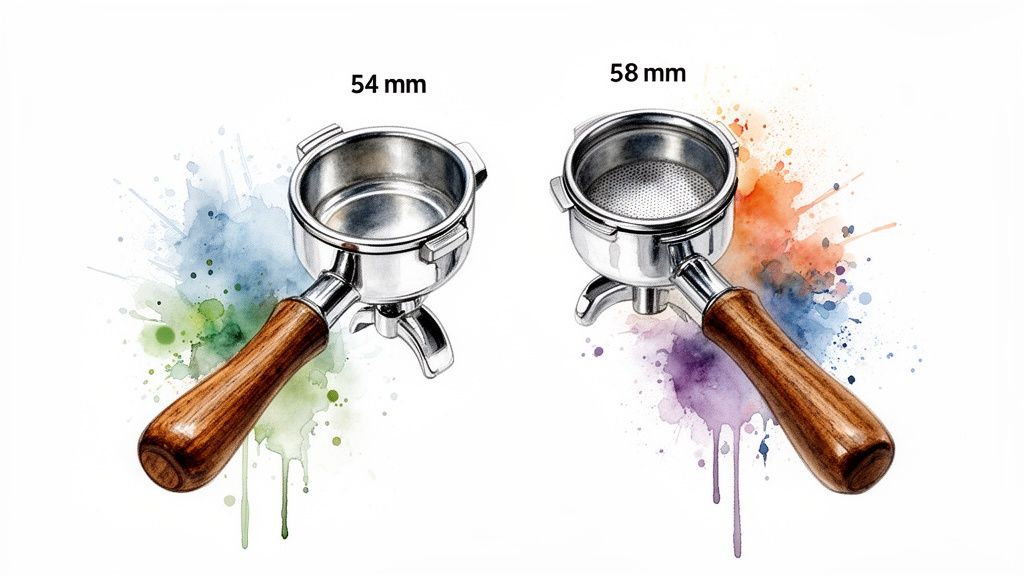
It's not just about the diameter, though. You also need to look at the "lugs" or "ears"—those little metal tabs that lock the portafilter snugly into the group head. The thickness and angle of these lugs can vary between manufacturers. This means a portafilter designed for a La Marzocco won't fit a Rancilio, even if they're both 58mm.
Preparing for Your First Pull
Once you've got the right portafilter in hand, it's time to pull a shot. Steel yourself for a bit of a learning curve, and please don't be disheartened if things get a little messy at first. Splatters and sprays aren't failures; they are incredibly valuable data points telling you exactly what needs fixing in your prep.
Your first few shots with a naked portafilter might be humbling. Think of any mess not as a mistake, but as your machine giving you direct, honest feedback on your puck preparation. This is the accelerated learning you signed up for.
The most common culprit for those unexpected sprays is channelling, which points a finger directly at your puck prep. This is your cue to really dial in on two key areas:
- Even Distribution: Make sure your coffee grounds are perfectly level in the basket before you even think about tamping. A distribution tool can work wonders here.
- Level Tamping: Apply firm, even pressure straight down. An uneven tamp is one of the biggest causes of a one-sided, messy extraction. Getting this right is a fundamental skill, and you can learn more about finding the right tamping pressure for consistent results in our detailed guide.
Your New Cleaning Routine
Here’s one of the most overlooked benefits of a bottomless portafilter: they are ridiculously easy to clean. With no spouts or hidden crevices, there's simply nowhere for old coffee oils to hide, build up, and go rancid. Those old oils are notorious for tainting the flavour of your future shots.
A quick rinse under hot water and a wipe with a clean cloth after each use is pretty much all it takes. This simple routine ensures that every shot you pull tastes purely of the fresh coffee you’re using, preserving that clean, bright flavour profile you're working so hard to achieve. It’s a simple bit of upkeep that makes a huge difference to your long-term consistency.
Frequently Asked Questions
Got a few more questions before making the switch? No problem. Here are some straight answers to the things we hear most often from home baristas weighing up a bottomless portafilter.
Will It Instantly Make My Coffee Taste Better?
Not necessarily, and that’s actually a good thing. A bottomless portafilter is a diagnostic tool first and foremost. The first few times you use it, it’s likely going to expose flaws in your technique you never even knew you had, which might make those initial shots taste a little harsh or sour.
But as you start using that direct visual feedback to fix issues like an uneven tamp or a dodgy grind, you will absolutely begin to notice a cleaner, more vibrant taste and a much richer crema. Think of it as a personal trainer for your espresso skills—it makes you work for the reward, but the results are worth it.
Is Using a Bottomless Portafilter Messy?
It definitely can be, especially at the start. If your puck prep isn’t quite right, you’ll probably see some spraying or spurting as the pressurised water finds the path of least resistance and channels right through the coffee.
But instead of seeing this as a failure, try to view each splatter as a clue. With a bit of practice, you'll learn how to get that perfect, neat cone of espresso flowing from the centre. Not only does this eliminate the mess, but it’s also the clearest sign you’ve nailed your extraction.
Do I Need an Expensive Grinder to Use One?
You don’t need a top-of-the-line model, but you absolutely need a good quality burr grinder. Blade grinders just chop beans into inconsistent bits and pieces, which is a guaranteed recipe for channelling and a messy, uneven extraction.
A reliable burr grinder that produces a fine, uniform grind is non-negotiable if you want to get anything useful out of a naked portafilter. It’s the foundation that all good puck prep is built on.
How Do I Choose the Right Portafilter for My Machine?
Getting the right fit is crucial. The first thing you need to do is check your machine’s specifications for its group-head diameter, which is usually either 54 mm or 58 mm. You have to match this size exactly.
Next, you'll need to check the lug pattern—those are the little metal tabs that lock the portafilter into place. Different brands use different designs and thicknesses. The safest bet is to check your machine’s manual and then look for a bottomless portafilter that’s specifically listed as compatible with your brand and model.
Ready to unlock your espresso machine's true potential? At ADS Coffee Supplies, we offer a curated range of high-quality bottomless portafilters designed to fit many of the most popular home machines. Explore our collection and start your journey towards café-quality coffee today. Find the perfect bottomless portafilter for your setup at ads-coffee-supplies.co.uk.