How Long Do Coffee Beans Stay Fresh An Expert UK Guide
Think of your coffee beans like freshly baked sourdough bread. Right out of the oven—or in this case, the roaster—it’s at its absolute best. While a bag of beans won’t go off like a pint of milk, its vibrant character and complex flavours have a surprisingly short lifespan. Whole coffee beans are at their peak for about 2–4 weeks after roasting, but ground coffee? That can lose its magic in a matter of minutes.
What Does Coffee Freshness Actually Mean?
When we talk about coffee freshness, we’re not really talking about safety; we’re talking about flavour. It all comes down to preserving the delicate, volatile aromatic compounds that are created and locked into the bean during the roasting process. These compounds are what give your coffee its incredible depth, from bright floral notes to rich, chocolatey goodness.
As soon as coffee is roasted, it starts a natural process called 'degassing', where it releases carbon dioxide. This is a good thing, but it’s immediately followed by oxidation—the ultimate enemy of flavour. Imagine slicing an apple and watching it turn brown; oxygen is doing the same thing to your coffee, just invisibly.
The trick is to catch the beans after they’ve had a day or two to degas but before oxidation has stripped them of their personality. This sweet spot is what we call the peak flavour window.
The Freshness Clock
This timeline gives you a clear picture of the journey from roast to stale, highlighting that crucial window where your coffee will taste its absolute best.
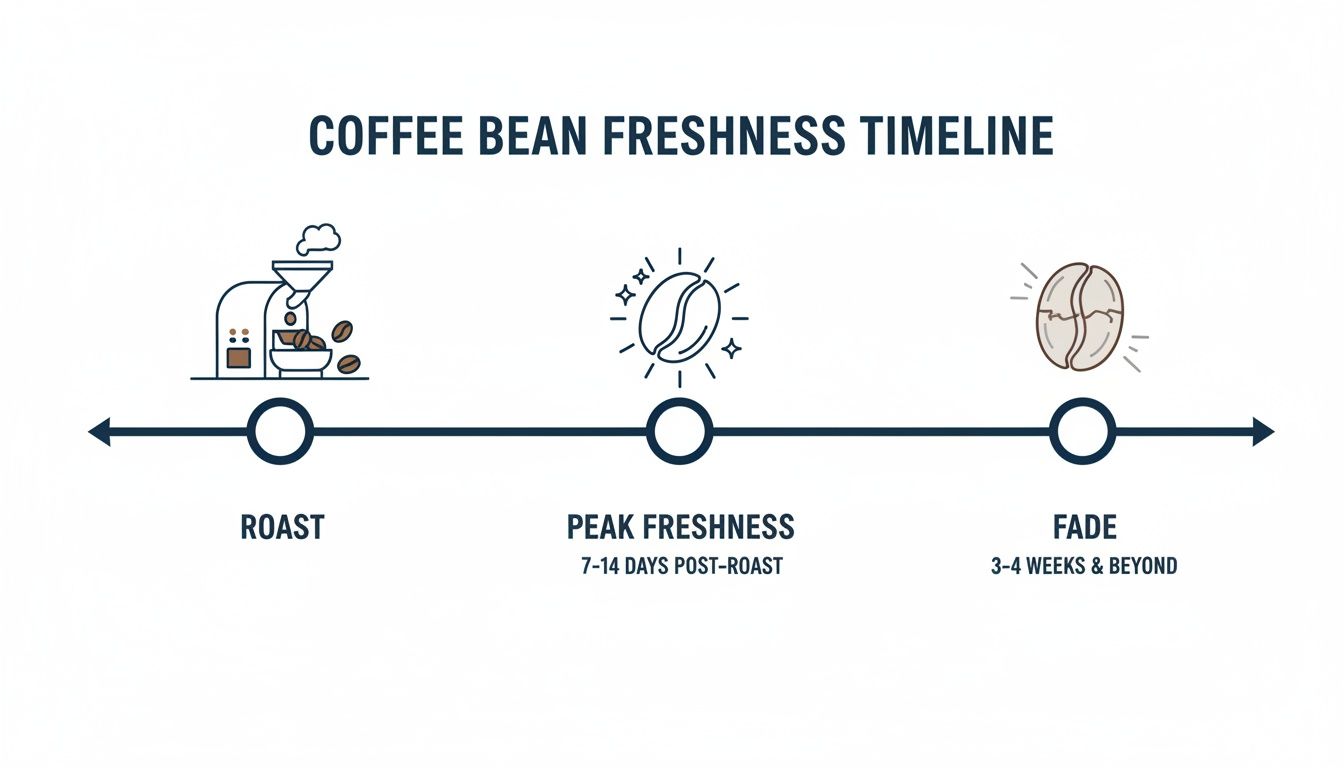
As you can see, the ideal time to brew is a lot shorter than most people think, starting just a few days after the roast and fading within a few weeks.
The peak freshness for whole beans is a fleeting moment, really only lasting between 2 to 4 weeks after they’ve been roasted. It’s during this critical period that 70–80% of the coffee's aromatic oils and complex flavours are at their most expressive. Once you break the seal on a bag, the clock starts ticking even faster. For the best possible taste, you’ll want to use those beans within 14 days.
This obsession with peak flavour is a cornerstone of what makes specialty coffee special. To truly get a feel for this, nothing beats seeing it for yourself. If you ever get the chance, a coffee roasting taster session is a fantastic way to experience firsthand how roasting breathes life, flavour, and aroma into the beans.
The Four Enemies Of Fresh Coffee
To truly understand how long coffee beans stay fresh, you need to meet the four culprits actively working to make your coffee taste dull. Think of them as a team of saboteurs, each with a specific mission to ruin that perfect cup. Once you understand how they operate, you can build a solid defence for your precious beans.
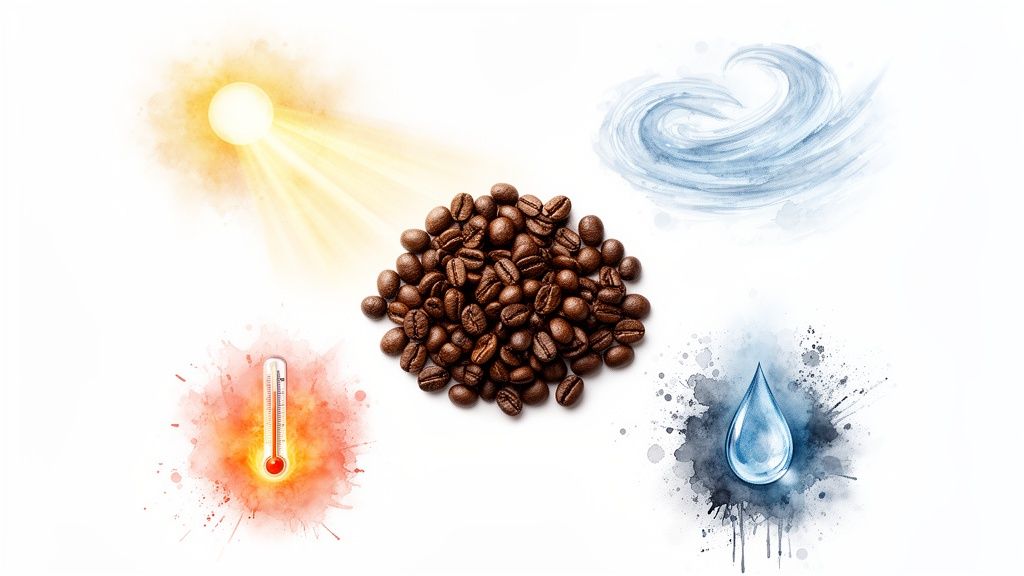
The battle for freshness is a constant struggle against these natural elements. Protecting your coffee means keeping these four factors firmly in check from the moment the beans leave the roaster.
Oxygen: The Flavour Thief
Oxygen is, without a doubt, public enemy number one for fresh coffee. It triggers a chemical process called oxidation, which attacks the delicate oils and aromatic compounds that give coffee its magic. It's the very same process that causes metal to rust or a sliced apple to turn brown.
Every single day your coffee is exposed to air, oxidation relentlessly steals its vibrant notes, leaving behind a flat, lifeless, and sometimes even rancid taste. It’s a slow and silent decay, but it’s the primary reason coffee goes stale.
Light: The Accelerator
Light, particularly direct sunlight, is a powerful catalyst that speeds up the whole degradation process. The UV rays in sunlight don’t just heat the beans; they actively accelerate the chemical reactions that oxygen started.
Think of light as the getaway driver for oxygen, helping it to strip away your coffee's flavour much, much faster. This is exactly why you’ll never find high-quality coffee sold in clear bags or containers—it’s a recipe for rapid staling.
Keeping your beans in the dark is one of the simplest yet most effective steps you can take. An opaque container tucked away in a dark cupboard is your best line of defence against this sneaky enemy.
Heat: The Aroma Evaporator
Heat is another massive threat to coffee freshness. Warmer temperatures cause the volatile compounds—the very molecules responsible for that incredible coffee aroma—to simply evaporate into thin air.
When you store beans in a warm spot, like next to an oven or on a sunny windowsill, you're essentially "cooking" out their aroma before you even get a chance to brew them. A cool, stable environment is crucial for keeping those amazing smells locked in. The key enemies of freshness are:
- Oxygen: Causes oils to go rancid through oxidation.
- Light: Speeds up the rate of chemical decay.
- Heat: Makes wonderful aromas evaporate.
- Moisture: Can ruin bean integrity and encourage mould growth.
Moisture: The Deal-Breaker
Finally, moisture is an absolute deal-breaker for roasted coffee beans. The beans are porous and will readily absorb any moisture from their surroundings, which can wash away their precious oils and soluble compounds.
Worse still, any dampness creates an ideal breeding ground for mould, completely ruining the coffee. This is precisely why storing beans in a humid place, like a refrigerator, is one of the worst things you can possibly do.
Understanding these four enemies is the first step to preserving the incredible character of beans from roasters like Seven Sisters Coffee Co. Now, let’s build the perfect fortress to protect them.
Mastering The Art Of Coffee Storage
Now that you know what ruins coffee, we can build the perfect defence. Don't worry, practical coffee storage isn't complicated. It's really just about creating a safe haven for your beans, tucked away from their four main enemies.
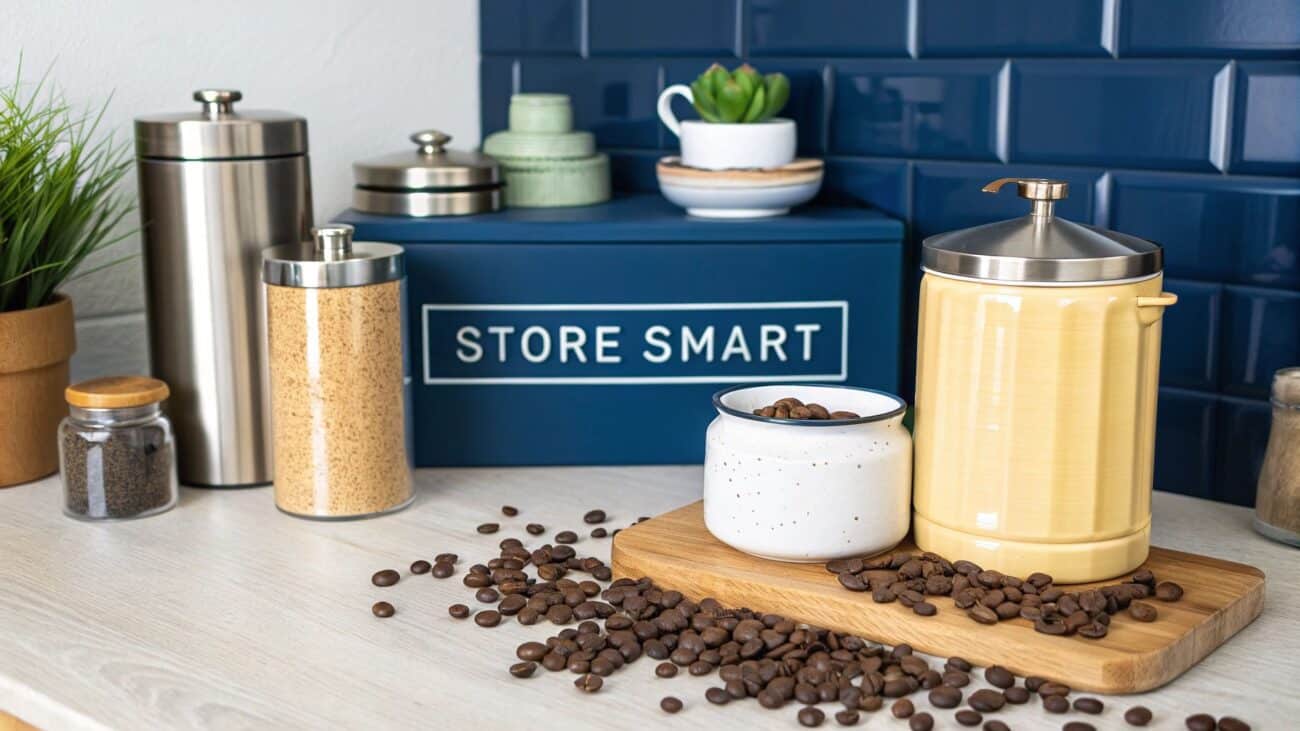
The ideal setup is surprisingly simple: an opaque, airtight container stored in a cool, dark cupboard.
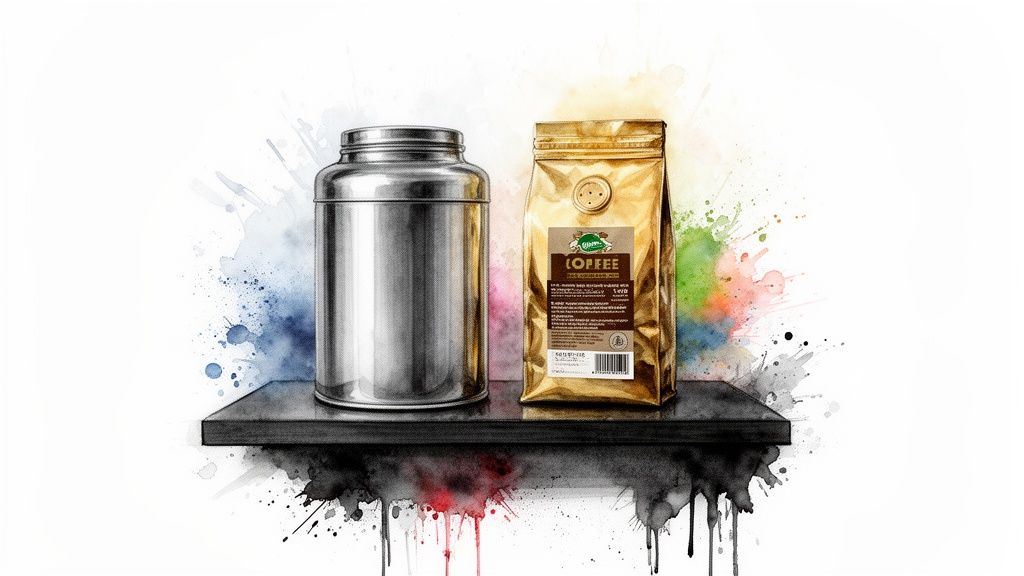
This strategy directly counters oxygen, light, heat, and moisture, giving your coffee the best possible chance to hold onto its vibrant flavour profile. A kitchen cupboard away from the oven or any direct sunlight is the perfect spot.
Choosing Your Storage Container
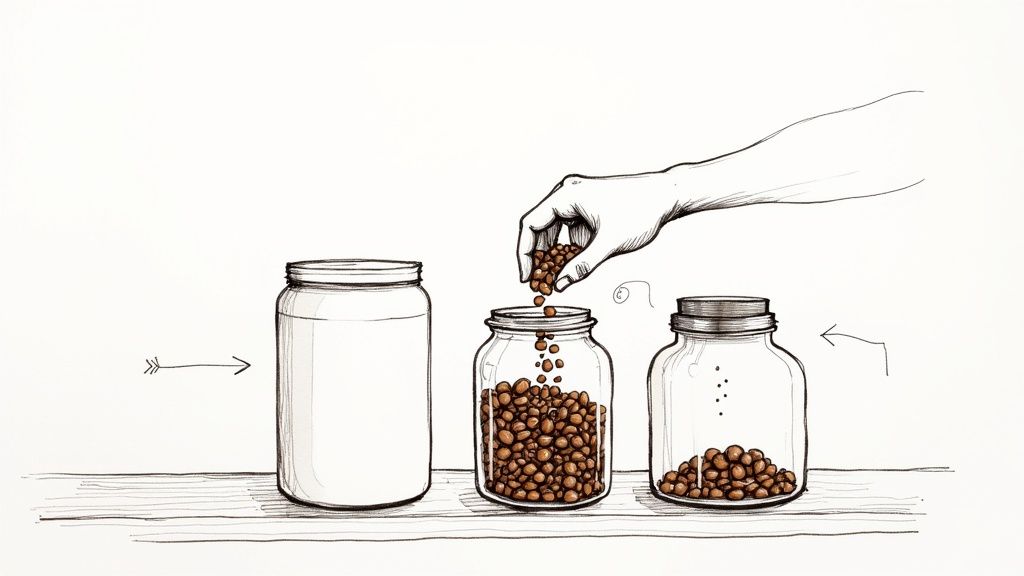
The right container is your primary line of defence. While the original bag your coffee came in is fine for getting it home, it’s not designed for long-term storage once you’ve broken the seal. You need something that provides an airtight seal to keep oxygen out.
There are plenty of options out there, from simple ceramic jars to advanced vacuum-sealed canisters. Ceramic or non-reactive metal containers are excellent choices because they completely block out damaging light. To find the perfect match for your kitchen and brewing habits, you can explore our comprehensive guide to the best coffee storage containers.
The goal is to create an environment that's as stable as possible. By keeping your beans cool, dark, and sealed off from air and moisture, you dramatically slow down the staling process, preserving those delicate flavours for longer.
Choosing the right vessel is a key step in mastering your home coffee setup. It’s a small change that makes a massive difference to every single cup you brew.
Common Storage Myths Debunked
Many well-intentioned coffee drinkers make storage mistakes based on common myths. Let's clear up the two biggest misconceptions: the fridge and the freezer.
Why The Fridge Is A Terrible Idea
Please, never store your coffee beans in the refrigerator. The cool, humid environment inside your fridge is a prime spot for condensation to form on your beans. This moisture is disastrous, washing away precious oils and potentially even encouraging mould.
On top of that, coffee beans are porous. They’ll act like a sponge, soaking up strong odours from nearby foods like cheese or last night's curry. Nobody wants that.
The Rules For Freezing Coffee
Freezing is a bit more controversial, but it can be done if—and only if—you follow some very strict rules. This method is best reserved for long-term storage, not for the bag you dip into every morning.
- Only freeze completely unopened, factory-sealed bags. This is critical to minimise exposure to air and moisture.
- Divide into small, week-long portions before freezing if needed. Once you've thawed a bag, you can't refreeze it.
- Thaw completely to room temperature before opening. This step is non-negotiable. It prevents condensation from forming on the cold beans when they meet warmer air.
While this guide focuses on coffee, understanding the general principles of how to apply proper food storage to extend shelf life can greatly enhance your overall food preservation skills. By mastering storage, you ensure every brew is as fresh and delicious as the roaster intended.
Why Whole Beans Always Win The Freshness Showdown
If you're looking for the single biggest upgrade you can make to your home coffee game, this is it: switch to whole beans. The reason is surprisingly simple, and you can see it in action with an everyday apple.
Think about a whole apple versus one that's been sliced. A whole apple stays crisp and flavourful for days. But once you slice it, the pieces start browning and losing their taste in minutes. That browning is oxidation—the exact same enemy that steals freshness from your coffee.
Grinding coffee is like slicing that apple, but on a massive, microscopic scale. It shatters the bean into tiny particles, dramatically increasing the surface area exposed to oxygen. From that moment on, the delicate oils and aromatic compounds that create amazing flavour start to break down.
The Great Escape of Flavour
You know that incredible, rich aroma that fills the room the second you grind fresh beans? That isn't just a pleasant smell; it's the very essence of your coffee's flavour literally escaping into the air. These aromatic compounds are volatile, which just means they turn into gas easily. Grinding is the process that unlocks the cage and sets them free.
Once ground, the flavour clock starts ticking incredibly fast. In as little as 15 minutes, pre-ground coffee can lose a huge chunk of its aromatic complexity. By the time it’s been sitting in a bag for days or weeks, you’re brewing with a pale imitation of what that coffee could have been.
Grinding your beans just moments before you brew is the secret to getting all those complex, vibrant flavours into your cup instead of letting them vanish into your kitchen. It's the most fundamental step towards making café-quality coffee at home.
This is why a good coffee grinder isn't just an accessory; it's a direct investment in a better cup of coffee, every single day.
Control and Consistency
Beyond just preserving flavour, grinding your own beans gives you total control over the single most important variable in brewing: grind size. Different brewing methods need different grind sizes to extract flavour perfectly.
- Coarse Grind: Perfect for immersion methods like a French press. The larger particles allow for a longer steep without making the coffee bitter.
- Medium Grind: This is the sweet spot for most automatic drip machines and pour-overs, creating a balanced and even extraction.
- Fine Grind: Absolutely essential for espresso. The fine grounds create the resistance needed for the machine to build pressure and pull a concentrated shot.
Having your own grinder means you can dial in the exact consistency for any coffee maker you own, unlocking the true potential of your beans and letting you experiment. To really get a handle on how different settings change your final cup, check out our complete coffee grind size guide.
How To Tell If Your Coffee Beans Are Stale
Forget guesswork and forget ‘best before’ dates. When it comes to answering “how long do coffee beans stay fresh?”, the best tools you have are your own senses. With a few simple checks before you brew, you can easily become your own coffee quality expert.
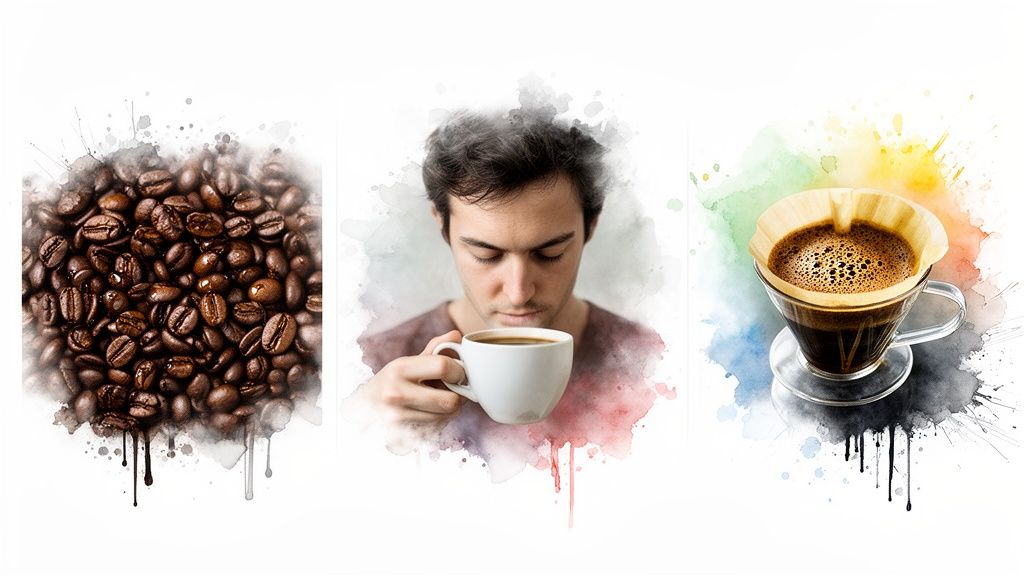
These sensory cues will tell you everything you need to know about the state of your coffee. No more settling for a dull, lifeless cup.
The Look And Feel Test
First up, a simple visual inspection. Pour a few beans into your hand and have a proper look. Freshly roasted beans, particularly medium to dark roasts, often have a subtle, appealing sheen on their surface. This is down to the natural oils migrating outwards after roasting.
Stale beans, in contrast, will often appear dull, dry, and lifeless. They might even feel lighter and more brittle. If they look completely matte and lack any hint of that oily sheen, it’s a strong sign they’re well past their peak.
The Smell Test
Next, it’s time to trust your nose—it’s an incredibly powerful tool for judging coffee. Open your bag or container and take a deep sniff.
Fresh coffee has a powerful, complex, and inviting aroma. You should be able to pick out a whole range of notes—be it fruity, floral, nutty, or chocolatey—depending on the bean's origin and roast style. It's a scent that fills the air with promise.
Stale coffee, on the other hand, just smells flat and one-dimensional. Those vibrant aromas will have vanished, often replaced by a dusty, cardboard-like, or even slightly rancid smell as the oils have oxidised. If the wonderful smell is gone, the flavour has gone with it. To really get why this happens, learning about how to roast coffee beans gives fantastic insight into how those amazing aromas are created in the first place.
The Ultimate Proof: The Bloom
The final, most definitive test happens when you actually start brewing. This is where you can see freshness—or the lack of it—in action. When you pour hot water over freshly ground coffee, you’ll see a lively bubbling and foaming reaction. This is the famous "bloom".
This bloom is simply the rapid release of trapped carbon dioxide gas, a key indicator of a recent roast. A vigorous bloom means fresh coffee. Simple as that. Stale grounds, having already lost most of their CO2, will barely react. They’ll just absorb the water with little to no bubbling, leading to a flat and uninspiring brew.
The Seven Sisters Commitment to Peak Freshness
Knowing what makes coffee go stale is one thing, but building a process from the ground up to stop it from happening is another entirely. This is where our philosophy at Seven Sisters Coffee Co. really sets us apart. We believe protecting your coffee’s flavour doesn't just start when it gets to your kitchen; it begins the second our beans drop out of the roaster.
Our artisanal roasting process is meticulously designed to shield the beans from their biggest enemy—oxygen—from the very start. Unlike conventional methods that expose beans to air, our technique is all about locking in those delicate, volatile aromatic compounds to preserve the coffee's true character. The result? A peak freshness window that lasts far longer than the industry standard.
Quality From Source to Sip
Our commitment to freshness is an unbroken chain that begins long before the beans even reach our roaster. It starts with our ethical partnerships with dedicated farmers—producers who share our obsession with excellence and ensure only the finest beans ever make it into our hands. This deep respect for the entire coffee journey is what defines our promise to you.
We deliver the freshest possible coffee straight to your door so you can finally experience how truly remarkable a cup can be when its integrity has been protected at every single step. This philosophy is the beating heart of our entire range of specialty coffee beans, where each bag tells the unique story of its origin.
Protecting freshness isn't just a step in our process; it is the process. By managing oxygen exposure from the very beginning, we ensure the vibrant, complex flavours developed during roasting are the ones you actually get to taste in your cup.
This unwavering focus is how we guarantee that every bag delivers an exceptional experience. We don’t just sell coffee; we provide a promise of freshness that you can taste in every single brew.
Frequently Asked Questions About Coffee Freshness
We get asked about coffee freshness all the time, so let's clear up some of the most common questions. Here are the straightforward answers you need to understand why these details matter so much for your daily brew.
Roast Date vs Best Before Date: Which Matters More?
The roast date is the only date that truly matters. Think of it as the bean's "birth date"—it tells you the exact moment the freshness clock started ticking. A 'best before' date is just a vague guideline from the roaster for an unopened bag and says nothing about when the coffee will be at its peak flavour.
Always look for roasters who proudly display the roast date on their bags. It’s a clear sign they’re transparent about their quality and have nothing to hide.
Does A Bag With A Valve Really Make A Difference?
Yes, it’s absolutely essential. That little one-way plastic disc you see on good coffee bags is a brilliant piece of technology. Freshly roasted coffee naturally releases carbon dioxide (CO2) in a process called degassing, and this valve lets that gas escape without allowing destructive oxygen to creep in and spoil the beans.
This valve is a hallmark of any serious specialty coffee. It's one of the main reasons your beans can travel from the roaster to your grinder with their delicate aromas and flavours perfectly intact.
Is Vacuum-Packed Coffee The Freshest Option?
Sucking out all the air with vacuum-packing definitely helps. By removing most of the oxygen, it dramatically slows down the staling process. But it’s not a perfect fix. The beans will continue to degas CO2, which can sometimes interfere with the seal or the internal environment over time.
A far more advanced technique, which is what you'll find with most premium coffees, is nitrogen flushing. This process pushes all the oxygen out of the bag by replacing it with inert nitrogen gas. It creates a perfectly preserved, oxygen-free bubble that protects the coffee's unique character right up until the moment you tear the bag open.
Ready to taste what true freshness is all about? At Seven Sisters Coffee Co, we roast our beans with meticulous care. Explore our range of exceptional specialty coffee blends and experience coffee at its absolute peak.