A UK Guide to Dark Roast Coffee

Often misunderstood, dark roast coffee is all about a bold, rich flavour profile defined by deep notes of chocolate, nuts, and caramel. Forget the idea of "burnt" coffee; a properly crafted dark roast delivers a full-bodied yet incredibly smooth experience. It's no wonder its popularity is booming across the UK's vibrant speciality coffee scene.
Embracing the Boldness of Dark Roast Coffee
For many of us, the journey into coffee started with a dark roast. It’s that classic, comforting brew, conjuring images of traditional Italian espresso bars and cosy weekend mornings.
This style is all about its time in the roaster. The beans are heated just long enough to pass the "second crack"—a key moment where they expand and release their natural oils. This process caramelises the sugars inside the bean, resulting in lower acidity and a heavier, more satisfying body.
The result? A flavour that’s powerful and straightforward, yet surprisingly full of nuance. While lighter roasts are prized for showcasing a bean's delicate floral or fruity origin notes, a dark roast masterfully transforms them.
The magic of a great dark roast isn’t in what it hides, but in what it creates: a rich tapestry of roasty, sweet, and satisfying flavours that feel both timeless and deeply comforting.
The Rise of Dark Roasts in the UK
Britain has wholeheartedly dived into the world of speciality coffee, and dark roasts are a huge part of this shift. As of 2025, Brits are drinking an estimated 98 million cups every single day—a massive 40% jump from 70 million back in 2008. This growing appreciation has turned Britain into Europe's largest speciality market, with expertly crafted dark roasts leading the charge. Find out more about the UK coffee market's growth.
This trend has opened the door for artisan roasters who are completely redefining what a dark roast can be. Modern techniques, like our own oxygen-free roasting process, stop those bitter, acrid notes associated with over-roasting from ever developing. Instead, we can amplify those classic smoky profiles while keeping the bean's natural sweetness intact.
For a perfect introduction, our signature Seven Sisters Espresso Blend is the ideal starting point, embodying this rich, smooth, and modern character.
Understanding the Dark Roasting Process
So, what exactly turns a humble green coffee bean into the bold, rich dark roast we know and love? The journey is a fascinating blend of heat, time, and chemistry. Think of it like toasting bread; the longer it sits under the heat, the more its core structure and flavour profile transform.
Roasting is where the real magic happens. As green coffee beans tumble inside a roaster, they slowly absorb heat, turning from pale green to yellow, and then to a light cinnamon brown. At this point, they hit the "first crack"—a distinct popping sound, a bit like popcorn, as moisture inside the bean escapes and causes it to expand. If you stop here, you've got a light roast.
But for a true dark roast, the journey continues far beyond this point. The beans are pushed to higher temperatures until they reach a second critical moment: the "second crack". This is a quieter, more rapid series of snaps, signalling that the bean's internal structure is starting to fracture, pushing its natural oils to the surface. It’s this oily sheen that gives dark roast coffee its classic glossy look.
This infographic simplifies the dark roast journey, from the scientific changes inside the bean right through to the final brewing stage.
This visual flow shows just how much a roaster's skill directly influences the chemical reactions that create those deep, satisfying flavours in your cup.
How Roasting Shapes Flavour
The intense heat of a dark roast does a lot more than just change the bean's colour. It fundamentally rewires its chemical makeup, creating the flavours we instinctively associate with this style of coffee.
During the extended time in the roaster, the natural sugars within the bean caramelise, and the acids break down. This gives you a coffee with noticeably lower acidity, a much fuller, heavier body, and those classic notes of dark chocolate, toasted nuts, and smoky caramel.
The catch is that this long roasting time means the unique, subtle flavours of the coffee's origin—like the floral hints from an Ethiopian bean or the fruity brightness of a Kenyan—tend to fade into the background. Instead, the bold, deep flavours created by the roast itself step into the spotlight. If you're keen to dive deeper, you can learn more about how different coffee roasting profiles are developed in our detailed guide.
The Seven Sisters Oxygen-Free Difference
In most traditional roasting, hot coffee beans are exposed to oxygen, which can cause oxidation. This is what often introduces those unwanted acrid or bitter notes—that classic "burnt" taste—especially in darker roasts where the beans are more porous and vulnerable. It’s the flavour that gives dark roasts a bad name.
Here at Seven Sisters, we've completely re-engineered this crucial stage with our unique oxygen-free roasting process. By removing oxygen from the roaster as the beans heat up, we prevent that harsh oxidation from ever happening. This lets us develop all those deep, roasty flavours without sacrificing the bean’s natural sweetness or creating any bitterness.
The result? A remarkably smooth and clean dark roast coffee. You get all the richness and body you're looking for, but with a cleaner finish that allows the subtle aromatics to shine through. It’s the perfect way to experience the powerful character of a dark roast without any of the harshness.
Exploring Flavour and Aroma Profiles
The first thing that hits you when you lean over a fresh cup of dark roast is that deep, comforting aroma. It’s an unmistakable sign of the rich, sensory experience about to unfold—one that’s been shaped entirely by the transformative heat of the roaster.
Unlike lighter roasts, which are all about preserving the delicate, often fruity or floral, notes from the coffee bean’s origin, a dark roast speaks the language of the roaster. The extended time in the drum caramelises the bean’s natural sugars and mellows out the acids. What you get is a bold, powerful, and deeply satisfying flavour profile.
Pinpointing the Key Tasting Notes
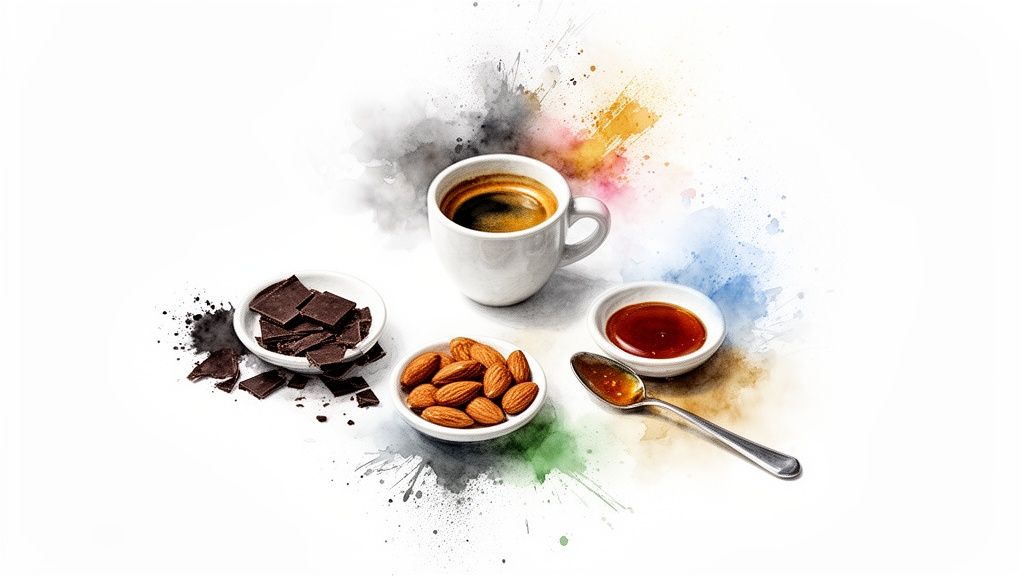
When you start to explore the flavours in a dark roast, one of the most common tasting notes people pick up is rich dark chocolate notes. This isn't just a vague descriptor; it’s a tangible flavour created by the Maillard reaction and sugar browning that happens deep inside the bean during roasting.
But it doesn't stop at chocolate. A good dark roast offers a whole spectrum of deep, comforting flavours. Think of the rich sweetness of molasses or black treacle, the earthy notes of toasted almonds and walnuts, and maybe even a pleasant, subtle smokiness that lingers on the palate.
These are the classic hallmarks of a well-executed dark roast. They come together to create a coffee that feels substantial, with a heavy body and a smooth, long-lasting finish. Our Sumatran Dark Roast Coffee is a perfect example, delivering a heavy-bodied cup with distinct notes of dark chocolate and treacle.
How Roast Level Dominates Flavour
Here’s a fundamental concept in coffee: the longer a bean is roasted, the more the flavours of the roast itself take centre stage, pushing the bean's origin character into the background.
Imagine you're a chef with a beautiful, fresh tomato. A light touch of heat might bring out its natural sweetness and zingy acidity. But if you slow-roast that same tomato for hours, it transforms into a rich, deep, and smoky paste. The original bright tomato flavour hasn't vanished, but it's been fundamentally changed into something new and complex.
The same thing happens with coffee. The distinct regional flavours you might find in a single-origin bean are often muted in a dark roast, overshadowed by the bold, roasty notes developed in the heat. To get a better grasp of this, it's worth learning more about what is single origin coffee and how its unique character is often preserved in lighter roasts.
A dark roast doesn't erase a bean's origin; it reinterprets it. The process creates a rich, roasty canvas where deeper, sweeter notes like chocolate and caramel are amplified, offering a different kind of complexity.
Comparing the Roast Profiles
To truly appreciate what makes a dark roast special, it helps to see how it stacks up against its counterparts. The differences in acidity, body, and flavour are striking and cater to entirely different tastes.
Here’s a simple breakdown to help you see the key differences between the three main roast profiles at a glance.
Roast Profile Flavour Comparison
| Characteristic | Light Roast | Medium Roast | Dark Roast |
|---|---|---|---|
| Body | Light, tea-like | Balanced, smooth | Full, heavy |
| Acidity | High, bright | Medium, balanced | Low, mellow |
| Flavour Notes | Fruity, floral, citrus | Caramel, nutty, chocolatey | Roasty, smoky, dark chocolate |
| Appearance | Light brown, dry surface | Medium brown, minimal oil | Dark brown, oily sheen |
This comparison makes it clear that your perfect coffee really comes down to personal taste. If you love a bright, zesty cup that shows off a bean's unique terroir, a light roast is your best bet. If you prefer a balanced and mellow brew, medium is the way to go.
But for those who crave a coffee that is bold, rich, and intensely flavourful, with a satisfying weight and a smooth finish, there is simply no substitute for a great dark roast coffee. It’s a style that stands proudly on its own, offering a timeless and deeply comforting coffee experience.
How to Brew Dark Roast Coffee at Home
Getting the hang of brewing dark roast coffee at home is a game-changer. It’s incredibly rewarding, and with just a couple of small adjustments, you can pull out a rich, smooth, and deeply satisfying cup every single time. Because dark roast beans are more porous and soluble, they just behave a little differently to their lighter cousins, meaning a bit of extra care really pays off.
The secret is all about managing the extraction. Dark roasts are keen to give up their flavours, so our goal is to capture all that chocolatey, nutty goodness without letting any harsh, bitter notes sneak in. This usually means dialling back the water temperature a touch and being strict with your brew time.
We’ll walk through three of the UK’s favourite brewing methods: the classic Cafetière, the clean and crisp V60, and the ever-versatile AeroPress. Each one can produce a stunning cup of dark roast coffee when you know the right moves.
Key Principles for Brewing Dark Roasts
Before we jump into the specific recipes, let’s go over a few universal rules that will set you up for success, no matter which brewer you’re using.
- Grind Size is Crucial: A coarser grind is generally your best mate here. It slows everything down, giving you more control over the extraction and helping you sidestep the bitterness that a fine grind can so easily create.
- Watch Your Water Temperature: Forget boiling water; it’s far too aggressive for the delicate oils in a dark roast. You want to aim for water that’s just off the boil, somewhere around 90-94°C. This gentler heat coaxes out the sweetness instead of scorching the grounds.
- Time it Right: Dark roasts get the job done faster. Over-steeping is the most common mistake and the quickest route to a bitter brew. Keep a timer handy and stick to the plan.
Keep these three simple rules in mind, and you're already halfway to a perfect cup.
The Cafetière: A Full-Bodied Classic
The Cafetière, or French Press, is a fantastic match for dark roasts. Its full immersion style creates a brew with a heavy body, rich texture, and satisfying mouthfeel. The metal filter lets all the coffee's natural oils flow into the cup, which is exactly what you want for a bold, robust coffee.
Here’s a simple guide to get it right:
- Grind Your Beans: Go for a coarse grind, something like the texture of rough sea salt. For a standard 8-cup (1 litre) Cafetière, you’ll need about 60 grams of coffee.
- Add Water: Pour your hot water (around 92°C) over the grounds, making sure to wet them all. Start your timer as you pour and fill the Cafetière to the top.
- Wait and Plunge: Pop the lid on but don’t plunge just yet. Let the coffee steep for exactly 4 minutes. Any longer, and you're inviting bitterness to the party. After four minutes, press the plunger down slowly and steadily.
- Serve Immediately: This is critical. Pour all the coffee out straight away. If you leave it sitting in the Cafetière, it will keep brewing and turn bitter.
This method is perfect for a lazy Sunday morning, giving you a proper, hearty cup that holds up beautifully to a splash of milk.
The V60: A Cleaner Cup
Often seen as the go-to for light, floral coffees, the V60 can actually produce a wonderfully clean and nuanced cup of dark roast. The trick is to tweak your technique to bring out the sweetness and avoid over-extracting.
Using a V60 with a dark roast lets you highlight those subtle smoky and sweet notes without the heavy texture you get from immersion. It’s all about a controlled, gentle pour.
Follow these steps for a perfect dark roast V60:
- Grind and Prepare: Use a medium-coarse grind. Pop a paper filter in your V60 and give it a good rinse with hot water. This gets rid of any paper taste and warms up the brewer.
- Bloom the Coffee: Add 20 grams of coffee to the V60. Start your timer and pour in 60 grams of water at 90°C. Give it a gentle swirl and let it 'bloom' for 30 seconds to release trapped gases.
- Pour in Stages: Slowly pour the rest of the water in steady, concentric circles. Aim to have your total 320ml of water in by the 1:30 mark. The entire brew should finish dripping through by around 2 minutes and 30 seconds.
- Enjoy: Once the dripping stops, give your cup a swirl to mix the flavours and enjoy the clean, aromatic result.
The AeroPress: Ultimate Versatility
The AeroPress is a home brewer's dream, giving you total control over every part of the process. For dark roasts, the inverted (upside-down) method works wonders. It combines immersion with pressure to create a rich, almost espresso-like concentrate.
Here’s our go-to recipe:
- Set Up: Assemble the AeroPress in the inverted position and sit it on a sturdy mug. Use a medium-fine grind—a touch finer than you would for a V60.
- Brew: Add 18 grams of coffee, followed by 80 grams of water at 92°C. Stir gently for about 10 seconds, then let it steep for a minute.
- Press: Secure the filter cap, carefully flip the AeroPress onto your mug, and press down firmly and slowly. It should take about 30 seconds to push all the water through.
- Dilute: You’ll be left with a strong coffee concentrate. Top it up with hot water for a classic Americano or add steamed milk for a café-style latte.
This method delivers a rich, full-flavoured cup with very little acidity. It's quick, clean, and ridiculously consistent.
While we've covered immersion and pour-over, if you're curious about stovetop methods, you can learn how to brew with a Moka pot in our other guide.
Once you've mastered brewing at home, you might want to invest in some collapsible travel cups for enjoying coffee on the go to keep your drink warm and cut down on waste.
Sourcing Ethical and Decaffeinated Options
For today’s coffee lover, a great cup is about more than just taste. It’s about knowing where your beans come from, how they were grown, and that the farmers who produced them were treated fairly. This focus on the story behind the bean is becoming a powerful force in the coffee world.
The UK coffee scene is absolutely booming, set to grow from £7.5 billion in 2024 to a staggering £9 billion by 2035. With that kind of growth comes a greater sense of responsibility. Freshness and ethics are paramount, especially when you learn that UK roasted imports were a mere 423 tonnes in 2023. This really highlights the value of local, conscientious roasters like us. If you’re curious, you can discover more insights about the UK coffee market's trajectory and see just why sustainability matters so much.
This shift towards conscious consumption means certifications like Fair Trade and Rainforest Alliance aren't just labels; they're promises. They’re a guarantee of fair wages, safe working conditions, and farming practices that are kind to our planet.
Our Commitment to Ethical Coffee
Here at Seven Sisters Coffee Co, these principles are baked into everything we do. We genuinely believe that exceptional coffee can—and should—be a force for good. That’s why we’re so committed to sourcing our beans from farms that uphold the highest ethical standards.
We also put our money where our mouth is by donating a percentage of every single order to World Coffee Research. This non-profit is dedicated to protecting and future-proofing coffee. Their work helps farmers tackle climate change and grow more sustainable, higher-quality crops for generations to come.
By choosing ethically sourced coffee, you're not just buying a product; you're casting a vote for a fairer, more sustainable industry. Every cup becomes part of a positive global impact.
This dedication runs through our entire range, from our boldest single-origin dark roasts to our flavour-packed decaf. Understanding what these commitments really mean is key, so feel free to explore our guide on what is Fair Trade coffee to learn more about the standards we champion.
Delicious Dark Roast Without the Caffeine
Who says you can't enjoy a rich, satisfying dark roast in the evening? The demand for brilliant decaf has shot up, and thankfully, modern methods mean you no longer have to compromise on flavour. We've come a long way from the days when decaf was just a pale imitation of the real thing.
We exclusively use the Swiss Water Process for our decaffeinated beans. It’s a remarkable, 100% chemical-free method that gently coaxes the caffeine out using only pure water, temperature, and time.
Here’s a simple breakdown of how it works:
- Creating the Flavour Essence: First, a batch of green beans is soaked in hot water. This creates a solution full of all the soluble flavour compounds from the coffee, which is called Green Coffee Extract (GCE). The beans from this first step are discarded.
- Filtering the Caffeine: The caffeine is then filtered out of this GCE using a special carbon filter system, leaving behind a caffeine-free, flavour-charged liquid.
- The Magic Step: A fresh batch of green coffee beans is then soaked in this special GCE. Because the water is already saturated with all the good stuff from coffee, only the caffeine molecules migrate from the beans into the water. All the original flavour stays right where it belongs—in the bean.
This incredibly clever process ensures our decaf dark roast keeps all the deep, chocolatey notes and full-bodied character you love. It’s the perfect way to enjoy a superb cup of coffee, any time of day. You can buy our Decaffeinated Coffee and taste the difference for yourself.
Choosing and Storing Your Coffee Beans
You're at the final, crucial step in your dark roast journey: choosing the right beans. When you pick up a bag, the first thing to look for is the roast date. Freshness is everything in coffee, and the beans hit their absolute peak within a few weeks of being roasted.
Next, have a good look at the beans themselves. A hallmark of a proper dark roast is a subtle, glossy sheen on the surface. That’s not a flaw—it's the natural oils that the longer roast has coaxed out, a sure sign of the rich, full-bodied flavour waiting for you.
Finding Your Perfect Dark Roast
To guarantee freshness and exceptional quality, it always pays to start with a trusted source. We've put together a few of our favourite dark roasts, each one designed to deliver that classic, bold character people love.
- For Espresso Lovers: The Seven Sisters Espresso Blend is the perfect foundation for a rich, syrupy shot with a thick, satisfying crema.
- For a Rich & Bold Cup: Our Sumatran Dark Roast delivers those deep, comforting notes of dark chocolate and treacle.
- For the Perfect Gift: Explore our Coffee Hampers, which bring together our exceptional beans with a few curated accessories.
Keeping Your Beans Fresh
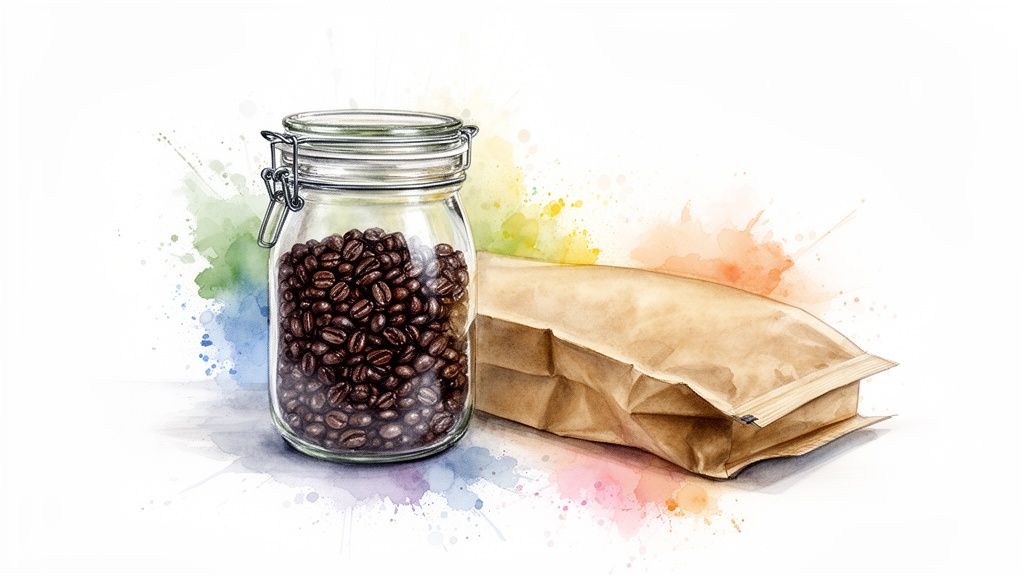
Once you’ve got your beans home, storing them properly is non-negotiable if you want to protect their flavour. The four biggest enemies of fresh coffee are oxygen, light, heat, and moisture. This means the absolute worst places to keep your coffee are the fridge or freezer—a common myth that actually does more harm than good.
The ideal home for your dark roast coffee is simple: an airtight container, tucked away in a cool, dark cupboard. This one small step protects those delicate oils and aromatics, ensuring every single cup tastes as incredible as the last.
For a much deeper dive, have a look at our complete guide on how to store coffee beans and keep them tasting their absolute best.
Got Questions About Dark Roast Coffee?
Even after diving deep into roasting and flavour, a few questions always seem to pop up. Let's clear the air on some of the most common queries about dark roast coffee, busting a few myths so you can sip with complete confidence.
Does Dark Roast Coffee Have More Caffeine?
This is one of the most stubborn myths in coffee, and the answer isn't as simple as you'd think. If you measure your coffee by weight, light roast beans technically have a tiny bit more caffeine. But because the dark roasting process makes beans less dense, a scoop of dark roast can sometimes pack more of a punch than a scoop of light roast.
Honestly, the difference is so small it’s barely worth mentioning. The brewing method you choose and your coffee-to-water ratio will have a much bigger impact on the caffeine in your final cup. The best advice? Just pick the roast you enjoy the flavour of most.
Is Dark Roast Coffee Bad for Your Stomach?
For a lot of people, it’s actually the other way around. The longer roasting time naturally reduces the coffee's acidity and breaks down some of the chemical compounds that can irritate sensitive stomachs.
Many coffee drinkers who struggle with acid reflux or indigestion find that a smooth, low-acidity dark roast is much gentler on their system. Our oxygen-free roasting process takes this smoothness a step further, making our dark roasts a brilliant choice for a truly comfortable brew.
What Is the Best Way to Use Dark Roast Beans?
Dark roasts are incredibly versatile, which makes them a fantastic all-rounder for all sorts of brewing styles. They are the classic choice for espresso, consistently pulling rich, syrupy shots with that thick, stable crema everyone loves.
Their full body and deep, chocolatey notes also really come alive in full-immersion methods.
- Cafetière (French Press): This method is perfect for highlighting the coffee’s heavy body and rich texture.
- AeroPress: You can easily create a strong, espresso-like concentrate with almost no bitterness.
- Cold Brew: Dark roasts make a wonderfully bold, smooth, and naturally sweet cold brew that's hard to beat.
Whether it’s your classic morning brew or a bold espresso, a good dark roast always delivers.
Why Are Some Dark Roast Beans Oily?
That glossy sheen on the surface of your beans is completely natural—in fact, it’s a good sign of a proper dark roast. As the beans spend more time in the roaster and go past the "second crack," their internal oils start to migrate to the surface.
This isn’t a flaw; it's a key characteristic that contributes directly to the coffee's rich flavour and full-bodied mouthfeel. It’s exactly what you want to see when you're after that classic, bold character so many of us in the UK love. In fact, our love for premium brews is a huge part of the UK speciality coffee boom, with 23% of out-of-home consumption now being speciality coffee. You can explore more details about the UK's coffee market potential here.
Ready to explore the rich, smooth world of expertly roasted coffee? Seven Sisters Coffee Co offers a curated selection of exceptional dark roasts, crafted with our unique oxygen-free process for unparalleled flavour. Discover your new favourite brew by browsing our Sumatran Dark Roast Coffee today.