
Ethiopian ceremony coffee: A Guide to the Ritual and Flavour

The Ethiopian coffee ceremony, known as ‘Buna’, isn't just about brewing coffee. It's a deeply significant ritual at the very heart of Ethiopian culture—a celebrated act of hospitality, friendship, and community that turns a simple drink into a shared, multisensory experience.
The Heart of Ethiopian Coffee: A Rich Cultural Tradition
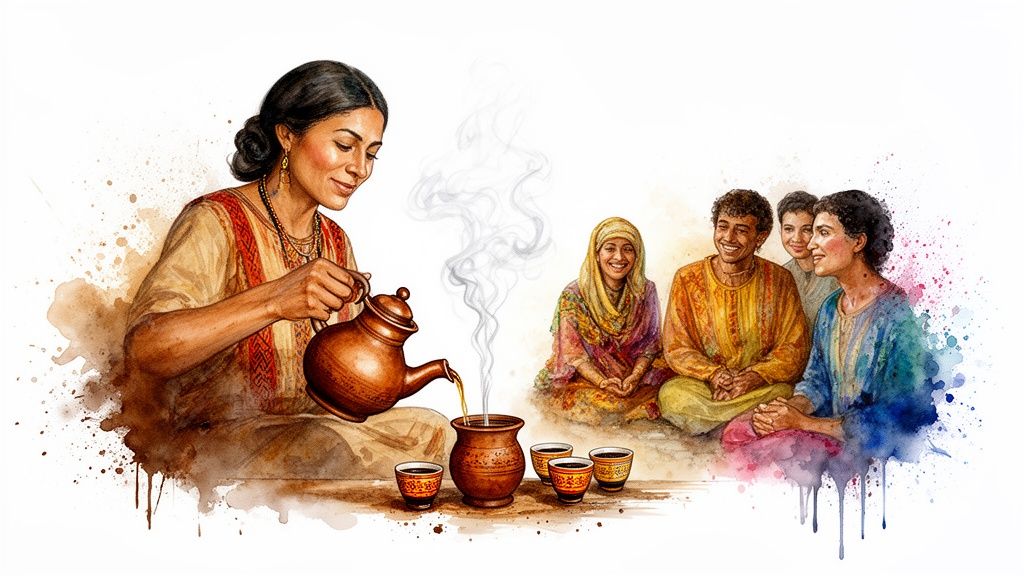
In Ethiopia, an invitation to a coffee ceremony is a genuine sign of respect and friendship. The ritual is a deliberately unhurried affair, often lasting for hours, and it carves out a special space for conversation, storytelling, and strengthening community bonds. For many, it's a daily practice that provides a welcome pause from the rush of life.
The tradition is rich with symbolism and structure. Frankincense is often burned to purify the air, while fresh grasses are spread across the floor to bring a touch of nature indoors. The entire process, from roasting the green beans to the final pour, is a performance that engages all the senses—the sizzle of the beans, the rich aroma filling the room, and finally, the intense flavour of the coffee itself.
The Three Sacred Rounds
A complete ceremony always involves serving three distinct rounds of coffee, each with its own name and significance. This progression from the strongest brew to the weakest symbolises a journey of transformation and deepening connection among those present.
- Abol (አቦል): The first and most potent round. This is the strongest brew, said to have the boldest spirit and flavour.
- Tona (ቶና): The second serving, made by adding more water to the same coffee grounds. It's lighter than the Abol but still wonderfully rich.
- Baraka (በረካ): The final round, which translates to "to be blessed." As the mildest brew, it's considered a final blessing for everyone taking part.
This structured serving isn't just about drinking coffee; it’s a ceremonial act that encourages guests to slow down, connect, and savour the moment. Accepting all three rounds is considered polite, as each cup is believed to deepen the social and spiritual bond.
This captivating ritual is no longer confined to Ethiopia. The tradition has found a growing appreciation here in the UK, where its focus on mindfulness and community resonates deeply. In fact, this interest is part of a larger trend, with speciality coffee shops seeing 9.1% annual growth, partly fuelled by showcasing authentic cultural experiences like this one.
Bringing this beautiful tradition into your own home is a wonderful way to explore a new dimension of coffee. It’s a chance to appreciate the nuanced flavours that come from carefully prepared single-origin coffee beans and to create a unique and meaningful gathering for your friends and family.
Gathering Your Tools and Ingredients
To truly capture the magic of an Ethiopian coffee ceremony, you’ll need to get a few key items together. While the traditional tools create a wonderfully authentic atmosphere, don’t feel you have to track them all down. Many common kitchen utensils work beautifully as stand-ins, letting you embrace the spirit of the ritual without a frantic search for specialised equipment.
The most important ingredient, of course, is the coffee. The ceremony starts with green, unroasted beans. Roasting them in a pan just moments before brewing is what fills the room with that incredible, intoxicating aroma—it's a core part of the experience and a signal that something special is about to begin.
Essential Equipment for Your Coffee Ceremony
Choosing your tools is the first step in setting up your space. The iconic clay coffee pot, the Jebena (ጀበና), is central to the traditional process, but you can absolutely go ahead without one. What matters most is honouring the slow, intentional process of brewing.
To help you get started, here’s a look at the traditional items alongside some practical, modern alternatives you probably already have in your UK kitchen.
Essential Equipment for Your Coffee Ceremony
| Traditional Item | Purpose | Modern UK Alternative |
|---|---|---|
| Jebena (ጀበና) | A clay pot for slowly brewing coffee over heat. Its unique shape helps the grounds settle. | A small saucepan, a Turkish ibrik, or even a French press can be used to brew the coffee. |
| Roasting Pan | A long-handled, shallow pan for roasting green coffee beans over hot coals or a flame. | A simple, heavy-bottomed skillet or a cast-iron pan on your hob will do the job perfectly. |
| Mortar & Pestle | Used to hand-grind the freshly roasted beans to a medium-coarse consistency. | A blade-style electric coffee grinder is a quick and effective alternative. Just pulse it briefly to avoid too fine a powder. |
| Cini (ሲኒ) Cups | Small, handleless ceramic cups for serving the coffee, perfectly sized for the three rounds. | Small espresso cups or demitasse cups are an excellent and widely available substitute. |
This adaptability is key. The real heart of the Ethiopian ceremony coffee lies in the shared experience and hospitality, not just in having the perfect set of tools.
Sourcing Your Core Ingredients
With your equipment sorted, it's time to focus on the ingredients that bring the ceremony to life. Using high-quality components will make a world of difference to the final taste and aroma.
-
Green Coffee Beans: This is your starting point. The choice of bean dictates the entire flavour profile. For a truly authentic taste, you’ll want a high-quality single-origin variety. We highly recommend exploring a selection of premium Ethiopian coffee beans to find the perfect match for your ceremony.
-
Incense: Traditionally, frankincense (etan) or myrrh is burned throughout the ceremony. The fragrant smoke is believed to purify the space and ward off negative spirits, adding another beautiful layer to the sensory experience. You can find authentic Ethiopian incense to complete the atmosphere.
-
Snacks: Simple snacks are always served alongside the coffee. Popcorn is a classic and hugely popular choice, often made fresh during the ceremony itself. Roasted barley (kolo) or simple, lightly salted nuts also pair beautifully with the coffee's bold flavour.
A Note on Roasting: Don't be intimidated by the idea of roasting green beans at home! It's an incredibly rewarding process. Watching the beans transform in colour and release their oils is part of the ceremony’s magic, connecting you directly to the coffee’s journey from a raw seed to a delicious brew.
For anyone new to this, the process is simple: heat the beans in a pan, stirring constantly until they turn a rich, uniform brown and start to look glossy. If you're looking for more detailed guidance, learning the basics of how to roast coffee beans will give you the confidence you need to master this crucial part of the ritual. Once these items are gathered, you’re ready to begin.
Performing The Coffee Ceremony In Your Home
Hosting an Ethiopian coffee ceremony is more than just brewing a drink; it’s about creating a moment of connection and sensory delight. We'll walk you through the entire process, from start to finish, so you can share this beautiful tradition with confidence and respect right in your own home. The ceremony is a journey, starting with the raw, green beans and ending with three distinct, meaningful cups of coffee.
The whole thing kicks off not with brewing, but with roasting. This is probably the most magical part of the Ethiopian ceremony coffee, as the incredible, evolving aroma fills your kitchen and lets your guests know the experience has truly begun.
This simple visual shows you the core flow, from the green beans all the way to the traditional brewing pot.
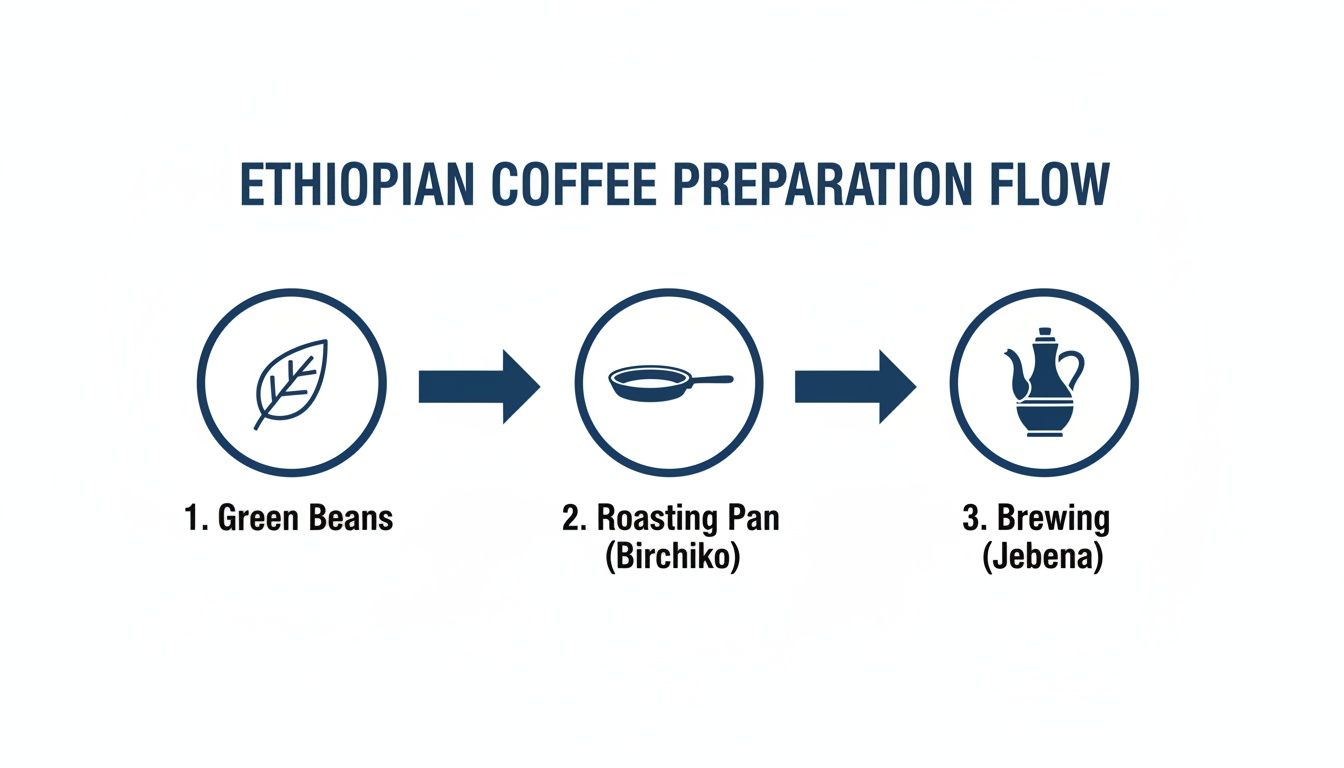
As you can see, the ceremony is very hands-on. Each step is a deliberate and essential part of the ritual.
The Initial Preparation Roasting The Green Beans
First things first: wash the green coffee beans. Just take a small handful—enough for everyone you're serving—and rinse them gently in a bowl of cold water. Any dust or chaff will float to the top. Drain them well before you get roasting.
Traditionally, this happens over hot coals, but your kitchen hob is a perfect substitute. Tip the clean, damp beans into a dry, heavy-bottomed skillet or pan over a medium heat. Now, start stirring continuously with a wooden spoon. This constant movement is the secret to an even roast.
You'll get to watch a real transformation. The beans will go from green to pale yellow, then to a light cinnamon, and finally to a deep, rich brown. As they darken, they'll start to release their natural oils, giving them a lovely sheen. Listen out for a distinct cracking sound, a bit like popcorn, which tells you they're hitting a medium roast.
Host Tip: Once the beans are roasted to your liking, it's time for a bit of theatre. Present the hot pan to your guests and waft the aromatic smoke towards them. This is a traditional gesture of hospitality and a key part of the sensory experience, inviting everyone to share in the fragrance.
After this, get the beans onto a cool plate or tray to stop the cooking process. Let them rest for a few minutes before the next stage.
From Bean To Brew Grinding And Brewing
Once the beans have cooled, it’s time to grind. A traditional mortar and pestle gives a wonderfully tactile feel to the process, but a simple electric blade grinder is a great modern alternative. Just pulse it in short bursts. You're aiming for a medium-coarse consistency, not a fine powder.
Next, you'll need your Jebena. If you have one, fill it with cold water and add the freshly ground coffee. A good starting point is a ratio of about one part coffee to three parts water, but feel free to adjust this to your own taste. Pop the Jebena on the hob over a medium-low heat.
No Jebena? No problem. A small saucepan or a Turkish ibrik will do the job nicely. The principle is exactly the same: bring the coffee and water mixture slowly to a boil. As it heats up, a foam will rise to the top. The moment it reaches the neck of the Jebena or the brim of your pan, take it off the heat.
Now, let it sit for a few minutes. This patient pause is crucial for letting the grounds settle at the bottom, which means you'll get a clear, grit-free cup. If you're keen to explore other brewing styles, you can find more inspiration in our guide on how to brew coffee using various techniques.
The Three Rounds Of Serving
The serving is the ceremony's grand finale, and it happens in three distinct rounds. Each round has its own name and character, representing a journey from strength to blessing. The host pours the coffee in a single, continuous stream from about a foot high, aiming for the small cini cups arranged closely together. This elegant pour not only looks beautiful but also aerates the coffee.
First Round The Potent Abol
The first pour is the Abol (አቦል). This is the strongest, most flavourful of the three rounds. It’s often served black so guests can really appreciate the pure character of the beans you've just roasted. It's bold, intense, and sets the stage for what's to come.
Second Round The Sociable Tona
After everyone has had their Abol, the host adds more hot water to the Jebena—without any new coffee grounds—and puts it back on the heat. The resulting brew is the Tona (ቶና). This second round is milder and smoother, a more relaxed cup that encourages conversation to flow. This is usually when sugar is offered.
Final Round The Blessed Baraka
The final round is the Baraka (በረካ), which translates to "blessing." Brewed with even more water added to the same grounds, this is the lightest cup of the three. It acts as a final gesture of hospitality and shared blessing, bringing the ceremony to a gentle, meaningful close. To fully participate, it’s considered polite for guests to accept all three rounds.
Hosting is all about creating an atmosphere of warmth. For those looking to create a special gathering, some of the principles involved in organising a meaningful community event can be surprisingly helpful here too.
Adapting For A Modern UK Kitchen
You don't need to completely redecorate to embrace the Ethiopian coffee ceremony at home. The ritual is beautifully adaptable, and its spirit can be fully captured with a few modern tweaks.
- Heat Source: Instead of a charcoal stove, your electric or gas hob will work perfectly for both roasting beans in a skillet and heating the Jebena. Just keep the heat steady and medium.
- Grinding: A mortar and pestle is traditional, but an electric blade grinder is fast and effective. Remember to pulse it, not hold it down, to get that coarser texture.
- Atmosphere: You can still create a special mood without spreading grass on the floor. Try lighting some frankincense or myrrh on a heatproof dish, put on some gentle Ethiopian music, and arrange comfy seating for your guests.
- Snacks: Freshly made popcorn is a classic pairing, but a simple bowl of roasted nuts or a plain sponge cake also works wonderfully with the strong coffee, honouring the tradition of serving a little something to eat.
With these small adjustments, you can perform a beautiful and respectful Ethiopian ceremony coffee that feels both authentic and perfectly at home in your own kitchen. The most important things—hospitality, connection, and savouring the moment—always remain the same.
Choosing the Perfect Ethiopian Coffee Beans
Getting the beans right is the absolute heart of an authentic Ethiopian coffee ceremony. The ritual itself is beautiful, of course, but the soul of the experience truly comes alive in the flavour filling each small cup. As the birthplace of coffee, Ethiopia offers a staggering diversity of beans, and each one has a unique personality shaped by the soil and altitude of its home region.
Think of it like choosing a good bottle of wine. The origin tells you a story about what to expect, guiding you towards a flavour profile that you and your guests will genuinely love.
Navigating Ethiopia's Famous Coffee Regions
The flavour profiles you can find in Ethiopian coffees are famously complex. For the ceremony, you can't go wrong with beans from two of the most celebrated regions, Yirgacheffe and Sidamo. Both produce coffees with bright, nuanced flavours that really come to life when they're freshly roasted.
- Yirgacheffe: Beans from this region are known for their delicate, almost tea-like body and a clean, bright acidity. You'll often find vibrant floral notes like jasmine or bergamot, followed by a zesty citrus finish that might remind you of lemon or tangerine.
- Sidamo (or Sidama): Coffee from Sidamo tends to be wonderfully complex and rich. Expect a symphony of fruity notes—from sweet berries and stone fruit to hints of tropical mango—all beautifully balanced by a smooth, full-bodied mouthfeel.
Starting with high-quality green beans from one of these regions is the ideal. The act of roasting them yourself is central to the Ethiopian ceremony coffee, as it unlocks those incredible aromas just moments before you brew.
Convenience Without Compromise: Pre-Roasted Beans
While roasting your own green beans is traditional, let's be realistic—it's not always practical for a modern kitchen. If you're short on time or just getting started, a high-quality, pre-roasted bean is a fantastic alternative that still honours the spirit of the ceremony.
The secret here is freshness. We suggest looking for beans that have been roasted in an oxygen-free environment. This is a modern technique designed to lock in the volatile aromatic compounds that make Ethiopian coffee so special, stopping them from degrading over time.
When you're picking a pre-roasted coffee, always aim for a light to medium roast. A darker roast can easily overwhelm the bean's natural floral and fruity notes, masking the very characteristics that make Ethiopian single-origins so sought after. The goal is to celebrate the bean's origin, not the roast itself.
This love for high-quality Ethiopian coffee has certainly taken root here in the UK. Market analysis projects that the UK will hold a commanding 14.60% share of Europe's Ethiopia coffee market in 2025, which really speaks to our nation's discerning palate. You can see this trend in cities like London, where thousands of independent coffee shops proudly feature Ethiopian single-origins with high cupping scores.
A Ceremony for Everyone: Decaffeinated Options
The beauty of the Ethiopian coffee ceremony is its spirit of community and inclusivity. It’s all about sharing a moment together, and no one should have to miss out because of caffeine sensitivity. Luckily, modern decaffeination processes have come a very long way, making it possible to remove the caffeine while preserving the bean's intrinsic flavour.
Look for beans that have been decaffeinated using the Swiss Water or CO2 methods. These processes are completely chemical-free and are known for being exceptionally gentle, leaving the delicate floral and citrus notes of a Yirgacheffe or Sidamo wonderfully intact.
Choosing a quality decaf ensures everyone can participate fully in all three rounds of the ceremony, from the potent Abol to the blessed Baraka. It's a thoughtful touch that makes the experience even more welcoming for all your guests. For a broader look at high-quality beans, feel free to explore our full range of speciality coffee beans from around the world.
Serving Etiquette and Thoughtful Food Pairings

The ritual of an Ethiopian ceremony coffee is, at its heart, an act of sharing. The way you serve the coffee and welcome your guests is just as meaningful as the brewing itself. This is what transforms a simple drink into a profound gesture of hospitality.
The host is central to the etiquette. Traditionally, the person hosting the ceremony pours the coffee from the Jebena into the small cini cups from a height of about a foot. This isn't just for show—that long, graceful pour helps cool the coffee to a perfect drinking temperature and cleverly prevents any grounds from escaping the pot.
For guests, the main role is to show appreciation. When you receive your cup, it’s customary to praise the aroma and flavour. Simple words of enjoyment are a lovely way to honour the host’s effort. Remember, accepting all three rounds—Abol, Tona, and Baraka—is a sign of respect that fully embraces the ceremony's journey.
Traditional Accompaniments
In Ethiopia, coffee is rarely served alone. Simple snacks are an essential part of the experience, offering a wonderful textural and flavour contrast to the rich brew. These aren’t meant to be elaborate; their role is to complement, not overshadow, the coffee.
Some classic pairings you can easily recreate at home include:
- Freshly Made Popcorn: This is the most common and beloved snack. Lightly salted and often made just as the coffee is brewing, its simple, savoury crunch is the perfect foil for the coffee’s bold character.
- Roasted Barley (Kolo): A crunchy and nutty mix of roasted barley, sometimes with chickpeas and seeds. It has a wholesome, earthy flavour that pairs beautifully.
The act of sharing food, no matter how simple, deepens the sense of community. It reinforces the idea that the ceremony is about more than just a drink; it's about nurturing relationships and creating a shared, memorable moment.
Modern Pairings For A UK Setting
While traditional snacks are fantastic, you can absolutely honour the spirit of hospitality with pairings that are easier to find in a UK kitchen. The key is to choose simple, clean flavours that let the coffee's complex profile remain the star of the show.
For a modern twist that still respects the tradition, you could try:
- Lightly Salted Nuts: A bowl of almonds, cashews, or peanuts offers a satisfying crunch and savoury note, much like Kolo.
- Simple Sponge Cake: A classic Victoria sponge or a plain Madeira cake provides a soft texture and gentle sweetness that won't compete with the coffee.
- Plain Biscuits: You can't go wrong with a simple shortbread or digestive biscuit. They're an excellent choice for a subtle, familiar accompaniment.
Ultimately, the goal is to create a welcoming atmosphere. Choosing high-quality beans is your first step. If you're curious about the nuances that make these brews so unique, you can learn more about what is speciality coffee and why origin matters so much. By thoughtfully pairing your brew with simple, delicious snacks, you complete the circle of hospitality that makes this ceremony so special.
Your Ethiopian Coffee Ceremony Questions Answered
We’ve walked through the steps, but you might still have a few questions buzzing around. To help you host with total confidence, here are some practical answers to the most common queries we hear. Think of this as your final checklist before you start brewing.
Do I Have To Use Green Coffee Beans?
Traditionally, yes. Roasting the green beans right there in the room is a massive part of the whole sensory experience—that incredible, evolving aroma is what makes an Ethiopian coffee ceremony so memorable.
However, let’s be realistic. If you're short on time or just aren't ready to roast your own, using high-quality, freshly roasted whole beans is a perfectly fine shortcut. We'd suggest a light to medium roast to keep those delicate, fruity notes alive. The one non-negotiable? Grind them right before you brew to get the best possible flavour.
How Long Does A Traditional Ceremony Take?
A full-blown ceremony is a leisurely affair, often stretching anywhere from one to three hours. It's designed to be slow, a deliberate pause in the day for connection and conversation. The relaxed pace is really its greatest charm.
For a modern version at home, you can absolutely adapt the timing. You can host a meaningful and respectful ceremony in about an hour, especially if you have all your equipment ready to go. The key is not to rush it. The goal is to savour the moment, not just get caffeinated.
A Note on Time: The unhurried nature of the ceremony is a deliberate contrast to modern life. It's a built-in opportunity to pause, put phones away, and be present with your guests, transforming a simple coffee into a shared experience.
Can I Add Sugar Or Milk To The Coffee?
In Ethiopia, it's pretty common to drink the first round, the Abol, completely black to appreciate the pure, unadulterated flavour. After that, adding sugar to the milder second and third rounds is very popular. In some regions, they might even add a pinch of salt or a dollop of spiced butter (niter kibbeh) for a unique twist.
Milk, however, is a definite no-go. It’s just not part of the tradition. The best approach is to serve sugar on the side and let your guests decide. That way, you're honouring the custom while still letting everyone enjoy their coffee just the way they like it.
What If I Don’t Have A Traditional Jebena?
While the jebena—that beautiful clay pot—is the iconic centrepiece, its absence shouldn't stop you from hosting. The heart of this ritual isn’t the equipment; it’s the shared process and the spirit of hospitality you bring to it.
A French press is a great substitute, or you could even use a simple saucepan to brew the coffee. What really matters is that you brew it slowly, give the grounds time to settle, and serve it with the same care and intention. Your focus on creating a warm, welcoming atmosphere is what will make it special.
At Seven Sisters Coffee Co, we believe that exceptional coffee experiences should be accessible to everyone. To start your own journey, why not explore our curated selection of high-quality, single-origin Ethiopian coffee beans? We have everything you need to bring the authentic taste of this beautiful tradition into your home.