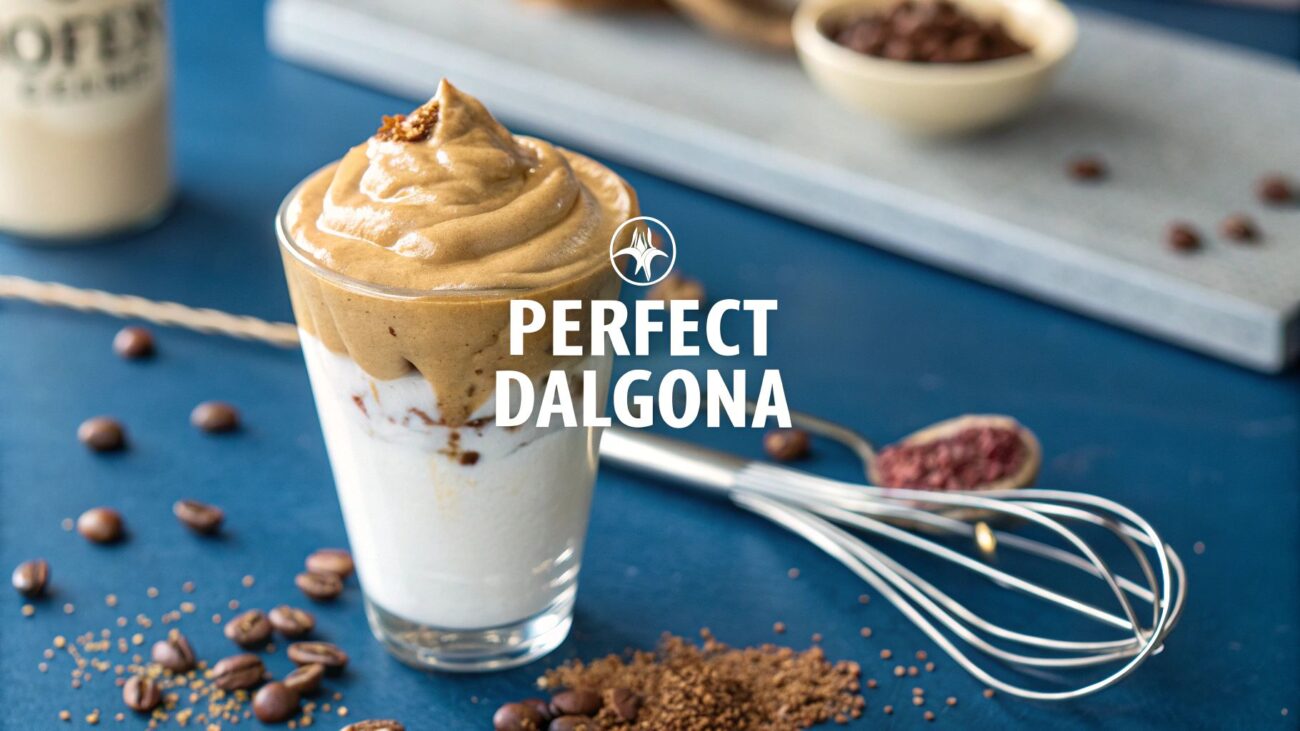
A Perfect Vietnamese Egg Coffee Recipe to Make at Home

A proper Vietnamese egg coffee comes down to just four things: strong dark coffee, fresh egg yolks, sweetened condensed milk, and a splash of vanilla extract. The real magic, though, is in the technique—whipping the yolks and milk into a thick, sweet, meringue-like cream that floats perfectly on top of the rich coffee.
The Surprising Story Behind Vietnamese Egg Coffee

Before you start measuring ingredients, it’s worth knowing the story of Cà Phê Trứng (which simply means 'egg coffee'). It’s more than just a drink; it's a piece of Vietnamese history, born from sheer ingenuity during a time of real hardship.
The tale begins in 1940s Hanoi during the First Indochina War. With fresh milk a rare and expensive luxury, a bartender named Nguyen Van Giang at the Sofitel Legend Metropole Hotel had to get creative. He needed a substitute to whip up creamy cappuccinos for the hotel’s guests.
His solution was as simple as it was brilliant: he whisked egg yolks with sugar to replace the frothy milk. The result? A velvety, rich, and sweet cream that perfectly cut through the bitterness of the dark coffee.
From Humble Origins to a Global Favourite
What started as a clever fix quickly became a local sensation. Giang eventually left the hotel to open his own small café, Café Giang, dedicated entirely to his signature creation. To this day, it remains one of Hanoi's most famous spots, still serving the original Vietnamese egg coffee recipe to locals and tourists alike.
This drink is treasured for its unique texture and flavour. Think of it as a liquid tiramisu or a drinkable crème brûlée. The foam is undoubtedly the star of the show:
- Velvety and thick, it has a consistency almost like a soft meringue.
- Sweet and rich, thanks to the condensed milk that provides a deep sweetness to balance the coffee's intensity.
- Bold and balanced, sitting beautifully atop a strong, dark Vietnamese coffee, which is traditionally brewed using a phin filter.
A New Craze in the UK
The unique charm of Cà Phê Trứng is now making waves with coffee lovers here in the UK. With Brits drinking an estimated 95–100 million cups of coffee daily and the café industry pulling in over £15 billion each year, there's always an appetite for something new.
In this buzzing market, the rich, dessert-like quality of egg coffee offers an exciting experience for adventurous palates. You can discover more about the potential of Vietnamese coffee in the UK. This bit of history really gives you an appreciation for the drink you’re about to craft in your own kitchen.
Getting Your Kit Together: Ingredients & Equipment
The secret to a truly phenomenal egg coffee isn't some complicated, cheffy technique. It all comes down to the quality of what you put into it. Before we get into the magic of whisking and brewing, let's get our ducks in a row. Think of it as your mise en place—having everything ready makes the whole process a breeze.
The ingredient list is wonderfully short, which means every single item has a chance to shine. There’s simply nowhere for poor-quality stuff to hide, so try to use the best you can find.
The Core Ingredients Checklist
For an authentic Cà Phê Trứng, you only really need four things. It’s how they work together that creates that velvety, decadent experience.
- High-Quality Dark Roast Coffee: The coffee is the backbone of this drink. You need something strong, bold, and intense to slice through the rich, sweet foam. Traditionally, it's made with Vietnamese Robusta beans, famous for their deep, almost chocolatey flavour.
- Fresh Egg Yolks: This is the heart and soul of the creamy topping. Use the freshest eggs you can get your hands on; they whip up into a much more stable and delicious foam. We’ll get into the safety side of things later on.
- Sweetened Condensed Milk: The classic sweetener. This is what gives the foam that signature, almost-pudding-like texture and sweetness. Don't skimp here!
- A Touch of Vanilla Extract (Optional): While not strictly traditional, a tiny drop of good vanilla extract can really round out the flavours and mellow any potential 'eggy' taste some people worry about.
Choosing Your Coffee
Finding authentic Vietnamese Robusta can be a bit tricky in the UK, especially with recent market shifts impacting both availability and price. In the first half of this year alone, the UK saw a staggering 68.4% year-on-year price hike for Vietnamese coffee imports, and supply has tightened up.
But don't let that stop you. A fantastic dark roast is an excellent, and readily available, substitute. We’ve got several blends at Seven Sisters Coffee Co. that pack the necessary intensity and low acidity to perfectly balance the sweetness of the foam.
Your Cà Phê Trứng Toolkit
You definitely don't need a professional café setup, but a few key tools will make a world of difference. To get that authentic taste and texture, having the right brewing equipment is a big part of the puzzle. If you're looking to upgrade your setup, it's worth reading a guide on choosing the right coffee machine to see what might work for you.
Here's a quick rundown of what you'll need to nail your homemade Vietnamese Egg Coffee.
| Equipment | Recommended Type | Why It's Important | Where to Buy (UK) |
|---|---|---|---|
| Coffee Brewer | Vietnamese Phin Filter | Creates the traditional strong, slow-drip coffee that's essential for authentic flavour. | ADS Coffee Supplies |
| Whisk | Electric Hand Whisk | Achieves the thick, glossy foam in minutes without breaking your arm. | ADS Coffee Supplies |
| Mixing Bowl | Small, Deep Bowl | A deeper bowl prevents splashes and helps the foam build volume quickly. | Any major kitchenware retailer |
| Serving Glass | Small, Heatproof Glass | Shows off the beautiful layers and is the traditional way to serve. | ADS Coffee Supplies |
While some of these items are ideal, the good news is you likely have great alternatives already sitting in your kitchen.
The main goal is to brew a very strong, concentrated coffee. A traditional Vietnamese phin filter is perfect for this. It’s a slow-drip method that produces an incredibly rich and potent brew, which is exactly what this recipe needs.
If you don't have a phin, though, you can still make a brilliant egg coffee with what you've got.
- Espresso Machine: Pulling a double shot of espresso gives you that perfect concentrated coffee base in seconds.
- Moka Pot: This classic stovetop brewer makes a strong, espresso-like coffee that works beautifully. If you need a quick refresher, have a look at our guide on how to brew with a Moka pot.
- Electric Whisk: Honestly, while you could whisk this by hand, an electric hand whisk is your best friend. It makes getting that thick, glossy, ribbon-like foam incredibly easy and takes a fraction of the time.
Crafting Your Authentic Cà Phê Trứng
Right, this is where the fun really starts. Making a proper Vietnamese egg coffee is a fantastic two-part dance. First, you brew a seriously intense coffee. Second, you whip up a cloud-like, sweet egg cream. Get these two sorted, and you’ll have a café-quality Cà Phê Trứng without leaving your kitchen.
Let's begin with the heart of the drink: the coffee. A key part of making an authentic Cà Phê Trứng is mastering coffee brewing techniques to get the perfect base. A weak brew will just get lost under all that rich foam. The traditional way is to use a Vietnamese phin filter, a simple little gadget that creates a slow, potent drip.
Brewing with a Phin Filter
Using a phin is a wonderfully mindful process. Pop about two tablespoons of a fine, dark roast coffee into the filter chamber. Gently place the metal screen on top of the grounds—don't tamp it down hard, just enough to get it level.
Next, set the phin over a heatproof glass and pour in a small splash of hot water (around 96°C is perfect) to let the coffee 'bloom' for about 30 seconds. This little step releases trapped gases and is crucial for a more balanced flavour. Finally, fill the phin to the top with hot water, stick the lid on, and wait. The coffee will drip slowly, taking about four to five minutes to brew a small, concentrated shot.
No phin? No problem. A strong double espresso shot is a brilliant alternative. Have a look at our guide on how to make an espresso at home for a quick substitute that works a treat.
Whipping the Perfect Egg Cream
While your coffee is dripping away, it's time to create that signature luscious foam. This part needs a bit of speed and precision, but it’s incredibly satisfying when it comes together.
In a small, deep mixing bowl, combine two fresh egg yolks with two to three tablespoons of sweetened condensed milk. I'd really recommend using an electric hand whisk here; it just makes getting the right consistency so much easier. Start whisking on a low speed, then gradually crank it up to high.
Pro Tip: For the best results, make sure your bowl and whisk attachments are spotlessly clean and dry. Even a tiny trace of oil or water can stop the yolks from whipping up into a stable, airy foam. It’s a tiny detail that makes a world of difference.
You’re watching for a transformation. The mixture will go from a thin, yellow liquid to a pale, thick, and glossy cream. You’ll know you’ve nailed it when you can lift the whisk and the foam falls off in thick "ribbons" that hold their shape for a moment. This whole process should take about three to five minutes with an electric whisk.
This simple infographic breaks down the essential tools for each stage, from brewing the coffee to whipping the foam and serving the final drink.
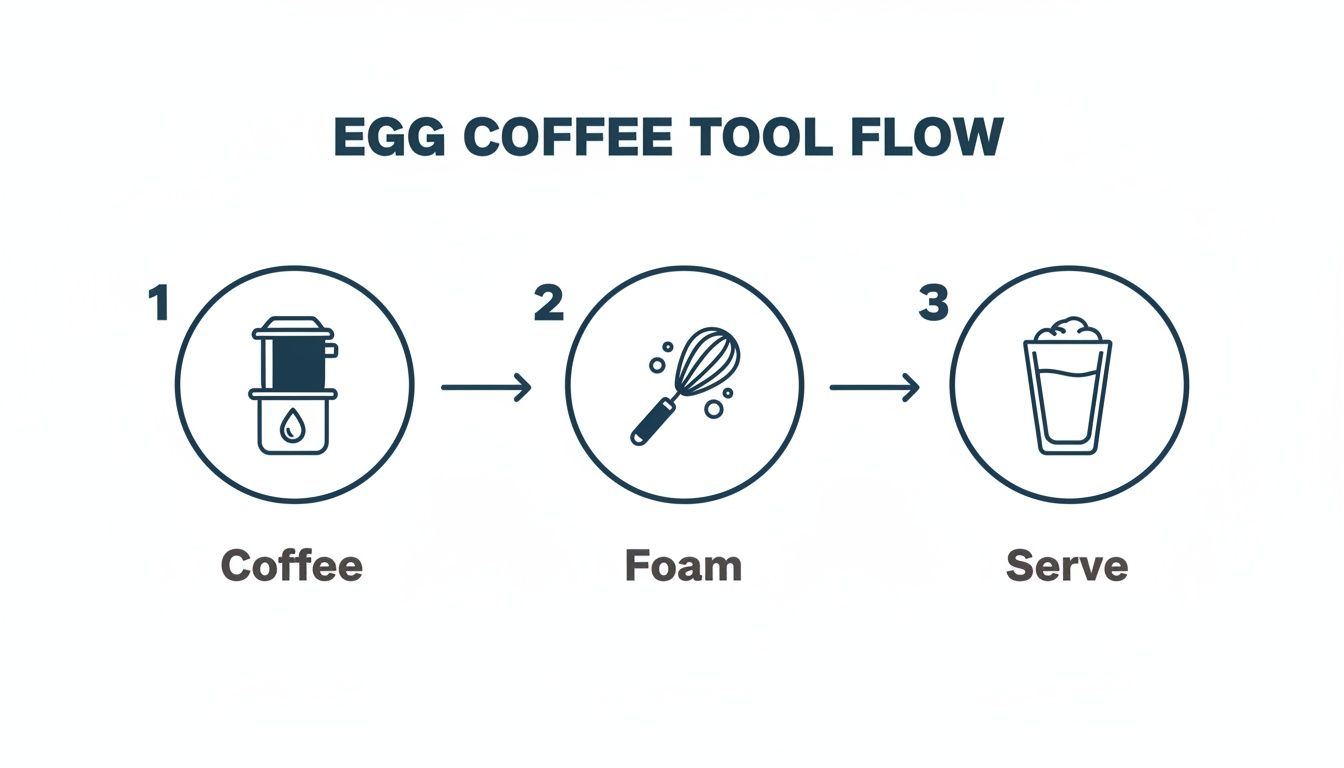
As you can see, getting these distinct steps—brewing, foaming, and serving—right is the secret to a perfect Vietnamese egg coffee.
Assembling Your Masterpiece
Once the coffee has finished dripping and your egg cream is perfectly whipped, the final step is to bring it all together. This is where you create that iconic layered look.
First, pour the hot, freshly brewed coffee into your serving glass. Then, gently spoon the thick, glossy egg cream on top. Don't just pour it in. The foam should be dense enough to sit right on the coffee, creating a beautiful, clean separation.
Serve it immediately while the coffee is piping hot and the foam is at its absolute peak. Traditionally, you can either stir the layers together before drinking or dip a spoon straight through the foam to get a bit of everything in each mouthful.
Mastering the Perfect Foam and Common Fixes
That signature, velvety foam is the soul of a good Vietnamese egg coffee, but it can be a little temperamental. Think of this section as your personal masterclass, packed with hard-won tips to get that perfect, cloud-like texture every single time.
The secret often lies in the small details. Egg freshness, for instance, is non-negotiable. Fresher eggs have stronger proteins that whip up into a much more stable and voluminous cream. Likewise, the speed and duration of your whisking directly impact that final, glorious consistency.
Solving Common Foam Frustrations
Even with the best ingredients, things can occasionally go sideways. Don't worry—most problems are surprisingly easy to fix once you know what you’re looking for. Here are the most common hiccups and how to sort them out.
- Problem: My foam won’t thicken. This is usually down to one of two culprits: you haven’t whisked it long enough, or something has contaminated the bowl. If it’s still runny, just keep whisking on high speed for another minute or two. Still refusing to thicken? You might have a tiny trace of oil or water in your bowl, which stops the egg yolks from emulsifying properly.
- Problem: The foam tastes too ‘eggy’. A strong egg flavour can easily overpower the drink. The simplest fix is adding a very small drop of high-quality vanilla extract—no more than a quarter of a teaspoon. It’s amazing how this one little addition mellows the flavour without masking that lovely richness.
- Problem: My foam split or looks curdled. This can happen if the egg yolks get slightly cooked by the coffee’s heat or if you’ve over-whipped the mixture. To prevent this, always add the foam to the coffee, never the other way around. And be sure to stop whisking as soon as you achieve thick, glossy ribbons.
Getting a great foam without professional kit is entirely possible. For more ideas on creating rich textures at home, you can find some really useful tips in our guide to frothing milk without a steam wand, as many of the principles apply here too.
A key takeaway is to trust your eyes. The ideal foam should be pale, thick, and so dense that when you lift the whisk, the mixture falls in slow, elegant ribbons that hold their shape for a moment before melting back into the cream.
A Note on Food Safety in the UK
Recreating an authentic Vietnamese egg coffee recipe here in the UK means blending a bit of culinary craft with an awareness of local food safety guidelines. The classic method uses a whipped mixture of raw egg yolk and condensed milk, which is perfectly safe when you know what you’re doing.
UK food safety law allows cafés to serve dishes with raw eggs, provided they have strict hygiene controls in place and inform customers about allergens. When you're making this at home, using pasteurised egg yolks is the smartest and safest choice, completely eliminating any potential risks. You can usually find these in the chilled section of most larger UK supermarkets.
This simple swap ensures you can enjoy every last sip with complete peace of mind, confident that your delicious creation is as safe as it is satisfying.
Creative Variations on Your Egg Coffee

Once you’ve nailed the classic Vietnamese egg coffee, the real fun begins. Think of that simple, elegant combination of rich coffee and velvety foam as your starting canvas. From here, you can get creative and tweak the recipe to suit your mood, the season, or even your dietary needs.
The most obvious twist, and an absolute lifesaver on a warm day, is the iced version: Cà Phê Trứng Đá. The process is nearly identical to making it hot, but with a crucial change in assembly. Brew your coffee as usual, but let it cool down completely. Then, pour it over a glass packed with ice and gently spoon the freshly whipped egg cream on top. It's a gorgeous, layered treat perfect for summer.
Adding New Flavours to the Mix
Beyond just changing the temperature, you can really elevate your egg coffee by infusing new flavours into the foam itself. A few simple additions can turn this already delicious drink into a full-blown dessert.
- For a Chocolate Twist: Add one teaspoon of good-quality, unsweetened cocoa powder into the egg yolk and condensed milk before you start whisking. The slight bitterness of the cocoa beautifully cuts through the sweetness, creating a rich, mocha-like foam. Dust a little extra on top to finish it off.
- For an Adult Treat: Fancy a boozy kick? Whisk in about half a teaspoon of dark rum or a coffee liqueur like Kahlúa. It adds a warming complexity that pairs perfectly with the deep coffee notes—ideal for a cosy evening in.
This style of whipped, customisable coffee might feel familiar. If you enjoy playing with textures and flavours like this, you’ll probably love our Dalgona coffee recipe, which has a similar whipped vibe.
The key is always balance. When adding new ingredients, start small and taste as you go. You want to complement the coffee and cream, not overpower them. The soul of the Cà Phê Trứng should still shine through.
To make it even easier to see how a few tweaks can change the whole drink, here’s a quick comparison of the most popular variations.
Vietnamese Egg Coffee Variations
This table gives you a quick look at different ways to enjoy Cà Phê Trứng, from the classic to more creative twists.
| Variation | Key Ingredient Change | Flavour Profile | Best Served |
|---|---|---|---|
| Iced Egg Coffee | Served over ice | Refreshing, sweet, and bold | On a warm afternoon |
| Chocolate Egg Coffee | 1 tsp cocoa powder | Rich, decadent, mocha-like | As a dessert coffee |
| Boozy Egg Coffee | ½ tsp rum or liqueur | Warming, complex, with a kick | As an evening treat |
| Dairy-Free Egg Coffee | Coconut condensed milk | Subtly tropical, sweet | Anytime |
As you can see, a single change is all it takes to create a completely new experience.
Adapting to Dietary Needs
You can absolutely adapt this recipe for different dietary requirements without losing what makes it special. The most common swap is for a dairy-free version, and the best substitute by far is coconut condensed milk.
Using a coconut-based alternative will give you a foam that’s a little less thick but has a lovely, subtle coconut flavour that works wonders with a dark roast coffee. It’s a fantastic option that makes this delicious Vietnamese treat accessible to even more people. Experimenting is all part of the fun of making this recipe truly your own.
Your Vietnamese Egg Coffee Questions Answered
Diving into a new coffee recipe for the first time usually throws up a few questions. So, I've put together a quick guide to tackle the most common queries about making Cà Phê Trứng at home. A little bit of know-how is all you need to brew the perfect cup with confidence.
Probably the first thing on everyone's mind is the raw egg situation. Traditional recipes absolutely call for fresh, raw yolks, but for making it safely at home here in the UK, I always recommend using pasteurised egg yolks. You can find them in most big supermarkets, and they completely remove any health worries without changing that incredible flavour or velvety texture one bit.
Practical Tips for Perfecting Your Brew
What if I don't have a phin filter?
No phin? No problem at all. While the traditional phin filter gives you that classic, slow-dripped intensity, you can still get a brilliant result with other methods. A strong shot or two of espresso works wonders. A concentrated brew from a Moka pot also gives you that perfect, robust coffee base needed to stand up to the rich, sweet egg cream.
Why did my egg foam sink into the coffee?
This is a classic hiccup and nearly always has a simple fix. The foam will sink if it hasn't been whipped long enough to get really thick and stable. You need to keep whipping the egg and condensed milk mixture until it's very pale and creates thick, slow-moving "ribbons" when you lift the whisk out.
When you're ready to assemble, pour the coffee into the glass first, then gently spoon the foam on top. If it's whipped correctly, it should be dense enough to float beautifully.
A strong coffee base is about more than just the brewing method; your grind size is critical. Using the right grind ensures you get the best possible extraction and flavour. You can get the full rundown in our detailed coffee grind size guide.
Can I make egg coffee ahead of time?
Honestly, Vietnamese egg coffee is a treat that's best enjoyed the second it's made. That delicate, airy foam will deflate and the whole texture changes if it sits in the fridge for too long. For that perfect, velvety experience, it's always best to make single servings fresh.
Here at Seven Sisters Coffee Co, we know that phenomenal coffee starts with phenomenal beans. Take a look at our collection of freshly roasted dark blends—they're just the ticket for your next Vietnamese egg coffee adventure. Discover your new favourite coffee today.