Moka Pot vs Espresso Machine at Home: An Expert Comparison

Choosing between a moka pot and an espresso machine for your kitchen really comes down to one thing: the trade-off between simplicity and sophistication. A moka pot is your ticket to a rich, potent, espresso-like coffee with minimal fuss and a tiny price tag. On the other hand, a home espresso machine delivers true, high-pressure espresso with that signature crema, giving you a genuine café experience but demanding a much bigger investment.
Your Definitive Guide to Moka Pots and Espresso Machines
Deciding on the right coffee brewer can feel like a huge commitment, but understanding the core differences right from the start makes the choice much clearer. The whole moka pot vs espresso machine debate at home isn't about which one is "better," but which brewer slots perfectly into your lifestyle, budget, and what you actually want your coffee to taste like.
This guide is here to walk you through every critical detail, from the science behind the brew to the daily ritual you'll be signing up for. Before we get into the nitty-gritty, it helps to see the big picture.
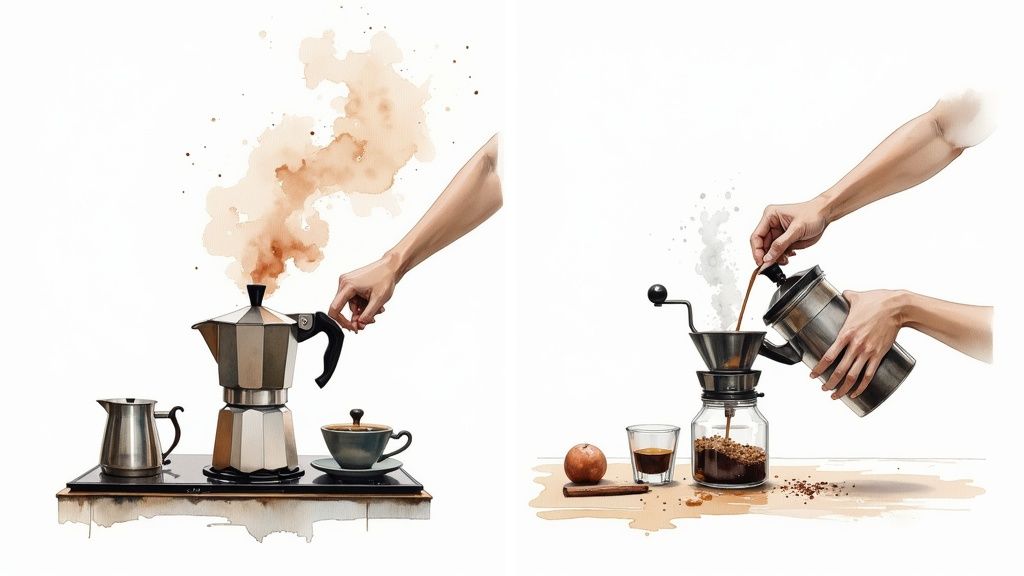
The illustration below shows the fundamental trade-offs between cost, effort, and the quality of coffee you'll get in your cup.
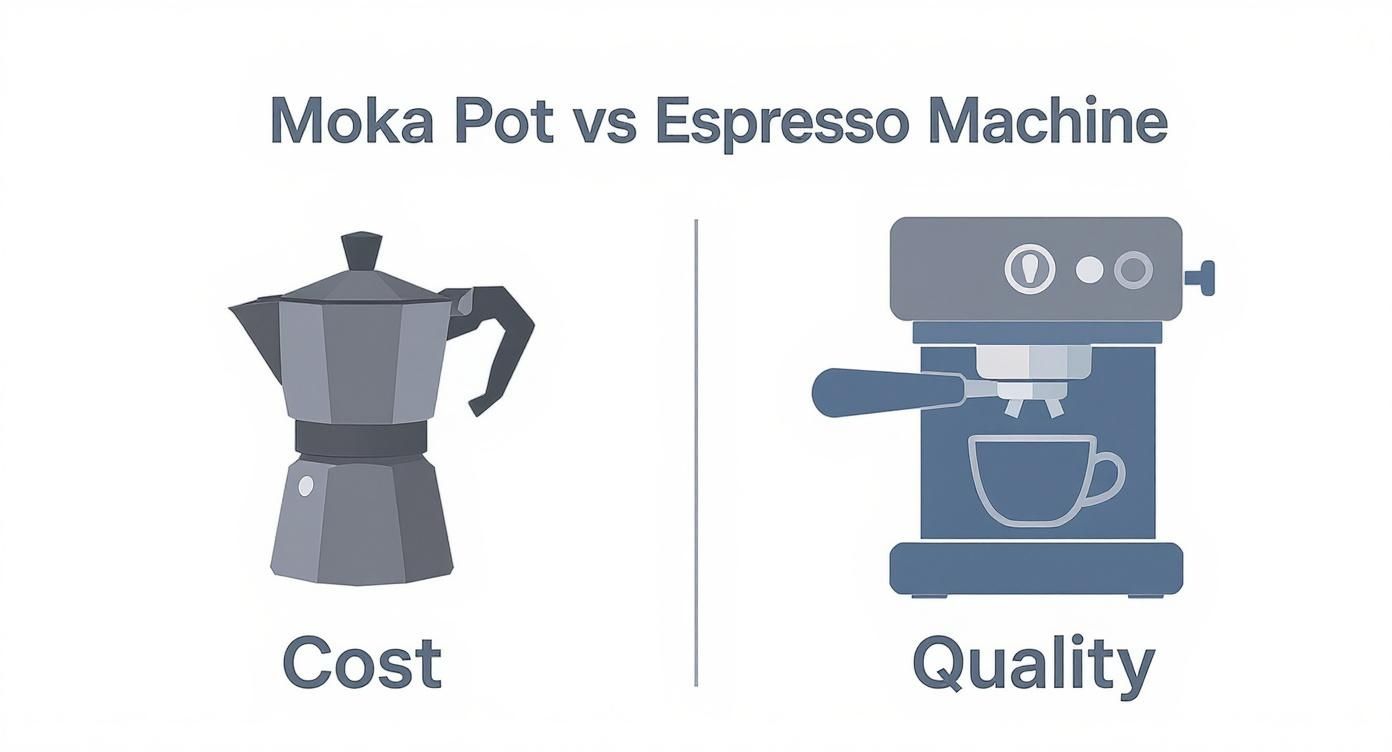
As you can see, the moka pot is a low-cost, low-effort brewer that punches well above its weight, producing a seriously strong brew. The espresso machine, however, demands a higher investment for that superior, café-standard quality.
To frame the rest of our deep dive, let’s quickly break down the essential characteristics of each brewer side-by-side. Think of this as your cheat sheet.
Moka Pot vs Espresso Machine: A Quick Comparison
This quick-reference table sums up the key factors you'll want to consider for your UK home setup. It gives you a snapshot of everything from the initial cost to long-term upkeep, helping you immediately grasp the practical differences between the two.
| Feature | Moka Pot | Espresso Machine |
|---|---|---|
| Brew Quality | Strong, bold, espresso-like; no crema | True espresso with rich, stable crema |
| Initial Cost | Very affordable, typically under £50 | Significant investment, £150 to £2000+ |
| Daily Effort | Simple and quick; a 5-minute process | Steeper learning curve; requires practice |
| Required Skill | Minimal; easy to learn with basic tips | High; mastering it is a hobby in itself |
| Footprint | Compact; easily stored in a cupboard | Large; requires dedicated counter space |
| Running Costs | Extremely low (coffee, occasional seal) | Moderate (coffee, cleaning supplies, servicing) |
This table lays the groundwork, but the real story is in the details that follow. Let’s explore how these differences play out in the real world.
Understanding How They Brew
To really get to the heart of the moka pot versus espresso debate, you have to look at how they work. The distinct flavour you get from each one isn't magic; it's physics. The way they use pressure to pull coffee from the grounds is fundamentally different, and that's the secret behind why each cup is so unique.
A moka pot is a clever bit of stovetop engineering. It’s a simple three-chamber system where water boils in the bottom, creating steam. That steam builds up to about 1.5 bars of pressure—just enough to push hot water up through the coffee grounds and into the top chamber.
It’s a beautifully simple process that makes a strong, concentrated coffee without any complicated pumps or electronics. The whole thing is driven by basic thermodynamics, making it a reliable and almost ritualistic way to brew.
It All Comes Down to Pressure
The main point of difference here is force. While a moka pot’s 1.5 bars is impressive for a simple stovetop gadget, it’s in a completely different league to a proper espresso machine.
An espresso machine is built for one job: creating intense pressure. The gold standard for true espresso is 9 bars, which is about nine times the air pressure you feel at sea level. This incredible force is what unlocks the deeper flavours hidden inside the coffee bean.
This high-pressure blast forces water through a finely ground, tightly packed puck of coffee. In doing so, it extracts a much wider spectrum of oils, soluble compounds, and aromatic particles that lower-pressure methods just can’t touch. It’s this violent, rapid extraction that creates that complex, layered shot and its signature velvety crema.
The pressure difference also dictates the speed. A proper espresso shot is pulled in just 25-30 seconds—it’s a fast, intense process. A moka pot, on the other hand, takes a few minutes, relying on a much gentler, steam-driven infusion.
A Step-by-Step Look at the Moka Pot
Getting to grips with the moka pot’s mechanics is the first step to brewing a great cup. The process is straightforward, but a few small details can make or break the final taste.
- The Water Chamber: You fill the bottom chamber with water. A top tip is to use water that’s already hot (just off the boil). This stops the metal pot from overheating on the hob, which can scorch the grounds and give your coffee a nasty metallic taste.
- The Coffee Basket: Next, you fill the filter basket with finely ground coffee. Crucially, you don’t tamp it down like you would with an espresso. Tamping creates too much resistance for the moka pot’s low-pressure system, which can cause the brew to stall or extract unevenly.
- Brewing on the Hob: As the pot heats up, steam pressure forces the hot water up through the coffee. The final brew collects in the top chamber, ready to pour.
When you get it right, this little device produces an incredibly rich and satisfying coffee. For a more detailed guide, check out our post on how to brew with a moka pot, where we share some expert tricks to avoid common mistakes like bitterness. Understanding these basics is key to appreciating why its brew is so different from a true espresso.
Comparing Flavour Profile, Body and Crema
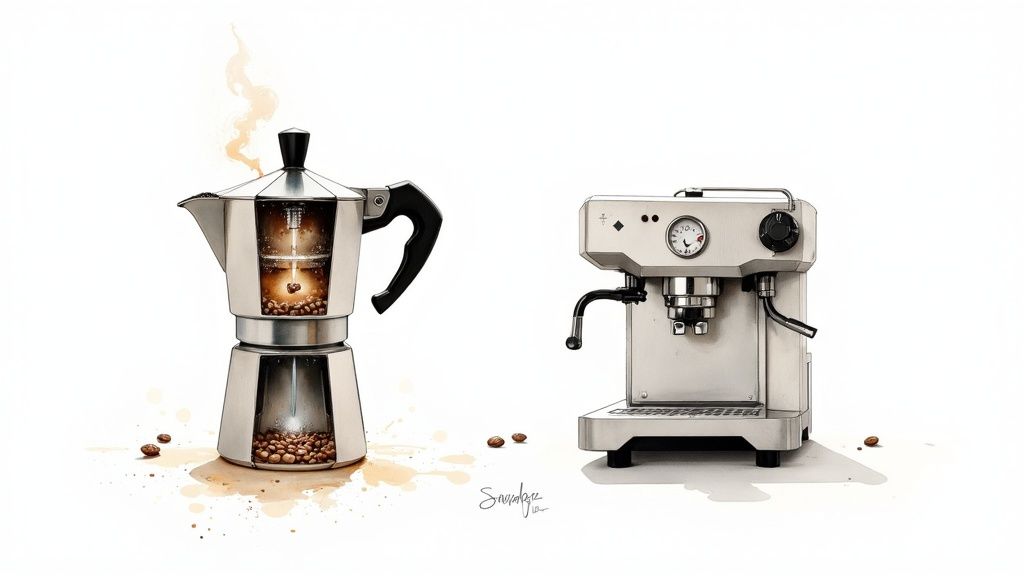
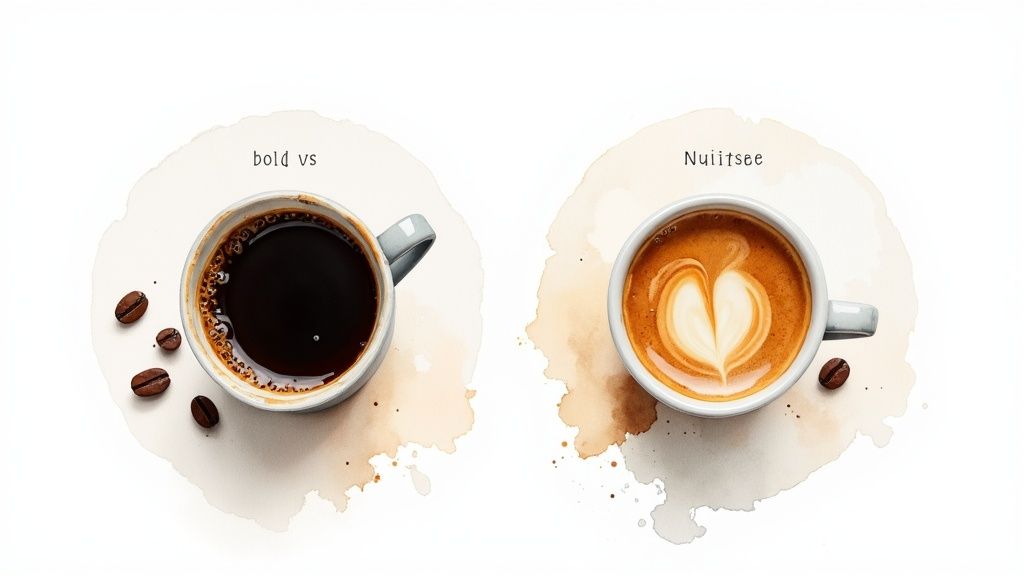
When you get right down to it, the most important difference between a moka pot and an espresso machine is what ends up in your cup. The mechanics of pressure and temperature are interesting, but it's the sensory experience—the aroma, the taste, the mouthfeel—where you truly understand what sets them apart. Each one brews a coffee with a completely distinct personality.
A moka pot makes coffee that is unapologetically bold and robust. You get a heavy-bodied, potent, and concentrated flavour. This comes directly from its low-pressure, high-temperature brew, which tends to pull out deeper, earthier tones and can sometimes create a slightly bitter finish if you’re not careful.
The Character of Moka Pot Coffee
The brew from a moka pot is rich, powerful, and what many would describe as "full-bodied." It coats your palate with a syrupy intensity that a lot of coffee lovers find deeply satisfying. It's the kind of strong, commanding coffee that holds its own against milk and sugar without losing its essential character.
One thing a moka pot can’t produce, though, is true crema. That iconic reddish-brown foam is the signature of high-pressure extraction, and the 1.5 bars a moka pot generates just isn't enough to emulsify the coffee oils and create it. You’re left with a strong, delicious brew, but it’s missing that final velvety layer.
Because of its robust nature, moka pot coffee pairs brilliantly with blends designed for strength and depth. A classic, well-rounded profile like the 'Morning Blend' from Seven Sisters Coffee Co, available from ADS Coffee Supplies, has the kind of chocolatey and nutty notes that are amplified perfectly by this brewing method.
The Nuance of Espresso
An espresso machine, engineered for precision, delivers a completely different experience. Using 9 bars of pressure, it extracts a far more balanced and nuanced shot, showcasing a coffee's inherent sweetness, acidity, and delicate aromatic oils in a way the moka pot simply can't.
A well-pulled espresso is a symphony of flavours. It has a bright, clean entry, a rich and complex middle, and a pleasant, lingering aftertaste. The higher pressure allows for a much finer grind and a quicker extraction (around 25-30 seconds), which helps prevent the over-extraction of bitter compounds that can sometimes happen with a moka pot.
Crema is the crowning glory of a true espresso. It’s not just for looks; this fine foam of CO2 bubbles and emulsified oils traps aromatics, delivering a more intense aroma and contributing to a longer-lasting flavour and a smoother, velvety mouthfeel.
This precision is what makes espresso machines the ideal choice for showcasing the intricate flavours of single-origin beans. For example, the bright acidity and floral notes of a coffee like the Seven Sisters 'El Salvador Single Origin', also from ADS Coffee Supplies, would truly shine when extracted as a proper espresso. To really nail this, it's worth reviewing a guide on how to make perfect espresso, which covers the essential techniques.
Here’s a quick summary of the sensory differences you can expect:
| Sensory Aspect | Moka Pot Coffee | True Espresso |
|---|---|---|
| Flavour | Bold, robust, earthy, potentially bitter | Balanced, nuanced, sweet, complex acidity |
| Body | Heavy, syrupy, full-bodied | Velvety, smooth, well-rounded |
| Crema | None | Rich, stable, reddish-brown layer |
| Aroma | Intense and straightforward | Complex and layered with trapped aromatics |
Ultimately, your choice comes down to the flavour you’re chasing. If you want a powerful, rich, and straightforwardly strong cup, the moka pot is an excellent brewer. But if your goal is to explore the subtle complexities of speciality coffee and achieve that café-quality crema and balanced taste, only an espresso machine will get you there.
Analysing the True Cost of Ownership
When you’re weighing up a moka pot against an espresso machine, the financial side of things is probably one of the biggest dividing lines. The sticker price is just the start; the real cost comes from the ongoing expenses, the essential kit, and the odd bit of maintenance down the line. It's a tale of two very different financial journeys for coffee lovers here in the UK.
The moka pot is the undisputed champion of accessibility. It’s a tiny upfront investment for a massive return in flavour. You can get your hands on high-quality, built-to-last models almost anywhere, making it ridiculously easy to start brewing rich, powerful coffee without raiding your savings.
The Modest Moka Pot Investment
For anyone who puts a premium on simplicity and value, the moka pot is a no-brainer. It has an incredibly low barrier to entry for making genuinely great coffee right in your own kitchen.
- Initial Cost: A top-tier moka pot will rarely set you back more than £50. For instance, you can find excellent Bialetti moka pots at ADS Coffee Supplies that are built to last for years, which is just outstanding value.
- Ongoing Costs: Day-to-day running costs are practically zero. Besides your favourite coffee beans, the only part that needs a look-in now and then is the rubber gasket. A replacement usually costs just a few quid every year or two.
- Accessories: You don't need any extra gear. While a good grinder will always lift your coffee game, a moka pot is forgiving enough to work brilliantly with pre-ground coffee, keeping any extra spending to a minimum.
The moka pot’s financial appeal is all about its simplicity. It’s a one-off purchase that gives you consistently great results for years with almost no extra upkeep. That makes it a smart, sustainable, and budget-friendly way to brew.
The Broader Espresso Machine Spectrum
Dipping your toe into the world of home espresso, on the other hand, is a much bigger financial commitment. The market for these machines is huge, with prices that reflect a massive range of capabilities, from basic starter models to serious, pro-level equipment.
The initial price of an espresso machine is often just the tip of the iceberg. To get that café-quality shot, a bunch of accessories aren't just recommended—they're essential. This is where the "hidden costs" of an espresso setup really start to show themselves.
A quality burr grinder is completely non-negotiable, as proper espresso extraction is incredibly sensitive to how consistently your coffee is ground. This piece of kit alone can cost as much as an entry-level machine. On top of that, you'll want a proper tamper, a tamping mat, a knock box for the used grounds, and cleaning supplies. All these extras can easily double what you first planned to spend.
The higher price point of these machines is a major force in the coffee appliance market. In fact, research shows the UK coffee machine market pulled in a revenue of USD 268.6 million in 2022, with espresso machines carving out a distinct, high-end slice. This tells us there's a big group of coffee drinkers willing to invest more for that perfect café-style result, which you can read more about in the full market research.
Long-Term Running and Maintenance Costs
Beyond the initial layout, the running costs for an espresso machine are higher too. They use more electricity and need special cleaning products to stop limescale from building up and to keep the group head clear of coffee oils. Regular descaling is absolutely vital for performance and keeping the machine alive; you can learn more about this in our guide on how to descale a coffee machine.
Over time, repairs can also become a real consideration. Figuring out the long-term financial hit means weighing up these potential costs against just buying a new one. For a really detailed breakdown, you can find a comprehensive guide on the factors to consider when repairing versus replacing home appliances.
Ultimately, the choice boils down to your budget and how deep you want to go. The moka pot is a simple, affordable pleasure, whereas the espresso machine is a true investment in a dedicated hobby.
The Daily Ritual: A Tale of Two Brews
Beyond the mechanics and the money, choosing between a moka pot and an espresso machine is really about choosing your morning ritual. Each one brings a completely different rhythm to your day. One is a simple, almost meditative act, while the other is a deep dive into the craft of coffee. It all comes down to your personality and what you enjoy.
The moka pot offers a beautifully straightforward, hands-on process. You fill the base with water, spoon coffee into the basket, screw the pot together, and pop it on the hob. The whole thing is over in about five minutes, with the final gurgle and hiss letting you know your coffee is ready. It's a satisfying, tactile experience.
This routine is reliable and forgiving. Yes, you need to pay a bit of attention to your grind and heat to sidestep any bitterness, but the basics are incredibly easy to pick up. It's a process that quickly becomes second nature, perfect if you just want a dependable way to make strong, no-fuss coffee.
Espresso as a Hobby
On the flip side, an espresso machine demands a lot more from you. It’s less of a routine and more of a dedicated hobby, a constant journey of refinement. It starts with 'dialling in'—a meticulous process of tweaking your grinder to find the absolute sweet spot for your current beans.
Then comes the art of puck prep: distributing the grounds evenly and tamping with just the right pressure for a perfect extraction. Finally, you pull the shot, aiming for that golden 25-30 second window. Getting all these variables to line up takes patience and practice. Of course, bean-to-cup machines can automate this, but they come with a hefty price tag.
The espresso ritual is for the enthusiast who geeks out on the details. It's about controlling every variable, understanding the science, and chasing the immense satisfaction of pulling that 'perfect shot' with a thick, velvety crema.
For anyone serious about levelling up their espresso game, mastering puck preparation is non-negotiable. Our comprehensive puck prep guide on WDT and distribution is a fantastic resource for achieving more consistent, delicious shots.
How We Brew at Home in the UK
This choice between simplicity and precision reflects what’s happening in kitchens across the UK. According to World Coffee Portal’s Coffee At Home UK 2023 report, coffee pod systems are king, making up 48.7% of all home coffee machine sales, with espresso machines following at 27.2%. The fact that 66% of UK pod owners bought their machine in the last three years shows a clear trend towards mid-range convenience.
The data paints a clear picture. There’s a huge market for the speed and simplicity offered by pods and automated machines. But there’s also a growing tribe of home baristas investing time and money into replicating the café experience. The humble moka pot sits happily in between, offering a hands-on, budget-friendly ritual for those who want great, strong coffee without the espresso machine’s complexity.
For those truly committed to their espresso craft, a Barista Skills Foundation Course can turn that daily routine into a genuine skill, elevating your coffee from good to exceptional.
Ultimately, the best daily ritual is the one you actually look forward to. If you value a simple, soulful, and reliable process, the moka pot is your perfect partner. If you’re a passionate hobbyist who loves the challenge of mastering a craft, the espresso machine offers a deeply rewarding journey.
Which Coffee Brewer Is Right for You?
After weighing up the flavour, cost, and the daily ritual, the moka pot vs espresso machine debate really boils down to you. There’s no single “best” brewer; there’s only the one that fits perfectly with your budget, your lifestyle, and the kind of coffee you genuinely love to drink. This final verdict should help you pinpoint exactly which camp you’re in.
It all hinges on what you prioritise. Are you chasing the pure, unadulterated joy of a simple and effective brew, or are you drawn to the challenge and reward of mastering a complex craft?
Choose a Moka Pot If You Value Simplicity and Affordability
The moka pot is the undisputed champion for anyone who wants a straightforward, rewarding coffee experience without a hefty price tag or steep learning curve. It’s just an elegant, no-fuss solution for making powerful, rich coffee.
You’re the ideal moka pot owner if:
- Budget is a key factor: You want the best possible brew for the smallest initial investment. Simple as that.
- You love strong, rich coffee: You’re all about a bold, full-bodied flavour and aren’t hung up on producing a true crema.
- Simplicity is your priority: You appreciate a quick, repeatable, and almost meditative brewing ritual that doesn’t demand technical wizardry.
- Kitchen space is limited: You need a compact brewer that can be easily tucked away in a cupboard.
The moka pot’s enduring appeal is its ability to deliver a deeply satisfying, espresso-like coffee with nothing more than a hob and some ground beans. You can explore a fantastic selection of classic moka pots at ADS Coffee Supplies to start your journey.
Choose an Espresso Machine If You Are a Passionate Enthusiast
An espresso machine is more than just an appliance; it's an investment in a hobby. It’s for the person who sees coffee brewing as a craft to be perfected and wants the full café experience at home—lattes, flat whites, cappuccinos, the lot.
An espresso machine is the right choice for you if:
- Authenticity is everything: You want true, high-pressure espresso with a rich, velvety crema. No compromises.
- You are a dedicated hobbyist: You relish the challenge of dialling in a grinder, mastering puck prep, and pulling the perfect shot.
- You love milk-based drinks: Your goal is to create café-quality lattes and cappuccinos with perfectly steamed and textured milk.
- Budget is less of a constraint: You’re prepared to invest in a quality machine and essential accessories, like a good burr grinder.
The right grinder is non-negotiable for espresso, as the consistency of the grind directly impacts your shot. If you're diving into this world, understanding your options is key, which is why we've put together a guide explaining the differences between conical and flat burr grinders. For those ready to commit, browse the excellent range of home espresso machines to find your perfect match.
Ultimately, the moka pot is a timeless classic for a reason. It offers an accessible and deeply satisfying way to make brilliant coffee. Its continued popularity and market growth in the UK confirm its value as a practical, cost-effective choice for coffee lovers everywhere.
The market certainly reflects this. Recent analysis shows the United Kingdom's moka pot market was valued at USD 42.90 million in 2024 and is set to grow at a rate of 7.8%. This trend highlights that plenty of UK coffee drinkers are actively choosing the moka pot for a strong, espresso-like brew without the high cost of a dedicated machine. You can discover more insights on the moka pot market boom.
Frequently Asked Questions
To help you make that final call between a moka pot and an espresso machine, here are a few answers to the questions we hear most often.
Can I Make a Latte with a Moka Pot?
Yes, absolutely! It's one of the best things about having one. While a moka pot won't give you a true, technically-defined espresso, it brews a strong, concentrated coffee that's a fantastic substitute for milk drinks.
You'll just need to handle the milk separately. A simple handheld frother works wonders, but even shaking some hot milk in a sealed jar can do the trick. You’ll end up with a delicious, creamy coffee that feels just like a proper café latte.
Is a More Expensive Espresso Machine Worth It?
For anyone serious about coffee as a hobby, the answer is a resounding yes. Your entry-level machine can certainly pull a decent shot, but investing more unlocks huge improvements in build quality, performance, and, most importantly, consistency.
The pricier machines usually offer:
- Better Temperature Stability: This is non-negotiable for avoiding sour or bitter shots and achieving consistent extraction.
- Superior Build Quality: You’re paying for stainless steel instead of plastic, which means the machine is built to last.
- Powerful Steam Wands: This is how you get that silky microfoam for latte art that actually looks like something.
If you want to replicate café-quality coffee and really dive into the craft, a more expensive machine from a respected brand like Sage is a wise investment. It gives you the control and reliability needed to really perfect your skills.
What Is the Correct Coffee Grind Size?
Getting the grind right is one of the most critical steps, and it’s completely different for each brewer. Nail this, and you're halfway to a great cup.
A moka pot needs a fine grind, feeling something like table salt or fine sand. Go too coarse, and the water will gush through, leaving you with a weak, sad brew. Go too fine, and you risk clogging the filter and creating too much pressure.
An espresso machine demands an even finer, almost powder-like grind. This fine texture creates the resistance needed for the high-pressure water to extract all that rich flavour in just 25-30 seconds.
Ready to elevate your home coffee experience? Whether you're drawn to the classic simplicity of a Moka Pot or the refined craft of an espresso machine, ADS Coffee Supplies has everything you need. Explore our expertly curated collections of coffee makers and accessories today.